Epilepsie
Begutachtet von Dr Rosalyn Adleman, MRCGPZuletzt aktualisiert von Dr Doug McKechnie, MRCGPLast updated 19 Apr 2025
Erfüllt die Anforderungen des Patienten Richtlinien des Patienten
- HerunterladenHerunterladen
- Teilen
- Language
- Diskussion
- Audio-Version
- Add to preferred sources on Google
In dieser Serie:Arten von AnfällenElektroenzephalographTonisch-klonische AnfälleFokale AnfälleAbsencenEpilepsie-Medikamente und Nebenwirkungen
Et etwa 1 von 30 Menschen im Vereinigten Königreich entwickelt im Laufe ihres Lebens Epilepsie. Sie beginnt am häufigsten in der Kindheit und bei Menschen über 60 Jahren. Epilepsie kann jedoch in jedem Alter auftreten. Im Allgemeinen sind Anfälle in etwa 4 von 5 Fällen durch Behandlung gut kontrolliert.
At a glance
Epilepsy is a brain condition that causes repeated seizures.
A seizure is a sudden burst of electrical activity in the brain, causing various symptoms.
Diagnosis involves looking at symptoms and may include brain scans and an EEG.
Medication is the main treatment and helps most people to control their seizures.
Other treatments include surgery, vagal nerve stimulation, and a special diet.
If you have had a seizure, you should see a healthcare professional.
In diesem Artikel:
Video picks for Epilepsie und Anfälle
Lesen Sie unten weiter
What is epilepsy?
Epilepsy is a long-lasting brain condition that causes people to have repeated seizures.
A seizure is a sudden change in electrical activity in the brain. It can cause different symptoms, from someone becoming unconscious and shaking, to someone behaving unusually for a short time (see types of epilepsy and seizures for more).
There are different causes of seizures, including epilepsy, but also other things such as infections, a very low blood sugar, a head injury, withdrawing from drugs or alcohol, and others. Seizures caused by another medical problem are called 'provoked' seizures.
So, we usually say that someone has epilepsy if they have repeated seizures that aren't solely provoked by another medical problem.
If you have had a single seizure, it does not necessarily mean that you have epilepsy.
The frequency of seizures in people with epilepsy varies. In some cases there may be years between seizures. At the other extreme, in some cases the seizures occur every day. For others, the frequency of seizures is somewhere in between.
Epilepsy can affect anyone at any age. Around 456,000 people in the UK have epilepsy.
Epilepsy symptoms
The main symptom of epilepsy is seizures that happen more than once. A seizure is a short episode of symptoms caused by a burst of abnormal electrical activity in the brain. Typically, a seizure lasts from a few seconds to a few minutes. (Older words for seizures include convulsions and 'fits'.)
Seizures involve a temporary burst of electrical activity in the brain. This causes a temporary problem in the way the brain is functioning. These can cause different symptoms, depending on which parts of the brain are affected.
The most well-known type of seizure is a generalised tonic-clonic seizure. This is what most people think of when they think of a seizure. With this type of seizure, you lose consciousness, your whole body stiffens, and then your body shakes (convulses) due to uncontrollable muscle contractions. Afterwards, you usually feel drowsy or confused, and it takes some time until your thinking and awareness returns to normal.
There are also many other types of seizures, such as generalised absence seizures und focal seizures. See the types of epilepsy and seizures leaflet for more detail.
People with epilepsy can have any of the types of seizures, although they usually have a predictable pattern of seizure type and symptoms.
What causes epilepsy?
Zurück zum InhaltA seizure happens when there is a burst of electrical activity in the brain.
It's thought that seizures happen when activity in the brain goes above a certain level, called the 'seizure threshold'. The seizure threshold is how resistant the brain is to seizures.
Anyone can have a seizure in certain circumstances. In people without epilepsy, their seizure threshold is high enough that this rarely, or never, happens. If it does, it's usually because they have another serious medical problem, like a serious infection, drug or alcohol withdrawal, or a brain injury.
People with epilepsy have a lower seizure threshold. This means that they are more likely to have a seizure. This can happen in response to a trigger (see Epilepsy triggers, below), or sometimes for no obvious reason.
The causes of a lower seizure threshold differ from person to person. The causes of epilepsy are complex and not fully understood.
Unknown cause (idiopathic epilepsy)
About half of people with epilepsy have idiopathic epilepsy, which means the cause is not known - none of the other causes below are present.
Medication to control seizures usually works well for people with idiopathic epilepsy.
There is probably a genetic link to idiopathic epilepsy in many people - see 'is epilepsy hereditary?' below.
Some types of idiopathic epilepsy have now been renamed 'genetic epilepsy', as we have learned more about the genetic basis of epilepsy.
Is epilepsy hereditary?
We think that there is a close link between genetics and epilepsy. Some researchers think that genetics are important to some extent in everyone with epilepsy.
It's thought that people with epilepsy have a genetic tendency to have seizures, or a lower seizure threshold. This tendency can be inherited from one or both parents, or it can develop for the first time as a new genetic change in the person with epilepsy.
This genetic tendency is often due to changes in several different genes; people with epilepsy may have several different genetic variants, which in combination make them more likely to have seizures.
Many different gene combinations can cause this, so it is difficult to predict who will inherit these genetic tendencies in a family. It is also difficult to clearly identify which gene variants are responsible, and therefore genetic testing is often not possible. There is, though, a lot of ongoing research into this area.
There are some rare conditions where a single gene variant causes epilepsy. These conditions usually have other symptoms as well. Because only one gene is involved, it's much easier to predict how these will be inherited, and genetic testing is often performed to diagnose these conditions. Examples of these rare genetic conditions include:
Tuberöse Sklerose.
Fragile X syndrome.
Rett syndrome.
Neurofibromatose.
Dravet syndrome.
Structural epilepsy
Structural epilepsy is caused by damage or changes in the brain's structure, which are usually visible on brain scans.
These brain changes can be something that you were born with, or something that has happened to the brain later on in life.
There are lots of possible causes, such as:
A patch of scar tissue in a part of the brain.
A head or brain injury.
A Schlaganfall.
Zerebrale Kinderlähmung.
Growths or tumours of the brain.
Previous infections of the brain, such as Hirnhautentzündung und Enzephalitis.
The condition may irritate the surrounding brain cells and trigger seizures.
Sometimes, the only symptom of the condition is the seizures. Other times, the condition may cause other problems as well as seizures and epilepsy.
Lesen Sie unten weiter
Seizure triggers
Zurück zum InhaltSeizure triggers are things that make it more likely for someone with epilepsy to have a seizure.
Seizures can happen for no obvious reason. Sometimes, though, people with epilepsy can identify triggers for their seizures.
Seizure triggers don't cause epilepsy, but they can make it more likely for someone with epilepsy to have a seizure.
Mögliche Auslöser können sein:
Stress or Angstzustände.
Some medicines such as Antidepressiva, and antipsychotic medication (these lower the seizure threshold in the brain).
Schlafmangel oder Müdigkeit.
Irregular meals (or skipping meals) which may cause a low blood sugar level.
Heavy alcohol intake or using recreational drugs.
Flickering lights such as from strobe lighting or video games.
Menstruation (menstruation).
Illnesses which cause hohe Temperatur (Fieber), such as Grippe or other infections.
How is epilepsy diagnosed?
Zurück zum InhaltEpilepsy is diagnosed by carefully exploring your symptoms, including a clear description of the seizures. Other tests, such as blood tests, brain scans, and an EEG, are often done as well, and can be useful to help make the diagnosis and look for underlying causes.
You should always see a healthcare professional if you think you have had a seizure for the first time. Epilepsy is usually diagnosed and treated by a specialist - typically, a neurologist - and you may be referred to see one.
Diagnosing a seizure can be difficult. Other things, such as faints, panic attacks, collapses due to heart problems, and breath-holding attacks in children can look like seizures. Non-epileptic attacks, or non-epileptic seizures, can also be difficult to tell apart from seizures due to epilepsy.
So, it is important for doctors to have a clear picture of what happened during the possible seizure. They will ask you questions about what happened before and after the event. It can also be very helpful to get a description of what happened from someone who witnessed your seizure.
There is no one test to confirm a diagnosis of epilepsy. However, tests such as brain scans, an electroencephalogram (EEG - brainwave recordings) and blood tests may help to make a diagnosis.
Brain scan
Usually a MRT-Scan (Magnetresonanztomographie) oder Computertomographie (CT) Scan - shows the structure of different parts of the brain. This is looking for a structural cause of epilepsy.
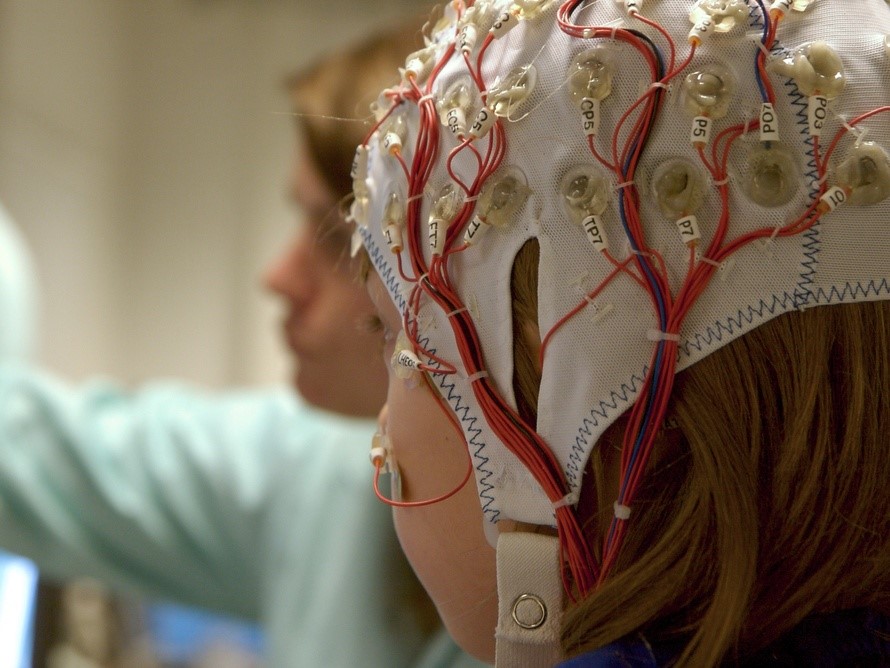
Electroencephalograph (EEG). This test records the electrical activity of the brain. Special stickers are placed on various parts of the scalp. They are connected to the EEG machine. This amplifies the tiny electrical messages given off by the brain and records their pattern on paper or computer. The test is painless. Some types of seizure produce typical EEG patterns. However, a normal recording does not rule out epilepsy and not all EEG abnormalities are related to epilepsy.
Heart test
Electrocardiogram (ECG). Sometimes a seizure can be triggered by an issue with your heart, such as an abnormal heart rhythm. Seizures due to heart rhythm problems are not classed as epilepsy.
Bluttests
Blood tests and other tests may be advised to check on your general well-being. They may also look for other possible causes of the event.
Diagnosing epilepsy can be complicated. Tests are only useful if considered alongside your symptoms. It is possible to have epilepsy with normal test results. Also, if an abnormality is found on a brain scan, it does not prove that it causes seizures.
Epilepsy is usually only diagnosed after you have had two or more seizures, because epilepsy is defined as a condition that causes recurrent seizures.
Lesen Sie unten weiter
Can epilepsy be cured?
Zurück zum InhaltEpilepsy is a long term condition. Currently, there is no cure. However, with the right medication, most people with epilepsy either have no, or very few, seizures, with little impact on their day-to-day-life.
What are the treatments for epilepsy?
See also the separate leaflets called Treatments for Epilepsy and Living with Epilepsy.
Medikation
For more details on the recommendations, see our leaflet called Treatments for Epilepsy.
Epilepsy medicines work by stabilising the electrical activity of the brain. You need to take medication every day to prevent seizures. Deciding on which medicine to prescribe depends on such things as:
Your type of epilepsy.
Ihr Alter.
Other medicines that you may take for other conditions, and their possible side-effects.
Whether you are pregnant.
Whether you are planning a pregnancy.
One medicine can prevent seizures in most cases. A low dose is usually started at first. The dose may be increased if this fails to prevent seizures. In some cases two medicines are needed to prevent seizures.
The decision when to start medication may be difficult. A first seizure may not mean that you have epilepsy, as a second seizure may never happen or may occur years later. The decision to start medication should be made by weighing up all the pros and cons of starting, or not starting, the medicine. It is unusual to start treatment after a first seizure. A common option is to wait and see after a first seizure. If you have a second seizure within a few months, more are likely.
Medication is commonly started after a second seizure that occurs within 12 months of the first. However, there are no definite rules and the decision to start medication should be made after a full discussion with your doctor.
The type of treatment you will be given often depends on the type of seizures you have and also if you are taking any other medication.
If you are capable of becoming pregnant (or might want to have children in the future) there are extra factors to consider. Your doctor will discuss these in detail with you. This is because:
Some treatments can reduce the effectiveness of some forms of hormonal contraception.
Taking some treatments when you become pregnant or during pregnancy can put you at increased risk of your baby being born with medical problems.
Some points about medication for epilepsy include the following:
Ask your doctor how long treatment is likely to be advised. This will vary from case to case. If you have not had seizures for several years, your specialist may suggest stopping your medication. However, this depends on your particular type of epilepsy, as some types will need medication for life.
Don't stop taking anti-epileptic medication suddenly, as this can cause a seizure. Always speak to a doctor if you want to know if it is safe to stop taking them.
Although the list of möglichen side-effects for each medicine seems long, in practice, most people have few or no side-effects, or just minor ones. Ask your doctor which side-effects are important to look out for. If you develop a troublesome side-effect it may be dose-related, or may settle in time. Alternatively, a switch to another medicine may be advised.
Medicines which are used for other conditions may interfere with medication for epilepsy. If you are prescribed or buy another medicine, remind your doctor or pharmacist that you take medication for epilepsy. Even things like indigestion medicines may interact with your epilepsy medication. Any interaction may increase your chance of having a seizure.
Some medicines for epilepsy interfere with the contraceptive pill. A higher-dose pill or an alternative method of contraception may be needed.
Tell your doctor if you intend to become pregnant. Epilepsy and anti-epileptic medication can affect pregnancy, and it's good to review things to see if any changes need to be made before getting pregnant.
One epilepsy medicine, sodium valproate, may also cause problems in the baby if a man is taking it at the time of conception. Speak to your doctor if you are taking sodium valproate and planning to father a child, because it may be possible to switch to a different medication.
If you have epilepsy and take medication, you are exempt from prescription charges for all your prescriptions. You need an exemption certificate. You can get this from your GP surgery.
Other treatments for epilepsy
Operation to remove a small part of the brain which is the underlying cause of the epilepsy. Epilepsy surgery is only a suitable option if your seizures start in one small area of your brain (this means it is only possible for a minority of people with epilepsy). It may be considered when medication fails to prevent seizures. However, there are risks from operations. Only a small number of people with epilepsy are suitable for surgery. Even for those who are, there are no guarantees of success. Surgical techniques continue to improve and surgery may become an option for more and more people in the future.
Vagal nerve stimulation is a treatment for epilepsy. A small generator is implanted under the skin below the left collarbone. The vagus nerve is stimulated to reduce the frequency and intensity of seizures. This can be suitable for some people with seizures that are difficult to control with medication.
The ketogenic diet is a diet very high in fat, low in protein and almost carbohydrate-free. This diet can be effective in the treatment of difficult-to-control seizures in children.
Komplementäre Therapien such as aromatherapy may help with relaxation and relieve stress. However, they have no proven effect on preventing seizures.
What is the outlook for people with epilepsy?
Zurück zum InhaltThe success in preventing seizures by medication varies depending on your type of epilepsy. For example, if no underlying cause can be found for your seizures (idiopathic epilepsy), there is a very good chance that medication can fully control your seizures. Seizures caused by einigen underlying brain problems may be more difficult to control. Some conditions that cause epilepsy may also cause other problems.
The overall outlook (prognosis) is better than many people realise. The following figures are based on studies of people with epilepsy, which looked back over a five-year period. These figures are based on grouping people with all types of epilepsy together, which gives an overall picture:
About 5 in 10 people with epilepsy will have no seizures at all over a five-year period. Many of these people will be taking medication to stop seizures. Some will have stopped treatment having had two or more years without a seizure whilst taking medication.
About 3 in 10 people with epilepsy will have some seizures in this five-year period but far fewer than if they had not taken medication.
So, in total, with medication, about 8 in 10 people with epilepsy are well controlled with either no, or few, seizures.
The remaining 2 in 10 people experience seizures, despite medication.
A very small number of people with epilepsy have sudden unexpected death - called SUDEP. The exact cause of this is unknown. However, it may be related to a change in the breathing pattern or to abnormal heart rhythms during a seizure. This is rare and the vast majority of people with epilepsy fully recover following each seizure.
The best way to reduce the risk of SUDEP is to get as good seizure control as possible. Take medication regularly as advised, try to avoid seizure triggers, and work with your epilepsy specialist team.
A trial without medication may be an option if you have not had any seizures for 2-3 years. If a decision to stop treatment is made, a gradual reduction of the dose of medication is usually advised over several months. You should never stop taking medication without discussing it with a doctor.
Patient picks for Epilepsie und Anfälle
Gehirn und Nerven
Fokale Anfälle
Es gibt verschiedene Arten von Epilepsie und unterschiedliche Arten von Anfällen.. Dieses Faltblatt handelt von fokalen Anfällen, die früher als partielle Anfälle bezeichnet wurden.
von Dr. Doug McKechnie, MRCGP
Gehirn und Nerven
Arten von Anfällen
Ein Anfall ist eine Erkrankung, die durch einen plötzlichen Ausbruch elektrischer Aktivität im Gehirn verursacht wird. Es gibt verschiedene Arten von Anfällen. Dieses Faltblatt gibt einige Informationen darüber, was Ihr Arzt möglicherweise wissen möchte und welche Tests nach einem solchen Ereignis empfohlen werden könnten.
von Dr. Doug McKechnie, MRCGP
Häufig gestellte Fragen
Can I still develop epilepsy if I've only had one seizure?
Having a single seizure does not automatically mean you have epilepsy. Epilepsy is typically diagnosed when someone has repeated seizures that aren't caused by another medical problem. It's important to consult a healthcare professional if you've experienced a seizure for the first time.
How often do people with epilepsy experience seizures?
The frequency of seizures varies significantly among individuals with epilepsy. Some people might only have seizures years apart, while others could experience them daily. The frequency can range from very rare to very common, with many people falling somewhere in between these extremes.
Is it possible for a seizure to be caused by something other than epilepsy?
Yes, seizures can be 'provoked' by other medical issues and are not always a sign of epilepsy. Common causes can include infections, very low blood sugar, head injuries, or withdrawal from drugs or alcohol.
If I have epilepsy, will it always be obvious what caused it?
No, in about half of people with epilepsy, the cause is not known. This is called idiopathic epilepsy. In other cases, epilepsy can be due to structural changes in the brain or genetic factors, but a clear cause isn't always identified.
What is a 'seizure threshold' and how does it relate to epilepsy?
The seizure threshold is how resistant the brain is to having a seizure. Everyone has a seizure threshold. People without epilepsy have a high threshold, meaning it's rare for them to have a seizure unless there's a serious medical problem. People with epilepsy have a lower seizure threshold, making them more prone to seizures, sometimes even without an obvious trigger.
Can genetic testing help diagnose my type of epilepsy?
Genetic testing can be complex. While it's believed genetics play a role in many cases of epilepsy, often multiple genes are involved, making it difficult to pinpoint specific variants. However, for some rare conditions where a single gene variant causes epilepsy and often other symptoms, genetic testing is more straightforward and frequently performed.
Are there any types of food or diets that can help with epilepsy?
The ketogenic diet, which is very high in fat, low in protein, and almost carbohydrate-free, can be effective in treating difficult-to-control seizures, particularly in children. Aside from this, other diets are not specifically mentioned as treatments for epilepsy in general.
If my tests like brain scans and EEGs come back normal, does that mean I don't have epilepsy?
Diagnosing epilepsy can be complex, and it is possible to have epilepsy even with normal test results. Tests like brain scans and EEGs provide important information but are always considered alongside your symptoms. A normal recording from an EEG, for instance, does not rule out epilepsy, and an abnormality found on a scan doesn't automatically mean it's causing seizures.
Can certain medications for other conditions interfere with my epilepsy treatment?
Yes, it's important to inform your doctor or pharmacist about all medications you are taking, including those for other conditions or even over-the-counter remedies like indigestion medicines. Some medicines can interfere with epilepsy medication, potentially increasing your chance of having a seizure or affecting the effectiveness of contraceptives.
Weiterführende Literatur und Referenzen
- Following a first seizure without a fever in children and young people - Information for parents and carers; Royal College of Paediatrics and Child Health (RCPCH), 2019
- Scheffer IE, Berkovic S, Capovilla G, et al; ILAE classification of the epilepsies: Position paper of the ILAE Commission for Classification and Terminology. Epilepsia. 2017 Apr;58(4):512-521. doi: 10.1111/epi.13709. Epub 2017 Mar 8.
- Antiepileptika in der Schwangerschaft: Aktualisierte Empfehlungen nach umfassender Sicherheitsüberprüfung; GOV.UK - Arzneimittel- und Gesundheitsprodukte-Regulierungsbehörde (Januar 2021)
- Epilepsien bei Kindern, Jugendlichen und Erwachsenen; NICE-Richtlinien (2022 - zuletzt aktualisiert Januar 2025)
- Tiefenhirnstimulation bei therapieresistenter Epilepsie im Erwachsenenalter; NICE-Leitfaden für interventionelle Verfahren, August 2020
Lesen Sie unten weiter
About the authorView full bio

Dr Doug McKechnie, MRCGP
Medizinischer Autor
MA, MBBS, MSc, DRCOG, MRCP(UK), MRCGP(2021), FHEA
Dr. Doug McKechnie ist ein NHS-Hausarzt, der in London arbeitet. Er arbeitet klinisch in Vollzeit und ist außerdem stellvertretender Leiter des Moduls für klinische und berufliche Praxis an der University College London Medical School.
About the reviewerView full bio
Dr Rosalyn Adleman, MRCGP
MRCGP
Dr. Rosalyn Adleman ist eine NHS-Ärztin, die in Nordlondon arbeitet.
Artikelverlauf
Die Informationen auf dieser Seite wurden von qualifizierten Klinikern verfasst und begutachtet.
Nächste Überprüfung fällig: 18. Apr. 2028
19 Apr 2025 | Neueste Version

Fragen, teilen, verbinden.
Durchsuchen Sie Diskussionen, stellen Sie Fragen und teilen Sie Erfahrungen zu Hunderten von Gesundheitsthemen.

Fühlen Sie sich unwohl?
Bewerten Sie Ihre Symptome online kostenlos
Abonnieren Sie den Patienten-Newsletter
Ihre wöchentliche Dosis klarer, vertrauenswürdiger Gesundheitsberatung - geschrieben, um Ihnen zu helfen, sich informiert, selbstbewusst und in Kontrolle zu fühlen.
By subscribing you accept our Datenschutzrichtlinie. Sie können sich jederzeit abmelden. Wir verkaufen Ihre Daten niemals.