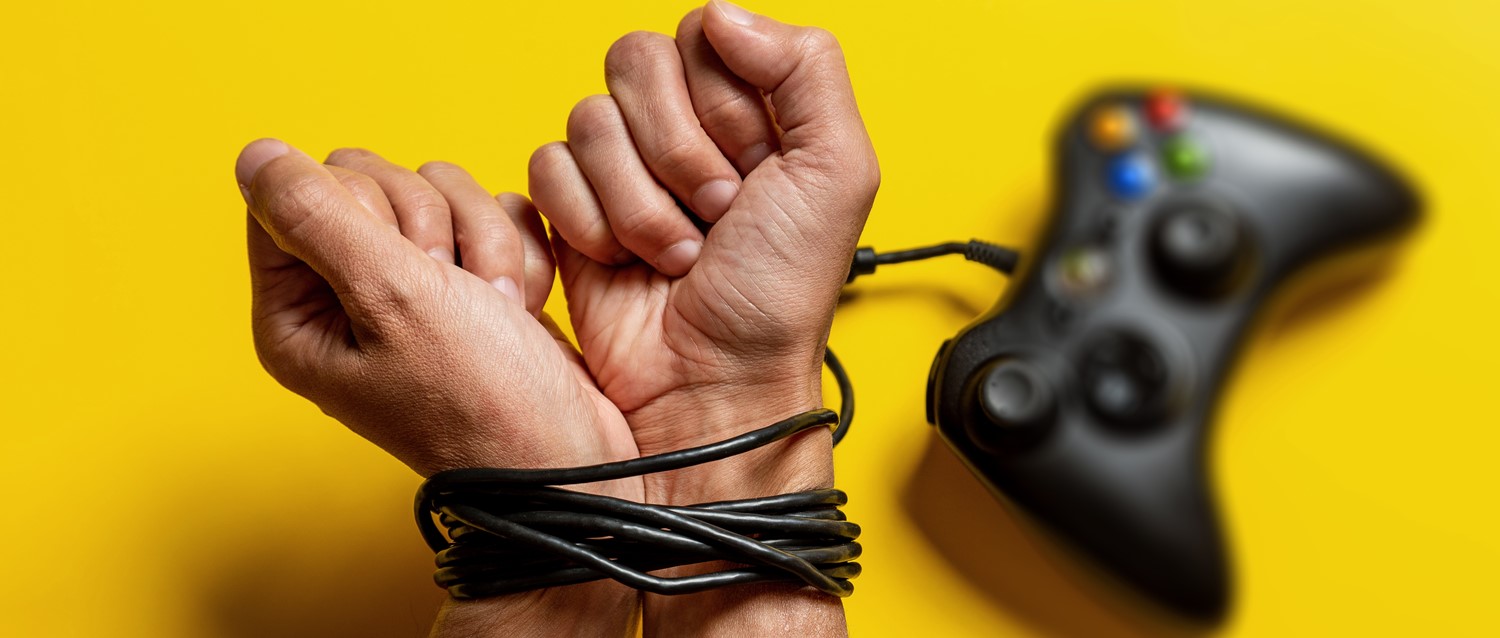
How to spot the signs of gaming addiction in children
Peer reviewed by Dr Sarah JarvisAuthored by Emily Jane BashforthOriginally published 15 May 2022
Meets Patient’s editorial guidelines
- DownloadDownload
- Share
- Language
- Discussion
- Audio Version
- Add to preferred sources on Google
Nearly half of parents are worried that their children are spending too much time playing online games. There are also concerns over violent games affecting their sleep and making children less sociable. As technology develops and becomes more accessible to minors, it's important that parents and guardians are able to spot the signs of gaming addiction before it gets out of control.
What do parents think about gaming addiction?
New research from digital board game publisher Marmalade Game Studio shows that parents' biggest worry about the rise of online gaming is focused on the amount of time children spend on games.
Its nationwide survey asked parents with children who game, to rank their biggest concerns about their child's online gaming. The results showed nearly half (45%) are concerned or very concerned about children spending too much time on games.
Findings also show:
35% are worried about online gaming affecting children's sleep.
34% are worried about children not seeing their friends due to online gaming.
30% are worried about children playing violent games.
What are the signs of gaming addiction?
Child and adolescent psychotherapist and Association of Child Psychotherapists spokesperson Ryan Lowe says one of the useful aspects of gaming addiction is that it has clear signs and symptoms.
"Children who are starting to become dependent on gaming are not keen to leave their games when called to dinner or take time to do other things. As their addiction worsens, they may become very distressed when asked to leave their games - either angry or upset," she says.
Over time, this can result in complete withdrawal from other interests, socialising, family events and other more creative or sporty interests.
Video game addiction is not fully recognised in the DSM-5, which is a manual used to classify mental disorders and aid professionals when diagnosing. However, the World Health Organization (WHO) added "gaming disorder" to its medical reference book, International Classification of Diseases, in 2018.
The American Psychiatry Association's manual, the DSM-5, does list some of the warning signs of video game addiction, which include:
Constantly thinking about gaming.
Feeling sad or restless when they're unable to play video games.
Relying heavily on gaming to make them feel good.
Feeling unable to quit or cut down the amount of time spent gaming.
Losing interest in hobbies.
Experiencing issues at school or home because of their gaming.
Continuing to play despite being aware of these problems.
Lying to people about how much time they spend gaming.
Repeatedly turning to gaming to relieve stress or for a mood boost.
How to prevent gaming addiction
Lowe explains that the easiest way to prevent a gaming addiction is by intervening right at the start. As soon as you notice the signs of possible addiction, or your child starts acting out of character, you should address the issue, rather than presuming they will grow out of it or it will sort itself out.
"When you see these early signs, it's important to offer your time, attention and support. Often, the signs appear because the child is unhappy or anxious in other aspects of life, so they retreat to a behaviour where they feel more in control."
She adds that the key to resolving early gaming addiction is showing your child that they can manage without games while tackling the problems that are causing anxiety. You should also keep an eye on their other hobbies and interests and social interactions.
"It is important to note that you cannot do this for your child while being on your devices yourself. Of course, you may turn to the internet for advice, but you need to take time in person to support your child and help them face their worries," adds Lowe.
What are the consequences of too much screen time?
While time spent gaming can make a child feel excited and fulfilled in the moment, in the long term, it can have a detrimental impact on their well-being. Some of the consequences of gaming addictions include:
Reduced self-esteem.
Limited ability during face-to-face interactions.
Inability to address difficult situations in real time.
School grades declining.
Gaming addiction can also lead to physical health problems, such as:
Migraines.
Eye strain.
Fatigue.
Poor personal hygiene.
Carpal tunnel syndrome can also be the result of too much time spent gaming. Carpal tunnel syndrome, which commonly affects people in their 50s or older, causes numbness, tingling, and pain in the hand and forearm. It occurs when one of the major nerves to the hand is squeezed or compressed as it travels through the wrist. It can get worse over time.
It is worth noting that gaming addiction can lead to serious isolation if not treated early. As they get older, some children might end up without friends and may feel cut off from society, leading to severe anxiety and depression. At the same time, they may be totally reliant on gaming for happiness. Video games increase tolerance to dopamine - the neurotransmitter in the brain that regulates pleasure. Therefore, when a child plays video games for hours on end, other activities do not feel as much fun, and not being able to game feels boring.
Another long-term effect of video game addiction worth considering is the financial aspect. Funding an interest such as gaming can be expensive, whether that's purchasing games, the equipment, or high-speed wifi.
How to manage gaming addiction
While forcing your child to go "cold turkey" and quit their gaming activity altogether might seem the simplest option, such a drastic measure might not be effective. In the early stages, it is more worthwhile to reduce your child's screen time slowly and offer them alternatives.
Lowe says one of the key ways you can encourage your child away from their computer games is by nurturing their other interests. This might be a sport, an artistic activity, or simply encouraging them to go out with their friends. You should also aim to make time for family outings and invite people over to keep their social interests alive, even when they might be struggling with peers.
Other ways to reduce your child's gaming time include:
Setting limits on their screen time.
Reasoning with your child and making deals (for example, allowing them to have 30 minutes of gaming time if they go for a walk with you).
Finding a new activity you can both do together and scheduling in time for it.
Keeping devices out of their bedroom (especially during the night when they are sleeping).
Trying web extensions or apps that block certain games (this can be helpful in deterring them from violent games).
Asking friends and relatives also to monitor their gaming habits while they are not at home.
Satisfying their love for gaming with offline games, such as board games like Monopoly, Cluedo or others you can play as a family.
"However, if your child is experiencing a full-blown addiction, then cutting down their time slowly might not be enough. Treating the problem will take a lot of time and effort. It may potentially require complete downtime outside of their usual environment, whether that is in a residential facility or just being somewhere with no wifi or screens," adds Lowe.
Can you get withdrawal symptoms from gaming addiction?
"It is almost certain that your child will experience withdrawal symptoms as they reduce their gaming time. These will mostly be in the form of anxiety, but could be expressed in a number of ways, such as anger, frustration, collapse, or more obvious fear," says Lowe.
She says there is no easy way to overcome these symptoms, but you should encourage your child to face the feelings they have been avoiding and suppressing while fixating on their computers.
"As a parent, you may need to find the capacity to be with your children while they're in real distress. This can be one of the hardest jobs a parent can do as you experience their pain, anguish and fear without flicking a switch to fix it. However, this might be what it takes to understand the severity of the issue and to help them get better."
You should trust that this process will be worth it and remind your child that their withdrawal is survivable, as they will reach a point - perhaps in weeks or months - where they are able to function beyond gaming.
What treatment is offered for gaming addiction?
The professional support required for gaming addiction will depend on its severity. As previously mentioned, early intervention is key, so it's important to be vigilant and address any issues before they worsen and medical intervention or addiction treatment is required. Do be careful though, to avoid making your child feel as if they are under a microscope
However, you may be able to access support from a child psychotherapist or a family therapist, who is experienced in working with parents and can help you to enforce clear boundaries. A therapist will also, importantly, help you with your own feelings of anxiety in the face of your child's distress. Gaming addiction can take a toll on family members, so you should remember that you aren't alone.
Furthermore, if the situation gets out of hand, there are residential rehabilitation centres that can break the cycle, but they are not an easy fix. The hard work will still need to be continued by yourself and your loved ones when they return home.
"I would advise against any support that is purely behavioural in approach. At the core of gaming addiction are issues relating to mood, anxiety and self-worth. These feelings need to be held, understood and processed by parents and then by your child. It would be beneficial to find professional support that understands this part of the process and not just a rules and boundaries approach," adds Lowe.
If you are concerned for your child's mental health, you can contact your GP.
Patient picks for Online and social media
Healthy living
How to spot the signs of cyberbullying
Cyberbullying and children's safety online have become major concerns in recent years due to technological advances and the rapid pace at which social media has grown. It's really important parents and guardians are able to spot the signs of cyberbullying in how a child is behaving, and that they know what to do to offer support.
by Amberley Davis

Healthy living
How to support your child if they are being cyberbullied
If you suspect your child is being cyberbullied, it can be difficult to know how to approach the situation. You want them to know you are there to support them, but also don't want them to think you are intruding. However, with online bullying becoming an increasingly concerning issue with the growth of social media platforms, it's important to know how to be there for your child, and how to help prevent cyberbullying.
by Emily Jane Bashforth
About the authorView full bio
Authored by

Emily Jane Bashforth
Feature Writer
NCTJ
Emily is a Feature Writer with Patient, writing articles on a variety of topics relating to health and well-being.
About the reviewerView full bio

Dr Sarah Jarvis
Clinical Consultant
MA (Cantab), BM, BCh (Oxon), DRCOG, FRCGP, MBE
After training in medicine at Cambridge and Oxford, Dr Sarah Jarvis MBE became a GP.
Article history
Article also available in English, German, Spanish, French, Italian, Portuguese, Hindi, Hebrew, Arabic, and Swedish.
15 May 2022 | Originally published
Authored by:
Emily Jane BashforthPeer reviewed by
Dr Sarah Jarvis
Join the conversation
Share your thoughts or experiences with others in our patient communities.

Ask, share, connect.
Browse discussions, ask questions, and share experiences across hundreds of health topics.

Feeling unwell?
Assess your symptoms online for free
Sign up to the Patient newsletter
Your weekly dose of clear, trustworthy health advice - written to help you feel informed, confident and in control.
By subscribing you accept our Privacy Policy. You can unsubscribe at any time. We never sell your data.