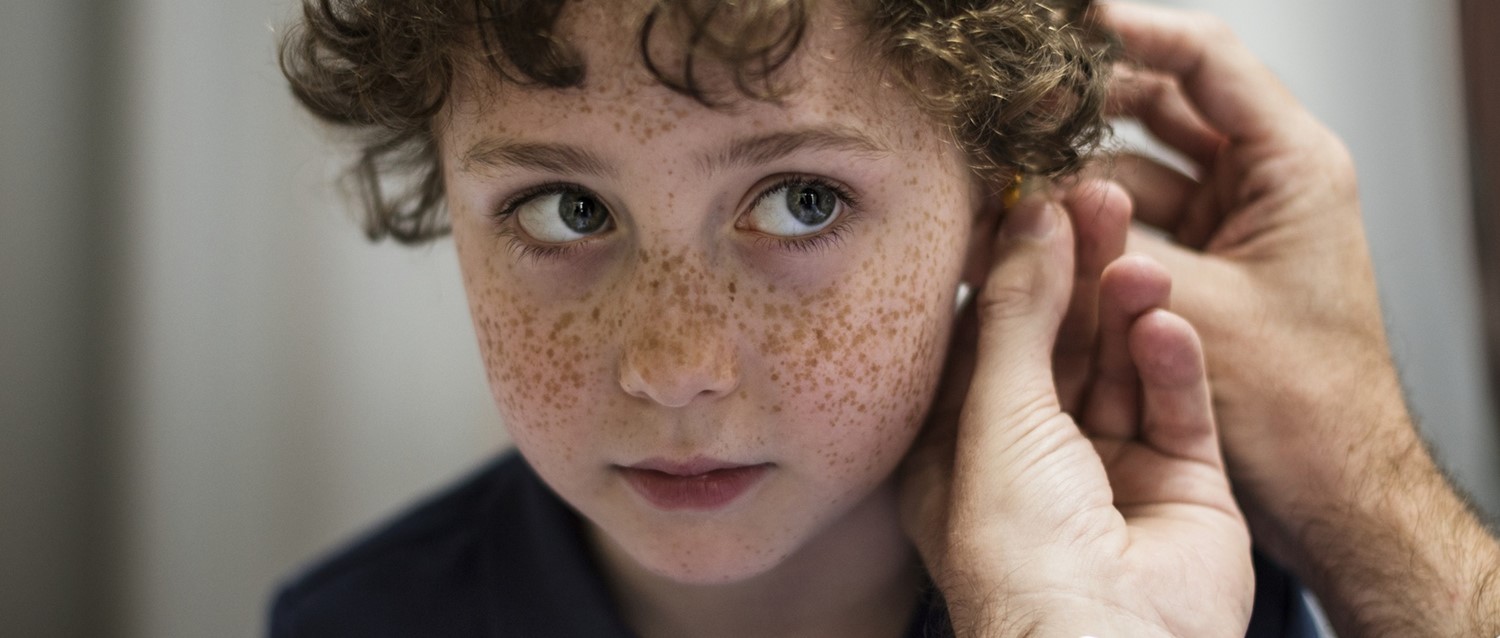
Signs of tinnitus to look out for in children
Peer reviewed by Dr Sarah JarvisAuthored by Natalie HealeyOriginally published 6 Feb 2018
Meets Patient’s editorial guidelines
- DownloadDownload
- Share
- Language
- Discussion
- Audio Version
- Add to preferred sources on Google
Think of tinnitus and it's likely you'll associate the hearing condition with the older generation - perhaps those who have attended a few too many rock concerts. But think again. Tinnitus affects young people too, with one child in every classroom across the UK estimated to have it.
What is tinnitus?
Tinnitus is a ringing, humming, pulsing or hissing sound in your ear. The sounds, which vary from person to person, are created by your own hearing system. It's the feeling of hearing noises when no sound is actually present.
The condition is not just for adults. But often kids think that hearing these sounds is normal, so might not tell their parents. Tinnitus may seem to get worse when they're anxious and could lead to difficulty sleeping.
But many parents are unaware that children can suffer from tinnitus in the first place. In fact, research published in 2018 from the British Tinnitus Association (BTA) showed worrying statistics around parents' knowledge of the condition. Just under a third (32%) of UK parents are aware that children under the age of 10 can have tinnitus, and just 37% think it can affect children aged 10 to 16 years old.
Signs of tinnitus in children
Children with tinnitus are often unable to vocalise what it is the're hearing or experiencing, and so often display other more subtle signs of the condition.
"While unsurprisingly, most parents would associate their child reporting sounds in their ears or head with tinnitus - the problem is that children are often unable to explain what it is they're experiencing so unless they are directly asked the question by a parent, teacher or medical professional, it can often be overlooked," says David Stockdale, chief executive of the BTA.
"They may be struggling alone and so may often display more subtle signs, such as appearing distracted or becoming anxious which can also have a real impact on their general quality of life, including their behaviour and learning at school."
What causes tinnitus in children?
As with adults, there are many reasons why children may experience tinnitus.
Veronica Kennedy, consultant audiovestibular physician at Bolton NHS Foundation Trust, and former chair of the BTA's Professional Advisers’ Committee, explains: "For most children there is no significant underlying condition (pathology). Some children can be aware of tinnitus where their ears are blocked due to wax or glue ear. Some may have a hearing loss for other reasons."
A temporary hearing loss associated with tinnitus might occur after noise exposure. For instance, the child may have attended a loud concert. But with repeated exposure, this hearing problem can become permanent.
"A very small number of children have tinnitus in association with a medical condition so all children with troublesome tinnitus should be referred to their local paediatric audiology service or ENT clinic," Kennedy stresses.
What parents should do
If you're concerned that your child may have tinnitus, it's best to visit your GP. Kennedy reveals that in most cases of tinnitus in children, the outcome is positive. But it can also be a source of worry for a child if it's not addressed.
"For most children and teens with tinnitus, an explanation of the condition and reassurance is all that is needed. Some benefit from strategies to help cope with the tinnitus and some need strategies to cope with stress and feelings of anxiety. A small number of children need psychological support."
In one study of tinnitus and anxiety/depression in children, 32% had significant anxiety and 14.5% depression. Those with depression experienced tinnitus for 24 months compared to those without depression (17 months).
"But another feature that indicates a good prognosis is that few adults troubled with tinnitus recall having it as children," Kennedy concludes.
You can contact the BTA for advice and to access resources for children with tinnitus.
Patient picks for General signs and symptoms

Signs and symptoms
Causes of nausea
Feeling sick - nausea - or being sick is a miserable experience. We tend to think of feeling sick as being a gut problem, but there are lots of other reasons. You have a 'vomiting centre' in your brain and it's often here that the issue lies. In addition, your inner ears play an important role in balance, and an issue affecting the inner ear can often lead to vomiting or feeling sick in addition to dizziness. The other symptoms that go along with feeling or being sick often give clues to the cause.
by Dr Sarah Jarvis

Signs and symptoms
Why some people bruise so easily
Bruises are a natural consequence of minor injuries. However, some people are more susceptible than others and bruising can be indicative of a more serious underlying medical condition. We ask a GP for their advice.
by Julian Turner
About the authorView full bio
Authored by

Natalie Healey
Freelance journalist
BSc (Hons) Biomedical Science
She is a London-based health journalist who has been writing about science and medicine for several years. She is the former head of editorial at Patient.
About the reviewerView full bio

Dr Sarah Jarvis
Clinical Consultant
MA (Cantab), BM, BCh (Oxon), DRCOG, FRCGP, MBE
After training in medicine at Cambridge and Oxford, Dr Sarah Jarvis MBE became a GP.
Article history
Article also available in English, German, Spanish, French, Italian, Portuguese, Hindi, Hebrew, Arabic, and Swedish.
6 Feb 2018 | Originally published
Authored by:
Natalie HealeyPeer reviewed by
Dr Sarah Jarvis
Join the conversation
Share your thoughts or experiences with others in our patient communities.

Ask, share, connect.
Browse discussions, ask questions, and share experiences across hundreds of health topics.

Feeling unwell?
Assess your symptoms online for free
Sign up to the Patient newsletter
Your weekly dose of clear, trustworthy health advice - written to help you feel informed, confident and in control.
By subscribing you accept our Privacy Policy. You can unsubscribe at any time. We never sell your data.