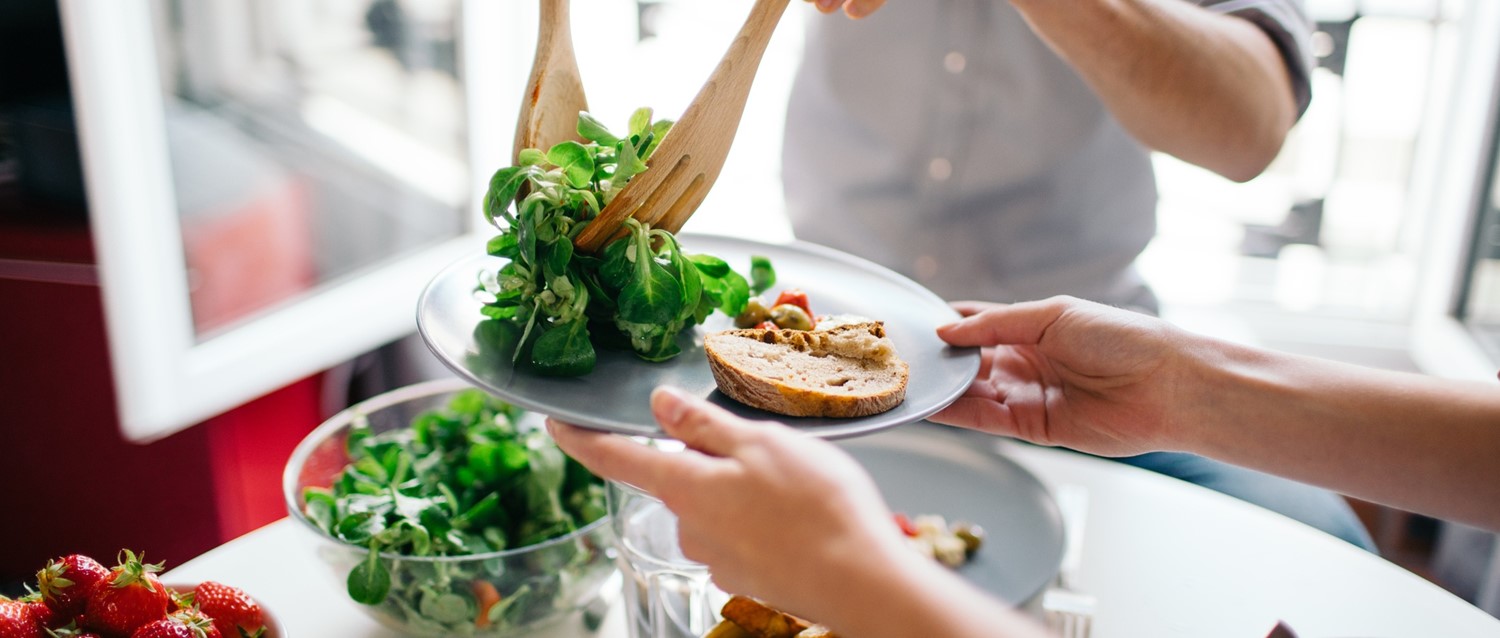
Size matters: why our oversized portions are contributing to the obesity crisis
Peer reviewed by Dr Colin Tidy, MRCGPAuthored by Dr Sarah JarvisOriginally published 15 Mar 2021
Meets Patient’s editorial guidelines
- DownloadDownload
- Share
- Language
- Discussion
- Audio Version
- Add to preferred sources on Google
A new global report has cast the risks of obesity and COVID-19 into sharp relief. But rates of obesity in the UK and across the world have been rising for decades, and COVID-19 is by no means the only complication. How can we tackle our weight in the longer term?
Need weight loss treatment?
Start a quick online consultation through Patient.info, available 24/7.
Reviewed by UK-registered clinicians and powered by Evaro, a UK-regulated healthcare service. Treatment can often be delivered next day.

The World Obesity Federation's report COVID-19 and Obesity: The 2021 Atlas created front-page headlines when it was released on 3rd March 2021.
They examined the 2.5 million global COVID-19 deaths reported by the end of February 2021. Of these:
88% of deaths were in countries where more than half the population is classified as overweight.
Death rates are 10 times higher in countries where over 50% of the population is overweight or obese.
Drivers of overweight - especially high levels of consumption of processed foods - are associated with higher death rates from COVID-19.
In addition to death, there is a clear link between increasing weight and hospitalisation or the need for ventiliation and intensive care unit (ICU) admission.
8.6% of COVID-19 hospitalisations can be attributed to inadequate physical activity, and 29.5% to overweight and obesity.
COVID-19 is not a special case. Similar increasing risk with increasing weight is seen with a number of other respiratory viruses, including influenza, suggesting that future pandemics may show a similar picture.
More than meets the eye
Of course there are some 'confounding factors' which might weaken the link between weight and COVID-19. For instance, in developing countries with lower levels of obesity, under-reporting of COVID-19 deaths is more likely. In addition, countries with lower obesity rates also often have younger populations. But while these factors may slightly weaken the association, they are likely to play only a minor part in the overall picture.
Even in the UK, almost 8% of people admitted to ICU fell into the severely obese category with a body mass index (BMI) over 40: this group represents about 2.9% of the population, meaning their risk was more than doubled. And Public Health England estimates that a BMI of 35 to 40 could increase a person's chances of dying from COVID-19 by 40%, while a BMI greater than 40 could increase the risk by 90%.
Helping hand or nanny state?
With obesity also closely linked to an increased risk of type 2 diabetes, heart disease, osteoarthritis and even many cancers, doctors have been telling policymakers for years that something needs to be done. It is reported that the Prime Minister's experience of severe illness with COVID-19 in April 2020 galvanised him into action, determined to introduce initiatives to stem the rising tide of obesity.
In July 2020, the government launched a new obesity strategy, aiming to tackle some of the factors that make it so easy to gain weight and so difficult to lose it.
An end to 'buy one get one free', ''super size' and other offers encouraging overconsumption.
A ban on pre-watershed TV adverts for food high in fat, sugar and salt.
An expansion of weight management services for people living with obesity with type 2 diabetes and/or high blood pressure.
Accelerated expansion of the NHS Diabetes Prevention Programme.
Calorie displays on café and coffee shop menus.
An update of the 'traffic light' food labelling system.
A focus on portion size of takeaway food and drink, which on average contain twice as many calories as equivalents bought in shops.
While campaigners decry the infringement on personal choice, the National Obesity Forum looks at the situation from a completely different perspective. They highlight the subliminal messages we face every day from the barrage of advertising of ultra-processed food to 'the obesogenic society in which we are all forced to live'. They position obesity as a disease which requires the same level of psychological and medical support as other long-term conditions.
Certainly, there is good evidence that many people who weigh too much overeat because of low self-esteem, poor coping mechanisms or lack of awareness of appropriate portion size.
Portion distortion
In 2013, the British Heart Foundation published a report on 'Portion Distortion'. They commissioned research to assess how portion sizes in the UK's main retailers compare to the information provided in 1993 government publications on portion size. The results were disturbing. Compared to 20 years earlier, their findings found the following average 'individual portion' sizes:
Bagels - increased in size by 24% (eating one a day, this represents an extra 19,500 kcal or 5½ lb in weight a year).
Crumpets - increased by 20%.
Garlic bread - 30% larger.
Pizza - in some cases, 100% larger.
Individual pies - 40% larger.
Many individual peanut portions increased by 80%.
Family bags of crisps were on average 50% bigger than 20 years earlier. And while individual chocolate bar portions have, if anything, reduced over the last two decades, most consumers today are unlikely to stick to a single recommended portion. For instance, in an '8-portion' bar, 73% of consumers thought it contained 4 portions or fewer, and 1 in 7 said they would eat the whole bar.
Another finding was greater inconsistency in portion size. For instance, in 1993 an average American muffin weighed 85 g. By 2013, portion sizes (looking at a range of major supermarkets and market-leading brands) ranged from 72 g to 130 g - a calorie range for a single portion of 280-475 kcal.
Fighting back
So how do we help people recalibrate their eating and adopt healthier eating habits that can not only allow them to lose excess weight but to keep it off?
Sarah Harris, senior registered nutritionist at Jane Plan, which provides nutritionally balanced, portion-controlled meals and ongoing support from a registered nutritionist, confirms the value of a personal approach.
"I have a Master's in Public Health, but during my undergraduate nutrition studies it became clear to me that we knew what the issues were but there wasn't as much focus on developing interventions which addressed the contributing factors and tackling any potential barriers such as time, cooking ability, cost, family situation and physical health. It's so important to me that we tailor our support - I'm currently looking after people who want to lose half a stone to 8 stone."
She sees people who have tried many other weight loss plans but have regained their weight, and people who are keen to lose weight to help with their blood sugar (because they've been diagnosed with pre-diabetes) or their high blood pressure. She believes everyone wanting to lose weight has different priorities and motivations.
Harris believes firmly that regardless of the motives of people looking to lose weight, portion control is absolutely key. "So many people find it hard to know what portion sizes are right for them. Their views have been skewed by the large portions they see in takeaways and many individual supermarket meals. Using portion-controlled meals for a while allows people to develop an understanding of what portion sizes they should be eating, learn new habits and develop healthy eating patterns to maintain their new weight.
"In addition, people often underestimate how many hidden calories there are in the food, from adding condiments to a meal, their frothy coffees to a takeaway burger and chips, and how these can all add up."
Psychological support
Sarah is in no doubt that psychological support is also a key element. "We find that people have often tried to lose weight before by skipping meals and cutting out food groups which results in overeating due to feeling hungry and being unable to control cravings.
Additionally, some people get into a routine of comfort eating, verging on binge eating. That's a particular issue during stress - whether because of work, family or finances - but it can be a difficult cycle to break. A weekly phone call or email allows us to take what may seem an insurmountable barrier and offer a solution."
Peer support
Jane Plan also offers users access to a private Facebook 'trailblazers' group, where customers can share advice and support. While Harris acknowledges the huge benefit of peer support, she feels the fact that their nutritionists are also members of the group adds another dimension. "If we see someone struggling, we can arrange a call to discuss their food diary and progress and work out a solution to get them back on track."
Other commercial companies recognise the value of peer support. Many have offered face-to-face support groups for years - NHS UK has a directory, although many are currently online only because of the pandemic. Others, such as WW (Weight Watchers), also have online suport groups.
Do it yourself
If you're keen to lose weight but want to develop your own plan:
Use the British Dietetic Association guide to portion size - but remember that these are based on people who want to maintain their weight. To lose weight, you'll need to reduce the amount of calorie-dense food you eat - but by increasing your intake of vegetables and fruit, you can keep your plate looking full and your vitamin and mineral intake high.
The Eatwell plate gives an idea of the proportions of different foods that go into a healthy diet.
Remember that not all calories are created equal. Foods high in refined carbohydrates are usually very low in nutrients, and ultra-processed foods have been linked to a higher incidence of heart disease and type 2 diabetes.
Try to enlist help from family members. By moving gradually towards a healthier diet, you can improve the whole family's health.
The bigger picture
With so many confusing messages about 'good' and 'bad' food out there, it's easy to get lost in the detail. While there's no doubt that some foods have little or no nutritional value while others are packed with vitamins, minerals and other micronutrients, quantity - even of the highest-quality food - matters.
And with COVID-19 added to the list of casualties of obesity, there's no doubt that an understanding of the bigger picture has never been more urgent for all of us.
Dr Sarah Jarvis has acted as a medical advisor to Jane Plan.
Patient picks for Obesity and weight loss

Healthy living
Why losing weight can cause hair loss - and what to do about it
When we think about weight loss, we often focus on what the scales say rather than the wider impact it can have on our bodies. One lesser-known side effect of losing weight quickly is temporary hair loss. We spoke to a pharmacist to explain why it happens, what can make it more likely, and how to help protect your hair throughout your weight loss journey.
by Victoria Raw
Healthy living
Does eating spicy food help you lose weight?
Many of us have a love-hate relationship when it comes to spicy food. Either you're smothering everything you eat with hot sauce, or you're shying away from a korma. But could a little red pepper or two in your meals actually be good for you? It's time to turn up the heat.
by Gemma Grange
Frequently asked questions
Are there specific types of foods that contribute more to the risk associated with obesity and COVID-19?
Yes, the report explicitly links higher consumption of processed foods to increased COVID-19 death rates.
Beyond COVID-19, are there other health risks influenced by a person's weight?
Yes, obesity is closely associated with a heightened risk of developing type 2 diabetes, heart disease, osteoarthritis, and various types of cancer.
What is meant by an 'obesogenic society'?
The term 'obesogenic society' refers to an environment where people are constantly exposed to factors that promote weight gain, such as the frequent advertising of ultra-processed foods and easy access to large portion sizes, making it difficult to maintain a healthy weight.
I'm trying to lose weight but find it hard to know how much to eat. How can I learn appropriate portion sizes?
Many people struggle with this due to large portions in takeaways and supermarket meals. Using portion-controlled meals for a period can help you understand correct portion sizes, develop new habits, and establish healthy eating patterns for weight maintenance.
Why is psychological support important when trying to lose weight?
Psychological support is crucial because many people overeat due to low self-esteem, poor coping mechanisms, or comfort eating, sometimes verging on binge eating, especially during stress. This support can help address these underlying issues and provide solutions to break difficult cycles.
About the authorView full bio
Authored by

Dr Sarah Jarvis
Clinical Consultant
MA (Cantab), BM, BCh (Oxon), DRCOG, FRCGP, MBE
After training in medicine at Cambridge and Oxford, Dr Sarah Jarvis MBE became a GP.
About the reviewerView full bio

Dr Colin Tidy, MRCGP
General Practitioner, Medical Author
MBBS, MRCGP, MRCP (Paediatrics), DCH
Dr Colin Tidy is an NHS Doctor, based in Oxfordshire.
Article history
Article also available in English, German, Spanish, French, Italian, Portuguese, Hindi, Hebrew, Arabic, and Swedish.
15 Mar 2021 | Originally published
Authored by:
Dr Sarah JarvisPeer reviewed by
Dr Colin Tidy, MRCGP
Join the conversation
Share your thoughts or experiences with others in our patient communities.

Ask, share, connect.
Browse discussions, ask questions, and share experiences across hundreds of health topics.

Feeling unwell?
Assess your symptoms online for free
Sign up to the Patient newsletter
Your weekly dose of clear, trustworthy health advice - written to help you feel informed, confident and in control.
By subscribing you accept our Privacy Policy. You can unsubscribe at any time. We never sell your data.