Was sind die Vorteile von Vitamin A?
Begutachtet von Dr Krishna Vakharia, MRCGPZuletzt aktualisiert von Andrea DowneyZuletzt aktualisiert 13. Feb 2024
Entspricht den Richtlinien Richtlinien des Patienten
- HerunterladenHerunterladen
- Teilen
- Language
- Diskussion
- Audio-Version
- Zu bevorzugten Quellen bei Google hinzufügen
Unsere Körper benötigen bestimmte Nährstoffe, um tägliche Funktionen auszuführen, und ohne sie können gesundheitliche Probleme auftreten. Einer dieser Nährstoffe ist Vitamin A. Was sind die Vorteile von Vitamin A, woher kommt es, und müssen Sie Nahrungsergänzungsmittel einnehmen, um die richtige Menge zu erhalten?
Was ist Vitamin A?
Vitamin A is a fat-soluble vitamin that cannot be synthesised in the body, meaning we have to consume it as part of our diets.
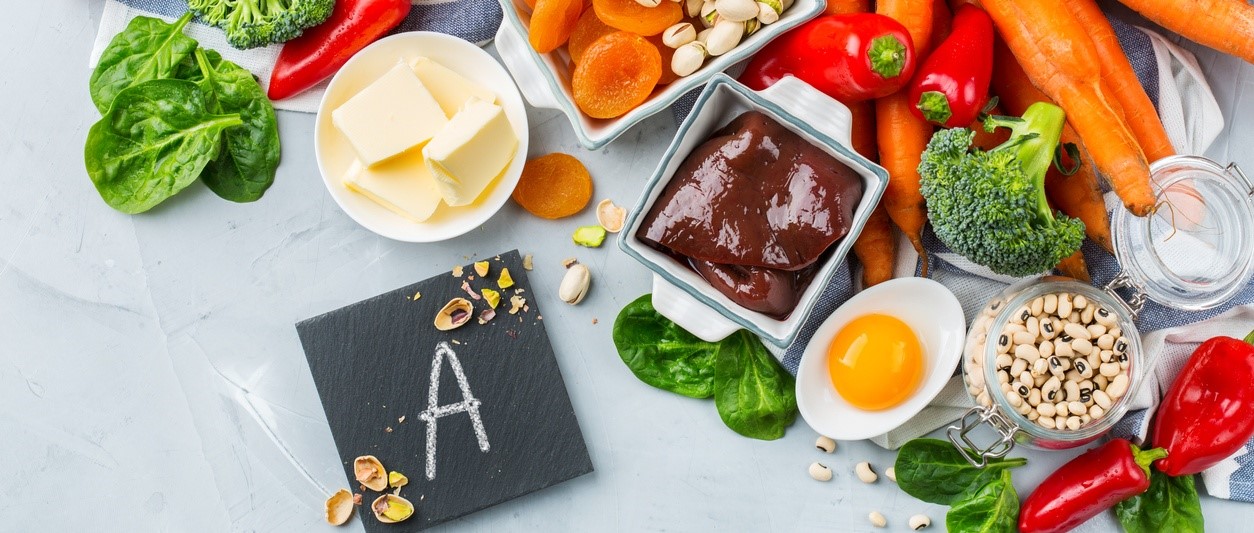
Preformed vitamin A, also known as retinol and retinal esters, can be used in the body without undergoing any changes first. These are usually found in meat, dairy products, and fish.
"Provitamin versions, scientifically known as beta carotene, need to be converted to its active form retinol before it can be used by the body," explains Dr Deborah Lee from Dr Fox Online Pharmacy. In a nutshell, this means your body has to convert it before it can use it.
This form of vitamin A is found in most brightly coloured fruit and vegetables such as leafy greens, carrots, peppers, and tomatoes.
"Once ingested in the diet, vitamin A is absorbed into the bloodstream in the small intestine. Because it is a fat-soluble vitamin, it is best absorbed after eating a meal containing fat, but this doesn't need to be a huge amount," Dr Lee says.
"Adding nuts, avocado, or a small dash of olive oil to a meal, is all that's required."
Vitamin A benefits
Dr Lee says it has several essential functions in the body: "It plays a role in the functioning of the immune system, it stimulates and maintains cell growth, and in reproduction it is vital for successful cell division in the ovaries and testes.
"Vitamin A has been found to be intricately involved in the growth, maturation, and differentiation of many different cell lines in the body, including those in the heart, lungs, and eyes.
"In the eye it is the precursor to the production of rhodopsin, the photopigment found in the rods of the retina which enable night vision. As a result, vitamin A deficiency can cause night blindness. Vitamin A also maintains the health of the cornea and the conjunctiva - the cells and membranes that cover the front of the eye."
There you have it - eating your carrots really does help you see in the dark.
What happens if you don't eat enough vitamin A?
Dr Lee says vitamin A deficiency is rare in the UK, but some groups are more at risk.
"These include women who are pregnant or breastfeeding, and young children and toddlers. Also, those with malabsorption from a variety of causes such as zystische Fibrose, Zöliakie, Morbus Crohn oder chronische Pankreatitis, or after intestinal surgery - including bariatric surgery," she explains.
One study found around 29% of those with Crohn's disease had low vitamin A levels compared to 15% in the control group1.
A 2019 review found patients who had undergone bariatric surgery were often deficient in a range of vitamins. Some 10-11% of those who had had a gastric bypass were lacking in vitamin A2.
Dr Lee lists a range of symptoms that can be linked to vitamin A deficiency:
Dry, itchy skin with scaling.
Delayed growth or stunted growth.
Repeated infections due to disruption of the immune system.
Keratinisation - where the skin can become hard.
Xerophthalmia - an eye condition that causes the eye to become dry and crusted.
Night blindness.
Reduced fertility.
To supplement or not to supplement?
So now we know the vitamin A benefits - and what happens when you don't eat enough vitamin A - how can you ensure you are eating enough?
The simple answer is - if you're eating a healthy, balanced diet with plenty of brightly coloured fruit and vegetables, dairy products, or meat then you're getting enough vitamin A.
How much vitamin A per day?
Vegans and vegetarians can rest assured there is enough vitamin A in fruits and vegetables to keep them healthy.
It is recommended that adult men eat around 700 micrograms of vitamin A per day, and women eat 600 micrograms. You really don't need to eat that much to get the right amount in your diet3.
Vitamin A supplements should be avoided in pregnancy as they can harm your baby's development. For this reason, liver and liver products (including fish liver oil) should be avoided in pregnancy as they have a high vitamin A content.
Foods high in vitamin A
Brightly coloured fruit and vegetables - such as leafy greens, spinach, kale, broccoli, Brussels sprouts, lettuce, peppers, butternut squash, carrots, mangoes, papayas, and grapefruit.
Dairy products - these are also often fortified with vitamin A.
Meat - vitamin A is found in beef, calf, and lamb's liver.
Oily fish - such as mackerel and salmon - but also fish oil supplements.
Eier.
Too much vitamin A
"If you eat a healthy, balanced diet, and are fit and well, there is no need to take vitamin A supplements, which could even be dangerous," Dr Lee says.
"You only need to take vitamin A supplements if you have a chronic medical condition as outlined above and have been told to do this under medical advice.
"Vitamin A supplements can cause problems as they can interact with some other types of medications," Dr Lee adds.
"For example, taking these alongside drugs such as acitretin, which is used in the treatment of psoriasis, or bexarotene, used to treat T-cell lymphoma, could lead to vitamin A toxicity, as these medicines are derived from vitamin A."
Dr Lee suggests speaking to your local pharmacist or GP before adding supplements to your diet, especially if you are on other medication.
Weiterführende Lektüre
Patientenauswahl für Vitamine und Nahrungsergänzungsmittel

Ernährung und Diät
Fördern Probiotika gesundes Haar?
Wenn Sie an gesundes Haar denken, denken Sie wahrscheinlich an Pflegespülungen, Hitzeschutz und viele andere Dinge. An Ihren Darm denken Sie dabei vielleicht nicht - aber die Verbindung zwischen Darm und Haar ist etwas, das Wissenschaftler neu entdecken. Probiotika sind gute Bakterien, die helfen, Ihren Darm glücklich zu halten. Macht sie das auch zum Schlüssel für volleres und gesünderes Haar?
von Amberley Davis
Ernährung und Diät
Kann Kombucha Ihre Gesundheit fördern?
Kombucha – einst ein Nischen-Health-Drink – ist dank seiner einzigartigen Kombination aus Hydratation, Geschmack und Sprudel zu einem festen Bestandteil des Mainstreams geworden. Doch jenseits seines unverwechselbaren Geschmacks, erfahren Sie, ob die gesundheitlichen Vorteile von Kombucha seinem Ruf gerecht werden.
von Victoria Raw
Über den Autor

Andrea Downey
Über den RezensentenVollständige Biografie anzeigen

Dr Krishna Vakharia, MRCGP
Chief Medical Officer für Gesundheit, Optum UK
MBChB, MRCGP(2013), BMedSci (hons), DFSRH, DRCOG, PGDipDerm (Distn)
Dr. Krishna Vakharia ist eine NHS-Hausärztin. Sie ist auch regelmäßige Prüferin für das postgraduale Diplom in Praktischer Dermatologie an der Cardiff University und zudem Chief Medical Officer für Gesundheit bei Optum UK.
Artikelverlauf
Die Informationen auf dieser Seite werden von qualifizierten Klinikern begutachtet.
Artikel auch verfügbar in Englisch, Deutsch, Spanisch, Französisch, Italienisch, Portugiesisch, Hindi, Hebräisch, Arabisch, und Schwedisch.
13. Feb 2024 | Neueste Version
12. Okt. 2022 | Ursprünglich veröffentlicht
Verfasst von:
Andrea Downey

Fragen, teilen, verbinden.
Durchsuchen Sie Diskussionen, stellen Sie Fragen und teilen Sie Erfahrungen zu Hunderten von Gesundheitsthemen.

Fühlen Sie sich unwohl?
Bewerten Sie Ihre Symptome online kostenlos
Abonnieren Sie den Patienten-Newsletter
Ihre wöchentliche Dosis klarer, vertrauenswürdiger Gesundheitsberatung - geschrieben, um Ihnen zu helfen, sich informiert, selbstbewusst und in Kontrolle zu fühlen.
Durch das Abonnieren akzeptieren Sie unsere Datenschutzrichtlinie. Sie können sich jederzeit abmelden. Wir verkaufen Ihre Daten niemals.
Mehr zu Ernährung und Diät
- Kann eine Ernährungsumstellung bei Psoriasis helfen?
- Kann die Ernährung Ihr ADHS beeinflussen?
- Diabetes-Diät: Typ-2-Diabetes managen
- Müssen Sie täglich acht Gläser Wasser trinken?
- Feeding your good bacteria with probiotics and prebiotic supplements
- Honig könnte der natürliche Energieschub sein, den Sie für Ihr Training benötigen
- Wie viel Fleisch sollten wir essen?
- Wie man während des Ramadan sicher fastet
- Wie Sie Ihre Immunität durch Ernährung und Lebensstil verbessern können
- Wie man länger lebt: Gute Gewohnheiten für ein gesundes Leben
- Wie man das Fressanfall-Übermaß beendet
- Reizdarmsyndrom-Diät: Lebensmittel, die man essen und vermeiden sollte
- Is dein Kind zu viel Zucker?
- Achtsames Essen: Wie man langsamer isst und das Essen genießt
- Pflanzliche Proteine könnten helfen, Bluthochdruck vorzubeugen
- Größe zählt: Warum unsere übergroßen Portionen zur Adipositas-Krise beitragen
- Eine pflanzenbasierte Ernährung senkt das Risiko für Typ-2-Diabetes
- Vitamin-A-reiche Lebensmittel könnten vor Hautkrebs schützen
- Wegovy-Diät: Lebensmittel, die man essen und meiden sollte
- Was ist Kreatin? Vorteile, Anwendungen und Risiken