
What is the Eatwell Guide? A balanced diet explained
Peer reviewed by Dr Krishna Vakharia, MRCGPAuthored by Victoria RawOriginally published 25 Oct 2024
Meets Patient’s editorial guidelines
- DownloadDownload
- Share
- Language
- Discussion
- Audio Version
- Add to preferred sources on Google
The UK government's National Diet and Nutrition Survey (NDNS) found a worrying drop in people's intake of important nutrients in the UK. Even with access to a wide range of information on the subject, many people still aren't sure what makes up a balanced diet. However, if you're feeling overwhelmed by dietary bumf, the Eatwell Guide offers a simple easy-to-follow framework for healthy eating.
The Eatwell Guide is a useful way of knowing how much of each food group you should eat to stay healthy. The Health and Food Supplement Information Service (HSIS) says that including each of these groups in your diet can help reduce your chance of developing some serious health conditions such as heart disease, diabetes and stroke.
What is the Eatwell Guide?
The Eatwell Guide - created by Public Health England - is a tool that shows the recommended amounts of different food groups needed for a healthy diet. It breaks down the perfect proportions of these groups in a simple, visual way.
Isabelle Spellissy, registered associate nutritionist, Innermost, London, UK explains: "The Eatwell Guide acts as a general framework for a balanced diet, and is designed to be adaptable for the UK population. Its recommendations are broader than some diets - such as the Mediterranean diet - though it still emphasises the importance of eating fruits, vegetables, whole grains and lean protein sources."
Sebnem Unluisler, Chief Longevity Officer and Genetic Engineer, London Regenerative Institute says that the Eatwell Guide provides guidance on the types and amounts of foods you should eat to make sure your body receives all the necessary nutrients.
These foods are divided into five main groups:
Fruits and vegetables - these should make up more than one third of your daily food intake, and include the recommended five portions of fruit and veg a day.
Starchy carbohydrates - such as whole grain bread, brown rice, and potatoes, which should also make up one third.
Proteins - such as beans, pulses, fish, eggs, and lean cuts of meat and mince, with a focus on variety, including plant-based sources.
Dairy or dairy alternatives - should be low-fat or lower-sugar options.
Oils and spreads - to be used in small amounts, prioritising unsaturated fats over saturated and trans fats.
"The Guide advises that you reduce your intake of foods high in fat, sugar, and salt - such as sweets, fried foods, and sugary drinks," says Unluisler. "It encourages you to drink water as your go-to beverage, suggesting low-fat milk or unsweetened drinks as alternatives."
The Eatwell Guide
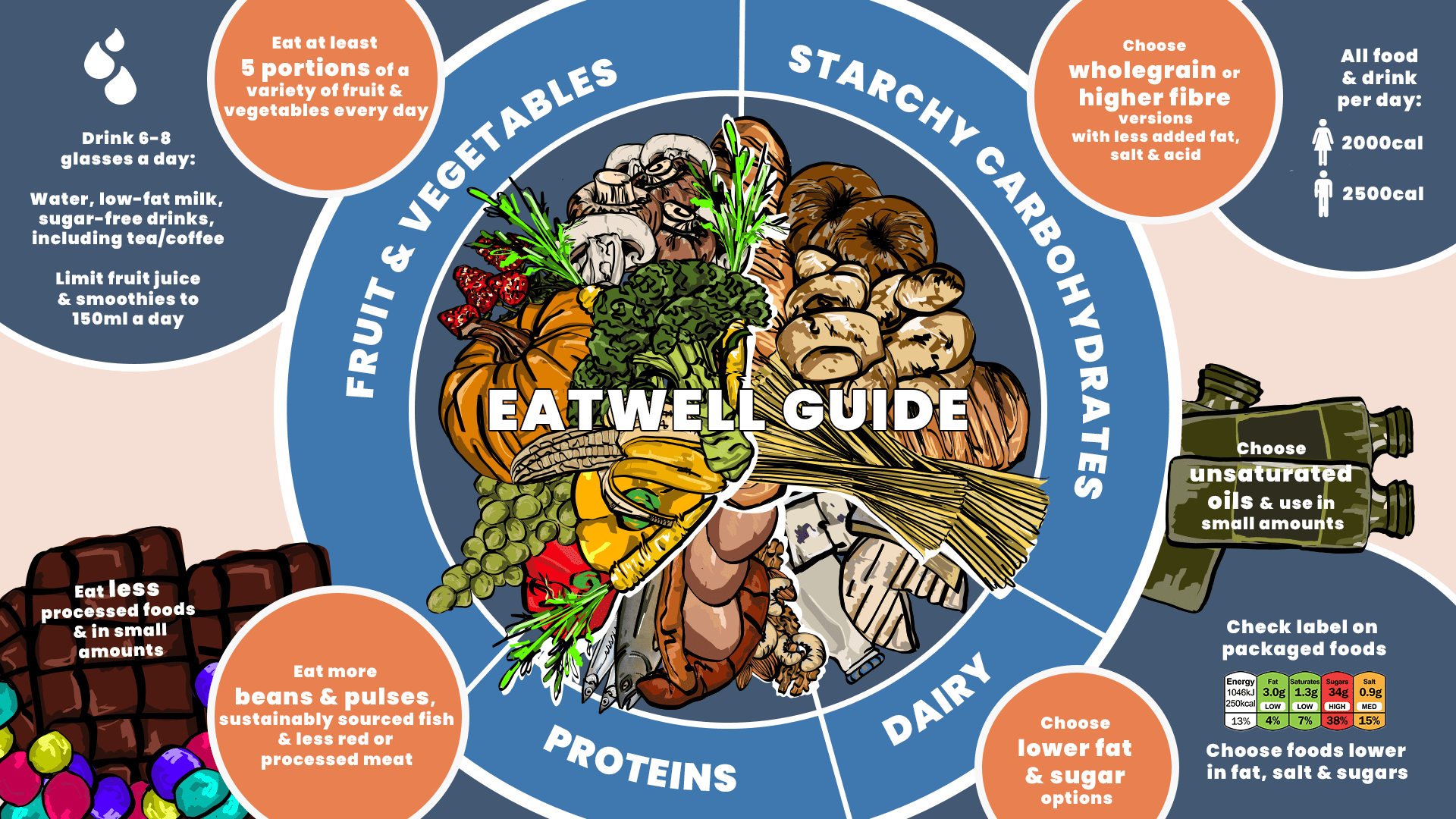
Source: Public Health England in association with the Welsh Government, Food Standards Scotland and the Food Standards Agency in Northern Ireland
Graphic: Ben Hudson
How can the Eatwell Guide help you?
A nutritious diet is crucial for your wellbeing. A balanced intake of nutrients can boost energy, maintain a healthy weight, and keep your body functioning well.
Spellissy says: "By focusing on a variety of food groups, the Eatwell Guide ensures you're getting all the necessary vitamins, minerals, fibre and healthy fats needed for overall wellness."
Healthy ageing plays a crucial role in maintaining cellular health, and reducing your chance of age-related conditions.
Unluisler says: "A high intake of fruits and vegetables - rich in vitamins, minerals and antioxidants - will protect your skin, and reduce the signs of ageing."
According to Unluisler, a balanced intake of proteins, healthy fats and carbohydrates can:
Support heart health.
Lower cholesterol and blood pressure.
Protect your brain against cognitive decline.
Improve mood and mental well-being.
Reduce symptoms of anxiety and depression.
She adds that by encouraging the consumption of whole grains and limiting sugary foods, following the Eatwell Guide can contribute to stable blood sugar levels, reducing the likelihood of insulin resistance and type 2 diabetes.
Who should follow the Eatwell Guide?
The Eatwell Guide is designed to serve a wide range of the UK population, making it a suitable dietary model for most people - including children over two years of age, and older adults.
Spellissy says, that people with specific dietary needs may need to modify certain aspects of the Eatwell Guide to fit their personal nutritional requirements.
People with the following conditions may need to adjust their portions or food choices:
Food allergies or intolerances - such as lactose intolerance.
Medical conditions - such as coeliac disease, kidney disease, diabetes.
"Adjustments might also be required if you're pregnant, an athlete, older, or following a vegetarian or vegan diet," adds Spellissy.
How to use the Eatwell Guide
The Eatwell Guide - Source: Public Health England
Planning meals and controlling portion sizes help make the Eatwell Guide easier to follow, and ensure you're following its daily recommendations.
Spellissy advises you start by filling half your plate with fruits and vegetables - a quarter with starchy carbohydrates, preferably whole grains, and the remaining quarter with protein.
An example of a healthy, well-balanced plate might include:
Seasoned or spiced grilled chicken - protein.
Wholegrain rice - starch.
A colourful variety of roasted vegetables - such as broccoli, carrots and bell peppers.
A glass of water, milk, or a sugar-free drink.
Unluisler recommends the following tips for incorporating healthier foods:
Go for healthy snacks - such as fruit, nuts or yoghurt.
Cut down your intake of processed foods.
Choose healthier cooking methods - such as baking, grilling or steaming.
Try new recipes that incorporate different food groups - these could include stir-fries or salads that combine various vegetables and proteins.
If you have specific dietary needs you should work with a registered dietitian to customise the Eatwell Guide to your requirements. This will ensure you're meeting your nutritional goals, while addressing any health concerns.
Patient picks for Diet

Diet and nutrition
Pescatarian diet: pros, cons, and what you can eat
The pescatarian diet continues to grow in popularity. Here we look at what you can and can't eat, what are the health benefits, and if there are any potential issues.
by Lynn Stephen

Diet and nutrition
Is the Okinawa diet a recipe for longevity?
Once called the land of immortals, the island of Okinawa is home to some of the world's oldest and healthiest residents. These centenarians grew up eating a traditional Okinawa diet, with the ingredients available to them. We speak to an expert about replicating this way of eating, to promote healthy ageing and longevity - no matter where in the world you are. Hint: it's not just what you eat, but how.
by Lynn Stephen
About the authorView full bio

Victoria Raw
Feature Writer
BA (Hons), English Literature
Victoria is a content writer at Patient, with special interests spanning mental wellbeing, societal trends and the impact of technology on our health.
About the reviewerView full bio

Dr Krishna Vakharia, MRCGP
Chief Medical Officer for Health, Optum UK
MBChB, MRCGP(2013), BMedSci (hons), DFSRH, DRCOG, PGDipDerm (Distn)
Dr Krishna Vakharia is an NHS GP. She is also a regular examiner for the postgraduate Diploma in Practical Dermatology at Cardiff University as well as being the Chief Medical Officer for health at Optum UK.
Article history
The information on this page is peer reviewed by qualified clinicians.
Article also available in English, German, Spanish, French, Italian, Portuguese, Hindi, Hebrew, Arabic, and Swedish.
Next review due: 25 Oct 2027
25 Oct 2024 | Originally published
Authored by:
Victoria RawPeer reviewed by
Dr Krishna Vakharia, MRCGP
Join the conversation
Share your thoughts or experiences with others in our patient communities.

Ask, share, connect.
Browse discussions, ask questions, and share experiences across hundreds of health topics.

Feeling unwell?
Assess your symptoms online for free
Sign up to the Patient newsletter
Your weekly dose of clear, trustworthy health advice - written to help you feel informed, confident and in control.
By subscribing you accept our Privacy Policy. You can unsubscribe at any time. We never sell your data.
More in diet and nutrition
- Can your diet reduce the risk of cancer?
- Do you really need to give up sugar?
- How AI can give you ideas for healthy meals
- How big is a portion?
- How much meat should we be eating?
- How to eat healthily on a tight budget
- How to eat more vegetables without trying
- How to have a healthy Christmas party
- How to make healthy mince pies
- How to snack healthily when you are vegan
- How to stop binge eating
- How your gut affects your overall health
- Our favourite summer recipes
- Recipe: Gluten-free hot cross buns
- The best gut health foods - and why you need them
- Vitamin A-rich foods could protect against skin cancer
- Vitamin B12 deficiency signs you need to know
- Vitamin D toxicity: 5 signs you’ve taken too much
- What are the pros and cons of taking supplements?
- What would your stomach choose at the supermarket?