What are the health benefits of yoga?
Peer reviewed by Dr Sarah JarvisAuthored by Georgia GallantOriginally published 29 Mar 2019
Meets Patient’s editorial guidelines
- DownloadDownload
- Share
- Language
- Discussion
- Audio Version
- Add to preferred sources on Google
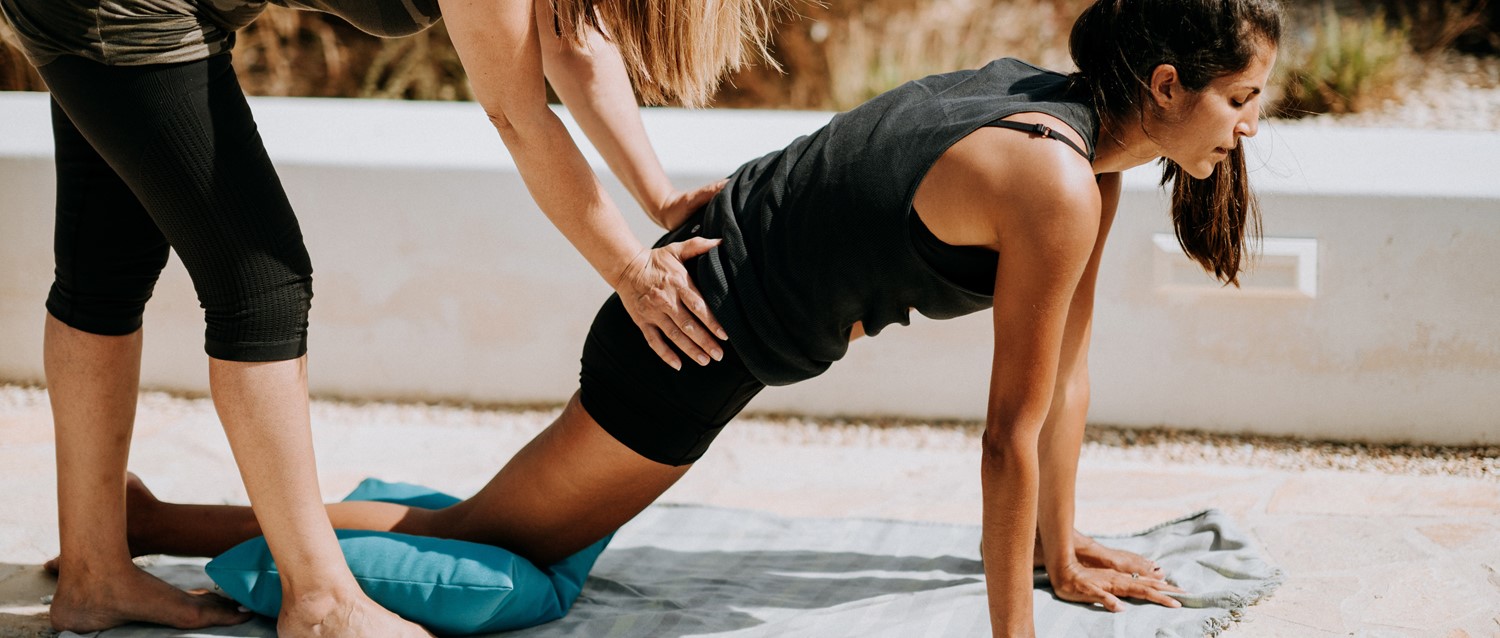
Yoga originated in India thousands of years ago. It has steadily grown in popularity in Western culture, with various spins on the traditional meditative practice - you can even do yoga classes with your dog. Novelties aside, we asked experts about yoga's numerous health benefits, with a few that might surprise you.
When expressing health concerns to a friend, many people may be sick of hearing: "Have you tried yoga?" But there's more to it than you think. Yoga has the potential to help you with both your physical health and your mental health, as it aims to bring together the mind and the body.
It shouldn't be used in place of medication, says Liz Joy Oakley, yoga instructor at MoreYoga, but it can be hugely beneficial for a range of health conditions.
"It can be used as a preventative method alongside being a useful and effective tool in improving existing health issues," she says - such as insomnia, chronic back pain, high blood pressure, diabetes, sciatica, heart disease, arthritis and high cholesterol.
Clear your mind
First and foremost, many people use yoga as a stress management technique, and there's evidence that it can lower cortisol levels (the stress hormone) in patients with depression if practised regularly.
"Yoga teaches relaxation, mindfulness and breathing techniques which are very useful for individuals to use as coping strategies to help with stress or anxiety, fatigue or depression," says Doug Jones, a physiotherapist at The Manchester Institute of Health & Performance (MIHP).
Jessica Skye, founder of Fat Buddha Yoga, adds that it can even aid poor sleep due to increased dopamine levels.
"Learning to switch off a busy mind and focusing on what we're feeling and doing means we're more mindful," she says, as yoga enables you to recognise negative thought patterns and thus actively try to stop the vicious insomnia-anxiety cycle.
Core benefits
Contrary to popular belief, yoga really is a workout. It can improve your posture, balance and core strength.
The benefits for your body don't end there. "Regular and dedicated yoga practice can help to prevent physical injuries [such as] cartilage and joint breakdown, protect your spine and improve bone health," reveals Oakley.
Additionally: "There is research linked to yoga also being effective in helping the lymphatic system fight infection," she adds.
As it improves your range of motion and mobility, it can also be beneficial for joint stiffness, muscle spasms and pain. There has even been a study detailing its effectiveness in relieving chronic knee pain due to osteoarthritis.
"Yoga can be very useful for undoing the harmful effects of prolonged sitting at a desk and help with releasing the characteristic tight hips and stiff spines associated with sedentary workers," notes Jones.
Perhaps even more surprisingly, he says that people who suffer with chronic headaches may benefit from yoga, as some poses help to relieve tension in the head.
As for the breathing exercises, there has been a study on yoga's potential to ease asthma symptoms.
Good for your gut
Skye suggests the calming effects of yoga that lower stress hormones also mean good things for your digestive system as it puts the body into 'rest digest' mode (the opposite to fight or flight).
"This calms the parasympathetic nervous system, sending relaxing signals to the brain - this is why we sigh and why you’re told to breathe and count to ten when stressed.
"[Yoga] twists and folds massage the internal organs, which also help digestive circulation, and helps to keep things moving," she continues.
Twisting for two
Yoga is a great option for expectant mothers, as it's low impact but helps to build muscle.
Hannah Barrett, postnatal health and fitness specialist and author of Strength Through Yoga, states that it's important to keep your muscles strong during pregnancy as your body changes.
"Hormonal changes result in your ligaments becoming more lax, which is needed in preparation for birth. However, if your ligaments are not doing their normal job of controlling movement around your joints, you need your muscles to provide this support.
"There is also research that has found exercise during pregnancy helps with labour and reduces the risk of postpartum conditions (such as diastasis recti - where a space develops at the join of your abs, vertically down the centre of your stomach wall - and prolapse)," she adds.
Pregnancy hormones can also bring on feelings of anxiety, stress and exhaustion. Mindfulness and breathing techniques in yoga can help relieve this, again activating the parasympathetic nervous system.
"The breathing techniques learned in yoga can also be invaluable during labour and help with pain relief," Barrett reveals.
As well as this, yoga can also be invaluable after delivery, potentially easing symptoms of postpartum depression.
"Mindfulness-based therapy is recommended by the NICE guidelines for recurrent depression, and for women who are breastfeeding this may be a helpful option as medication is normally contra-indicated.
"However," Barrett cautions, "I would always advise you speak to a trusted health professional for help, as postpartum depression is common but does not have to be your normal and help is out there."
Yoga in healthcare
According to Oakley: "Although a lot of research has been done on the health benefits of yoga, it is a relatively new and unexplored field.
"Many of the past studies that have been conducted have included low-quality, small groups and the benefits have been difficult to measure without continuing the studies over a long period of time," she warns. "However, this field is rapidly expanding and quality research is now taking place."
"The Yoga in Healthcare conference [took] place in London last month which brought together key opinion leaders and pioneers in yoga, health care, yoga research, health policy, and the government to address how we help transform the NHS through the integration of yoga."
The benefits of yoga are beginning to become more widely recognised, meaning it could have the potential to be recommended as a social prescribing activity.
Oakley also notes that yoga has benefits not just in healthcare, but also the workplace, criminal justice system and education.
If you're not sure about committing to a class just yet, YouTube yoga instructor Yoga With Adriene is a popular choice for beginners, allowing you to practise in the comfort of your own home.
Patient picks for Exercise and physical activity

Healthy living
Keeping kids active over Christmas
During the festive season most of us look forward to having a rest, treating ourselves to some delicious food and generally making merry. But while it's nice to give ourselves a break once in a while, two weeks of inactivity can really take its toll on our fitness. And for children, staying active is particularly important.
by Gillian Harvey

Healthy living
Which sports are the worst for your health?
Despite their many health benefits, many sports can lead to injuries if you're not careful. But which sports carry the highest risk of injury and what should you do to stay safe?
by Abi Millar
About the authorView full bio

Georgia Gallant
BA (Hons), MA
Georgia graduated from Bournemouth University with a BA (Hons) in Scriptwriting for Film and Television and an MA in Literary Media.
About the reviewerView full bio

Dr Sarah Jarvis
Clinical Consultant
MA (Cantab), BM, BCh (Oxon), DRCOG, FRCGP, MBE
After training in medicine at Cambridge and Oxford, Dr Sarah Jarvis MBE became a GP.
Article history
Article also available in English, German, Spanish, French, Italian, Portuguese, Hindi, Hebrew, Arabic, and Swedish.
29 Mar 2019 | Originally published
Authored by:
Georgia GallantPeer reviewed by
Dr Sarah Jarvis
Join the conversation
Share your thoughts or experiences with others in our patient communities.

Ask, share, connect.
Browse discussions, ask questions, and share experiences across hundreds of health topics.

Feeling unwell?
Assess your symptoms online for free
Sign up to the Patient newsletter
Your weekly dose of clear, trustworthy health advice - written to help you feel informed, confident and in control.
By subscribing you accept our Privacy Policy. You can unsubscribe at any time. We never sell your data.
More in healthy living
- Blue light filters: do they really work?
- Can exercise help with grief?
- Can fitness trackers help boost activity levels in adults?
- Can you lose weight and be body positive?
- CBT for insomnia: how does it work?
- HIIT for weight loss: how does it compare to traditional cardio?
- How quitting smoking affects your mental health
- How to sleep better
- How to start a new fitness routine this autumn
- How to talk to children about death
- Is intermittent fasting a healthy way to lose weight?
- Knee health: how to prevent knee injuries
- LGBTQI+: what are the barriers and challenges in end of life care?
- Should you 'come out' to your doctor?
- Switch off TV in the bedroom to avoid weight gain
- Thinking of trying wild swimming? Read this first
- What to do if you feel lonely
- What to do when your child can't sleep
- Will future towns and cities focus on fitness?