Was macht Rauchen mit Ihrem Herzen?
Begutachtet von Dr Sarah JarvisVerfasst von Gillian HarveyUrsprünglich veröffentlicht 7 Sept 2021
Erfüllt die redaktionelle Richtlinien
- HerunterladenHerunterladen
- Teilen
- Language
- Diskussion
- Ask Patient
- Audio-Version
- Zu bevorzugten Quellen bei Google hinzufügen
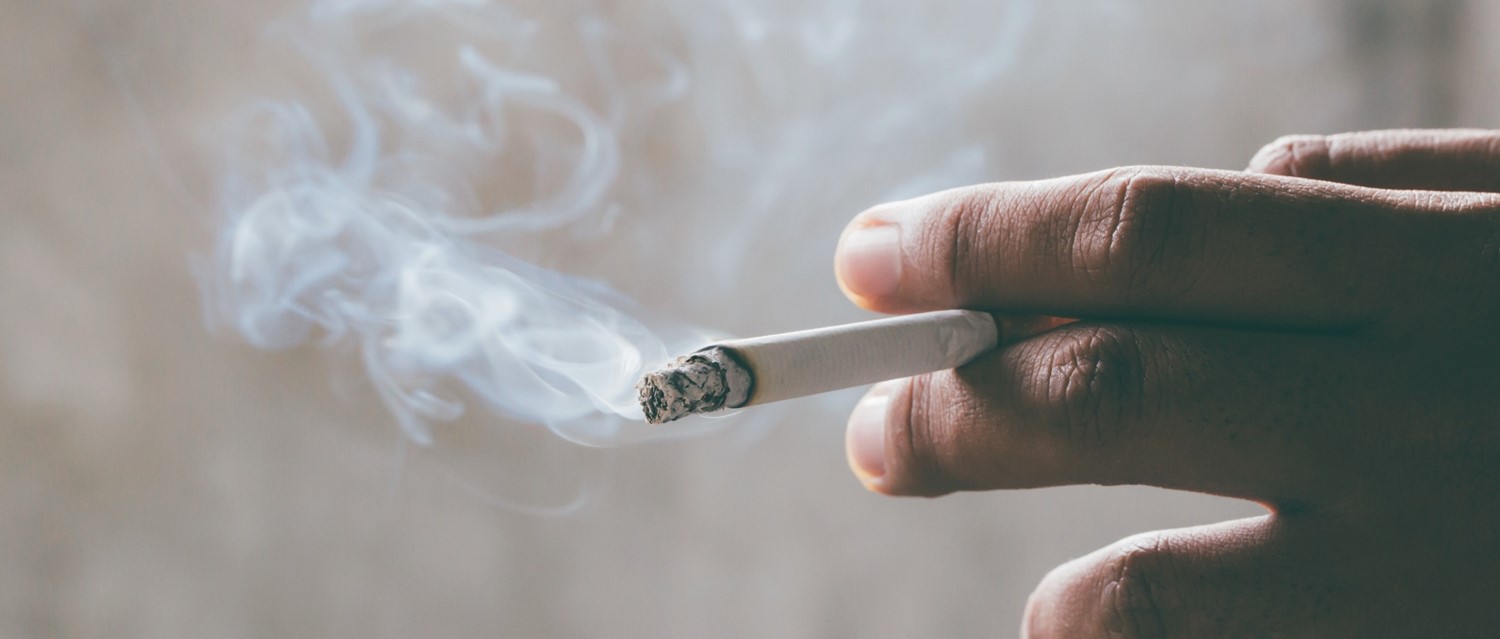
Die meisten Menschen, egal ob sie rauchen oder nicht, sind sich der Schäden bewusst, die das Rauchen den Lungen zufügen kann. Aber weit weniger Menschen wissen, dass Rauchen auch dem Herzen schadet. Obwohl der Rauch in die Lungen eingeatmet wird, können die in den Blutkreislauf aufgenommenen Chemikalien auch die Gesundheit des Herzens und des Kreislaufsystems beeinträchtigen.
Get support to stop smoking
Erhalten Sie fachkundige medizinische Beratung bequem von zu Hause aus. Füllen Sie eine kurze Online-Konsultation aus, die rund um die Uhr verfügbar ist. Ihre Anfrage wird von einer in Großbritannien registrierten medizinischen Fachkraft geprüft. Für ausgewählte Behandlungen ist eine Lieferung am nächsten Tag möglich.

How does smoking damage the heart?
Chemicals
There are over 7,000 chemicals in tobacco smoke, and over 70 of them are known to cause cancer. But these chemicals have also been proven to increase risk of Herzinfarkts oder Schlaganfall. "The chemicals in cigarettes can affect your heart and blood vessels. They can damage the walls of the heart's arteries so fatty material sticks to them. If the arteries that carry blood to your heart get damaged and clogged, it can lead to a heart attack. If it happens in the arteries that carry blood to your brain, it can lead to a stroke," explains June Davison, senior cardiac nurse at the British Heart Foundation.
Carbon monoxide
This poisonous gas is breathed in when you smoke, increasing your risk of disease. "Carbon monoxide prevents your blood cells from carrying oxygen around your body as well as they should. Having high levels of carbon monoxide in your blood greatly increases your risk of heart and circulatory diseases," explains Davison.
Nikotin
As well as being addictive, the nicotine contained in cigarettes can also directly affect your heart. "Nicotine increases your heart rate and blood pressure. Untreated Bluthochdruck permanently damages your arteries and your heart," says Davison.
Long-term effects
Those who continue to smoke over a long period of time increase the risk of heart damage and heart attack, due to narrowing of the arteries. "Smoking can increase the risk of coronary heart disease - when your coronary arteries become narrowed by a build-up of fatty material within their walls. This in turn can cause Angina symptoms and more seriously a heart attack. It also increases the risk of other circulatory diseases such a stroke and periphere arterielle Verschlusskrankheit," says Davison.
Smoking promotes heart disease in several ways. Firstly, it can damage the delicate lining of your arteries, limiting their ability to expand. It also leads to inflammation, which in turn results in harmful chemicals building up inside the arteries and stopping cells communicating effectively.
Smoking has been linked to higher levels of harmful LDL cholesterol and lower levels of HDL cholesterol, which usually protects the heart. And it makes your blood more prone to clotting, increasing the risk of a clot blocking off one of the major arteries supplying blood to the heart.
What are the warning signs?
Whether or not you smoke, it's important to know the warning signs of heart disease or heart attack. Sadly, not everyone has warning signs before a major cardiac incident, so lack of symptoms does not mean that no damage has occurred.
"Koronare Herzkrankheit (CHD) usually develops slowly over time and the symptoms can be different for everyone. Angina is the term used to describe the most common symptoms of CHD, these include: chest pain or tightness, shortness of breath, pain travelling through the body, feeling faint and nausea. These symptoms often occur after someone exerts themselves," explains Davison.
However, for many, the first sign of heart disease may be a major incident. "Unfortunately, sometimes the first time someone realises they have CHD is when they have a sudden heart attack."
Symptoms of a heart attack
Brustschmerzen - in the case of a heart attack, this pain is usually sudden and doesn't go away.
Pain that radiates to other areas of the body, particularly the left or right arm, neck, jaw, back or stomach.
Tightness in the chest - this may feel similar to indigestion, or be more of a 'heavy' feeling.
Feeling light-headed, short of breath, sick and sweaty.
If you experience symptoms of a heart attack it is crucial that you seek urgent medical attention - if in the UK by calling 999. Whilst waiting for paramedics, sit down and try to stay as calm as possible. If you are able to, take 300 mg aspirin.
Time to quit?
Even if you have been smoking for a long period of time, the good news is quitting can rapidly reduce your risk of heart and circulatory disease. "You might notice the benefits sooner than you think," agrees Davison. "20 minutes after you quit smoking, your heart rate and blood pressure return to normal; 2-12 weeks, exercise becomes easier, and your breathing improves." In fact, just a year after you quit the habit, your risk of heart attack is half of that of someone who is still smoking.
What about vaping?
Vaping is considered by many to be a safer alternative to smoking, and many smokers credit vaping devices with helping them quit. However, vaping does have addictive potential and - as vaping is relatively new - it is not certain how this might affect health in the longer term.
"E-cigarettes (also known as vapes) are devices that allow you to inhale nicotine in a vapour rather than smoke. They've been shown to be significantly less harmful than regular cigarettes, as they don't contain tobacco and don't produce tar or carbon monoxide. However, e-cigarettes can still be addictive because the liquid that's used in them usually contains nicotine. That's why they shouldn't be used by non-smokers or young people," explains Davison.
The good news is that these less harmful alternatives have been shown to be a stop-smoking aid. "There is evidence that e-cigarettes can be useful to help you quit smoking when combined with support from Stop Smoking Services. However, more research is needed on the long-term health impacts of e-cigarettes and vaping," says Davison.
With this in mind, it may be worth trying vaping as a means to quit the habit, rather than a permanent alternative.
Although smoking is harmful to your health in many ways, the benefits of quitting are enormous - and more rapid than you might think.
Get support to stop smoking
Erhalten Sie fachkundige medizinische Beratung bequem von zu Hause aus. Füllen Sie eine kurze Online-Konsultation aus, die rund um die Uhr verfügbar ist. Ihre Anfrage wird von einer in Großbritannien registrierten medizinischen Fachkraft geprüft. Für ausgewählte Behandlungen ist eine Lieferung am nächsten Tag möglich.
Patientenauswahl für Rauchen und Dampfen
Gesundes Leben
Was tun, wenn Sie nach dem Rauchstopp einen Rückfall erleiden
Gib nicht auf! Das ist die Botschaft, wenn du nach dem Rauchstopp rückfällig geworden bist. Rauchen ist eine schwere Angewohnheit, also sei nicht zu hart zu dir selbst, wenn es dir schwerfällt. Es gibt viele Techniken, die dir helfen können, wieder auf den richtigen Weg zu kommen und ihn langfristig beizubehalten.
von Andrea Downey

Gesundes Leben
Beeinflusst Rauchen Ihr Sexualleben?
Es ist ziemlich unmöglich, sich nicht bewusst zu sein, dass Rauchen schlecht für unsere Gesundheit ist – die Risiken von Lungenkrebs, chronischer Lungenerkrankung, Herzkrankheiten und mehr, die mit Lungenkrebs verbunden sind, sind allzu bekannt. Aber würde es Sie eher dazu bringen, mit dem Rauchen aufzuhören, wenn Sie erfahren würden, dass es Ihre Fähigkeiten im Schlafzimmer beeinträchtigen könnte – unabhängig von Ihrem Geschlecht?
von Andrea Downey
Über den AutorVollständige Biografie anzeigen
Verfasst von

Gillian Harvey
Freiberufliche Autorin
BA (Hons) Englisch
Gillian ist freiberufliche Autorin und Kolumnistin für verschiedene nationale Zeitungen und Zeitschriften.
Über den RezensentenVollständige Biografie anzeigen

Dr. Sarah Jarvis
Klinische Beraterin
MA (Cantab), BM, BCh (Oxon), DRCOG, FRCGP, MBE
Nach ihrer medizinischen Ausbildung in Cambridge und Oxford wurde Dr. Sarah Jarvis MBE Hausärztin.
Artikelverlauf
Artikel auch verfügbar in Englisch, Deutsch, Spanisch, Französisch, Italienisch, Portugiesisch, Hindi, Hebräisch, Arabisch, und Schwedisch.
7 Sept 2021 | Ursprünglich veröffentlicht
Verfasst von:
Gillian HarveyBegutachtet von
Dr. Sarah Jarvis
Teilen Sie Ihre Gedanken oder Erfahrungen mit anderen in unserem Patientengemeinschaften.
Einfacher Zugang zu vertrauenswürdigen Behandlungen und Gesundheitsdiensten online.
Common conditions
Get help with common conditions through the NHS, without a GP appointment.





Abonnieren Sie den Patienten-Newsletter
Ihre wöchentliche Dosis klarer, vertrauenswürdiger Gesundheitsberatung - geschrieben, um Ihnen zu helfen, sich informiert, selbstbewusst und in Kontrolle zu fühlen.
Durch das Abonnieren akzeptieren Sie unsere Datenschutzrichtlinie. Sie können sich jederzeit abmelden. Wir verkaufen Ihre Daten niemals.