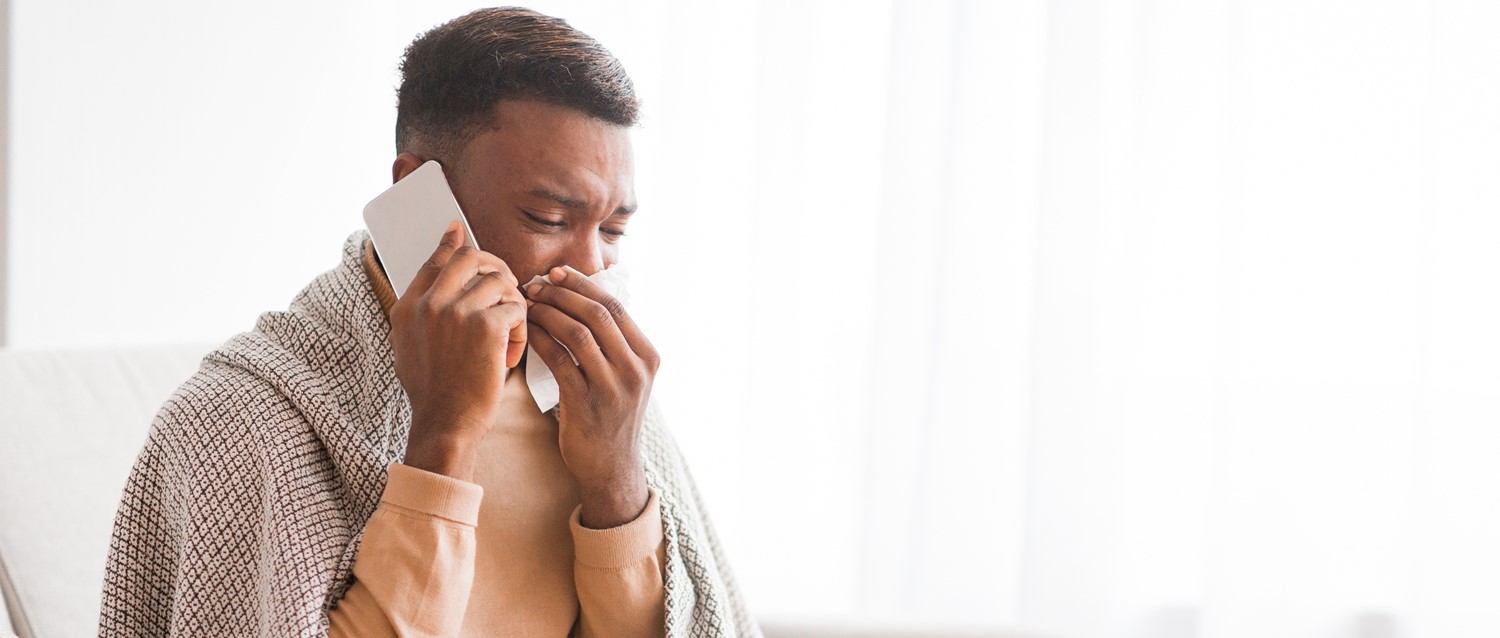
Why do we feel anxious about calling in sick to work when we are genuinely unwell?
Peer reviewed by Dr Sarah JarvisAuthored by Emily Jane BashforthOriginally published 14 Jan 2022
Meets Patient’s editorial guidelines
- DownloadDownload
- Share
- Language
- Discussion
- Audio Version
- Add to preferred sources on Google
Data from the past 10 years found that employees are more likely to be sick on Wednesday than any other day, with Tuesday coming a close second. Between 2016-2017 firms lost an average of 1.5 days per employee on Wednesdays, with 2016 being the peak year for Wednesday absences. The first Monday in February has also been branded National Sickie Day, since it marks the day when the highest proportion of people call in sick. However, calling into work sick can cause great anxiety.
Mental health support for adults and children
Online CBT and psychological therapy for adults and children aged 8–17. Onebright’s accredited clinicians support people experiencing anxiety, depression and other emotional challenges.
Where does "sick day guilt" come from?
Many factors can contribute to fear of calling into work sick.
Human behaviour expert Claire Brummell says: "There is a legacy of fear-based management styles in this country. This means that many of us have experienced a situation with a manager where we have had our needs negatively impacted when we have needed time off work for being legitimately ill."
She explains how we may have been ridiculed, dismissed, disbelieved, demeaned or even threatened with unjust disciplinary action in order to coerce us into working, even when we are ill.
"Every time a manager has acted in a way that has been detrimental to our needs when we have called in sick, it has conditioned us to feel anxious. That's because, subconsciously, we fear that our needs will be compromised when we do the same thing in the future," says Brummell.
"Likewise, we may have seen that other employees have been treated poorly by managers for calling in sick. Even if we have not personally experienced an issue with it in the past, the awareness of a pattern of calling in sick and receiving a negative reaction can create that anxiety for the future if we do the same."
Concern about the impact on our colleagues if we are off sick may also play a part. If co-workers are already under pressure, we may be loath to add to their workload if our work cannot be postponed. In addition, if there is nobody to cover for us while we are away, we may be worried that urgent deadlines will be missed or dread the idea of returning to a mountain of work.
All this anxiety and guilt surrounding sick days can lead to us as employees working when we are unwell, which can have consequences both for ourselves and for others. It could result in other colleagues becoming infected if germs are spread around a workplace, and it can cause an illness to worsen if we don't get the rest we need - leading to more time off at a later date.
Toxic productivity
Sick day guilt and the pressure to be constantly productive can mean employees only call in sick when we are "at death's door" and feel "deserving" of a sick day.
Throughout history, society seems to have had an obsession with productivity and getting stuff done. There's a bottomless well of advice, tips, tools and tricks on how to be more productive and manage your time efficiently. Productivity software alone accounts for an $133 billion (£97.7 billion) market, according to IBISWorld research.
Being over-productive is glamorised as the "the hustle", and it is often modelled by the super wealthy. Hustle culture has been propelled in recent years, particularly for the Generation-Z demographic. The pressures and expectations to be endlessly working, achieving, creating, moving and simply doing can lead to burnout: arguably, this pressure has heightened following advances in technology which mean we have constant access to online information and messages. In addition, these expectations can intensify the guilt of needing a sick day, even though it is impossible to be our most productive when we are unwell.
Why do we feel anxious about calling in sick?
Brummell says the presence of anxiety (that is not a clinically diagnosed condition) is almost always one of the below or a combination:
A reaction to an unmet need (or needs) from the past.
A reaction to an unmet need (or needs) in the present.
A fear that one or more of your needs will not be met in the future.
She says there are several needs that can be impacted in a situation like this, such as:
Security need
"If someone believes that their job might be at risk if they call in sick, this creates a fear that their security needs will be compromised in the future, as they will no longer feel safe and secure in their role and future income," Brummell says.
Value need
She adds that if someone is treated as if it is not acceptable to take time off from work to recover when they are genuinely sick, it implies that they are not worthy of getting what they need in order to heal.
"It sends a message that the business or their manager's wants and needs are more important than their physical well-being, making them feel undervalued."
Personal power
Brummell hypothesises that feeling they don't have a choice and that they have to work, even if sick, can cause employees to lose a sense of empowerment. This negative impact on someone's personal power need can make them feel out of control when they are working, despite knowing they should be resting and recovering.
Why do we feel guilty about needing time off?
"The feeling of guilt we experience in these situations is because we are conditioned as a society to view doing anything to prioritise our own well-being as selfish," suggests Brummell.
"This means that, even when we are physically in need of prioritising ourselves and our healing because we are genuinely ill, we still respond in a way that suggests we are doing something wrong. This further impacts our Value need, because it implies that we should still be prioritising other people, who are not worthy of being the priority, when we are genuinely ill."
She highlights the irony of this dynamic, since calling in sick may protect others from becoming ill and, as such, prevents a ripple effect on the business that would be created by many people needing sickness absence simultaneously.
"Not only is it not selfish to call in sick, it is Selfirst - the practice of meeting your own needs as a priority, in ways that do not do harm to others, and sometimes can benefit them. It is actually taking care of the needs of others as well."
Brummell stresses the importance of managers and employers reminding their staff it is both acceptable to call in sick when they are genuinely unfit for work, and actively encouraged. She says making this clear from the start of employment, and explicitly supporting their teams, minimises their fears for the future.
"Encouraging employees to do what is best for them, their team and the wider organisation creates a more pleasant working environment for everyone."
Patient picks for Workplace health
General health and lifestyle
What health benefits could a four-day working week have?
The past couple of years have seen widespread changes for many companies, with practices such as working from home becoming the norm. In addition to changes implemented due to lockdowns, some companies are beginning to run trials that assess the effects of a four-day working week. This concept effectively offers employees the same salaries for spending less time at the office.
by Emily Jane Bashforth
General health and lifestyle
Workplaces should help staff get fit to reduce sick days
Employers should do more to encourage staff to be more active during the working day, to tackle obesity levels and boost staff satisfaction, according to health officials.
by Natalie Healey
About the authorView full bio

Emily Jane Bashforth
Feature Writer
NCTJ
Emily is a Feature Writer with Patient, writing articles on a variety of topics relating to health and well-being.
About the reviewerView full bio

Dr Sarah Jarvis
Clinical Consultant
MA (Cantab), BM, BCh (Oxon), DRCOG, FRCGP, MBE
After training in medicine at Cambridge and Oxford, Dr Sarah Jarvis MBE became a GP.
Article history
Article also available in English, German, Spanish, French, Italian, Portuguese, Hindi, Hebrew, Arabic, and Swedish.
14 Jan 2022 | Originally published
Authored by:
Emily Jane BashforthPeer reviewed by
Dr Sarah Jarvis
Join the conversation
Share your thoughts or experiences with others in our patient communities.

Ask, share, connect.
Browse discussions, ask questions, and share experiences across hundreds of health topics.

Feeling unwell?
Assess your symptoms online for free
Sign up to the Patient newsletter
Your weekly dose of clear, trustworthy health advice - written to help you feel informed, confident and in control.
By subscribing you accept our Privacy Policy. You can unsubscribe at any time. We never sell your data.
More in general health and lifestyle
- 4 common winter hair problems - and how to treat them
- Air pollution and asthma: how to protect yourself this summer
- Air pollution blamed for a third of new asthma cases in Europe
- Air pollution linked to mental health problems
- Can you catch a cold in summer?
- Here's how to protect a bald head from the sun
- How good is PEP for preventing HIV?
- How physiotherapy can help people with lung conditions
- How to avoid neck, shoulder and back pain while working from home
- How to boost your motivation levels during winter
- How to cope with New Year after losing a loved one
- How to look after your mental health this winter
- How to maintain your running routine in winter
- Is it COVID-19 or flu this winter?
- The health problems cannabis could treat in the future
- What are the health benefits of houseplants?
- What are the most effective flu prevention methods?
- What to do if you're struggling with your mental health at Christmas
- What's the healthiest high street Christmas sandwich?