
What's causing your breast pain?
Peer reviewed by Dr Krishna Vakharia, MRCGPLast updated by Victoria RawLast updated 4 Mar 2025
Meets Patient’s editorial guidelines
- DownloadDownload
- Share
- Language
- Discussion
- Audio Version
- Add to preferred sources on Google
Breast pain - or mastalgia - is common in women of all ages and can often be a source of anxiety. We look at causes and management options, and the symptoms you should never ignore.
Breast pain can vary in intensity and is typically felt as tenderness, burning, a sharp stabbing pain, or as an aching heaviness. It may occur in both breasts, one breast, or in the underarm area. Up to 70% of women will have breast pain (mastalgia) at some point in their lives, although only around 15% will require medical treatment.
Breast pain and cancer
Mastalgia is not usually an early sign of breast cancer. However, it's still important to see your doctor if you're concerned about breast pain.
Types of breast pain
There are three main categories of mastalgia.
Cyclical breast pain - linked to your menstrual cycle.
Non-cyclical breast pain - can have multiple causes.
Chest wall pain - feels as though it is located in your breast, but actually emanates from elsewhere.
Clinical nurse specialist Carolyn Rogers explains that cyclical breast pain is particularly common.
"Most women are able to live with the discomfort as a regular part of their menstrual cycle," she says. "But for some it does present as severe pain every month that may interfere with sexual, social and physical activities."
Cyclical breast pain
Cyclical breast pain is due to a fluctuation in hormones during your menstrual cycle which makes your breast tissue more sensitive, although the exact cause is unknown. This discomfort tends to affect both breasts (bilateral) and usually occurs during the week or so before your period. Often the pain is accompanied by changes.
This can include:
Lumpiness and thickened areas of breast tissue.
Feelings of swelling, aching and heaviness - usually resolve after menstruation.
Non-cyclical breast pain
Non-cyclical breast pain can affect women at any point in their lives and the pain can be continuous or intermittent. Discomfort may be felt in one or both breasts and can be generalised or specific to one area.
Causes can include:
Previous surgery or trauma to the breast.
Hormonal contraception and hormone replacement therapy (HRT).
Pregnancy.
Certain medicines - such as antidepressants and some heart and blood pressure tablets.
Mastitis - an infection which can occur in lactating mothers, though also in menopausal women. It can be very painful and is usually accompanied by a high fever and redness of the breast tissue.
Benign (non-cancerous) conditions - such as cysts and fibrocystic changes.
"Cysts are small, fluid-filled sacs that are completely benign and many women get them," says Rogers. "Most don't discover they have breast cysts until they have an investigation such as an ultrasound. Some cysts are larger - rather like a balloon filled with water - and can cause a lump which you can feel. When women go to the doctor with a breast lump and discomfort, this is often the reason."
It is common for fibrocystic breasts to become lumpy and painful before a period as a result of hormonal fluctuations. At menopause, women taking HRT may also be more susceptible to breast cysts.
Rogers reassures that these cysts do not increase your chance of developing breast cancer - just as breast pain is not a common symptom of cancer.
At puberty, girls develop breast buds which may feel sore - some discomfort is normal and should pass in time. Enlargement of male breast tissue (gynaecomastia) can also cause pain during puberty, but also in older men.
Chest wall pain
Also known as extra-mammary pain, this is often triggered by respiratory infection or trauma elsewhere that can cause referred pain to the breast, or pain on the chest wall. Inflammation of the cartilage of the ribs and breastbone (sternum) can also give rise to referred breast pain, particularly conditions such as chondritis and Tietze's syndrome.
What can help
Evening primrose oil and vitamin E supplements used to be recommended as self-help measures for cyclical breast pain.
However Rogers says there is no definitive research to prove that this is helpful, as the evidence is inconsistent.
Instead, she offers practical measures that women often cite as helpful:
Wear a well-fitting bra.
Cut out caffeine and alcohol.
Give up smoking.
Take pain relief such as paracetamol, ibuprofen or ibuprofen gel - making sure to stay within the recommended doses.
"There are a couple of medicines that can be prescribed for breast pain," she adds. "But they have quite significant side effects which is why clinicians are reluctant to prescribe them."
These would usually be anti-hormone medicines and only prescribed by a specialist.
Non-cyclical breast pain responds less well to treatment, unless a specific trigger is identified that can be addressed. Stress and anxiety have been linked to non-cyclical breast pain, so finding ways to counter stress levels, such as mindfulness practice, yoga and exercise, may be helpful. NSAIDs - such as topical ibuprofen - may also offer some relief.
Rogers explains: "It can often be difficult to determine the cause of non-cyclical breast pain. However, in about 50% of women it will settle down by itself."
Treatment for chest wall pain will depend on what is causing it. A pulled a muscle in your chest is likely to improve over time and can be treated with over-the-counter pain relief. More serious conditions will require medical advice.
The importance of checking your breasts
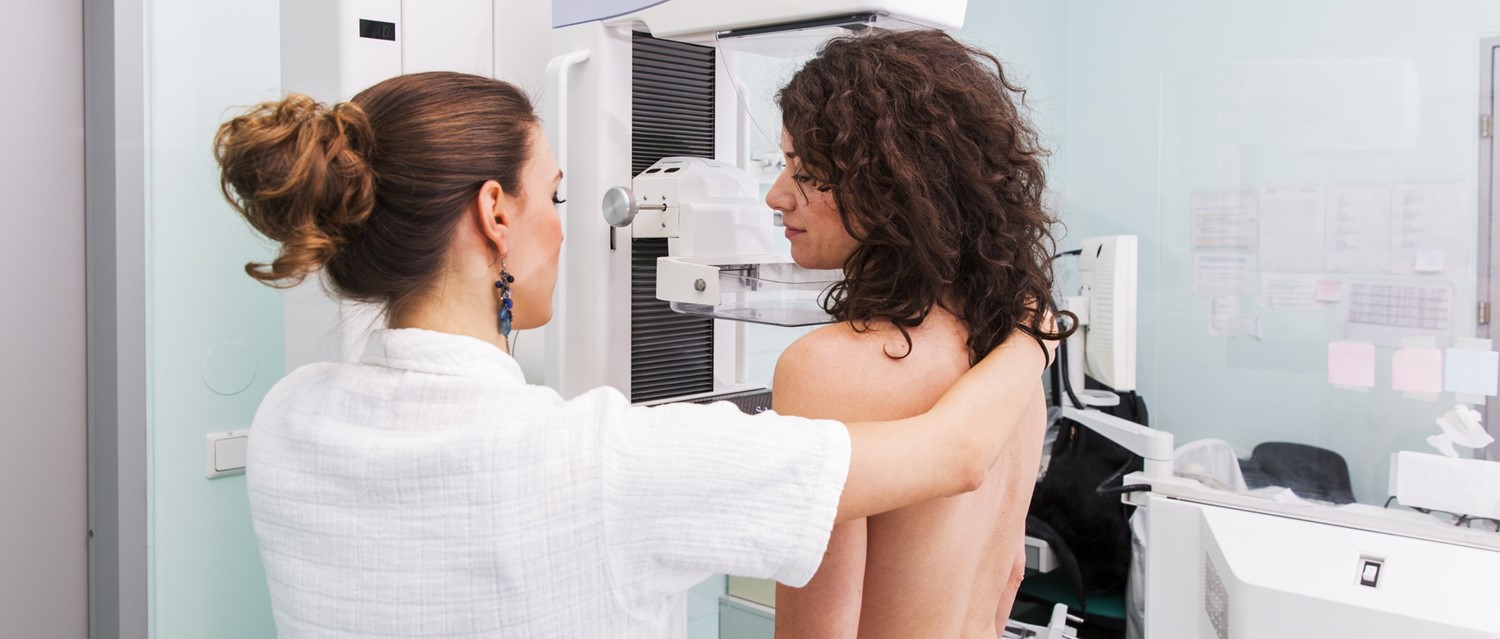
It is important to check your breasts regularly and develop an awareness of what they look and feel like, so you are more able to detect any changes should they arise.
"Anything new for you is a concern," says Rogers. "If you have a pain in one breast only, that is much more localised and persistent, then get that checked out. The same goes for nipple discharge and skin changes."
These types of changes would mean your doctor will want to check there are no cancerous changes.
She also suggests keeping a diary of the severity and timing of breast pain symptoms, as this will give your doctor an indication of whether the issue is likely to be cyclical or not.
Patient picks for Breast health
Women's health
Anatomy of the breast
The medical name for breast is mammary gland. Each breast consists of tissue overlying the chest wall muscles (the pectoral muscles). In women, the breasts are composed principally of specialised tissue (glandular tissue) that produces milk. The remaining part is made up of fatty tissue. In humans, breast tissue begins to enlarge at puberty. This is unlike other primates, where breast tissue only enlarges during milk production.
by Dr Laurence Knott
Women's health
Is your bra harming your health?
What you're wearing underneath your clothes could have more of an impact on your physical - and mental - wellbeing than you think. We explore the possible consequences of wearing a bra that doesn't fit you properly.
by Victoria Raw
About the authorView full bio

Sally Turner
Freelance Journalist
BA Media Production
Sally Turner is a writer and broadcaster specialising in sexual health and women’s issues.
About the reviewerView full bio

Dr Krishna Vakharia, MRCGP
Chief Medical Officer for Health, Optum UK
MBChB, MRCGP(2013), BMedSci (hons), DFSRH, DRCOG, PGDipDerm (Distn)
Dr Krishna Vakharia is an NHS GP. She is also a regular examiner for the postgraduate Diploma in Practical Dermatology at Cardiff University as well as being the Chief Medical Officer for health at Optum UK.
Article history
The information on this page is peer reviewed by qualified clinicians.
Article also available in English, German, Spanish, French, Italian, Portuguese, Hindi, Hebrew, Arabic, and Swedish.
Next review due: 6 Mar 2028
4 Mar 2025 | Latest version
28 Mar 2018 | Originally published
Authored by:
Sally Turner
Join the conversation
Share your thoughts or experiences with others in our patient communities.

Ask, share, connect.
Browse discussions, ask questions, and share experiences across hundreds of health topics.

Feeling unwell?
Assess your symptoms online for free
Sign up to the Patient newsletter
Your weekly dose of clear, trustworthy health advice - written to help you feel informed, confident and in control.
By subscribing you accept our Privacy Policy. You can unsubscribe at any time. We never sell your data.
More in women's health
- Breast cancer videos
- Contraception videos
- Do herbal remedies for menopause really work?
- Do you check your breasts?
- Early breast cancer care
- Easy ways to get the pill: options beyond the GP surgery
- How to alter your language around menstruation to be more inclusive
- How to check for breast cancer and what a lump feels like
- How to look after your mental health during your menstrual cycle
- How to support someone during the menopause
- How to treat vaginismus
- Is it normal to experience ovulation pain?
- Tampon tests - the latest way to check your vaginal health
- The pros and cons of female condoms
- Video: Are fibroids cancerous?
- What are the signs HRT is not working anymore?
- What is post-birth control syndrome?
- What you need to know about testosterone and menopause
- What's the future of contraception?
- Why do women feel the cold more than men?