Chromosome 11
Zuletzt aktualisiert 7. Apr 2026
Erfüllt die redaktionelle Richtlinien
- HerunterladenHerunterladen
- Teilen
- Language
- Diskussion
- Ask Patient
- Audio-Version
- Zu bevorzugten Quellen bei Google hinzufügen
Humans normally have 46 chromosomes in each cell, divided into 23 pairs. Two copies of chromosome 11, one copy inherited from each parent, form one of the pairs. Chromosome 11 spans about 135 million DNA building blocks (base pairs) and represents between 4 and 4.5 percent of the total DNA in cells.
Beschreibung
Humans normally have 46 chromosomes in each cell, divided into 23 pairs. Two copies of chromosome 11, one copy inherited from each parent, form one of the pairs. Chromosome 11 spans about 135 million DNA building blocks (base pairs) and represents between 4 and 4.5 percent of the total DNA in cells.
Identifying the genes on each chromosome is an active area of genetic research. Because researchers use different approaches to predict the number of genes on each chromosome, the estimated number of genes varies. Chromosome 11 likely contains 1,300 to 1,400 genes that provide instructions for making proteins. These proteins perform a variety of different roles in the body.
Conditions referring to this gene or chromosome
Related patient information and medicines
Patient information leaflet
Akute lymphoblastische Leukämie
Acute lymphoblastic leukaemia (ALL) is a condition where the bone marrow makes large numbers von abnormal immature lymphocytes. ... are done on abnormal cells obtained aus dem bone marrow sample or bloodThe chromosomes within Arztpraxis cells sind checked for certain changes. (These changes in chromosomes only occur in the leukaemia cells, not the normal.
Patient information leaflet
Chorionzottenbiopsie
Chorionzottenbiopsie (CVS) is a procedure that is carried out during pregnancy to diagnose or exclude various chromosomal or genetic conditions. Chorionzottenbiopsie (CVS) is a procedure that is carried out during early pregnancy. At what stage of pregnancy is chorionic villus sampling offered. CVS is usually carried out between the.
Patient information leaflet
Akute myeloische Leukämie
Cell and chromosome analysis Detailed tests are done on abnormal blast cells obtained from the bone marrow sample or blood test. The chromosomes within the cells sind überprüft für certain changes. Chromosomes are the parts in the cell which contain DNA - the genetic make-up of the cell. Various subtypes of AML can be diagnosed by detecting changes.

Patient information leaflet
Genetische Tests
Genetik testing is a type of medical test that identifies changes in chromosomes, genes or proteins. Genetic tests examine a person's DNA in a variety of ways to assess a person's genetic health. They are all designed to identify a particular... Sometimes a gene may change (this is called a mutation) and either cause or increase the risk of a.
Patient information leaflet
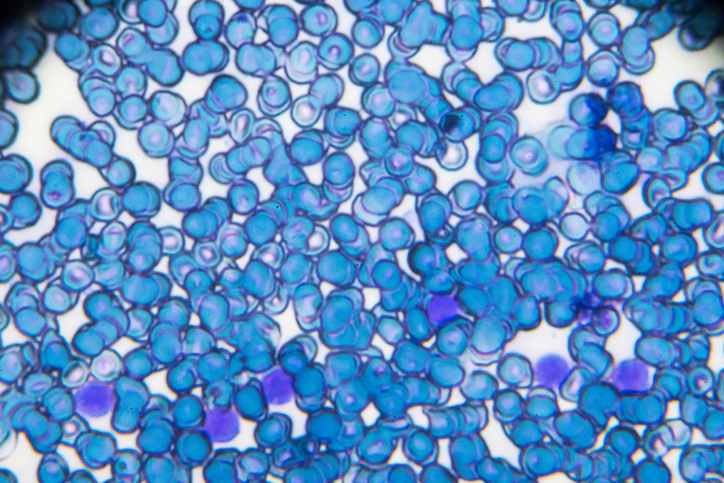
Leukämie
Leukaemia is a cancer of blood-forming cells. There are different types of leukaemia. (See the separate leaflet called ... A bone marrow test may not be needed to confirm the diagnosis of CLL. Cell und chromosome analysis Detailed tests are often done on abnormal cells obtained from the bone marrow sample or blood test. These find out the exact.
Patient information leaflet
Chronische myeloische Leukämie
Chronic myeloid leukaemia (CML) ist sometimes called chronic myelogenous leukaemia, chronic granulocytic leukaemia, oder chronic myelocytic leukaemia. What is chronic myeloid leukaemia. In most cases of CML the abnormal cells contain a change in chromosome 22. This changed chromosome ist shortened and is called the 'Philadelphia chromosome'. An.
Weiterführende Lektüre und Referenzen
- Chromosome 11; MedlinePlus, National Library of Medicine.
- Abu-Amero S, Monk D, Frost J, Preece M, Stanier P, Moore GE. The genetic aetiology of Silver-Russell syndrome. J Med Genet. 2008 Apr;45(4):193-9. doi: 10.1136/jmg.2007.053017. Epub 2007 Dec 21.
- Attiyeh EF, London WB, Mosse YP, Wang Q, Winter C, Khazi D, McGrady PW, Seeger RC, Look AT, Shimada H, Brodeur GM, Cohn SL, Matthay KK, Maris JM; Children's Oncology Group. Chromosome 1p and 11q deletions and outcome in neuroblastoma. N Engl J Med. 2005 Nov 24;353(21):2243-53. doi: 10.1056/NEJMoa052399.
- Bremond-Gignac D, Crolla JA, Copin H, Guichet A, Bonneau D, Taine L, Lacombe D, Baumann C, Benzacken B, Verloes A. Combination of WAGR and Potocki-Shaffer contiguous deletion syndromes in a patient with an 11p11.2-p14 deletion. Eur J Hum Genet. 2005 Apr;13(4):409-13. doi: 10.1038/sj.ejhg.5201358.
- Choufani S, Shuman C, Weksberg R. Molecular findings in Beckwith-Wiedemann syndrome. Am J Med Genet C Semin Med Genet. 2013 May;163C(2):131-40. doi: 10.1002/ajmg.c.31363. Epub 2013 Apr 16.
- Delplancq G, Boukebir MA, Amsallem D, Thines L, Roze V, Dahlen E, Van Maldergem L, Kuentz P. The Largest Germline Heterozygous Deletion Encompassing Potocki-Shaffer and WAGR Syndromes Loci to Date: A Case Report. Neuropediatrics. 2022 Aug;53(4):274-278. doi: 10.1055/s-0041-1740357. Epub 2021 Dec 8.
- Enklaar T, Zabel BU, Prawitt D. Beckwith-Wiedemann syndrome: multiple molecular mechanisms. Expert Rev Mol Med. 2006 Jul 17;8(17):1-19. doi: 10.1017/S1462399406000020.
- Fischbach BV, Trout KL, Lewis J, Luis CA, Sika M. WAGR syndrome: a clinical review of 54 cases. Pediatrics. 2005 Oct;116(4):984-8. doi: 10.1542/peds.2004-0467.
- Guo C, White PS, Weiss MJ, Hogarty MD, Thompson PM, Stram DO, Gerbing R, Matthay KK, Seeger RC, Brodeur GM, Maris JM. Allelic deletion at 11q23 is common in MYCN single copy neuroblastomas. Oncogene. 1999 Sep 2;18(35):4948-57. doi: 10.1038/sj.onc.1202887.
- Hall CR, Wu Y, Shaffer LG, Hecht JT. Familial case of Potocki-Shaffer syndrome associated with microdeletion of EXT2 and ALX4. Clin Genet. 2001 Nov;60(5):356-9. doi: 10.1034/j.1399-0004.2001.600506.x.
- Kim HG, Kim HT, Leach NT, Lan F, Ullmann R, Silahtaroglu A, Kurth I, Nowka A, Seong IS, Shen Y, Talkowski ME, Ruderfer D, Lee JH, Glotzbach C, Ha K, Kjaergaard S, Levin AV, Romeike BF, Kleefstra T, Bartsch O, Elsea SH, Jabs EW, MacDonald ME, Harris DJ, Quade BJ, Ropers HH, Shaffer LG, Kutsche K, Layman LC, Tommerup N, Kalscheuer VM, Shi Y, Morton CC, Kim CH, Gusella JF. Translocations disrupting PHF21A in the Potocki-Shaffer-syndrome region are associated with intellectual disability and craniofacial anomalies. Am J Hum Genet. 2012 Jul 13;91(1):56-72. doi: 10.1016/j.ajhg.2012.05.005. Epub 2012 Jul 5.
- Kurahashi H, Shaikh TH, Hu P, Roe BA, Emanuel BS, Budarf ML. Regions of genomic instability on 22q11 and 11q23 as the etiology for the recurrent constitutional t(11;22). Hum Mol Genet. 2000 Jul 1;9(11):1665-70. doi: 10.1093/hmg/9.11.1665.
- Luk HM, Ivan Lo FM, Sano S, Matsubara K, Nakamura A, Ogata T, Kagami M. Silver-Russell syndrome in a patient with somatic mosaicism for upd(11)mat identified by buccal cell analysis. Am J Med Genet A. 2016 Jul;170(7):1938-41. doi: 10.1002/ajmg.a.37679. Epub 2016 May 6. No abstract available.
- Mattina T, Perrotta CS, Grossfeld P. Jacobsen syndrome. Orphanet J Rare Dis. 2009 Mar 7;4:9. doi: 10.1186/1750-1172-4-9.
- Montgomery ND, Turcott CM, Tepperberg JH, McDonald MT, Aylsworth AS. A 137-kb deletion within the Potocki-Shaffer syndrome interval on chromosome 11p11.2 associated with developmental delay and hypotonia. Am J Med Genet A. 2013 Jan;161A(1):198-202. doi: 10.1002/ajmg.a.35671. Epub 2012 Dec 13.
- Riggi N, Stamenkovic I. The Biology of Ewing sarcoma. Cancer Lett. 2007 Aug 28;254(1):1-10. doi: 10.1016/j.canlet.2006.12.009. Epub 2007 Jan 23.
- Romeike BF, Wuyts W. Proximal chromosome 11p contiguous gene deletion syndrome phenotype: case report and review of the literature. Clin Neuropathol. 2007 Jan-Feb;26(1):1-11. doi: 10.5414/npp26001.
- Saal HM, Harbison MD, Netchine I. Silver-Russell Syndrome. 2002 Nov 2 [updated 2025 Jan 9]. In: Adam MP, Bick S, Mirzaa GM, Wallace SE, Amemiya A, editors. GeneReviews(R) [Internet]. Seattle (WA): University of Washington, Seattle; 1993-2026. Available from http://www.ncbi.nlm.nih.gov/books/NBK1324/
- Sankar S, Lessnick SL. Promiscuous partnerships in Ewing's sarcoma. Cancer Genet. 2011 Jul;204(7):351-65. doi: 10.1016/j.cancergen.2011.07.008.
- Shaikh TH, Budarf ML, Celle L, Zackai EH, Emanuel BS. Clustered 11q23 and 22q11 breakpoints and 3:1 meiotic malsegregation in multiple unrelated t(11;22) families. Am J Hum Genet. 1999 Dec;65(6):1595-607. doi: 10.1086/302666.
- Smith AC, Choufani S, Ferreira JC, Weksberg R. Growth regulation, imprinted genes, and chromosome 11p15.5. Pediatr Res. 2007 May;61(5 Pt 2):43R-47R. doi: 10.1203/pdr.0b013e3180457660.
- Taylor TD, Noguchi H, Totoki Y, Toyoda A, Kuroki Y, Dewar K, Lloyd C, Itoh T, Takeda T, Kim DW, She X, Barlow KF, Bloom T, Bruford E, Chang JL, Cuomo CA, Eichler E, FitzGerald MG, Jaffe DB, LaButti K, Nicol R, Park HS, Seaman C, Sougnez C, Yang X, Zimmer AR, Zody MC, Birren BW, Nusbaum C, Fujiyama A, Hattori M, Rogers J, Lander ES, Sakaki Y. Human chromosome 11 DNA sequence and analysis including novel gene identification. Nature. 2006 Mar 23;440(7083):497-500. doi: 10.1038/nature04632.
- Wakui K, Gregato G, Ballif BC, Glotzbach CD, Bailey KA, Kuo PL, Sue WC, Sheffield LJ, Irons M, Gomez EG, Hecht JT, Potocki L, Shaffer LG. Construction of a natural panel of 11p11.2 deletions and further delineation of the critical region involved in Potocki-Shaffer syndrome. Eur J Hum Genet. 2005 May;13(5):528-40. doi: 10.1038/sj.ejhg.5201366.
- Wuyts W, Waeber G, Meinecke P, Schuler H, Goecke TO, Van Hul W, Bartsch O. Proximal 11p deletion syndrome (P11pDS): additional evaluation of the clinical and molecular aspects. Eur J Hum Genet. 2004 May;12(5):400-6. doi: 10.1038/sj.ejhg.5201163.
- Xu S, Han JC, Morales A, Menzie CM, Williams K, Fan YS. Characterization of 11p14-p12 deletion in WAGR syndrome by array CGH for identifying genes contributing to mental retardation and autism. Cytogenet Genome Res. 2008;122(2):181-7. doi: 10.1159/000172086. Epub 2008 Dec 18.
Artikelverlauf
Artikel auch verfügbar in Englisch, Deutsch, Spanisch, Französisch, Italienisch, Portugiesisch, Hindi, Hebräisch, Arabisch, und Schwedisch.
7. Apr 2026 | Neueste Version
1 Apr 2026 | Ursprünglich veröffentlicht
Teilen Sie Ihre Gedanken oder Erfahrungen mit anderen in unserem Patientengemeinschaften.
Einfacher Zugang zu vertrauenswürdigen Behandlungen und Gesundheitsdiensten online.
Common conditions
Get help with common conditions through the NHS, without a GP appointment.





Abonnieren Sie den Patienten-Newsletter
Ihre wöchentliche Dosis klarer, vertrauenswürdiger Gesundheitsberatung - geschrieben, um Ihnen zu helfen, sich informiert, selbstbewusst und in Kontrolle zu fühlen.
Durch das Abonnieren akzeptieren Sie unsere Datenschutzrichtlinie. Sie können sich jederzeit abmelden. Wir verkaufen Ihre Daten niemals.