Lichen planus
Peer reviewed by Dr Krishna Vakharia, MRCGPLast updated by Dr Hayley Willacy, FRCGP Last updated 30 Jan 2023
Meets Patient’s editorial guidelines
- DownloadDownload
- Share
- Language
- Discussion
- Audio Version
- Add to preferred sources on Google
Lichen planus mainly causes an itchy skin rash. In some people it also affects other parts of the body such as the mouth, genitals, nails and hair. Most people get better in 6-12 months. Treatment, commonly with a steroid cream or ointment, often eases the itch and may reduce the rash until the condition clears.
At a glance
Lichen planus is a skin condition causing an itchy rash, mainly affecting people over 45.
The cause of lichen planus is unknown, it is not infectious or inherited.
Symptoms include red-purple, shiny bumps on the skin, which can be very itchy.
It can also affect the mouth, genitals, hair, and nails.
A doctor can usually diagnose the condition by looking at the rash, or with a skin biopsy.
Treatment aims to ease itching and improve the rash until it clears, which often happens within 6-12 months.
Regular dental checks are advised if oral lichen planus causes painful ulcers.
What is lichen planus?
Lichen planus is a condition that mainly affects the skin to cause an itchy rash. In some cases it affects the mouth, genitals, hair, nails and (rarely) other parts of the body.
About 1 in 5,000 people develop lichen planus. It occurs equally in men and women. Most cases occur in people over the age of 45. However, it can occur at any age. It is not an inherited disease. It is not an infection and the rash cannot be caught or passed on to others.
Causes of lichen planus
The cause of lichen planus is not known. A type of inflammation develops in the skin, which causes the rash. However, the cause of the inflammation is not known. One theory is that the immune system may be triggered by a virus or other factor in the environment to attack cells in the skin, which leads to the inflammation.
A rash very similar to lichen planus occasionally develops from a known cause but this is rare. For example:
A rash similar to lichen planus occurs as a rare side-effect of some medicines. This is called a lichenoid drug eruption. For example: antimalarials, beta-blockers, anti-inflammatory medicines, thiazide diuretics and gold injections for rheumatoid arthritis. The rash clears within a few weeks after stopping a medicine that caused it.
Lichen planus in the mouth is sometimes due to an allergy to mercury fillings in teeth.
A rash similar to lichen planus occasionally develops after contact with certain chemicals used in colour photographic developing.
Lichen planus symptoms
Lichen planus of the skin
The typical rash is small, red-purple bumps (papules). The bumps are usually shiny and flat-topped (planus means flat). They vary in size from a pinhead to about 1 cm across. The number of flat-topped bumps that develop varies. The rash can appear anywhere on the body but is most likely to occur on the inner wrists, lower legs and lower back. There are photos of the typical rash in the Further Reading section.
Fine white streaks often develop on the top of each bump. These are called Wickham's striae.
The itch can range from mild to severe. A severe itch is common and is often the worst thing about lichen planus. The itch may disturb sleep and affect your quality of life. The itchiness is unusual in that affected people tend to rub the rash rather than scratch to ease the itch.
Sometimes the rash develops quickly over a few days. Sometimes each bump develops gradually over several weeks. Sometimes several bumps form in a line along a previous scar. Sometimes several bumps clump together to form a large patch. New bumps may appear over time as older ones are fading away. Each bump tends to last several months before fading away.
In most cases, the rash lasts between 6-12 months and then clears. In some cases it persists longer. A non-itchy brown or grey mark may be left on the skin where each bump had been. These may take several months or years to fade away completely.
Oral lichen planus
Mouth lichen planus - inside cheek
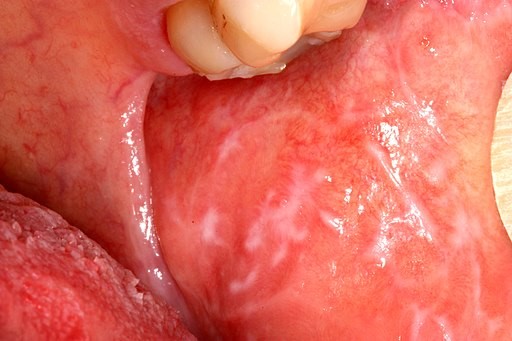
© Ian Furst, CC BY-SA 4.0, via Wikimedia Commons
About half of people with a lichen planus skin rash develop white streaks on the inside of the cheeks, gums or tongue. This is usually painless and not itchy. It may not be noticed unless looked for. Sometimes lichen planus of the mouth occurs without any skin rash.
Lichen planus can also cause ulcers in your mouth but this is uncommon. If they occur they can be very sore and unpleasant. Hot or spicy foods are especially difficult to eat.
Mouth ulcers can occur with or without the skin rash. In some cases, the gums become red and sore.
Lichen planus of other parts of the body
Most people with lichen planus just have the skin rash and/or mouth involvement. However, in some cases other areas of the body are also affected. These include the following:
Vulva and vagina of women - lichen planus can cause painless white streaks on the vulva. However, it can also cause painful red sore areas of the vulva and entrance to the vagina. This can be sore, itchy and in severe cases make it very painful to have sex. Scar tissue may also develop which may narrow the entrance to the vagina.
Penis of men - the typical skin rash may affect the head of the penis (glans). Also, white patches may develop on the glans.
Nails - about 1 in 10 people with lichen planus have affected nails. It usually causes minor ridging of the nail. Rarely, severe damage to the nail can occur.
The scalp - which can cause patches of baldness.
Rarely - the gullet (oesophagus), eyelids, ear canal, bladder and back passage (anus) are affected. This may be seen with erosive lichen planus.
Erosive lichen planus
Erosive lichen planus is a rare type of lichen planus. It usually presents with painful ulceration in the mouth or on the genital area. Very rarely it can be seen on other mucosal skin such as the eyelids, gullet or anus. It tends to be seen in people between the ages of 50-80 years and is twice as common in women than in men.
The diagnosis is made by the history and appearance of the ulceration. A biopsy may be needed if there is doubt, or there are also suspicions of cancer. Treatment can be challenging (as the response is often poor and relapses are frequent) but is the same as lichen planus.
How is lichen planus diagnosed?
In most cases the rash is typical and a doctor can diagnose the condition from the look of the rash. If there is doubt, then a small sample of affected skin can be taken (a biopsy) under local anaesthetic. The biopsy sample is looked at under a microscope. Characteristic changes in the skin can be seen which confirms the diagnosis.
Lichen planus treatment
There is no quick cure for lichen planus. However, it is likely to clear in time. Treatment aims to relieve itching and improve the appearance of the rash until it goes away.
No treatment - is an option if symptoms are mild.
Antihistamine medicines - may help to ease the itch. An antihistamine that makes you sleepy, taken at bedtime, may help you to sleep if the itch keeps you awake at night.
Emollients - are often also given to provide moisture to your skin. These can also help to reduce the itching.
A steroid cream or ointment - is commonly advised. Steroids reduce inflammation. The effect of steroid creams and ointments is variable. They work in many cases to ease itch but may not actually clear the rash.
Steroid pastes or mouth washes - may help to ease painful mouth ulcers.
A course of steroid tablets - may be advised if lichen planus is severe. This may clear, or greatly reduce, the rash. Steroid tablets taken for longer than a few weeks are not usually advised due to possible side-effects. The rash may reappear after the tablets are stopped. However, a course of steroid tablets may help to tide you over a particularly bad spell.
Immune modulators - such as imiquimod and levamisole may be advised by a specialist if lichen planus is severe. These work with the body's immune system to help fight damage to the skin. Skin irritation, headache, nausea and tiredness can be side-effects.
PUVA - this is a special light therapy that may be advised by a skin specialist if you have extensive and severe lichen planus.
Laser treatment - low-dose lasers are sometimes used to treat lichen planus in the mouth.
What is the outlook for people with lichen planus?
In general, the outlook is good. Lichen planus of the skin usually goes without leaving any ongoing problems.
Without treatment, about half of cases affecting the skin clear within 6-12 months. The rest usually clear soon after this. Although it is unusual for the rash to last longer than 18 months, some people find it can last up to two years. However, lichen planus persists longer in a small number of people who are severely affected. This is mostly in people who develop lichen planus mouth ulcers and lichen planus of the vulva or penis.
Treatment can usually ease skin symptoms until the rash clears.
For lichen planus of the skin, once the rash has cleared, about 1 in 5 affected people have a recurrence sometime in the future. A small number of people have several recurrences.
If lichen planus affects nails or hair, any damage such as bald patches or destroyed nails is permanent.
People with lichen planus have a slightly higher than average chance of developing other inflammatory diseases. For example:
Dermatomyositis.
This is probably due to some people being more prone to immune or inflammatory conditions. However, most people with lichen planus do not develop any of these other conditions.
If painful ulcers due to lichen planus develop in the mouth, there is a higher than average chance of developing cancer of the mouth. Again most people do not, but regular mouth checks from a dentist are advisable.
If the vulva is badly affected, there is a slightly increased risk of developing cancer of the vulva.
Patient picks for Skin rashes

Skin, nail and hair health
Rosacea
Rosacea is a skin condition that affects parts of your face. Symptoms can include facial flushing, facial redness, spots, thickening of your skin, and eye problems such as dry eyes and sore eyelids. Not all symptoms occur in all cases. Rosacea affects about 1 in 20 people in the UK, usually in middle age. Many cases are mild. Spots can usually be cleared with antibiotic treatment. Other treatments may be used for other symptoms. A complication that affects the front of the eye (the cornea) is uncommon but serious. See a doctor urgently if you have rosacea and develop any eye pain or visual problems.
by Dr Rosalyn Adleman, MRCGP
Skin, nail and hair health
Hives
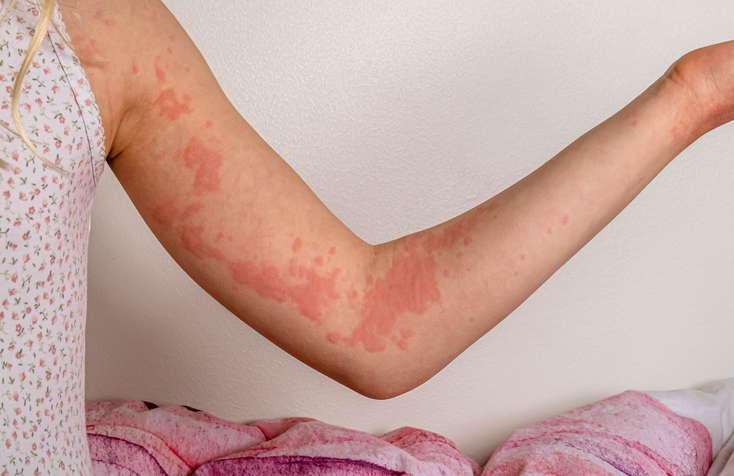
Hives (also called urticaria) are itchy red or white bumps on the skin that look like a nettle rash. Hives are common and are often caused by an allergic reaction, stress, infections, or certain medications. Most hives get better on their own within a few days. This leaflet discusses the causes, types, and treatment for hives.
by Dr Philippa Vincent, MRCGP
Frequently asked questions
Can lichen planus be prevented?
The exact cause of lichen planus is unknown, so there is no specific way to prevent its occurrence. However, if a rash similar to lichen planus develops as a side-effect of certain medicines, or due to an allergy to mercury fillings or contact with photographic chemicals, avoiding these triggers can prevent recurrences in those specific situations.
Are there any specific self-care measures I can take at home to manage my lichen planus symptoms?
While the article mentions emollients to moisturise skin and reduce itching, and antihistamines to help with sleep due to itching, it doesn't detail other self-care steps. For oral lichen planus, avoiding hot or spicy foods can help if you have painful mouth ulcers. However, there are no other widely applicable self-care measures mentioned for the condition as a whole that are not already treatment options.
How can I tell the difference between lichen planus and other skin conditions?
Lichen planus typically presents as small, red-purple, shiny, flat-topped bumps (papules) which often have fine white streaks (Wickham's striae) on them. While this description helps identify it, a doctor usually makes the diagnosis based on the rash's appearance. If there's any doubt, a skin biopsy can confirm it by showing characteristic changes under a microscope.
What should I do if my lichen planus rash persists for a long time?
Most cases of lichen planus on the skin clear within 6-12 months, though some can last up to two years. If your rash persists longer or is severe, the article mentions that a small number of people are severely affected and it can persist longer, particularly if it involves mouth ulcers or affects the vulva or penis. It also indicates that treatment can ease skin symptoms until the rash clears.
Is lichen planus contagious?
No, lichen planus is not an infection and the rash cannot be caught or passed on to others. It is also not an inherited disease.
Can lichen planus affect children?
While most cases of lichen planus occur in people over the age of 45, the article states that it can occur at any age. It does not provide specific details about its prevalence or characteristics in children.
Further reading and references
- Lichen Planus; Primary Care Dermatology Society (PCDS)
- Oral lichen planus; British Dental Health Foundation
- Gall R, Navarro-Fernandez IN; Lichen Planus Erosive Form.
- Arnold DL, Krishnamurthy K; Lichen Planus.
- Boch K, Langan EA, Kridin K, et al; Lichen Planus. Front Med (Lausanne). 2021 Nov 1;8:737813. doi: 10.3389/fmed.2021.737813. eCollection 2021.
About the authorView full bio

Dr Hayley Willacy, FRCGP
General Practitioner, Medical Author
MBChB (1992), DRCOG, DFFP, MRCOG (Part 1) MRCGP (2007), DFSRH (2013), MSc - medical education (2020)
Dr Hayley Willacy was an NHS GP working in northwest England, who retired from clinical practice in 2022 after 30 years.
About the reviewerView full bio

Dr Krishna Vakharia, MRCGP
Chief Medical Officer for Health, Optum UK
MBChB, MRCGP(2013), BMedSci (hons), DFSRH, DRCOG, PGDipDerm (Distn)
Dr Krishna Vakharia is an NHS GP. She is also a regular examiner for the postgraduate Diploma in Practical Dermatology at Cardiff University as well as being the Chief Medical Officer for health at Optum UK.
Article history
The information on this page is written and peer reviewed by qualified clinicians.
Article also available in English, German, Spanish, French, Italian, Portuguese, Hindi, Hebrew, Arabic, and Swedish.
Next review due: 29 Jan 2028
30 Jan 2023 | Latest version
Join the conversation
Share your thoughts or experiences with others in our patient communities.

Ask, share, connect.
Browse discussions, ask questions, and share experiences across hundreds of health topics.

Feeling unwell?
Assess your symptoms online for free
Sign up to the Patient newsletter
Your weekly dose of clear, trustworthy health advice - written to help you feel informed, confident and in control.
By subscribing you accept our Privacy Policy. You can unsubscribe at any time. We never sell your data.