glial cells missing transcription factor 2
Zuletzt aktualisiert 23. Jan. 2026
Erfüllt die redaktionelle Richtlinien
- HerunterladenHerunterladen
- Teilen
- Language
- Diskussion
- Ask Patient
- Audio-Version
- Zu bevorzugten Quellen bei Google hinzufügen
The GCM2 gene provides instructions for making a protein that is primarily found in the parathyroid glands. These four glands are located in the neck and produce a hormone called parathyroid hormone that regulates the levels of calcium in the blood. The GCM2 protein is needed for the development of the parathyroid glands before birth, and it plays a role in the maintenance of these glands into adulthood.
Normal function
The GCM2 gene provides instructions for making a protein that is primarily found in the parathyroid glands. These four glands are located in the neck and produce a hormone called parathyroid hormone that regulates the levels of calcium in the blood. The GCM2 protein is needed for the development of the parathyroid glands before birth, and it plays a role in the maintenance of these glands into adulthood.
The GCM2 protein acts as a transcription factor, which means that it binds to specific regions of DNA and helps control the activity of genes. As a transcription factor, it is likely that the GCM2 protein helps produce parathyroid hormone.
Conditions referring to this gene or chromosome
Other names
GCMB
Related patient information and medicines
Patient information leaflet
Gehirntumore
Understanding the brain Cross-section diagram of the brain Cross-section diagram of the brain The main parts of the brain include: The cerebrum. Neurons have long thin nerve fibres which enable them to send messages to other parts of the brain and down the spinal cord to all pa... The brain also contains glial cells. These provide support,.

Patient information leaflet
Genetische Tests
Genetische Tests is a type of medical test that identifies Änderungen in chromosomes, genes or proteins. Genetic tests examine a person's DNA in a variety of ways to assess a person's genetic health. We all have 46 chromosomes in our cells. Genes are short sections of DNA and each chromosome contains hundreds to thousands of genes. Genes contain the.
Patient information leaflet
Schrillkopf-Syndrom
Cri du chat syndrome is a chromosome problem caused by a missing piece of chromosome 5. The syndrome is called cri du chat (French for cry of the cat) because affected babies often have a high-pitched cry. Not all babies with the missing piece of chromosome 5 will develop cri du chat syndrome. Cri du chat syndrome may cause a variety of.
Patient information leaflet
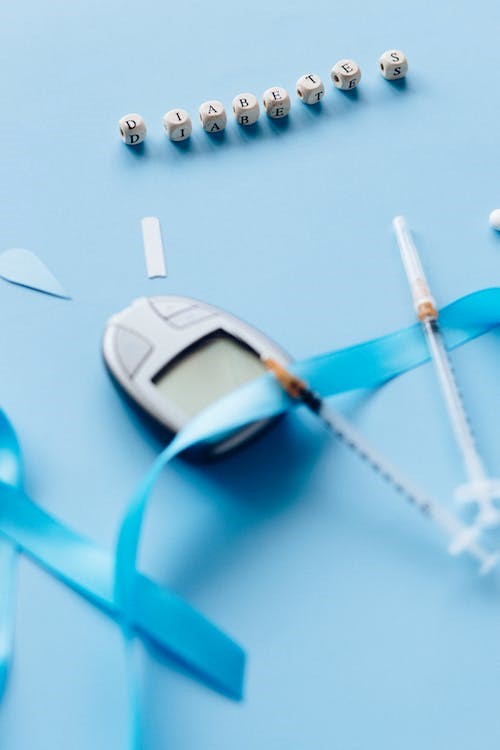
Behandlung von Typ-2-Diabetes
Managing Typ 2 diabetes Keeping your blood sugar (glucose) well controlled is key to reducing your risk of long-term complications such as heart, kidney or eye problems. You can find out more about how you can improve your diabetes control with diet from our separate leaflet called Type 2 diabetes diet Type 2 diabetes diet. The initial stages in.
Patient information leaflet
Fakten und Risikofaktoren zu Brustkrebs
What are the risk factors for breast cancer. Dr Sarah Jarvis MBE Although breast cancer can develop for no apparent reason, there are certain Risikofaktoren which increase the chance that Brustkrebs will develop. /health/breast-cancer-leaflet Most cases of breast cancer occur by chance. However, breast cancer ... If certain.
Patient information leaflet
Akute lymphoblastische Leukämie
Der immature cells are called lymphoblasts. There are various subtypes of ALL. For example, the abnormal lymphoblasts can be immature B or T lymphocytes. The abnormal lymphoblasts continue to divide and multiply but do not mature into proper lymphocytes. Typically, ALL develops quite quickly (acutely) and rapidly becomes worse (over a few weeks or.
Weiterführende Lektüre und Referenzen
- glial cells missing transcription factor 2; MedlinePlus, National Library of Medicine.
- Bowl MR, Mirczuk SM, Grigorieva IV, Piret SE, Cranston T, Southam L, Allgrove J, Bahl S, Brain C, Loughlin J, Mughal Z, Ryan F, Shaw N, Thakker YV, Tiosano D, Nesbit MA, Thakker RV. Identification and characterization of novel parathyroid-specific transcription factor Glial Cells Missing Homolog B (GCMB) mutations in eight families with autosomal recessive hypoparathyroidism. Hum Mol Genet. 2010 May 15;19(10):2028-38. doi: 10.1093/hmg/ddq084. Epub 2010 Feb 27.
- Cetani F, Pardi E, Aretini P, Saponaro F, Borsari S, Mazoni L, Apicella M, Civita P, La Ferla M, Caligo MA, Lessi F, Mazzanti CM, Torregossa L, Oppo A, Marcocci C. Whole exome sequencing in familial isolated primary hyperparathyroidism. J Endocrinol Invest. 2020 Feb;43(2):231-245. doi: 10.1007/s40618-019-01107-5. Epub 2019 Sep 5.
- English KA, Lines KE, Thakker RV. Genetics of hereditary forms of primary hyperparathyroidism. Hormones (Athens). 2024 Mar;23(1):3-14. doi: 10.1007/s42000-023-00508-9. Epub 2023 Dec 1.
- Garcia-Castano A, Madariaga L, Gomez-Conde S, Cordo CLR, Lopez-Iglesias M, Garcia-Fernandez Y, Martin A, Gonzalez P, Goicolea I, de Nanclares GP, De la Hoz AB, Aguayo A, de LaPiscina IM, Martinez R, Saso L, Urrutia I, Velasco O, Castano L, Gaztambide S. Five patients with disorders of calcium metabolism presented with GCM2 gene variants. Sci Rep. 2021 Feb 3;11(1):2968. doi: 10.1038/s41598-021-82661-y.
- Guan B, Welch JM, Sapp JC, Ling H, Li Y, Johnston JJ, Kebebew E, Biesecker LG, Simonds WF, Marx SJ, Agarwal SK. GCM2-Activating Mutations in Familial Isolated Hyperparathyroidism. Am J Hum Genet. 2016 Nov 3;99(5):1034-1044. doi: 10.1016/j.ajhg.2016.08.018. Epub 2016 Oct 13.
- Vincze S, Peters NV, Kuo CL, Brown TC, Korah R, Murtha TD, Bellizzi J, Riccardi A, Parham K, Carling T, Costa-Guda J, Arnold A. GCM2 Variants in Familial and Multiglandular Primary Hyperparathyroidism. J Clin Endocrinol Metab. 2022 Apr 19;107(5):e2021-e2026. doi: 10.1210/clinem/dgab929.
Artikelverlauf
Artikel auch verfügbar in Englisch, Deutsch, Spanisch, Französisch, Italienisch, Portugiesisch, Hindi, Hebräisch, Arabisch, und Schwedisch.
23. Jan. 2026 | Neueste Version
1 Jan 2026 | Ursprünglich veröffentlicht
Teilen Sie Ihre Gedanken oder Erfahrungen mit anderen in unserem Patientengemeinschaften.
Einfacher Zugang zu vertrauenswürdigen Behandlungen und Gesundheitsdiensten online.
Common conditions
Get help with common conditions through the NHS, without a GP appointment.





Abonnieren Sie den Patienten-Newsletter
Ihre wöchentliche Dosis klarer, vertrauenswürdiger Gesundheitsberatung - geschrieben, um Ihnen zu helfen, sich informiert, selbstbewusst und in Kontrolle zu fühlen.
Durch das Abonnieren akzeptieren Sie unsere Datenschutzrichtlinie. Sie können sich jederzeit abmelden. Wir verkaufen Ihre Daten niemals.