glial fibrillary acidic protein
Zuletzt aktualisiert 18. Aug 2020
Erfüllt die redaktionelle Richtlinien
- HerunterladenHerunterladen
- Teilen
- Language
- Diskussion
- Ask Patient
- Audio-Version
- Zu bevorzugten Quellen bei Google hinzufügen
Der GFAP gene provides instructions for making a protein called glial fibrillary acidic protein. This protein is a member of the intermediate filament family of proteins. Intermediate filaments form networks that provide support and strength to cells. Several molecules of glial fibrillary acidic protein bind together to form the type of intermediate filament found in astroglial cells. Astroglial cells support and nourish cells in the brain and spinal cord. If brain or spinal cord cells are injured through trauma or disease, astroglial cells react by rapidly producing more glial fibrillary acidic protein.
Normal function
Der GFAP gene provides instructions for making a protein called glial fibrillary acidic protein. This protein is a member of the intermediate filament family of proteins. Intermediate filaments form networks that provide support and strength to cells. Several molecules of glial fibrillary acidic protein bind together to form the type of intermediate filament found in astroglial cells. Astroglial cells support and nourish cells in the brain and spinal cord. If brain or spinal cord cells are injured through trauma or disease, astroglial cells react by rapidly producing more glial fibrillary acidic protein.
Although its function is not fully understood, glial fibrillary acidic protein is probably involved in controlling the shape, movement, and function of astroglial cells. Some researchers have suggested that astroglial cells play an important role in the functioning of other cells, including specialized cells that surround nerves (oligodendrocytes) and are involved in the production and long-term maintenance of myelin. Myelin is the fatty substance that forms a protective coating around certain nerve cells and ensures the rapid transmission of nerve impulses. Additionally, astroglial cells may assist in maintaining the protective barrier that allows only certain substances to pass between blood vessels and the brain (the blood-brain barrier).
Conditions referring to this gene or chromosome
Other names
FLJ45472
GFAP_HUMAN
Glial Intermediate Filament Protein
Related patient information and medicines

Patient information leaflet
Nephrotisches Syndrom
Nephrotic syndrome is a condition where the 'filters' in the kidney become 'leaky' and large amounts of protein leak from the blood into the urine. The main symptom is fluid retention (oedema) which is mainly due to the low protein level in the blood. Other disorders... For example, membranoproliferative glomerulonephritis, mesangial proliferative.
Patient information leaflet
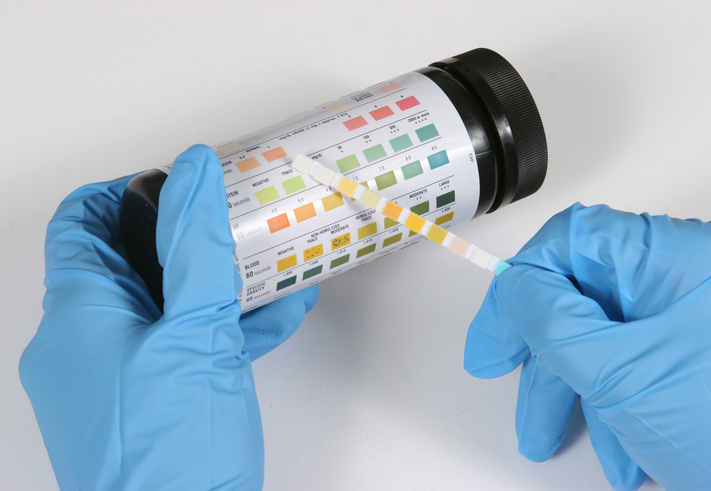
Urinteststreifen
There is a rare condition called famili... People with type 2 diabetes who are taking a medicine called an SGLT2 inhibitor (such as canagliflozin Canagliflozin tablets for diabetes , dapagliflozin Dapagliflozin tablets or empagliflozin Empagliflozin tablets ) can have Glukose in the urine due to the fact that these medicines help to reduce blood.

Patient information leaflet
Gehirntumore
This leaflet aims to give a brief overview of the various types of brain tumours. The treatment and survival rates vary greatly, depending on factors such as the type of tumour and the location in the brain. Understanding the brain Cross-section diagram of the brain Cross-section diagram of the brain The main part... These provide support,.
Patient information leaflet
Chronische Nierenerkrankung
Chronische Nierenerkrankung means that the kidneys are not working as well as would be expected. Various conditions can cause chronic kidney disease. Severity can vary but most cases are mild or moderate, occur in older people and do not cause symptoms. Chronic kidney disease tends to become worse gradually over months or years. What is chronic kidney.

Patient information leaflet
Ernährung bei chronischer Nierenerkrankung
Chronische Nierenerkrankung (CKD) is a common long-term condition where the kidneys aren't working as well as they should be. There are some dietary choices that are recommended for people with early CKD. People with more advanced CKD may be advised to follow a special diet, usually with the support of a specialist dietician. It's important for.

Patient information leaflet
Leberfunktionstests
What are the main liver function tests. The usual liver function tests typically include the following: Bilirubin. Albumin. Total protein. You may be advised to ... A few things to remember about abnormal liver function tests Liver function tests are not a diagnosis; they are a set of clues which help doctors make a diagnosis. Abnormal liver.
Weiterführende Lektüre und Referenzen
- glial fibrillary acidic protein; MedlinePlus, National Library of Medicine.
- Der Perng M, Su M, Wen SF, Li R, Gibbon T, Prescott AR, Brenner M, Quinlan RA. The Alexander disease-causing glial fibrillary acidic protein mutant, R416W, accumulates into Rosenthal fibers by a pathway that involves filament aggregation and the association of alpha B-crystallin and HSP27. Am J Hum Genet. 2006 Aug;79(2):197-213. doi: 10.1086/504411. Epub 2006 Jun 12.
- Li R, Johnson AB, Salomons G, Goldman JE, Naidu S, Quinlan R, Cree B, Ruyle SZ, Banwell B, D'Hooghe M, Siebert JR, Rolf CM, Cox H, Reddy A, Gutierrez-Solana LG, Collins A, Weller RO, Messing A, van der Knaap MS, Brenner M. Glial fibrillary acidic protein mutations in infantile, juvenile, and adult forms of Alexander disease. Ann Neurol. 2005 Mar;57(3):310-26. doi: 10.1002/ana.20406.
- Omary MB, Coulombe PA, McLean WH. Intermediate filament proteins and their associated diseases. N Engl J Med. 2004 Nov 11;351(20):2087-100. doi: 10.1056/NEJMra040319. No abstract available.
- Quinlan RA, Brenner M, Goldman JE, Messing A. GFAP and its role in Alexander disease. Exp Cell Res. 2007 Jun 10;313(10):2077-87. doi: 10.1016/j.yexcr.2007.04.004. Epub 2007 Apr 6.
- Srivastava S, Waldman A, Naidu S. Alexander Disease. 2002 Nov 15 [updated 2020 Nov 12]. In: Adam MP, Bick S, Mirzaa GM, Wallace SE, Amemiya A, editors. GeneReviews(R) [Internet]. Seattle (WA): University of Washington, Seattle; 1993-2026. Available from http://www.ncbi.nlm.nih.gov/books/NBK1172/
- Wippold FJ 2nd, Perry A, Lennerz J. Neuropathology for the neuroradiologist: Rosenthal fibers. AJNR Am J Neuroradiol. 2006 May;27(5):958-61.
Artikelverlauf
Artikel auch verfügbar in Englisch, Deutsch, Spanisch, Französisch, Italienisch, Portugiesisch, Hindi, Hebräisch, Arabisch, und Schwedisch.
18. Aug 2020 | Neueste Version
1 Nov 2008 | Ursprünglich veröffentlicht
Teilen Sie Ihre Gedanken oder Erfahrungen mit anderen in unserem Patientengemeinschaften.
Einfacher Zugang zu vertrauenswürdigen Behandlungen und Gesundheitsdiensten online.
Common conditions
Get help with common conditions through the NHS, without a GP appointment.





Abonnieren Sie den Patienten-Newsletter
Ihre wöchentliche Dosis klarer, vertrauenswürdiger Gesundheitsberatung - geschrieben, um Ihnen zu helfen, sich informiert, selbstbewusst und in Kontrolle zu fühlen.
Durch das Abonnieren akzeptieren Sie unsere Datenschutzrichtlinie. Sie können sich jederzeit abmelden. Wir verkaufen Ihre Daten niemals.