
Checkliste der Meningitis-Symptome
Begutachtet von Dr Helen Huins, MRCGPVerfasst von Dr Mary Harding, MRCGPUrsprünglich veröffentlicht 24. Sept 2017
Erfüllt die redaktionelle Richtlinien
- HerunterladenHerunterladen
- Teilen
- Language
- Diskussion
- Audio-Version
- Zu bevorzugten Quellen bei Google hinzufügen
Die folgenden sind mögliche Symptome von Meningitis oder Sepsis. Aber beachten Sie: Nicht alle Symptome müssen vorhanden sein. Zum Beispiel können die klassischen Symptome wie Nackensteifheit und Hautausschlag fehlen. Siehe unten für weitere mögliche Symptome. Wenn Sie Meningitis oder Sepsis vermuten - suchen Sie sofort medizinische Hilfe.
Was sind Meningitis und Sepsis?
Meningitis ist eine Entzündung der Membranen, die das Gehirn und das Rückenmark bedecken (die Meningen). Es wird normalerweise durch eine Infektion mit Keimen (Bakterien oder Viren) verursacht
Septikämie (Sepsis) ist eine Infektion des Blutes mit Bakterien (Blutvergiftung). Wenn sich Bakterien vermehren und Gifte (Toxine) in das Blut freisetzen, kann dies zu einer schweren Erkrankung führen.
Meningitis und Septikämie sind separate Krankheiten. Allerdings verursacht die häufigste Ursache für bakterielle Meningitis (der Meningokokkus) oft gleichzeitig eine Septikämie. Daher könnte eine Person mit Meningitis Folgendes haben:
Symptome und Anzeichen von Meningitis (15 von 100 Fällen).
Symptome und Anzeichen von Septikämie (25 von 100 Fällen, oder ein Viertel).
Symptome und Anzeichen sowohl von Meningitis als auch von Septikämie (60 von 100 Fällen).
Meningitis kann in jedem Alter auftreten, ist jedoch am häufigsten bei Kindern und jungen Menschen.
Was sind die Symptome und Anzeichen von Meningitis und Sepsis?
In den frühen Stadien von Meningitis und Septikämie ist es oft schwierig, diese Erkrankungen von leichten Krankheiten zu unterscheiden. Dies liegt daran, dass sie mit milden Symptomen beginnen können, die anderen häufigen Infektionen ähneln. Daher ist es wichtig, die frühen Warnsymptome zu kennen, die auf eine ernstere Erkrankung hindeuten könnten. Es ist auch wichtig, die Anzeichen einer schweren Krankheit zu kennen und zu wissen, wann ein Krankenwagen gerufen werden sollte.
Häufige frühe Warnsymptome
Viele Kinder, die Meningitis oder Sepsis entwickeln, haben unspezifische Symptome wie ein allgemeines Unwohlsein oder ein krankes Aussehen. Diese Symptome können Fieber, eine erhöhte Müdigkeit und Übelkeit umfassen.
Allerdings treten drei Symptome, die sich häufig früh entwickeln - oft bevor die später aufgeführten klassischen Symptome auftreten - auf:
Beinschmerzen - die stark werden können und ein Kind daran hindern, zu stehen oder zu gehen.
Kalte Hände oder Füße - auch wenn das Kind Fieber hat.
Blasse oder fleckige Haut
Blasse, düstere oder blaue Farbe der Haut um die Lippen.
Hautausschlag - tritt häufig auf, aber nicht immer
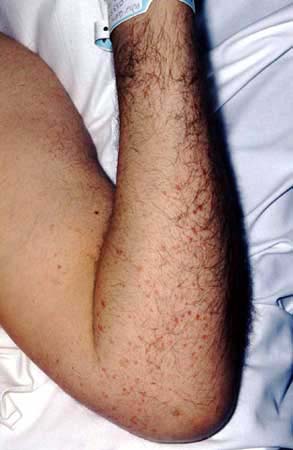
Ein typischer Ausschlag ist bei einer Meningokokken-Infektion häufig. Der Ausschlag ist rot oder lila. Zunächst entwickeln sich kleine Flecken, die in Gruppen überall am Körper auftreten können. Sie wachsen oft und werden fleckig und sehen aus wie kleine Blutergüsse. Zunächst können ein oder zwei auftreten, aber viele können dann in verschiedenen Teilen des Körpers erscheinen. Überprüfen Sie den gesamten Körper auf einen Ausschlag. Wenn die Haut dunkel ist, kann es schwieriger sein, den Ausschlag zu erkennen - überprüfen Sie hellere Hautbereiche wie Handflächen oder Fußsohlen.
Petechialer Ausschlag
Purpura Ausschlag
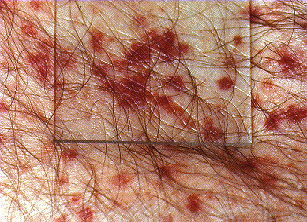
Die Flecken/Bläschen verblassen nicht, wenn sie gedrückt werden (im Gegensatz zu vielen anderen Ausschlägen). Um dies zu überprüfen, drücken Sie ein durchsichtiges Glas fest auf einen der Flecken oder Bläschen. Wenn der Fleck/das Bläschen nicht verblasst und Sie ihn durch das Glas noch sehen können, suchen Sie sofort medizinische Hilfe auf.
Glas-Test für Meningitis-Ausschlag
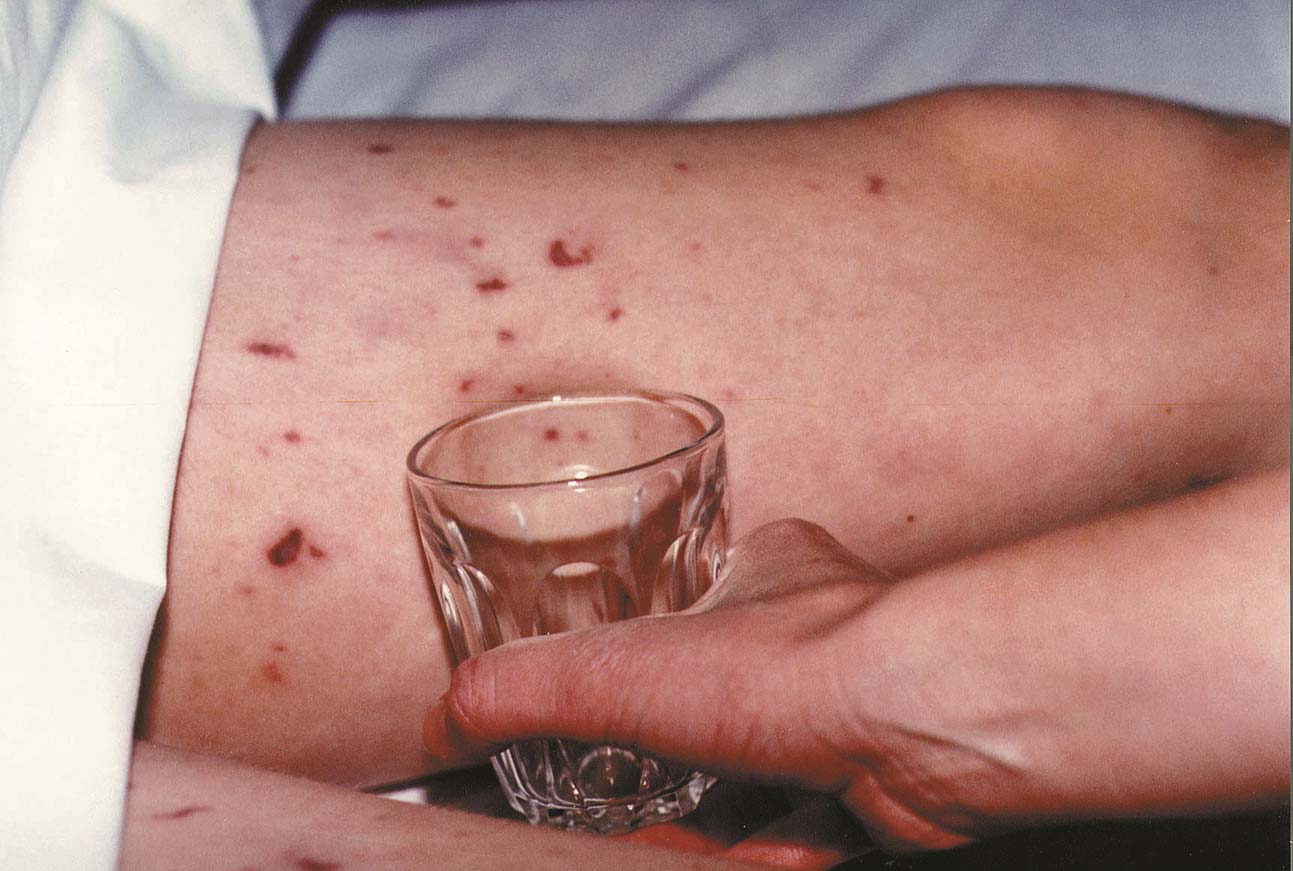
Mit Genehmigung von Meningitis Now reproduziert.
Hinweis: Ein Ausschlag tritt nicht in allen Fällen von Meningitis und Septikämie auf, kann jedoch recht charakteristisch sein, wenn er auftritt.
Andere Symptome
Andere Symptome, die bei Babys auftreten können
Dazu gehören:
Übermäßiges Weinen - oft hochfrequent oder jammernd und anders als ihr gewöhnliches Weinen.
Schnelles Atmen oder ungewöhnliche Atemmuster.
Eine hohe Temperatur (Fieber) - aber das Baby sieht möglicherweise nicht heiß aus und die Haut kann blass oder fleckig aussehen oder blau werden. Die Hände und Füße können sich kalt anfühlen. Das Baby kann zittern.
Nimmt keine Nahrung auf - manchmal wiederholt krank (Erbrechen).
Reizbarkeit - besonders beim Hochheben und Handhaben.
Müdigkeit oder Schläfrigkeit - wacht nicht leicht auf.
Manchmal entwickelt sich eine vorgewölbte Fontanelle. Die Fontanelle ist die weiche Stelle am Kopf eines Babys.
Ruckartige Bewegungen können auftreten und der Körper kann steif erscheinen. Manchmal tritt das Gegenteil ein und der Körper wirkt sehr schlaff. Krämpfe (Konvulsionen) können sich manchmal entwickeln.
Andere Symptome, die bei älteren Kindern und Erwachsenen auftreten können
Dazu gehören:
Fieber und Schüttelfrost - jedoch fühlen sich die Hände und Füße oft kalt an.
Steifer Nacken - kann den Nacken nicht nach vorne beugen.
Kopfschmerzen - die stark werden können.
Schnelles Atmen.
Schmerzen in Muskeln oder Gelenken - die Schmerzen können ziemlich stark werden.
Kein Verlangen zu essen oder zu trinken.
Die Haut kann blass oder fleckig aussehen oder sich blau verfärben.
Abneigung gegen grelles Licht - wird die Augen schließen und sich vom Licht abwenden.
Schläfrigkeit oder Verwirrung - kann abwesend wirken.
Übelkeit oder wiederholtes Erbrechen. Manchmal Bauchschmerzen (abdominale Schmerzen) und Durchfall.
Anfälle (Krämpfe).
Der Verlauf der Symptome
Die Symptome entwickeln sich oft schnell, innerhalb weniger Stunden. Die Symptome können in beliebiger Reihenfolge auftreten und nicht alle müssen auftreten. Manchmal entwickeln sich die Symptome langsamer, über mehrere Tage. Die Symptome können zunächst auf eine weniger ernsthafte Erkrankung hindeuten. Zum Beispiel sind Fieber, Kopfschmerzen und Erbrechen bei vielen viralen Erkrankungen wie Grippe häufig. Daher, selbst wenn Sie anfangs denken, es sei Grippe, kann es Meningitis oder Sepsis sein, wenn sich die Symptome verschlimmern.
Was soll ich tun, wenn ich befürchte, dass es Meningitis sein könnte?
Wenn Ihr Kind (oder Sie) eines dieser Symptome hat, sprechen Sie noch heute mit einem Arzt oder einer Krankenschwester. (Rufen Sie Ihre Hausarztpraxis an oder - im Vereinigten Königreich - wählen Sie 111, oder sprechen Sie mit dem Bereitschaftsarzt):
Immer kränker werden.
Nicht trinken.
Weniger Urin als üblich ausscheiden.
Wirken trocken (dehydriert). Anzeichen dafür sind:
Die weiche Stelle am Kopf des Babys (Fontanelle) scheint eingesunken zu sein.
Trockener Mund.
Eingefallene Augen.
Übermäßige Schläfrigkeit.
Temperatur (Fieber) verbessert sich nicht mit Paracetamol oder Ibuprofen, nicht einmal für kurze Zeit.
Temperatur von 39°C oder mehr bei einem Baby von 3 bis 6 Monaten.
Wenn Ihr Kind (oder Sie) eines dieser Symptome hat, wählen Sie 999/112/911 und sofort einen Krankenwagen rufen:
Schwer aufzuwecken (nicht erweckbar).
Schlapp sein.
Blasse, blaue oder fleckige Haut
Ein schwaches, hohes oder anhaltendes Weinen bei einem Baby.
Atembeschwerden oder grunzende Atmung.
Anfälle (Krämpfe).
Eine Temperatur von 38°C oder mehr bei einem Baby unter 3 Monaten.
Die weiche Stelle am Kopf des Babys (Fontanelle) wölbt sich nach außen.
Ein neuer rot/lila Ausschlag, der plötzlich aufgetreten ist und nicht verblasst, wenn ein Glas dagegen gedrückt wird.
Patientenauswahl für Meningitis und Sepsis

Infektionen
Video: Wie bekommt man bakterielle Meningitis?
Meningitis ist eine Erkrankung, die sich leicht verhindern lässt, wenn Sie die frei verfügbaren Impfungen nutzen. Sollten Sie jedoch daran erkranken, kann sie äußerst ernst und sogar lebensbedrohlich sein. Unsere Experten bieten einige nützliche und praktische Einblicke, um Ihnen zu helfen, sicher zu bleiben.
von Dr. Sarah Jarvis

Infektionen
Private MenB-Impfung: Wer sie in Betracht ziehen könnte und wie sie funktioniert
Impfungen haben die Meningitis-Prävention im Vereinigten Königreich revolutioniert. Allerdings werden nicht alle Formen der Meningokokken-Krankheit durch die routinemäßigen Impfprogramme für alle Altersgruppen abgedeckt. Eine der wichtigsten Stämme, die im Vereinigten Königreich noch vorkommen, ist Meningokokken-Gruppe B (MenB). Während Säuglinge routinemäßig gegen MenB geimpft werden, sind viele Teenager und Erwachsene nicht geschützt. Daher entscheiden sich manche Menschen, die MenB-Impfung privat zu erhalten, insbesondere wenn sie das Gefühl haben, einem erhöhten Risiko ausgesetzt zu sein. Zu verstehen, was MenB ist, wer von einer Impfung profitieren könnte und wie die private Impfung funktioniert, kann Ihnen bei der Entscheidung helfen, ob sie für Sie geeignet ist.
von Thomas Andrew Porteus, MBCS
Über den AutorVollständige Biografie anzeigen
Verfasst von

Dr Mary Harding, MRCGP
Allgemeinmediziner, Medizinischer Autor
BA, MA, MB, BChir, MRCGP, DFFP
Dr. Mary Harding schloss 1989 ihr Medizinstudium an der Universität Cambridge ab.
Über den RezensentenVollständige Biografie anzeigen

Dr Helen Huins, MRCGP
Allgemeinmediziner, Medizinischer Autor
MB, BS, Lond, DCH, DRCOG, MRCGP, JCPTGP, DFFP
Helen schloss 1989 ihr Studium am Guy’s Hospital ab und verließ London 1990, um sich auf dem Land niederzulassen.
Artikelverlauf
Artikel auch verfügbar in Englisch, Deutsch, Spanisch, Französisch, Italienisch, Portugiesisch, Hindi, Hebräisch, Arabisch, und Schwedisch.
24. Sept 2017 | Ursprünglich veröffentlicht
Verfasst von:
Dr Mary Harding, MRCGPBegutachtet von
Dr Helen Huins, MRCGP
Nehmen Sie an der Diskussion teil
Teilen Sie Ihre Gedanken oder Erfahrungen mit anderen in unserem Patientengemeinschaften.

Fragen, teilen, verbinden.
Durchsuchen Sie Diskussionen, stellen Sie Fragen und teilen Sie Erfahrungen zu Hunderten von Gesundheitsthemen.

Fühlen Sie sich unwohl?
Bewerten Sie Ihre Symptome online kostenlos
Abonnieren Sie den Patienten-Newsletter
Ihre wöchentliche Dosis klarer, vertrauenswürdiger Gesundheitsberatung - geschrieben, um Ihnen zu helfen, sich informiert, selbstbewusst und in Kontrolle zu fühlen.
Durch das Abonnieren akzeptieren Sie unsere Datenschutzrichtlinie. Sie können sich jederzeit abmelden. Wir verkaufen Ihre Daten niemals.