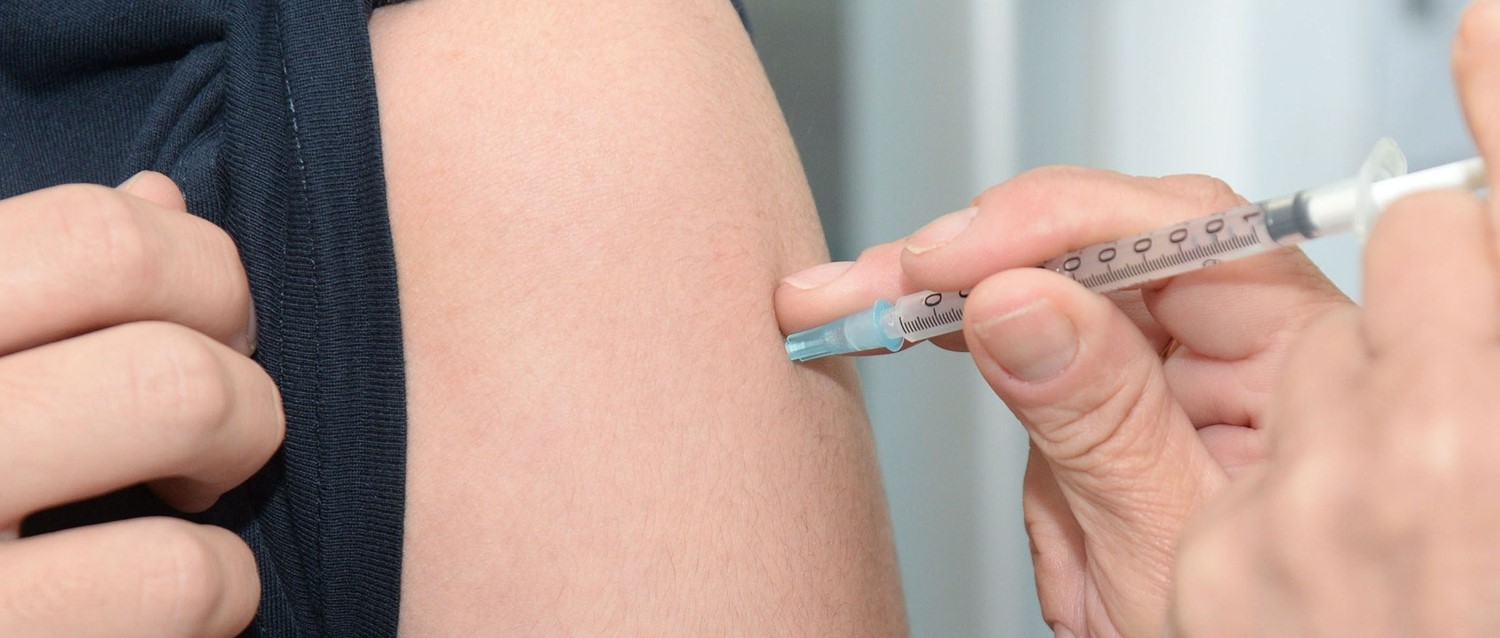
Werden Grippeimpfungen nach dem Brexit verfügbar sein?
Begutachtet von Joe CrowtherVerfasst von Ashwin BhandariUrsprünglich veröffentlicht 9. Sept. 2019
Erfüllt die redaktionelle Richtlinien
- HerunterladenHerunterladen
- Teilen
- Language
- Diskussion
- Audio-Version
- Zu bevorzugten Quellen bei Google hinzufügen
Leaving the EU without a deal on 31 October 'likely' to disrupt flu vaccine delivery just as UK faces virulent strain, doctors warn.
Several doctors and other health professionals have expressed concerns that a no-deal Brexit would affect this year's supply.
The president of the Royal College of Physicians, Andrew Goddard, told BBC Newsnight: "I can't sit here and say, 'Don't worry, no deal will be fine, no one is going to come to any harm, no one is going to run out of medicines'. "
Drug manufacturer Sanofi UK has said it would also expect issues with the vaccine in the event of no deal.
Hugo Fry, the company's managing director, told the BBC that more than 1 million doses of the vaccine would still need to be imported into the country after 31 October. He states that this is due to delays in identifying which strains of flu to put in this year's supply.
Fry added: "In the world of vaccines, you get shortages more often than you do in medicines, for example, because of the complexity. Therefore imagine in a world where it is difficult to get things into a country and there's a shortage of a particular vaccine, that's when you want to rush it into the country in case there's a shortfall."
The Department of Health stated: "We are working closely with vaccine suppliers to ensure they have robust contingencies in place. We want to reassure our patients that our plans should ensure that supplies of vaccines remain uninterrupted when we leave the EU on October 31, whatever the circumstances."
Flu vaccines are offered free every year to those most at risk of the illness, including over-65s and pregnant women, and other people can pay a small fee for the jab.
The World Health Organization also recommended it to people with pre-existing health conditions - (such as diabetes, asthma, chronic heart or lung diseases), children aged 6 months to 5 years, pregnant women and healthcare workers - to effectively prevent flu infection and its complications.
The NHS says the best time to get a flu vaccine is in the autumn, from the beginning of October to the end of November. Last winter it was reported that 72% of eligible people over 65 and 45% of eligible pregnant women had the vaccine, according to Public Health England.
Patientenauswahl für Grippe und Impfung
Infektionen
Ist es die Grippe oder nur eine Erkältung?
The season is upon us - it's that time of year when everyone reaches for the cold and flu medicine at the slightest hint of a cough or runny nose - but which is it, a cold, or the flu?
von Kerry Taylor-Smith
Infektionen
Wie Sie Ihre Grippesymptome zu Hause behandeln können
Winter is coming and that means flu season will soon be in full swing. Most of us are familiar with the headaches, pains, sore throat, and runny nose - but there are steps you can take to manage your symptoms at home.
von Victoria Raw
Über den AutorVollständige Biografie anzeigen
Verfasst von

Ashwin Bhandari
Medizinischer Autor
BA Journalismus
Über den Rezensenten

Joe Crowther
Artikelverlauf
Artikel auch verfügbar in Englisch, Deutsch, Spanisch, Französisch, Italienisch, Portugiesisch, Hindi, Hebräisch, Arabisch, und Schwedisch.
9. Sept. 2019 | Ursprünglich veröffentlicht
Verfasst von:
Ashwin BhandariBegutachtet von
Joe Crowther
Nehmen Sie an der Diskussion teil
Teilen Sie Ihre Gedanken oder Erfahrungen mit anderen in unserem Patientengemeinschaften.

Fragen, teilen, verbinden.
Durchsuchen Sie Diskussionen, stellen Sie Fragen und teilen Sie Erfahrungen zu Hunderten von Gesundheitsthemen.

Fühlen Sie sich unwohl?
Bewerten Sie Ihre Symptome online kostenlos
Abonnieren Sie den Patienten-Newsletter
Ihre wöchentliche Dosis klarer, vertrauenswürdiger Gesundheitsberatung - geschrieben, um Ihnen zu helfen, sich informiert, selbstbewusst und in Kontrolle zu fühlen.
Durch das Abonnieren akzeptieren Sie unsere Datenschutzrichtlinie. Sie können sich jederzeit abmelden. Wir verkaufen Ihre Daten niemals.