Hereditary diffuse gastric cancer
Zuletzt aktualisiert 21. März 2023
Erfüllt die redaktionelle Richtlinien
- HerunterladenHerunterladen
- Teilen
- Language
- Diskussion
- Audio-Version
- Zu bevorzugten Quellen bei Google hinzufügen
Hereditary diffuse gastric cancer (HDGC) is an inherited disorder that greatly increases the chance of developing a form of stomach(gastric) cancer. In this form, known as diffuse gastric cancer, there is no solid tumour. Instead cancerous (malignant) cells multiply underneath the stomach lining, making the lining thick and rigid. The invasive nature of this type of cancer makes it highly likely that these cancer cells will spread (metastasize) to other tissues, such as the liver or nearby bones.
Beschreibung
Hereditary diffuse gastric cancer (HDGC) is an inherited disorder that greatly increases the chance of developing a form of stomach(gastric) cancer. In this form, known as diffuse gastric cancer, there is no solid tumour. Instead cancerous (malignant) cells multiply underneath the stomach lining, making the lining thick and rigid. The invasive nature of this type of cancer makes it highly likely that these cancer cells will spread (metastasize) to other tissues, such as the liver or nearby bones.
Symptoms of diffuse gastric cancer occur late in the disease and can include stomach pain, nausea, vomiting, difficulty swallowing (dysphagia), decreased appetite, and weight loss. If the cancer metastasizes to other tissues, it may lead to an enlarged liver, yellowing of the eyes and skin (jaundice), an abnormal buildup of fluid in the abdominal cavity (ascites), firm lumps under the skin, or broken bones.
In HDGC, gastric cancer usually occurs in a person's late thirties or early forties, although it can develop anytime during adulthood. If diffuse gastric cancer is detected early, the survival rate is high; however, because this type of cancer is hidden underneath the stomach lining, it is usually not diagnosed until the cancer has become widely invasive. At that stage of the disease, the survival rate is approximately 20 percent.
Some people with HDGC have an increased risk of developing other types of cancer, such as a form of breast cancer in women that begins in the milk-producing glands (lobular breast cancer); prostate cancer; and cancers of the colon (large intestine) and rectum, which are collectively referred to as colorectal cancer. Most people with HDGC have family members who have had one of the types of cancer associated with HDGC. In some families, all the affected members have diffuse gastric cancer. In other families, some affected members have diffuse gastric cancer and others have another associated form of cancer, such as lobular breast cancer. Frequently, HDGC-related cancers develop in individuals before the age of 50.
Inheritance patterns
The source lists the following possible inheritance patterns: Autosomal dominant. More than one pattern can apply in different cases.
Related genes
Other names
E-cadherin-associated hereditary gastric cancer
Familial diffuse gastric cancer
FDGC
HDGC
Hereditary diffuse gastric adenocarcinoma
Related patient information and medicines
Patient information leaflet
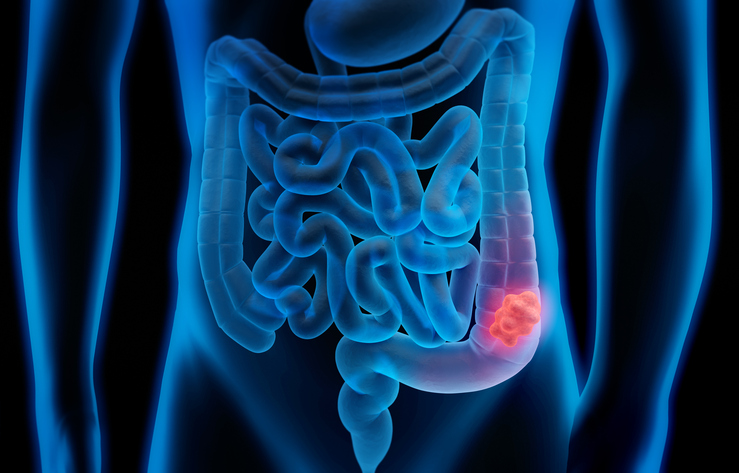
Darmkrebs
Colon cancer and rectal cancer (also called colorectal cancer) are common in the UK. If bowel cancer is diagnosed at an early stage, there is a good chance of a cure. If a close relative has had bowel cancer (there is some genetic factor). If you have a genetic condition that causes bowel cancer, such as familial adenomatous polyposis (FAP) or.

Patient information leaflet
Magenkrebs
Although stomach (gastric) cancer ist common worldwide, it is not so common in the UK. Most cases occur in people over the age of 55. If stomach cancer is diagnosed at an early stage, there is a good chance of a cure. In general, the more advanced the cancer ... However, treatment can often slow the progress of the cancer. What is stomach cancer..

Patient information leaflet
Ursachen von Krebs
Certain risk factors are known to increase the chance das one or more of dein cells will become abnormal and Bleivergiftung to cancer. How does cancer start. The body is made up from millions of tiny cells. Different parts of the body such as organs, bones, muscles, skin and blood are made up from different specialised cells. Most cells have a centre.

Patient information leaflet
Speiseröhrenkrebs
Oesophageal cancer is cancer of the gullet (oesophagus). There are over 8,000 new cases diagnosed every year in the UK and two thirds of new diagnoses are in men.t is the 7th most common cause of cancer death in the UK and accounts for 5% of all cancer deaths. Oesophageal cancer is not inherited so does not run in families. However, a family.

Patient information leaflet
Krebsarten
...ancer Childhood Leukaemias Colon, Rectal and Bowel Cancer (Colorectal Cancer) Gynaecological Cancer Hodgkin's Lymphoma Kidney Cancer Leukaemia Lung Cancer Mouth Cancer (Oral Cancer) Neck Lumps and Bumps Neuroblastoma Non-Hodgkin's Lymphoma Oesophageal Cancer Ovarian Cancer Pancreatic Cancer Penile Cancer Primary Bone Cancer Primary Liver Cancer.

Patient information leaflet
Lungenkrebs
Lung cancer (cancer of the lung) is common worldwide. Around 4 in 10 cases develop in people over the age of 75 years, usually in smokers. If lung cancer is diagnosed at an early stage, there is a chance of a cure. Certai... See the separate leaflet called Causes of cancer for more details. Smoking Smoking is a major risk factor and is the main.
Weiterführende Lektüre und Referenzen
- Hereditary diffuse gastric cancer; MedlinePlus, National Library of Medicine.
- Carneiro P, Fernandes MS, Figueiredo J, Caldeira J, Carvalho J, Pinheiro H, Leite M, Melo S, Oliveira P, Simoes-Correia J, Oliveira MJ, Carneiro F, Figueiredo C, Paredes J, Oliveira C, Seruca R. E-cadherin dysfunction in gastric cancer--cellular consequences, clinical applications and open questions. FEBS Lett. 2012 Aug 31;586(18):2981-9. doi: 10.1016/j.febslet.2012.07.045. Epub 2012 Jul 25.
- Figueiredo J, Soderberg O, Simoes-Correia J, Grannas K, Suriano G, Seruca R. The importance of E-cadherin binding partners to evaluate the pathogenicity of E-cadherin missense mutations associated to HDGC. Eur J Hum Genet. 2013 Mar;21(3):301-9. doi: 10.1038/ejhg.2012.159. Epub 2012 Aug 1.
- Fitzgerald RC, Hardwick R, Huntsman D, Carneiro F, Guilford P, Blair V, Chung DC, Norton J, Ragunath K, Van Krieken JH, Dwerryhouse S, Caldas C; International Gastric Cancer Linkage Consortium. Hereditary diffuse gastric cancer: updated consensus guidelines for clinical management and directions for future research. J Med Genet. 2010 Jul;47(7):436-44. doi: 10.1136/jmg.2009.074237.
- Hansford S, Kaurah P, Li-Chang H, Woo M, Senz J, Pinheiro H, Schrader KA, Schaeffer DF, Shumansky K, Zogopoulos G, Santos TA, Claro I, Carvalho J, Nielsen C, Padilla S, Lum A, Talhouk A, Baker-Lange K, Richardson S, Lewis I, Lindor NM, Pennell E, MacMillan A, Fernandez B, Keller G, Lynch H, Shah SP, Guilford P, Gallinger S, Corso G, Roviello F, Caldas C, Oliveira C, Pharoah PD, Huntsman DG. Hereditary Diffuse Gastric Cancer Syndrome: CDH1 Mutations and Beyond. JAMA Oncol. 2015 Apr;1(1):23-32. doi: 10.1001/jamaoncol.2014.168.
- Kluijt I, Siemerink EJ, Ausems MG, van Os TA, de Jong D, Simoes-Correia J, van Krieken JH, Ligtenberg MJ, Figueiredo J, van Riel E, Sijmons RH, Plukker JT, van Hillegersberg R, Dekker E, Oliveira C, Cats A, Hoogerbrugge N; Dutch Working Group on Hereditary Gastric Cancer. CDH1-related hereditary diffuse gastric cancer syndrome: clinical variations and implications for counseling. Int J Cancer. 2012 Jul 15;131(2):367-76. doi: 10.1002/ijc.26398. Epub 2011 Oct 23.
- Kluijt I, Sijmons RH, Hoogerbrugge N, Plukker JT, de Jong D, van Krieken JH, van Hillegersberg R, Ligtenberg M, Bleiker E, Cats A; Dutch Working Group on Hereditary Gastric Cancer. Familial gastric cancer: guidelines for diagnosis, treatment and periodic surveillance. Fam Cancer. 2012 Sep;11(3):363-9. doi: 10.1007/s10689-012-9521-y.
- Majewski IJ, Kluijt I, Cats A, Scerri TS, de Jong D, Kluin RJ, Hansford S, Hogervorst FB, Bosma AJ, Hofland I, Winter M, Huntsman D, Jonkers J, Bahlo M, Bernards R. An alpha-E-catenin (CTNNA1) mutation in hereditary diffuse gastric cancer. J Pathol. 2013 Mar;229(4):621-9. doi: 10.1002/path.4152.
- Oliveira C, Seruca R, Hoogerbrugge N, Ligtenberg M, Carneiro F. Clinical utility gene card for: Hereditary diffuse gastric cancer (HDGC). Eur J Hum Genet. 2013 Aug;21(8). doi: 10.1038/ejhg.2012.247. Epub 2013 Feb 27. No abstract available.
- Simoes-Correia J, Figueiredo J, Lopes R, Stricher F, Oliveira C, Serrano L, Seruca R. E-cadherin destabilization accounts for the pathogenicity of missense mutations in hereditary diffuse gastric cancer. PLoS One. 2012;7(3):e33783. doi: 10.1371/journal.pone.0033783. Epub 2012 Mar 21.
- van der Post RS, Vogelaar IP, Carneiro F, Guilford P, Huntsman D, Hoogerbrugge N, Caldas C, Schreiber KE, Hardwick RH, Ausems MG, Bardram L, Benusiglio PR, Bisseling TM, Blair V, Bleiker E, Boussioutas A, Cats A, Coit D, DeGregorio L, Figueiredo J, Ford JM, Heijkoop E, Hermens R, Humar B, Kaurah P, Keller G, Lai J, Ligtenberg MJ, O'Donovan M, Oliveira C, Pinheiro H, Ragunath K, Rasenberg E, Richardson S, Roviello F, Schackert H, Seruca R, Taylor A, Ter Huurne A, Tischkowitz M, Joe ST, van Dijck B, van Grieken NC, van Hillegersberg R, van Sandick JW, Vehof R, van Krieken JH, Fitzgerald RC. Hereditary diffuse gastric cancer: updated clinical guidelines with an emphasis on germline CDH1 mutation carriers. J Med Genet. 2015 Jun;52(6):361-74. doi: 10.1136/jmedgenet-2015-103094. Epub 2015 May 15.
Artikelverlauf
Artikel auch verfügbar in Englisch, Deutsch, Spanisch, Französisch, Italienisch, Portugiesisch, Hindi, Hebräisch, Arabisch, und Schwedisch.
21. März 2023 | Neueste Version
1 Jan 2014 | Ursprünglich veröffentlicht
Nehmen Sie an der Diskussion teil
Teilen Sie Ihre Gedanken oder Erfahrungen mit anderen in unserem Patientengemeinschaften.

Fragen, teilen, verbinden.
Durchsuchen Sie Diskussionen, stellen Sie Fragen und teilen Sie Erfahrungen zu Hunderten von Gesundheitsthemen.
Abonnieren Sie den Patienten-Newsletter
Ihre wöchentliche Dosis klarer, vertrauenswürdiger Gesundheitsberatung - geschrieben, um Ihnen zu helfen, sich informiert, selbstbewusst und in Kontrolle zu fühlen.
Durch das Abonnieren akzeptieren Sie unsere Datenschutzrichtlinie. Sie können sich jederzeit abmelden. Wir verkaufen Ihre Daten niemals.