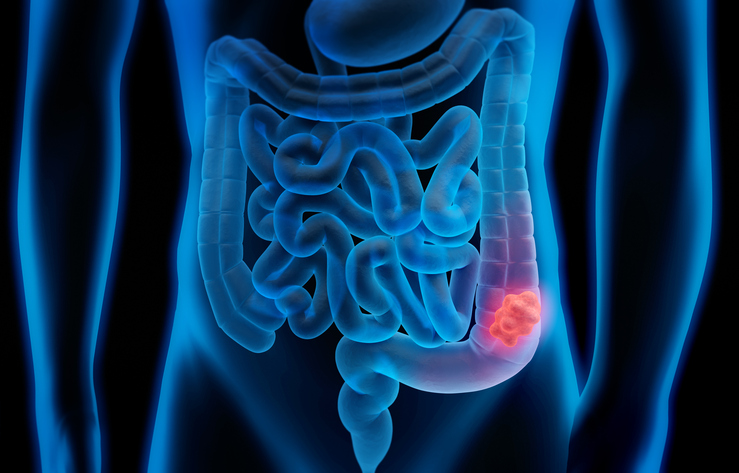
Darmkrebs
Kolon und Rektum
Begutachtet von Dr Philippa Vincent, MRCGPZuletzt aktualisiert von Dr Doug McKechnie, MRCGPZuletzt aktualisiert 17. Apr 2023
Erfüllt die redaktionelle Richtlinien
- HerunterladenHerunterladen
- Teilen
- Language
- Diskussion
- Audio-Version
- Zu bevorzugten Quellen bei Google hinzufügen
In dieser Serie:DarmkrebsvorsorgeFäkaler immunochemischer TestSigmoidoskopieKoloskopieCT-KolonographieDarm-Polypen
Dickdarmkrebs und Enddarmkrebs (auch Darmkrebs genannt) sind im Vereinigten Königreich häufig. Der Dickdarm und der Enddarm sind Teile Ihres Darms. Die meisten Fälle treten bei Menschen über 50 Jahren auf. Wird Darmkrebs frühzeitig diagnostiziert, bestehen gute Heilungschancen.
Im Allgemeinen gilt: Je weiter der Krebs fortgeschritten ist (je stärker er gewachsen ist und sich ausgebreitet hat), desto geringer ist die Chance, dass die Behandlung heilend wirkt. Eine Behandlung kann das Fortschreiten des Krebses jedoch oft verlangsamen.
Auf einen Blick
Darmkrebs ist Krebs des Dickdarms, einschließlich des Kolons oder des Enddarms.
Es ist eine der häufigsten Krebsarten im Vereinigten Königreich.
Zu den Symptomen können Blut im Stuhl, Veränderungen der Stuhlgewohnheiten und Bauchschmerzen gehören.
Zu den Behandlungsmöglichkeiten gehören Operationen, Chemotherapie und Strahlentherapie.
Wenden Sie sich an einen Arzt, wenn Sie Symptome haben oder sich Sorgen wegen Darmkrebs machen.
Was ist Darmkrebs?
Darmkrebs wird manchmal auch als Dickdarm- oder Enddarmkrebs, kolorektaler Krebs oder Krebs des Dickdarms bezeichnet. Er gehört zu den häufigsten Krebserkrankungen im Vereinigten Königreich. (Im Gegensatz dazu ist Dünndarmkrebs selten.)
Darmkrebs kann jeden Teil des Dickdarms oder des Enddarms betreffen. Am häufigsten entsteht er jedoch im unteren Abschnitt des absteigenden Dickdarms, im Sigma oder im Enddarm.
Darmkrebs entsteht meist aus einer kleinen fleischigen Wucherung (Polyp), die sich an der Schleimhaut des Dickdarms oder des Enddarms gebildet hat (siehe unten). Manchmal geht Darmkrebs von einer Zelle in der Schleimhaut des Dickdarms oder des Enddarms aus, die krebsartig entartet.
Einige seltene Krebsarten entstehen aus verschiedenen anderen Zellen in der Wand des Dickdarms oder des Enddarms, zum Beispiel Karzinoide, Lymphome und Sarkome. Wenn sich die Krebszellen vermehren, bilden sie einen Tumor.
Der Tumor dringt tiefer in die Wand des Dickdarms oder Enddarms ein. Einige Zellen können sich lösen und in die Lymphbahnen oder den Blutkreislauf gelangen. Der Krebs kann sich dann auf nahegelegene Lymphknoten oder andere Bereiche des Körpers ausbreiten (metastasieren) – am häufigsten auf die Leber und die Lunge.
Polypen und Darmkrebs
Ein Darmpolyp (Adenom) is a small growth that sometimes forms on the inside lining of the colon or rectum. Most bowel polyps develop in older people. About 1 in 4 people over the age of 50 develop at least one bowel polyp. Polyps are non-cancerous (benign) and usually cause no problems.
Manchmal kann sich ein gutartiger Polyp jedoch zu Krebs entwickeln. Wenn das geschieht, dauert es in der Regel mehrere Jahre. Die meisten Darmkrebserkrankungen entstehen aus einem Polypen, der bereits seit 5 bis 15 Jahren vorhanden ist.
Siehe den separaten Beipackzettel mit dem Titel Krebs für allgemeinere Informationen über Krebs.
Wo befinden sich Dickdarm und Enddarm?
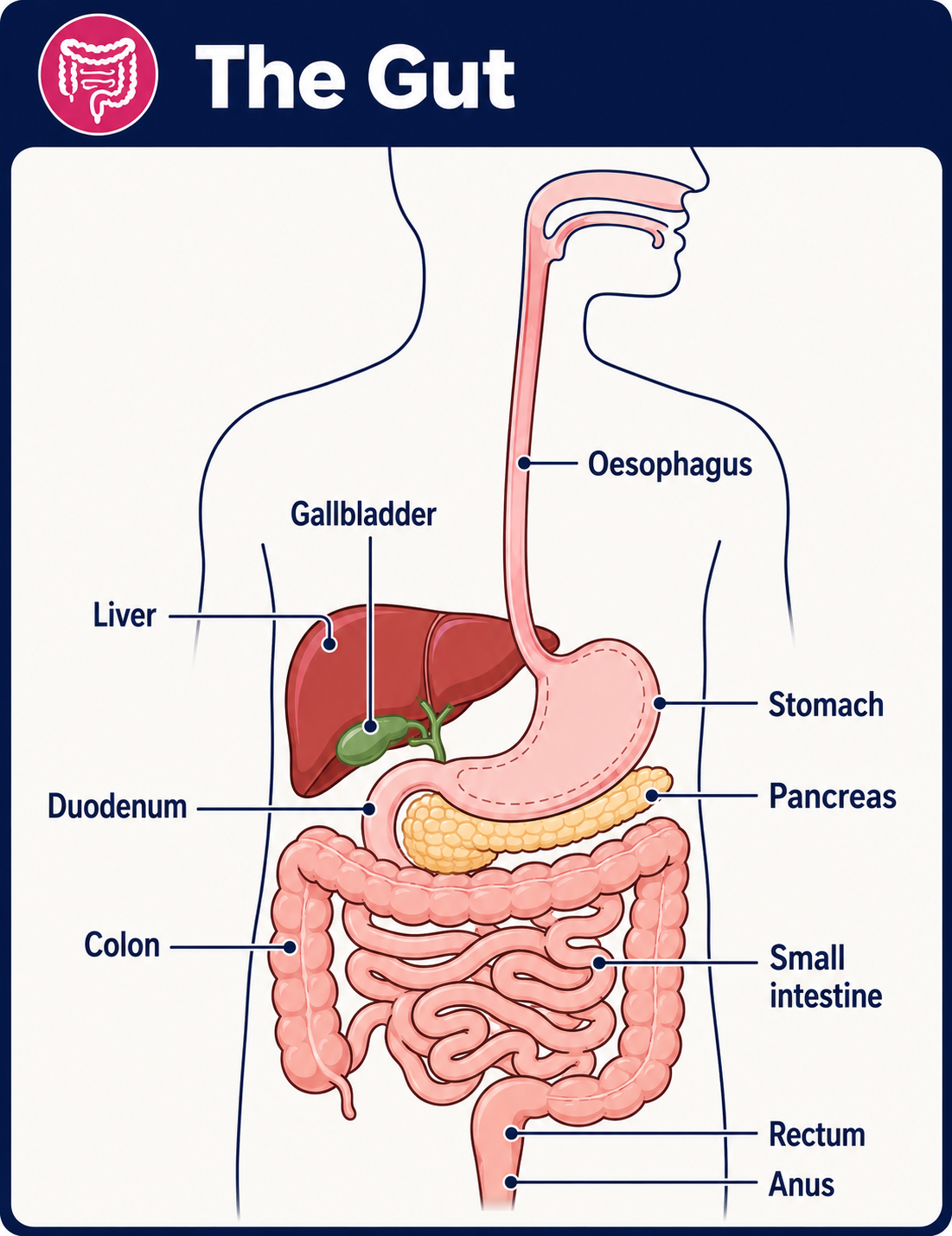
Der Dickdarm und der Enddarm sind Teile des Darms (Verdauungstrakts). Der Verdauungstrakt beginnt am Mund und endet am After. Wenn wir essen oder trinken, gelangen die Nahrung und die Flüssigkeit durch die Speiseröhre in den Magen. Der Magen durchmischt die Nahrung und gibt sie anschließend an den Dünndarm weiter.
Diagramm zur Benennung der Teile des Darms
Dickdarmkrebs
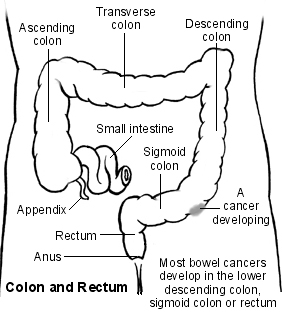
Der Dünndarm ist mehrere Meter lang. Hier werden die Nahrungsmittel verdaut und die Nährstoffe aufgenommen. Unverdaute Nahrungsreste, Wasser und Abfallstoffe gelangen anschließend in den Dickdarm. Der Hauptteil des Dickdarms wird Kolon genannt und ist etwa 150 cm lang.
Dieser ist in vier Abschnitte unterteilt: den aufsteigenden, den quer verlaufenden und den absteigenden Dickdarm sowie das Sigma. Im Dickdarm werden Wasser und Salze teilweise vom Körper aufgenommen. Der letzte Abschnitt des Dickdarms heißt Mastdarm und ist etwa 15 cm lang. Im Mastdarm wird der Stuhl (Kot) gespeichert, bevor er über den After ausgeschieden wird.
Was verursacht Darmkrebs?
Der genaue Grund, warum eine Zelle krebsartig wird, ist unklar. Man geht davon aus, dass etwas bestimmte Gene in der Zelle beschädigt oder verändert. Dadurch wird die Zelle abnormal und vermehrt sich unkontrolliert.
Weitere Informationen finden Sie im separaten Merkblatt „Ursachen von Krebs“.
Risikofaktoren
Obwohl Darmkrebs ohne erkennbaren Grund entstehen kann, gibt es bestimmte Risikofaktoren, die die Wahrscheinlichkeit für die Entstehung von Darmkrebs erhöhen. Zu den Risikofaktoren gehören:
Alter: Darmkrebs tritt bei älteren Menschen häufiger auf. Acht von zehn Menschen, bei denen Darmkrebs diagnostiziert wird, sind älter als 60 Jahre.
Wenn ein naher Verwandter an Darmkrebs erkrankt war (es gibt einen genetischen Faktor).
Wenn Sie an einer genetischen Erkrankung leiden, die Darmkrebs verursacht, wie etwa familiäre adenomatöse Polyposis (FAP) oder hereditärer nicht-polypöser Darmkrebs (HNPCC). Diese Erkrankungen machen etwa 5 % aller Darmkrebserkrankungen aus und sind recht selten.
Wenn Sie Colitis ulcerosa oder Morbus Crohn (conditions of the colon) for more than 8-10 years.
Lifestyle factors: wenig Bewegung, drinking a lot of alcohol, rauchen, und eine Ernährung mit viel rotem und verarbeitetem Fleisch.
Bei … besteht ein geringeres Risiko, an Darmkrebs zu erkranken people who eat a lot of fruit and vegetables.
Symptome von Darmkrebs
When a bowel cancer first develops and is small it usually causes no symptoms. As it grows, the Symptome und Anzeichen von Darmkrebs that develop can vary, depending on the site of the tumour.
Die häufigsten Symptome von Darmkrebs, die zuerst auftreten, sind:
Blutung aus dem Tumor. Möglicherweise sehen Sie Blut im Stuhl. Manchmal kann das Blut den Stuhl sehr dunkel färben. Die Blutung ist normalerweise nicht stark und wird in vielen Fällen nicht bemerkt, da es sich nur um eine geringe Menge Blut handelt, die sich mit dem Stuhl vermischt. Regelmäßig auftretende geringe Blutungen können jedoch zu Blutarmut führen, wodurch Sie müde und blass werden können.
Schleim im Stuhl.
Eine Veränderung Ihrer üblichen Stuhlgewohnheiten. This means you may pass faeces more often or less often than usual, causing bouts of Durchfall oder Verstopfung.
Das Gefühl, den Enddarm nach dem Stuhlgang nicht vollständig entleert zu haben.
Bauchschmerzen (abdominale Schmerzen).
Wenn der Tumor im Dickdarm oder Enddarm wächst, können sich die Symptome verschlimmern und Folgendes umfassen:
Dieselben Symptome wie oben, jedoch stärker ausgeprägt.
Möglicherweise fühlen Sie sich allgemein unwohl, müde oder nehmen ab.
Wenn der Krebs sehr groß wird, kann er eine Blockade (Verstopfung) des Dickdarms verursachen. Dies führt zu starken Bauchschmerzen und anderen Symptomen wie Übelkeit (Erbrechen).
Manchmal verursacht der Krebs ein Loch in der Darmwand des Dickdarms oder Enddarms (Perforation). In diesem Fall kann Stuhl in den Bauchraum austreten. Das verursacht starke Schmerzen.
Wenn sich der Krebs auf andere Körperteile ausbreitet, können verschiedene weitere Symptome auftreten. Die Symptome hängen davon ab, wohin er sich ausgebreitet hat.
Alle oben genannten Symptome können auch durch andere Erkrankungen verursacht werden. Daher sind Untersuchungen erforderlich, um Darmkrebs zu bestätigen.
Wenden Sie sich an einen Arzt, wenn eines der genannten Symptome bei Ihnen auftritt oder Sie befürchten, an Darmkrebs erkrankt zu sein.
Wie wird Darmkrebs diagnostiziert?
Erstbewertung
If a doctor suspects that you may have bowel cancer, he or she will examine you. The examination will usually include a rectal examination. The doctor inserts a gloved finger through your anus into your rectum to feel if there is a tumour in the lower part of the rectum. However, often the examination is normal, especially if the cancer is in its early stages. Your doctor may also arrange Bluttests and a faecal (poo) test called a FIT-Test.
Mit einem FIT-Test werden kleinste Blutmengen im Stuhl nachgewiesen. Der Test ist auch dann sinnvoll, wenn Sie sichtbares Blut im Stuhl haben (versuchen Sie, die Probe aus einem Bereich ohne sichtbares Blut zu entnehmen). Bei einem negativen FIT-Test ist Darmkrebs unwahrscheinlich. Ein positiver FIT-Test kann viele andere Ursachen als Darmkrebs haben, bedeutet aber in der Regel, dass Ihr Arzt Sie dringend zur weiteren Untersuchung an einen Facharzt überweist.
Hinweis der Redaktion
Dr. Krishna Vakharia, 16. Oktober 2023
Das National Institute for Health and Care Excellence (NICE) hat empfohlen, dass eine Person innerhalb von 28 Tagen nach einer dringenden Überweisung durch ihren Hausarzt wegen Verdachts auf Krebs eine Diagnose oder einen Ausschluss von Krebs erhalten sollte.
Einer oder mehrere der folgenden Tests können vereinbart werden:
Koloskopie
Eine Darmspiegelung ist eine Untersuchung, bei der ein langes, dünnes, flexibles Instrument (ein Koloskop) durch den After in den Enddarm und den Dickdarm eingeführt wird. So können der gesamte Dickdarm und der Enddarm genau untersucht werden.
Flexible Sigmoidoskopie
Dies ähnelt einer Koloskopie. Der Unterschied besteht darin, dass ein kürzeres Endoskop verwendet wird, das nur in den Enddarm und den Sigmadarm eingeführt wird.
CT-Kolonographie
Bei dieser Untersuchung werden mithilfe von Röntgenstrahlen mehrere Bilder Ihres Dickdarms und Enddarms aufgenommen. Ein Computer setzt diese anschließend zu einem detaillierten Bild zusammen, auf dem Polypen oder andere Auffälligkeiten an der Oberfläche Ihres Dickdarms oder Enddarms zu sehen sein können. Diese Untersuchung eignet sich für Menschen, bei denen keine Darmspiegelung durchgeführt werden kann oder die keine möchten. Wenn auf dem CT-Scan jedoch etwas Auffälliges zu sehen ist, wird als nächster Schritt wahrscheinlich trotzdem eine Darmspiegelung angeboten.
Siehe die separaten Broschüren mit dem Titel Koloskopie, Sigmoidoskopie, und CT-Kolonographie.
Biopsie - to confirm the diagnosis
Eine Biopsie entails a small sample of tissue being removed from a part of the body. The sample is then examined under the microscope to look for abnormal cells. If you have a colonoscopy or sigmoidoscopy, the doctor or nurse can take a biopsy of any abnormal tissue. This is done by passing a thin grabbing instrument down a side channel of the colonoscope or sigmoidoscope. It can take up to two weeks for the result of a biopsy.
Beurteilung des Ausmaßes und der Ausbreitung von Darmkrebs
If you are confirmed to have bowel cancer, further tests may be done to assess if it has spread. For example, a Computertomographie (CT) Scan, a MRT-Scan (Magnetresonanztomographie), or an Ultraschall. Diese Beurteilung wird als Stadieneinteilung der Krebserkrankung bezeichnet. Ziel der Stadieneinteilung ist es, Folgendes herauszufinden:
Wie stark der Tumor im Dickdarm oder Enddarm gewachsen ist und ob er teilweise oder vollständig durch die Darmwand gewachsen ist.
Ob sich der Krebs auf nahegelegene Lymphknoten ausgebreitet hat.
Ob der Krebs auf andere Bereiche des Körpers metastasiert hat.
By finding out the stage of the cancer, it helps doctors to advise on the best treatment options. It also gives a reasonable indication of outlook (prognosis). For bowel cancer, it may not be possible to give an accurate staging until after an operation to remove the tumour. The tumour, node, metastasis (TNM) classification system is being increasingly used to stage bowel cancer. Weitere Informationen finden Sie im separaten Merkblatt „Krebsstadien“.
Behandlung von Darmkrebs
Zu den Behandlungsmöglichkeiten, die in Betracht gezogen werden können, gehören:
Operation.
Chemotherapie.
Strahlentherapie.
Die für den jeweiligen Fall empfohlene Behandlung hängt von verschiedenen Faktoren ab, etwa vom Stadium der Krebserkrankung (wie groß der Tumor ist und ob er sich ausgebreitet hat) und von Ihrem allgemeinen Gesundheitszustand.
Sie sollten ausführlich mit einer Fachärztin oder einem Facharzt sprechen, die oder der Ihren Fall kennt. Diese Person kann Ihnen die Vor- und Nachteile, die wahrscheinliche Erfolgsquote, mögliche Nebenwirkungen und weitere Einzelheiten zu den verschiedenen Behandlungsmöglichkeiten für Ihre Krebsart erläutern.
Besprechen Sie mit Ihrer Fachärztin oder Ihrem Facharzt auch die Behandlungsziele. Zum Beispiel:
Heilung der Krebserkrankung
Einige Darmkrebserkrankungen können geheilt werden, insbesondere wenn sie in einem frühen Krankheitsstadium behandelt werden. (Ärzte verwenden eher den Begriff Remission als das Wort geheilt. Remission bedeutet, dass nach der Behandlung keine Anzeichen von Krebs vorliegen. Wenn Sie sich in Remission befinden, sind Sie möglicherweise geheilt. In manchen Fällen kehrt der Krebs jedoch Monate oder Jahre später zurück. Deshalb verwenden manche Ärzte nur ungern das Wort geheilt.)
Den Krebs unter Kontrolle halten
Wenn eine Heilung nicht realistisch ist, ist es mit Behandlung oft möglich, das Wachstum oder die Ausbreitung des Krebses zu begrenzen, sodass er sich weniger schnell ausbreitet. Dies kann dazu führen, dass Sie für eine gewisse Zeit symptomfrei bleiben.
Beschwerden lindern
Wenn eine Heilung nicht möglich ist, können Behandlungen eingesetzt werden, um einen Tumor zu verkleinern und dadurch Symptome wie Schmerzen zu lindern. Bei fortgeschrittenem Krebs benötigen Sie möglicherweise Behandlungen wie Nahrungsergänzungsmittel, Schmerzmittel oder andere Maßnahmen, die Ihnen helfen, schmerzfrei zu bleiben und weitere Symptome zu lindern.
Operation
Oft ist es möglich, den Primärtumor operativ zu entfernen. Wird der Tumor in einem frühen Stadium entfernt, kann dies zur Heilung führen. Bei der üblichen Operation wird der Dickdarm oder Enddarm oberhalb und unterhalb des Tumors durchtrennt. Anschließend wird der betroffene Abschnitt entfernt und, wenn möglich, werden die beiden Schnittenden wieder zusammengenäht.
Manchmal wird vorübergehend ein künstlicher Darmausgang angelegt, damit die miteinander verbundenen Darmenden heilen können, ohne dass Stuhl hindurchtritt. Der künstliche Darmausgang wird häufig einige Monate später in einer zweiten Operation zurückverlegt, wenn die verbundenen Enden des Dickdarms oder des Enddarms gut verheilt sind.
Wenn sich der Tumor weit unten im Enddarm befindet, müssen der Enddarm und der After entfernt werden. Anschließend benötigen Sie einen dauerhaften künstlichen Darmausgang.
A colostomy procedure entails an opening (hole) being made through the wall of the tummy (abdomen). A section of colon is then cut and the edges are attached to the opening in the abdominal wall. This is called a Stoma and it allows faeces to pass out from the colon into a disposable bag which is stuck over the stoma.
Auch wenn der Krebs bereits fortgeschritten ist und eine Heilung nicht möglich ist, kann eine Operation dennoch dazu beitragen, die Symptome zu lindern. Beispielsweise kann ein Stent eingesetzt werden, um einen blockierten Dickdarm zu entlasten.
Ein Stent ist ein dünner Metallschlauch, der durch einen verengten oder blockierten Abschnitt des Dickdarms eingeführt wird. Anschließend kann er aufgeweitet werden und verbleibt im Dickdarm, um eine erneute Blockade zu verhindern.
Chemotherapie
Je nach Ort und Stadium der Krebserkrankung kann eine dieser Behandlungen empfohlen werden. Bei der Chemotherapie wird Krebs mit Medikamenten behandelt, die Krebszellen abtöten oder ihre Vermehrung verhindern.
Chemotherapie wird zunehmend bei Menschen mit Darmkrebs eingesetzt. Chemotherapie wird angewendet:
Manchmal wird vor der Operation eine Chemotherapie durchgeführt, um den Tumor zu verkleinern und das Risiko eines Wiederauftretens der Krebserkrankung zu senken (neoadjuvante Chemotherapie).
Manchmal wird nach einer Operation eine Chemotherapie eingesetzt, um eventuell zurückgebliebene winzige Krebszellbereiche abzutöten und das Risiko eines Wiederauftretens des Krebses zu verringern (adjuvante Chemotherapie).
Zur Behandlung von fortgeschrittenem (metastasiertem) Darmkrebs.
Gezielte Therapie und Immuntherapie
Gezielte Therapien und Immuntherapien sind neuere Medikamente. Gezielte Therapien sollen Krebszellen selektiv angreifen. Bei der Immuntherapie wird Ihr Immunsystem eingesetzt, um Krebszellen abzutöten.
Zur Behandlung von fortgeschrittenem (metastasiertem) Darmkrebs werden zielgerichtete Therapien und Immuntherapien eingesetzt.
Viele zielgerichtete Behandlungen und Immuntherapien kommen nur infrage, wenn der Krebs bestimmte genetische Veränderungen aufweist. Diese werden in der ursprünglichen Biopsieprobe des Krebses untersucht.
Strahlentherapie
This is a treatment which uses high-energy beams of radiation which are focused on cancerous tissue. This kills cancer cells, or stops cancer cells from multiplying. It is most commonly used for bowel cancer when the tumour is in the rectum. Weitere Informationen finden Sie im separaten Merkblatt „Strahlentherapie“.
Eine Strahlentherapie kann eingesetzt werden:
Um einen Tumor vor einer Operation zu verkleinern (neoadjuvante Strahlentherapie).
Um nach der Operation verbliebene winzige Ansammlungen von Krebszellen abzutöten und das Risiko eines Wiederauftretens des Krebses zu verringern (adjuvante Strahlentherapie).
Zur Behandlung von Symptomen, die durch Darmkrebsmetastasen in anderen Organen verursacht werden (palliative Strahlentherapie).
Wie ist der Ausblick?
Die Prognose bei Darmkrebs hat sich im vergangenen Jahrzehnt deutlich verbessert. Ohne Behandlung wird ein bösartiger Tumor im Darm wahrscheinlich größer und breitet sich auf andere Körperteile aus.
In vielen Fällen wächst der Krebs jedoch langsam und kann einige Monate auf die Schleimhaut des Dick- oder Enddarms beschränkt bleiben, bevor er durch die Darmwand wächst oder sich ausbreitet. Die Heilungschancen sind gut, wenn die Diagnose gestellt und die Behandlung begonnen wird, solange sich der Krebs noch in diesem frühen Stadium befindet.
Ärzte und Forscher verwenden häufig eine Statistik namens „5-Jahres-Überlebensrate“, um die Prognose bei Krebs einzuschätzen. Dabei werden große Personengruppen betrachtet und ermittelt, wie viele von ihnen fünf Jahre nach der Diagnose noch leben. Das gibt einen Anhaltspunkt für die Prognose einer Gruppe von Menschen, kann aber nicht genau vorhersagen, was bei einer einzelnen Person geschehen wird.
In England and Wales, between 2013 and 2017, the 5-year survival rates for bowel cancer, according to Cancer Research UK, waren:
Bei Darmkrebs im Stadium 1 (Krebs, der nur in den inneren Teil der Darmwand eingewachsen ist) leben etwa 90 von 100 Menschen fünf Jahre nach der Diagnose noch.
Bei Darmkrebs im Stadium 2 (Krebs, der in die innere und äußere Schicht der Darmwand eingewachsen ist) leben fünf Jahre nach der Diagnose noch mehr als 80 von 100 Betroffenen.
Bei Darmkrebs im Stadium 3 (Krebs, der sich auf die Lymphknoten ausgebreitet hat) leben etwa 70 von 100 Betroffenen fünf Jahre nach der Diagnose noch.
Bei Darmkrebs im Stadium 4 (Krebs, der sich auf andere Organe ausgebreitet hat) leben etwa 10 von 100 Betroffenen fünf Jahre nach der Diagnose noch.
Die Krebsbehandlung ist ein sich ständig weiterentwickelnder Bereich der Medizin. Es werden laufend neue Behandlungsmethoden entwickelt, und die obigen Informationen zur Prognose sind sehr allgemein gehalten. Ihre Fachärztin oder Ihr Facharzt kann Ihnen genauere Informationen zu Ihrer individuellen Prognose geben und dazu, wie gut Ihre Krebsart und Ihr Krebsstadium voraussichtlich auf die Behandlung ansprechen.
Vorsorgeuntersuchung auf Darmkrebs
Ein Screening-Test soll eine Krankheit erkennen, bevor sie Symptome verursacht hat und eine Behandlung wahrscheinlich heilend wirkt.
A simple screening test for bowel cancer, which tests for traces of blood in the stools (faeces), has been introduced in the UK. This bowel cancer screening test is offered to all people of certain older ages. In addition, some younger people may be offered screening if they have a higher-than-average risk of developing bowel cancer. Es gibt eine separate Broschüre mit dem Titel „Darmkrebsvorsorge“, die Einzelheiten zum Vorsorgeprogramm enthält.
Patientenauswahl für Gastrointestinale Krebserkrankungen

Tests und Untersuchungen
Darmkrebsvorsorge
Darmkrebs (kolorektaler Krebs) ist häufig. Die Prognose und die Heilungschancen sind deutlich besser, wenn dieser Krebs in einem frühen Stadium erkannt wird, anstatt erst in einem späteren Stadium. Im Vereinigten Königreich gibt es ein Vorsorgeprogramm für bestimmte Altersgruppen. Ziel ist es, einen einfachen Test anzubieten, um Darmkrebs im Frühstadium zu erkennen, bevor Symptome auftreten. Personen außerhalb des normalen Vorsorgealters, die ein hohes Risiko haben, Darmkrebs zu entwickeln, werden zusätzliche Tests angeboten.
von Dr. Hayley Willacy, FRCGP

Tests und Untersuchungen
Fäkaler immunochemischer Test
Der immunochemische Stuhltest hilft bei der Diagnose von Blutungsstörungen im Darm (Darm).
von Dr. Colin Tidy, MRCGP
Häufig gestellte Fragen
Wie wahrscheinlich ist es, dass ein Darmpolyp bösartig wird?
Die meisten Darmpolypen sind gutartig und verursachen in der Regel keine Beschwerden. Ein gutartiger Polyp kann jedoch manchmal bösartig werden. Diese Veränderung tritt typischerweise über viele Jahre hinweg auf. Die meisten Darmkrebserkrankungen entstehen aus einem Polypen, der bereits seit 5 bis 15 Jahren besteht.
Was sollte ich tun, wenn ich Symptome von Darmkrebs habe?
Wenn bei Ihnen eines der genannten Symptome auftritt oder Sie befürchten, an Darmkrebs erkrankt zu sein, sollten Sie sich ärztlich beraten lassen.
Warum benötige ich während oder nach einer Darmkrebsoperation ein Kolostoma?
Nach einer Darmkrebsoperation kann vorübergehend ein Kolostoma angelegt werden, damit die wieder miteinander verbundenen Darmenden heilen können, ohne dass Stuhl hindurchtritt. Dieses vorübergehende Kolostoma wird häufig bei einer späteren Operation zurückverlegt. Befindet sich der Tumor sehr tief im Enddarm, kann es notwendig sein, den Enddarm und den After zu entfernen. In diesem Fall wäre ein dauerhaftes Kolostoma erforderlich.
Was ist das Ziel einer zielgerichteten Therapie und Immuntherapie bei Darmkrebs?
Gezielte Therapien und Immuntherapien sind neuere Medikamente, die vor allem bei fortgeschrittenem (metastasiertem) Darmkrebs eingesetzt werden. Gezielte Therapien sollen gezielt auf Krebszellen wirken, während die Immuntherapie das körpereigene Immunsystem nutzt, um die Krebszellen zu bekämpfen. Diese Behandlungen kommen oft nur infrage, wenn der Krebs bestimmte genetische Veränderungen aufweist, die anhand der ursprünglichen Biopsie festgestellt werden.
Wie wird Darmkrebs durch Vorsorgeuntersuchungen erkannt, wenn er im Frühstadium oft keine Symptome verursacht?
Im Vereinigten Königreich wurde ein einfacher Screeningtest auf Darmkrebs eingeführt. Bei diesem Test wird nach winzigen Blutspuren im Stuhl gesucht, die ein frühes Anzeichen für Darmkrebs sein können – noch bevor Symptome auftreten. Dieses Screening wird bestimmten älteren Altersgruppen und manchmal auch jüngeren Personen mit einem überdurchschnittlichen Risiko angeboten.
Weiterführende Lektüre und Referenzen
- Diagnose und Behandlung von Darmkrebs; Scottish Intercollegiate Guidelines Network – SIGN (Dezember 2011, überarbeitet im August 2016)
- Darmkrebsstatistiken; Krebsforschung UK
- Verdacht auf Krebs: Erkennung und Überweisung; NICE-Richtlinie (2015 - zuletzt aktualisiert im April 2026)
- Darmkrebs (Behandlung bei Personen ab 18 Jahren); NICE-Leitlinien (2020, zuletzt aktualisiert im Dezember 2021)
- Darmkrebs; NICE-Qualitätsstandard, 2012 – zuletzt aktualisiert im Februar 2022
- Cervantes A, Adam R, Rosello S, et al; Metastasiertes kolorektales Karzinom: ESMO-Leitlinie für die klinische Praxis zu Diagnose, Behandlung und Nachsorge. Ann Oncol. 2023 Jan;34(1):10-32. doi: 10.1016/j.annonc.2022.10.003. Epub 2022 Oct 25.
Über den AutorVollständige Biografie anzeigen
Aktualisiert von

Dr Doug McKechnie, MRCGP
Medizinischer Autor
MA, MBBS, MSc, DRCOG, MRCP(UK), MRCGP(2021), FHEA
Dr. Doug McKechnie ist ein NHS-Hausarzt, der in London arbeitet. Er arbeitet klinisch in Vollzeit und ist außerdem stellvertretender Leiter des Moduls für klinische und berufliche Praxis an der University College London Medical School.
Über den RezensentenVollständige Biografie anzeigen

Dr Philippa Vincent, MRCGP
Allgemeinmediziner, Medizinischer Autor
MB BS, Bsc, MRCGP (2000), DCH, DFSRH, DRCOG
Dr Philippa Vincent ist ein NHS-Arzt, der in Nordlondon arbeitet.
Artikelverlauf
Artikel auch verfügbar in Englisch, Deutsch, Spanisch, Französisch, Italienisch, Portugiesisch, Hindi, Hebräisch, Arabisch, und Schwedisch.
Nächste Überprüfung fällig: 15. Apr 2028
17. Apr 2023 | Neueste Version
Nehmen Sie an der Diskussion teil
Teilen Sie Ihre Gedanken oder Erfahrungen mit anderen in unserem Patientengemeinschaften.

Fragen, teilen, verbinden.
Durchsuchen Sie Diskussionen, stellen Sie Fragen und teilen Sie Erfahrungen zu Hunderten von Gesundheitsthemen.

Fühlen Sie sich unwohl?
Bewerten Sie Ihre Symptome online kostenlos
Abonnieren Sie den Patienten-Newsletter
Ihre wöchentliche Dosis klarer, vertrauenswürdiger Gesundheitsberatung - geschrieben, um Ihnen zu helfen, sich informiert, selbstbewusst und in Kontrolle zu fühlen.
Durch das Abonnieren akzeptieren Sie unsere Datenschutzrichtlinie. Sie können sich jederzeit abmelden. Wir verkaufen Ihre Daten niemals.