PGM3-congenital disorder of glycosylation
Zuletzt aktualisiert 18. Aug 2020
Erfüllt die redaktionelle Richtlinien
- HerunterladenHerunterladen
- Teilen
- Language
- Diskussion
- Ask Patient
- Audio-Version
- Zu bevorzugten Quellen bei Google hinzufügen
PGM3-congenital disorder of glycosylation (PGM3-CDG) is an inherited condition that primarily affects the immune system but can also involve other areas of the body. The pattern and severity of this disorder's signs and symptoms typically vary.
Beschreibung
PGM3-congenital disorder of glycosylation (PGM3-CDG) is an inherited condition that primarily affects the immune system but can also involve other areas of the body. The pattern and severity of this disorder's signs and symptoms typically vary.
Most people with PGM3-CDG have impaired immune function (immune deficiency). Many have a shortage of white blood cells (leukopenia), which normally protect the body from infection. Because affected individuals lack the necessary immune cells to fight off certain bacteria, viruses, and fungi, they are prone to repeated and persistent infections that often occur in the lungs, ears, skin, or gastrointestinal tract. In severe cases of PGM3-CDG, impaired bone marrow function may lead to a decrease in the production of all blood cells, resulting in a condition called bone marrow failure. Affected individuals usually also have allergies, asthma, or an inflammatory skin condition called eczema. People with PGM3-CDG may develop autoimmunity, which occurs when the body attacks its own tissues and organs by mistake. Persistent illness may cause affected children to grow more slowly than other individuals.
Additionally, people with PGM3-CDG often have abnormally high levels of immune system proteins called antibodies (also known as immunoglobulins), particularly immunoglobulin E (IgE). Antibodies help protect the body against infection by attaching to specific foreign particles and germs, marking them for destruction. The effect of abnormal levels of antibodies in PGM3-CDG is unclear.
Menschen mit PGM3-CDG often have intellectual disability, delayed development, and weak muscle tone (hypotonia). Many affected individuals have skeletal abnormalities involving the ribs or bones in the hands, feet, or spine. Some people with this condition have distinct facial features, such as a flat or sunken appearance of the middle of the face (midface hypoplasia), small chin (micrognathia), full lips, downturned corners of the mouth, and wide nostrils that open to the front rather than downward. PGM3-CDG can also cause problems in the lungs, gastrointestinal tract, and kidneys.
Lifespan varies widely in people with PGM3-CDG; some do not survive past infancy while others live into late adulthood.
Inheritance patterns
The source lists the following possible inheritance patterns: Autosomal recessive. More than one pattern can apply in different cases.
Related genes
Other names
AGM1 deficiency
CID due to PGM3 deficiency
Combined immunodeficiency due to PGM3 deficiency
Deficiency of N-acetylglucosamine-phosphate mutase 1
Deficiency of phosphoglucomutase 3
Immunodeficiency 23
Immunodeficiency with hyper IgE and cognitive impairment
Immunodeficiency-vasculitis-myoclonus syndrome
PGM3 deficiency
PGM3-CDG
PGM3-related congenital disorder of glycosylation
Phosphoglucomutase 3 deficiency
Phosphoglucomutase deficiency type 3
Related patient information and medicines

Patient information leaflet
Glykogenspeicherkrankheiten
Glykogenspeicherkrankheiten sind a group of inherited diseases. They result from a problem with one of the proteins (known as enzymes) involved in the conversion of glucose to glycogen, or the breakdown of glycogen back into glucose. Glycogen storage disorders are a group of inherited diseases that result from a lack of, or abnormal functioning of,.

Patient information leaflet
Angeborene Herzkrankheit
Angeborene Herzkrankheit is a condition where an abnormality (defect) develops in the heart before birth. There are a number of types of congenital heart defect. What is congenital heart disease. Abnormalities or defects of the heart which develop before birth are together (collectively) called congenital heart disease. Some of these are listed in.
Patient information leaflet
Erkrankungen der Hypophyse
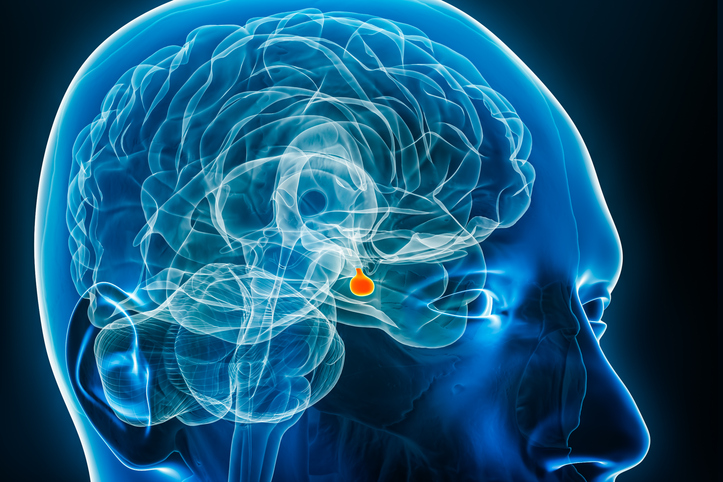
This leaflet gives a brief overview of the Hirnanhangsdrüse and the hormones it makes. The pituitary gland is found at the base of the brain and is 'pea-sized'. The pituitary gland is an overall controller of a number of other glands in the body, overseeing the function of these organs through hormones. Some of the pituitary gland disorders.

Patient information leaflet
Nephrotisches Syndrom
Nephrotisches Syndrom is a condition where the 'filters' in the kidney become 'leaky' and large amounts of protein leak from the blood into the urine. A syndrome is a set of symptoms and signs that tend to occur together and which can be caused by one or more different diseases. FSGS accounts for up to 1 in 10 cases of nephrotic syndrome in children.
Patient information leaflet
Porphyrie
Der porphyrias are a group of disorders in which there is a problem with the production of haem (also spelled heme) within the body. There are seven different types of porphyria and in most cases they run in families (are inherited). It is important that the type of porphyria that you have should be identified. Symptoms vary greatly and can.
Patient information leaflet
Koarktation der Aorta
Koarktation der Aorta is a type of angeborene Herzkrankheit where there is a narrowing in part of the aorta, the main artery that leaves the left side of the heart. Normal heart detail Cross-section diagram of a normal heart PatientPicksPlaceholder Heart - lung circulation heart - lung circulation What is coarctation of the aorta. Congenital.
Weiterführende Lektüre und Referenzen
- PGM3-congenital disorder of glycosylation; MedlinePlus, National Library of Medicine.
- Jaeken J, Lefeber DJ, Matthijs G. Clinical Utility Gene Card for: PGM3 defective congenital disorder of glycosylation. Eur J Hum Genet. 2019 Nov;27(11):1757-1760. doi: 10.1038/s41431-019-0453-y. Epub 2019 Jun 23.
- Lundin KE, Hamasy A, Backe PH, Moens LN, Falk-Sorqvist E, Elgstoen KB, Morkrid L, Bjoras M, Granert C, Norlin AC, Nilsson M, Christensson B, Stenmark S, Smith CI. Susceptibility to infections, without concomitant hyper-IgE, reported in 1976, is caused by hypomorphic mutation in the phosphoglucomutase 3 (PGM3) gene. Clin Immunol. 2015 Dec;161(2):366-72. doi: 10.1016/j.clim.2015.10.002. Epub 2015 Oct 19.
- Sassi A, Lazaroski S, Wu G, Haslam SM, Fliegauf M, Mellouli F, Patiroglu T, Unal E, Ozdemir MA, Jouhadi Z, Khadir K, Ben-Khemis L, Ben-Ali M, Ben-Mustapha I, Borchani L, Pfeifer D, Jakob T, Khemiri M, Asplund AC, Gustafsson MO, Lundin KE, Falk-Sorqvist E, Moens LN, Gungor HE, Engelhardt KR, Dziadzio M, Stauss H, Fleckenstein B, Meier R, Prayitno K, Maul-Pavicic A, Schaffer S, Rakhmanov M, Henneke P, Kraus H, Eibel H, Kolsch U, Nadifi S, Nilsson M, Bejaoui M, Schaffer AA, Smith CI, Dell A, Barbouche MR, Grimbacher B. Hypomorphic homozygous mutations in phosphoglucomutase 3 (PGM3) impair immunity and increase serum IgE levels. J Allergy Clin Immunol. 2014 May;133(5):1410-9, 1419.e1-13. doi: 10.1016/j.jaci.2014.02.025. Epub 2014 Apr 1.
- Stray-Pedersen A, Backe PH, Sorte HS, Morkrid L, Chokshi NY, Erichsen HC, Gambin T, Elgstoen KB, Bjoras M, Wlodarski MW, Kruger M, Jhangiani SN, Muzny DM, Patel A, Raymond KM, Sasa GS, Krance RA, Martinez CA, Abraham SM, Speckmann C, Ehl S, Hall P, Forbes LR, Merckoll E, Westvik J, Nishimura G, Rustad CF, Abrahamsen TG, Ronnestad A, Osnes LT, Egeland T, Rodningen OK, Beck CR; Baylor-Johns Hopkins Center for Mendelian Genomics; Boerwinkle EA, Gibbs RA, Lupski JR, Orange JS, Lausch E, Hanson IC. PGM3 mutations cause a congenital disorder of glycosylation with severe immunodeficiency and skeletal dysplasia. Am J Hum Genet. 2014 Jul 3;95(1):96-107. doi: 10.1016/j.ajhg.2014.05.007. Epub 2014 Jun 12.
- Yang L, Fliegauf M, Grimbacher B. Hyper-IgE syndromes: reviewing PGM3 deficiency. Curr Opin Pediatr. 2014 Dec;26(6):697-703. doi: 10.1097/MOP.0000000000000158.
- Zhang Y, Yu X, Ichikawa M, Lyons JJ, Datta S, Lamborn IT, Jing H, Kim ES, Biancalana M, Wolfe LA, DiMaggio T, Matthews HF, Kranick SM, Stone KD, Holland SM, Reich DS, Hughes JD, Mehmet H, McElwee J, Freeman AF, Freeze HH, Su HC, Milner JD. Autosomal recessive phosphoglucomutase 3 (PGM3) mutations link glycosylation defects to atopy, immune deficiency, autoimmunity, and neurocognitive impairment. J Allergy Clin Immunol. 2014 May;133(5):1400-9, 1409.e1-5. doi: 10.1016/j.jaci.2014.02.013. Epub 2014 Feb 28.
Artikelverlauf
Artikel auch verfügbar in Englisch, Deutsch, Spanisch, Französisch, Italienisch, Portugiesisch, Hindi, Hebräisch, Arabisch, und Schwedisch.
18. Aug 2020 | Neueste Version
1. Aug. 2019 | Ursprünglich veröffentlicht
Teilen Sie Ihre Gedanken oder Erfahrungen mit anderen in unserem Patientengemeinschaften.
Einfacher Zugang zu vertrauenswürdigen Behandlungen und Gesundheitsdiensten online.
Common conditions
Get help with common conditions through the NHS, without a GP appointment.





Abonnieren Sie den Patienten-Newsletter
Ihre wöchentliche Dosis klarer, vertrauenswürdiger Gesundheitsberatung - geschrieben, um Ihnen zu helfen, sich informiert, selbstbewusst und in Kontrolle zu fühlen.
Durch das Abonnieren akzeptieren Sie unsere Datenschutzrichtlinie. Sie können sich jederzeit abmelden. Wir verkaufen Ihre Daten niemals.