SLC35A2-congenital disorder of glycosylation
Zuletzt aktualisiert 26. Nov 2021
Erfüllt die redaktionelle Richtlinien
- HerunterladenHerunterladen
- Teilen
- Language
- Diskussion
- Ask Patient
- Audio-Version
- Zu bevorzugten Quellen bei Google hinzufügen
SLC35A2-congenital disorder of glycosylation (SLC35A2-CDG, formerly known as congenital disorder of glycosylation type IIm) is an inherited condition that causes neurological problems and other abnormalities. This disorder's signs and symptoms and their severity vary among affected individuals.
Videoauswahl für Genetische ErkrankungenVideothek
Beschreibung
SLC35A2-congenital disorder of glycosylation (SLC35A2-CDG, formerly known as congenital disorder of glycosylation type IIm) is an inherited condition that causes neurological problems and other abnormalities. This disorder's signs and symptoms and their severity vary among affected individuals.
Individuals with SLC35A2-CDG typically develop signs and symptoms of the condition early in infancy. Seizures develop within the first months of life, usually involving uncontrollable muscle stiffening (infantile spasms) that can switch to shorter episodes of muscle jerks (epileptic spasms) later in childhood. In some individuals, the seizures do not improve with anti-epileptic medications. Individuals with SLC35A2-CDG often have abnormal brain function (encephalopathy), unusual facial features, skeletal abnormalities, and weak muscle tone (hypotonia) with poor head control. They also have severe intellectual disability and delayed development, often only being able to sit or crawl and never developing meaningful speech. Affected children may have feeding difficulties and fail to grow or gain weight at the expected rate. Some have vision or hearing problems.
Verwirrung SLC35A2-CDG, medical imaging shows loss of tissue (atrophy) in parts of the brain called the cerebrum and cerebellum. These brain regions are necessary for thinking ability, hearing, vision, emotion, and coordinated movement. There can also be thinning of the tissue that connects the left and right halves of the brain (the corpus callosum) or a fluid-filled sac (cyst) on the membrane that surrounds the brain (arachnoid pouch).
Inheritance patterns
The source lists the following possible inheritance patterns: X-linked dominant. More than one pattern can apply in different cases.
Related genes
Other names
CDG IIm
CDG syndrome type IIm
CDG-IIm
CDG2M
CDGIIm
Congenital disorder of glycosylation, type IIm
EIEE22
Epileptic encephalopathy, early infantile, 22
SLC35A2-CDG
Related patient information and medicines
Patient information leaflet
Glykogenspeicherkrankheiten
Glykogenspeicherkrankheiten sind a group of inherited diseases. They result from a problem with one of the proteins (known as enzymes) involved in the conversion of glucose to glycogen, or the breakdown of glycogen back into glucose. Glycogen storage disorders are a group of inherited diseases that result from a lack of, or abnormal functioning of,.
Patient information leaflet
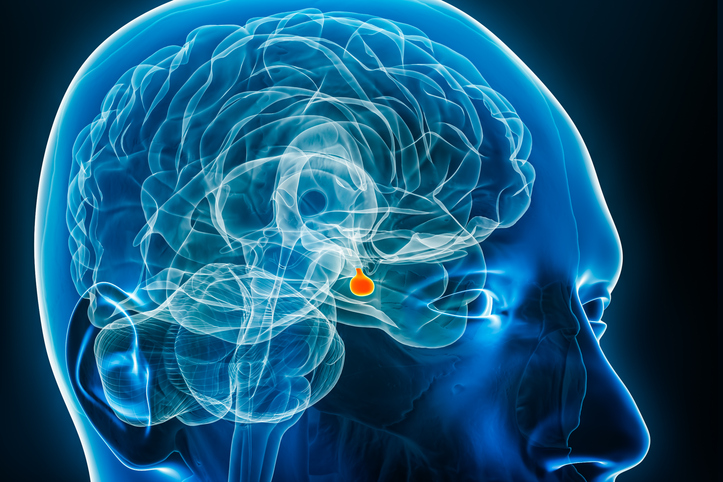
Erkrankungen der Hypophyse
This leaflet gives a brief overview of the Hirnanhangsdrüse and the hormones it makes. The pituitary gland is found at the base of the brain and is 'pea-sized'. The pituitary gland is an overall controller of a number of other glands in the body, overseeing the function of these organs through hormones. Some of the pituitary gland disorders.
Patient information leaflet
Angeborene Herzkrankheit
Angeborene Herzkrankheit is a condition where an abnormality (defect) develops in the heart before birth. There are a number of types of congenital heart defect. What is congenital heart disease. Abnormalities or defects of the heart which develop before birth are together (collectively) called congenital heart disease. Some of these are listed in.
Patient information leaflet
Nephrotisches Syndrom
Nephrotisches Syndrom is a condition where the 'filters' in the kidney become 'leaky' and large amounts of protein leak from the blood into the urine. A syndrome is a set of symptoms and signs that tend to occur together and which can be caused by one or more different diseases. FSGS accounts for up to 1 in 10 cases of nephrotic syndrome in children.
Patient information leaflet
Kongenitale adrenale Hyperplasie
Kongenitale adrenale Hyperplasie is an inherited (genetic) condition causing Schwellung of the adrenal glands. The condition is associated with a decrease in the blood level of a hormone called cortisol and an increase in the level of male sex hormones (androgens) in both sexes. What is congenital adrenal hyperplasia. Congenital adrenal hyperplasia.
Patient information leaflet
Porphyrie
Der porphyrias are a group of disorders in which there is a problem with the production of haem (also spelled heme) within the body. There are seven different types of porphyria and in most cases they run in families (are inherited). It is important that the type of porphyria that you have should be identified. Symptoms vary greatly and can.
Weiterführende Lektüre und Referenzen
- SLC35A2-congenital disorder of glycosylation; MedlinePlus, National Library of Medicine.
- Dorre K, Olczak M, Wada Y, Sosicka P, Gruneberg M, Reunert J, Kurlemann G, Fiedler B, Biskup S, Hortnagel K, Rust S, Marquardt T. A new case of UDP-galactose transporter deficiency (SLC35A2-CDG): molecular basis, clinical phenotype, and therapeutic approach. J Inherit Metab Dis. 2015 Sep;38(5):931-40. doi: 10.1007/s10545-015-9828-6. Epub 2015 Mar 17.
- Kimizu T, Takahashi Y, Oboshi T, Horino A, Koike T, Yoshitomi S, Mori T, Yamaguchi T, Ikeda H, Okamoto N, Nakashima M, Saitsu H, Kato M, Matsumoto N, Imai K. A case of early onset epileptic encephalopathy with de novo mutation in SLC35A2: Clinical features and treatment for epilepsy. Brain Dev. 2017 Mar;39(3):256-260. doi: 10.1016/j.braindev.2016.09.009. Epub 2016 Oct 12.
- Kodera H, Nakamura K, Osaka H, Maegaki Y, Haginoya K, Mizumoto S, Kato M, Okamoto N, Iai M, Kondo Y, Nishiyama K, Tsurusaki Y, Nakashima M, Miyake N, Hayasaka K, Sugahara K, Yuasa I, Wada Y, Matsumoto N, Saitsu H. De novo mutations in SLC35A2 encoding a UDP-galactose transporter cause early-onset epileptic encephalopathy. Hum Mutat. 2013 Dec;34(12):1708-14. doi: 10.1002/humu.22446. Epub 2013 Oct 15.
- Ng BG, Buckingham KJ, Raymond K, Kircher M, Turner EH, He M, Smith JD, Eroshkin A, Szybowska M, Losfeld ME, Chong JX, Kozenko M, Li C, Patterson MC, Gilbert RD, Nickerson DA, Shendure J, Bamshad MJ; University of Washington Center for Mendelian Genomics; Freeze HH. Mosaicism of the UDP-galactose transporter SLC35A2 causes a congenital disorder of glycosylation. Am J Hum Genet. 2013 Apr 4;92(4):632-6. doi: 10.1016/j.ajhg.2013.03.012.
Artikelverlauf
Artikel auch verfügbar in Englisch, Deutsch, Spanisch, Französisch, Italienisch, Portugiesisch, Hindi, Hebräisch, Arabisch, und Schwedisch.
26. Nov 2021 | Neueste Version
1 Aug 2018 | Ursprünglich veröffentlicht
Teilen Sie Ihre Gedanken oder Erfahrungen mit anderen in unserem Patientengemeinschaften.
Einfacher Zugang zu vertrauenswürdigen Behandlungen und Gesundheitsdiensten online.
Common conditions
Get help with common conditions through the NHS, without a GP appointment.





Abonnieren Sie den Patienten-Newsletter
Ihre wöchentliche Dosis klarer, vertrauenswürdiger Gesundheitsberatung - geschrieben, um Ihnen zu helfen, sich informiert, selbstbewusst und in Kontrolle zu fühlen.
Durch das Abonnieren akzeptieren Sie unsere Datenschutzrichtlinie. Sie können sich jederzeit abmelden. Wir verkaufen Ihre Daten niemals.