X-linked hypophosphatemia
Zuletzt aktualisiert 13 Feb 2026
Erfüllt die redaktionelle Richtlinien
- HerunterladenHerunterladen
- Teilen
- Language
- Diskussion
- Ask Patient
- Audio-Version
- Zu bevorzugten Quellen bei Google hinzufügen
X-linked hypophosphatemia is characterised by low levels of phosphate in the blood (hypophosphatemia), which can lead to skeletal abnormalities. Phosphate is a mineral that is essential for the normal development of bones and teeth. Without adequate amounts of phosphate, the bones can weaken or soften, leading to a condition called rickets in growing children or a similar condition called osteomalacia in adults.
Beschreibung
X-linked hypophosphatemia is characterised by low levels of phosphate in the blood (hypophosphatemia), which can lead to skeletal abnormalities. Phosphate is a mineral that is essential for the normal development of bones and teeth. Without adequate amounts of phosphate, the bones can weaken or soften, leading to a condition called rickets in growing children or a similar condition called osteomalacia in adults.
The features of X-linked hypophosphatemia vary widely, even among members of the same family. Mildly affected individuals may have hypophosphatemia without other signs and symptoms. More severely affected individuals typically experience slow growth beginning in early childhood, and they may be shorter than their peers. They often develop bone abnormalities that can impair movement and cause pain, such as legs that are abnormally curved (bowed) because the bones are too weak to bear weight. These abnormalities tend to worsen over time.
In adults with X-linked hypophosphatemia, osteomalacia can make the bones more prone to a type of fracture called a stress fracture, which can be painful. Affected adults may also have abnormal calcium deposits that occur near the joints where the ligaments and tendons attach (enthesopathy) and a painful joint disorder called osteoarthritis.
Other signs and symptoms of X-linked hypophosphatemia can include premature fusion of the skull bones (craniosynostosis) and hearing loss. Affected individuals may also have dental abnormalities, which can include pus caused by a bacterial infection (abscess). In rare cases, people with X-linked hypophosphatemia have abnormalities of the spine, which can include a narrowing of the spinal canal that can pinch the upper part of the spinal cord (spinal stenosis) and the formation of fluid-filled cysts (syrinx) within the spinal cord.
With early treatment, people with X-linked hypophosphatemia may have less-severe skeletal signs and symptoms and fewer long-term health issues.
Inheritance patterns
The source lists the following possible inheritance patterns: X-linked. More than one pattern can apply in different cases.
Related genes
Other names
Hypophosphatemic rickets, PHEX-Related
X-Linked Hypophosphatemic Rickets
X-Linked Vitamin D-Resistant Rickets
XLHR
Related patient information and medicines

Patient information leaflet
Glykogenspeicherkrankheiten
If the enzyme problem is with one of the enzymes involved in glycogen breakdown back into glucose, this can lead to: Low levels of glucose in your body (a condition known as hypoglycaemia). X-linked inheritance pattern This occurs in some people with glycogen storage disorder type IX. X-linked inheritance pattern x-linked pattern of inheritance In.
Patient information leaflet
Kann ich Cordyceps und Reishi zusammen einnehmen?
Taking cordyceps and reishi together may increase the risk of bruising or bleeding. Both supplements can also lower blood sugar levels, which might lead to symptoms of low blood sugar ( hypoglycaemia ) such as dizziness or shakiness. Why this happens Both cordyceps and reishi have 'antiplatelet' effects, meaning they make the blood less likely to.
Patient information leaflet
Kann ich Certican (Everolimus) und Matcha zusammen einnehmen?
Drinking matcha tea while taking Certican (everolimus) may increase the levels of the medication in your bloodstream. This could lead to an increased risk of side effects, such as mouth ulcers, infections, or kidney problems. Why this happens Certican is broken down in the body by a specific enzyme (CYP3A4) and a transport protein.

Patient information leaflet
Hämophilie
Haemophilia is a rare bleeding disorder that affects your ability to make a clot. The blood contains substances called clotting factors that work with platelets to form a clot. When you injure yourself the clot stops you bleeding. Haemophilia is a condition where there is a deficiency of clotting factors, so people with this condition usually have.
Patient information leaflet
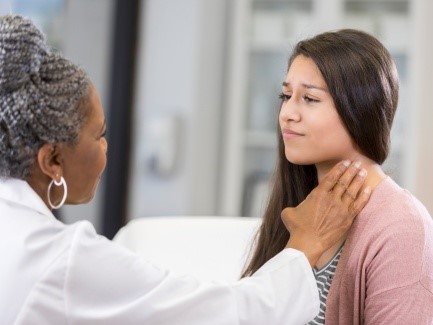
Schilddrüsen- und Nebenschilddrüsenprobleme
Der hormone produced by the parathyroid also helps to control the amount of these essential minerals. Types of thyroid disorders Cancer of the thyroid (thyroid cancer) Thyroid cancer. Thyroid swelling (goitre) Goitre. Thyroid nodules. These are lumps in the thyroid gland, which are usually non-cancerous (benign). Overactive thyroid.
Patient information leaflet
Ursachen von Krebs
Bestimmte Risikofaktoren sind bekannt dafür, die Wahrscheinlichkeit zu erhöhen, dass eine oder mehrere Ihrer Zellen abnormal werden und zu Krebs führen. How does cancer start. The body is made up from millions of tiny cells. Different parts of the body such as organs, bones, muscles, skin and blood are made up from different specialised cells. Most cells have a centre.
Weiterführende Lektüre und Referenzen
- X-linked hypophosphatemia ; MedlinePlus, National Library of Medicine.
- Ackah SA, Imel EA. Approach to Hypophosphatemic Rickets. J Clin Endocrinol Metab. 2022 Dec 17;108(1):209-220. doi: 10.1210/clinem/dgac488.
- Baroncelli GI, Bertelloni S, Sodini F, Galli L, Vanacore T, Fiore L, Saggese G. Genetic advances, biochemical and clinical features and critical approach to treatment of patients with X-linked hypophosphatemic rickets. Pediatr Endocrinol Rev. 2004 Jun;1(4):361-79.
- Bitzan M, Goodyer PR. Hypophosphatemic Rickets. Pediatr Clin North Am. 2019 Feb;66(1):179-207. doi: 10.1016/j.pcl.2018.09.004.
- Dahash BA, Sankararaman S. Rickets. 2023 Aug 7. In: StatPearls [Internet]. Treasure Island (FL): StatPearls Publishing; 2023 Jan-. Available from http://www.ncbi.nlm.nih.gov/books/NBK562285/
- Kamenicky P, Briot K, Munns CF, Linglart A. X-linked hypophosphataemia. Lancet. 2024 Aug 31;404(10455):887-901. doi: 10.1016/S0140-6736(24)01305-9. Epub 2024 Aug 21.
- Laurent MR, Harvengt P, Mortier GR, Bockenhauer D. X-Linked Hypophosphatemia. 2012 Feb 9 [updated 2023 Dec 14]. In: Adam MP, Bick S, Mirzaa GM, Wallace SE, Amemiya A, editors. GeneReviews(R) [Internet]. Seattle (WA): University of Washington, Seattle; 1993-2026. Available from http://www.ncbi.nlm.nih.gov/books/NBK83985/
- Marik B, Bagga A, Sinha A, Khandelwal P, Hari P, Sharma A. Genetic and clinical profile of patients with hypophosphatemic rickets. Eur J Med Genet. 2022 Aug;65(8):104540. doi: 10.1016/j.ejmg.2022.104540. Epub 2022 Jun 21.
- Narasimhan S, Lavik A, Auron M. Rickets. Pediatr Rev. 2025 Sep 1;46(9):494-509. doi: 10.1542/pir.2024-006494.
- Rothenbuhler A, Schnabel D, Hogler W, Linglart A. Diagnosis, treatment-monitoring and follow-up of children and adolescents with X-linked hypophosphatemia (XLH). Metabolism. 2020 Feb;103S:153892. doi: 10.1016/j.metabol.2019.03.009. Epub 2019 Mar 27.
Artikelverlauf
Artikel auch verfügbar in Englisch, Deutsch, Spanisch, Französisch, Italienisch, Portugiesisch, Hindi, Hebräisch, Arabisch, und Schwedisch.
13 Feb 2026 | Neueste Version
1. Feb 2026 | Ursprünglich veröffentlicht
Teilen Sie Ihre Gedanken oder Erfahrungen mit anderen in unserem Patientengemeinschaften.
Einfacher Zugang zu vertrauenswürdigen Behandlungen und Gesundheitsdiensten online.
Common conditions
Get help with common conditions through the NHS, without a GP appointment.





Abonnieren Sie den Patienten-Newsletter
Ihre wöchentliche Dosis klarer, vertrauenswürdiger Gesundheitsberatung - geschrieben, um Ihnen zu helfen, sich informiert, selbstbewusst und in Kontrolle zu fühlen.
Durch das Abonnieren akzeptieren Sie unsere Datenschutzrichtlinie. Sie können sich jederzeit abmelden. Wir verkaufen Ihre Daten niemals.