age-related maculopathy susceptibility 2
Zuletzt aktualisiert 3 Apr 2025
Erfüllt die redaktionelle Richtlinien
- HerunterladenHerunterladen
- Teilen
- Language
- Diskussion
- Audio-Version
- Zu bevorzugten Quellen bei Google hinzufügen
Der ARMS2 gene provides instructions for making a protein whose function is unknown. Studies suggest that the ARMS2 protein is found primarily in the placenta and in the specialized light-sensing tissue in the back of the eye (the retina). However, it is unclear what role, if any, the protein plays in early development or normal vision.
Normal function
Der ARMS2 gene provides instructions for making a protein whose function is unknown. Studies suggest that the ARMS2 protein is found primarily in the placenta and in the specialized light-sensing tissue in the back of the eye (the retina). However, it is unclear what role, if any, the protein plays in early development or normal vision.
Conditions referring to this gene or chromosome
Other names
age-related maculopathy susceptibility protein 2
ARMD8
ARMS2_HUMAN
LOC387715
Related patient information and medicines
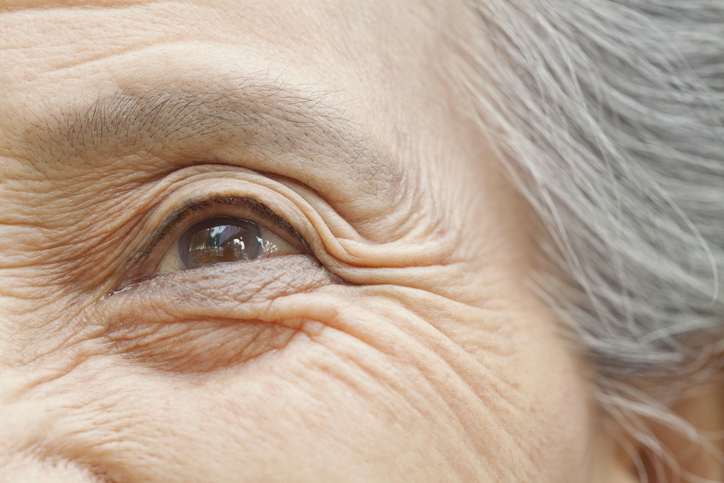
Patient information leaflet
Makuladegeneration
Altersbedingte Makuladegeneration is the most common cause of sight impairment in those aged over 50. It causes a gradual loss of central vision, which is needed for detailed work and for things like reading and driving. Edge vision (peripheral vision) is not lost. What is macular degeneration. Macular degeneration (also known as age-related.

Patient information leaflet
Altern
Ageing (also spelt aging) is the process of becoming older. This happens continually throughout life. Older age tends to bring with it unwelcome changes such as a greater risk of health problems and typical changes to appearance. Changes to hair colour (grey/white) and pattern (balding, particularly in men). Deterioration in memory. Deterioration.

Patient information leaflet
Turner-Syndrom
How common is Turner syndrome. Turner syndrome occurs in about one in 2,000 live female births. There are no known risk factors for Turner syndrome. It is not more common in girls born to older women and it is very rare to have a sec... So, some fluid leaks into tissues and causes swelling. The following symptoms can occur in Turner syndrome:.

Patient information leaflet
Find out if you are eligible for a free NHS flu vaccination
Open the flu jab Is the flu vaccine free for you this winter. The flu vaccine is free on the NHS for people most likely to get seriously ill from flu, and for those who could easily pass it on to someone at risk. You're likely to be offered a free flu vaccine if you're: pregnant aged 2 or 3 on 31 August 2026, or a school-aged child from reception.

Patient information leaflet
Katarakte
How common are cataracts. Age-related cataract (senile cataract) This is by far the most common type, and it affects older people, becoming mehr common with increasing age. In the UK about 1 in 3 people over the age of 65 have at least one cataract. However, protecting your eyes from UV light, eating a healthy diet rich in antioxidants, not.

Patient information leaflet
Augenflimmern, Blitze und Halos
Yes, eye floaters can appear in both eyes at the same time, however, if you notice new or sudden floaters in either eye, it’s bes... Can you prevent eye floaters. There’s no guaranteed way to prevent eye floaters, as they’re usually a natural part of ageing. However, protecting your eyes from UV light, managing conditions like diabetes, and having.
Weiterführende Lektüre und Referenzen
- age-related maculopathy susceptibility 2; MedlinePlus, National Library of Medicine.
- Friedrich U, Myers CA, Fritsche LG, Milenkovich A, Wolf A, Corbo JC, Weber BH. Risk- and non-risk-associated variants at the 10q26 AMD locus influence ARMS2 mRNA expression but exclude pathogenic effects due to protein deficiency. Hum Mol Genet. 2011 Apr 1;20(7):1387-99. doi: 10.1093/hmg/ddr020. Epub 2011 Jan 20.
- Fritsche LG, Loenhardt T, Janssen A, Fisher SA, Rivera A, Keilhauer CN, Weber BH. Age-related macular degeneration is associated with an unstable ARMS2 (LOC387715) mRNA. Nat Genet. 2008 Jul;40(7):892-6. doi: 10.1038/ng.170. Epub 2008 May 30.
- Kanda A, Chen W, Othman M, Branham KE, Brooks M, Khanna R, He S, Lyons R, Abecasis GR, Swaroop A. A variant of mitochondrial protein LOC387715/ARMS2, not HTRA1, is strongly associated with age-related macular degeneration. Proc Natl Acad Sci U S A. 2007 Oct 9;104(41):16227-32. doi: 10.1073/pnas.0703933104. Epub 2007 Sep 20.
- Kanda A, Stambolian D, Chen W, Curcio CA, Abecasis GR, Swaroop A. Age-related macular degeneration-associated variants at chromosome 10q26 do not significantly alter ARMS2 and HTRA1 transcript levels in the human retina. Mol Vis. 2010 Jul 15;16:1317-23.
- Rivera A, Fisher SA, Fritsche LG, Keilhauer CN, Lichtner P, Meitinger T, Weber BH. Hypothetical LOC387715 is a second major susceptibility gene for age-related macular degeneration, contributing independently of complement factor H to disease risk. Hum Mol Genet. 2005 Nov 1;14(21):3227-36. doi: 10.1093/hmg/ddi353. Epub 2005 Sep 20.
- Tong Y, Liao J, Zhang Y, Zhou J, Zhang H, Mao M. LOC387715/HTRA1 gene polymorphisms and susceptibility to age-related macular degeneration: A HuGE review and meta-analysis. Mol Vis. 2010 Oct 5;16:1958-81.
- Yang Z, Tong Z, Chen Y, Zeng J, Lu F, Sun X, Zhao C, Wang K, Davey L, Chen H, London N, Muramatsu D, Salasar F, Carmona R, Kasuga D, Wang X, Bedell M, Dixie M, Zhao P, Yang R, Gibbs D, Liu X, Li Y, Li C, Li Y, Campochiaro B, Constantine R, Zack DJ, Campochiaro P, Fu Y, Li DY, Katsanis N, Zhang K. Genetic and functional dissection of HTRA1 and LOC387715 in age-related macular degeneration. PLoS Genet. 2010 Feb 5;6(2):e1000836. doi: 10.1371/journal.pgen.1000836.
Artikelverlauf
Artikel auch verfügbar in Englisch, Deutsch, Spanisch, Französisch, Italienisch, Portugiesisch, Hindi, Hebräisch, Arabisch, und Schwedisch.
3 Apr 2025 | Neueste Version
1 Jun 2011 | Ursprünglich veröffentlicht
Nehmen Sie an der Diskussion teil
Teilen Sie Ihre Gedanken oder Erfahrungen mit anderen in unserem Patientengemeinschaften.

Fragen, teilen, verbinden.
Durchsuchen Sie Diskussionen, stellen Sie Fragen und teilen Sie Erfahrungen zu Hunderten von Gesundheitsthemen.
Abonnieren Sie den Patienten-Newsletter
Ihre wöchentliche Dosis klarer, vertrauenswürdiger Gesundheitsberatung - geschrieben, um Ihnen zu helfen, sich informiert, selbstbewusst und in Kontrolle zu fühlen.
Durch das Abonnieren akzeptieren Sie unsere Datenschutzrichtlinie. Sie können sich jederzeit abmelden. Wir verkaufen Ihre Daten niemals.