growth differentiation factor 6
Zuletzt aktualisiert 30. Sept. 2025
Erfüllt die redaktionelle Richtlinien
- HerunterladenHerunterladen
- Teilen
- Language
- Diskussion
- Ask Patient
- Audio-Version
- Zu bevorzugten Quellen bei Google hinzufügen
The GDF6 gene provides instructions for making a protein that is part of the transforming growth factor beta (TGFβ) superfamily, which is a group of proteins that help control the growth and development of tissues throughout the body. Within the TGFβ superfamily, the GDF6 protein belongs to the bone morphogenetic protein family, which helps regulate the growth and maturation (differentiation) of bone and cartilage. Cartilage is a tough but flexible tissue that makes up much of the skeleton during early development. The proteins in this family help regulate cell growth and differentiation both before and after birth. The GDF6 protein is necessary for the formation of bones and joints in the limbs, skull, spine, chest, and ribs.
Normal function
The GDF6 gene provides instructions for making a protein that is part of the transforming growth factor beta (TGFβ) superfamily, which is a group of proteins that help control the growth and development of tissues throughout the body. Within the TGFβ superfamily, the GDF6 protein belongs to the bone morphogenetic protein family, which helps regulate the growth and maturation (differentiation) of bone and cartilage. Cartilage is a tough but flexible tissue that makes up much of the skeleton during early development. The proteins in this family help regulate cell growth and differentiation both before and after birth. The GDF6 protein is necessary for the formation of bones and joints in the limbs, skull, spine, chest, and ribs.
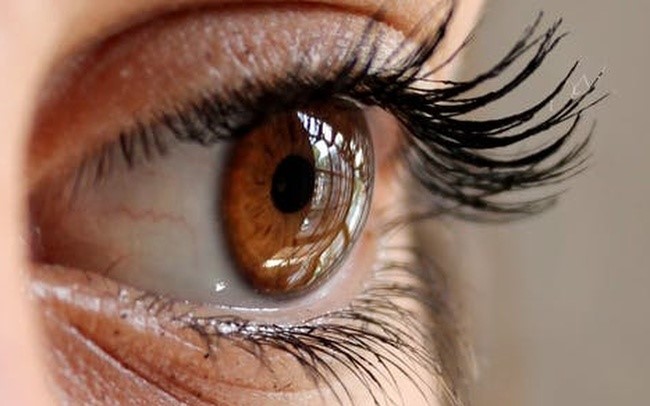
The GDF6 protein is also involved in the development of the eyes, specifically the specialized light-sensitive tissue that lines the back of the eye called the retina. The GDF6 protein likely plays a role in the survival of specialized cells within the retina that detect light and colour (photoreceptor cells).
Conditions referring to this gene or chromosome
Other names
BMP13
CDMP2
GDF-6
growth/differentiation factor 6
KFS
KFS1
SCDO4
SGM1
Related patient information and medicines

Patient information leaflet
Kehlkopfkrebs
The more you drink, the more likely you are to develop throat (laryngeal) cancer: Drinking alcohol makes you about two and a half times more likely to develop Rachenkrebs (laryngeal) cancer, if you don't also smoke. Dr Krishna Vakharia, 16th October 2023 The National Institute for Health and Care Excellence (NICE) has recommended that ein person should.

Patient information leaflet
Peniskrebs
Der exact reason why a cell becomes cancerous is unclear. It is thought that something damages or alters certain genes in the cell. This makes the cell abnormal and multiply 'out of control'. See the separate leaflet called Causes of cancer for more details. How common is penile cancer. Penile cancer is rare in the UK. It occurs in fewer than 1 in.

Patient information leaflet
Akromegalie
Akromegalie is a rare, progressive condition in which you make too much growth hormone. This causes a range of symptoms that develop gradually, often over several years. The most noticeable symptoms are that your hands and feet become larger and features of your face may become more prominent. The cause is usually a small non-cancerous growth.

Patient information leaflet
Vulväre intraepitheliale Neoplasie
Vulval intraepithelial neoplasia (VIN) ist a skin condition of the vulva. It is not a cancer, but it can turn into cancer if not treated. What is vulval intraepithelial neoplasia. Vulval intraepithelial neoplasia (VIN) is a skin disorder that affects your vulva. (See the separate leaflet called Gynaecological Cancer Gynaecological cancer for more.
Patient information leaflet
Diabetische Retinopathie
Stufe 3: proliferative retinopathy Proliferative retinopathy is the advanced diabetic retinopathy that occurs when damaged blood vessels in the retina make chemicals genannt growth factors. These can cause new tiny blood vessels to grow (prolif... Eye checks for diabetic retinopathy NICE guidance on screening and referral for diabetic eye problems.

Patient information leaflet
Turner-Syndrom
It should definitely be started as soon as it is clear that a child is not growing normally due to Turner syndrome. Growth hormone replacement therapy has been shown to increase the final height by as much as 10 cm. Growth hormone therapy is generally continued until a child reaches a bone age of 14. This means that her bones are the same as the.
Weiterführende Lektüre und Referenzen
- growth differentiation factor 6; MedlinePlus, National Library of Medicine.
- Asai-Coakwell M, March L, Dai XH, Duval M, Lopez I, French CR, Famulski J, De Baere E, Francis PJ, Sundaresan P, Sauve Y, Koenekoop RK, Berry FB, Allison WT, Waskiewicz AJ, Lehmann OJ. Contribution of growth differentiation factor 6-dependent cell survival to early-onset retinal dystrophies. Hum Mol Genet. 2013 Apr 1;22(7):1432-42. doi: 10.1093/hmg/dds560. Epub 2013 Jan 9.
- Frikha R. Klippel-Feil syndrome: a review of the literature. Clin Dysmorphol. 2020 Jan;29(1):35-37. doi: 10.1097/MCD.0000000000000301.
- Jae-Min Park A, Nelson SE, Mesfin A. Klippel-Feil Syndrome: Clinical Presentation and Management. JBJS Rev. 2022 Feb 15;10(2). doi: 10.2106/JBJS.RVW.21.00166.
- Litrenta J, Bi AS, Dryer JW. Klippel-Feil Syndrome: Pathogenesis, Diagnosis, and Management. J Am Acad Orthop Surg. 2021 Nov 15;29(22):951-960. doi: 10.5435/JAAOS-D-21-00190.
- Menger RP, Rayi A, Notarianni C. Klippel Feil Syndrome. 2024 May 11. In: StatPearls [Internet]. Treasure Island (FL): StatPearls Publishing; 2024 Jan-. Available from http://www.ncbi.nlm.nih.gov/books/NBK493157/
- Portnoy ME, McDermott KJ, Antonellis A, Margulies EH, Prasad AB; NISC Comparative Sequencing Program; Kingsley DM, Green ED, Mortlock DP. Detection of potential GDF6 regulatory elements by multispecies sequence comparisons and identification of a skeletal joint enhancer. Genomics. 2005 Sep;86(3):295-305. doi: 10.1016/j.ygeno.2005.05.003.
- Pregizer S, Mortlock DP. Control of BMP gene expression by long-range regulatory elements. Cytokine Growth Factor Rev. 2009 Oct-Dec;20(5-6):509-15. doi: 10.1016/j.cytogfr.2009.10.011. Epub 2009 Nov 8.
- Tassabehji M, Fang ZM, Hilton EN, McGaughran J, Zhao Z, de Bock CE, Howard E, Malass M, Donnai D, Diwan A, Manson FD, Murrell D, Clarke RA. Mutations in GDF6 are associated with vertebral segmentation defects in Klippel-Feil syndrome. Hum Mutat. 2008 Aug;29(8):1017-27. doi: 10.1002/humu.20741.
Artikelverlauf
Artikel auch verfügbar in Englisch, Deutsch, Spanisch, Französisch, Italienisch, Portugiesisch, Hindi, Hebräisch, Arabisch, und Schwedisch.
30. Sept. 2025 | Neueste Version
1 Sept 2025 | Ursprünglich veröffentlicht
Teilen Sie Ihre Gedanken oder Erfahrungen mit anderen in unserem Patientengemeinschaften.
Einfacher Zugang zu vertrauenswürdigen Behandlungen und Gesundheitsdiensten online.
Common conditions
Get help with common conditions through the NHS, without a GP appointment.





Abonnieren Sie den Patienten-Newsletter
Ihre wöchentliche Dosis klarer, vertrauenswürdiger Gesundheitsberatung - geschrieben, um Ihnen zu helfen, sich informiert, selbstbewusst und in Kontrolle zu fühlen.
Durch das Abonnieren akzeptieren Sie unsere Datenschutzrichtlinie. Sie können sich jederzeit abmelden. Wir verkaufen Ihre Daten niemals.