Glykogenspeicherkrankheit Typ V
Zuletzt aktualisiert 18. Aug 2020
Erfüllt die redaktionelle Richtlinien
- HerunterladenHerunterladen
- Teilen
- Language
- Diskussion
- Ask Patient
- Audio-Version
- Zu bevorzugten Quellen bei Google hinzufügen
Glycogen storage disease type V (also known as GSDV or McArdle disease) is an inherited disorder caused by an inability to break down a complex sugar called glycogen in muscle cells. A lack of glycogen breakdown interferes with the function of muscle cells.
Beschreibung
Glycogen storage disease type V (also known as GSDV or McArdle disease) is an inherited disorder caused by an inability to break down a complex sugar called glycogen in muscle cells. A lack of glycogen breakdown interferes with the function of muscle cells.
People with GSDV typically experience fatigue, muscle pain, and cramps during the first few minutes of exercise (exercise intolerance). Exercise such as weight lifting or jogging usually triggers these symptoms in affected individuals. The discomfort is generally alleviated with rest. If individuals rest after brief exercise and wait for their pain to go away, they can usually resume exercising with little or no discomfort (a characteristic phenomenon known as "second wind").
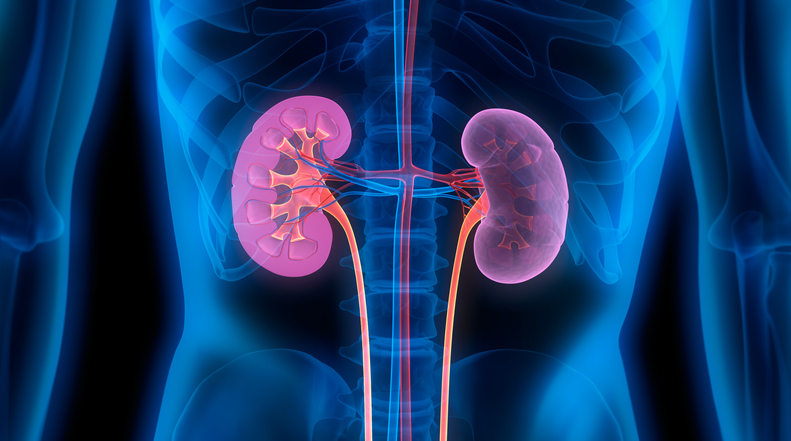
Prolonged or intense exercise can cause muscle damage in people with GSDV. About half of people with GSDV experience breakdown of muscle tissue (rhabdomyolysis). In severe episodes, the destruction of muscle tissue releases a protein called myoglobin, which is filtered through the kidneys and released in the urine (myoglobinuria). Myoglobin causes the urine to be red or brown. This protein can also damage the kidneys, and it is estimated that half of those individuals with GSDV who have myoglobinuria will develop life-threatening kidney failure.
The signs and symptoms of GSDV can vary significantly in affected individuals. The features of this condition typically begin in a person's teens or twenties, but they can appear anytime from infancy to adulthood. In most people with GSDV, the muscle weakness worsens over time; however, in about one-third of affected individuals, the muscle weakness is stable. Some people with GSDV experience mild symptoms such as poor stamina; others do not experience any symptoms.
Inheritance patterns
The source lists the following possible inheritance patterns: Autosomal recessive. More than one pattern can apply in different cases.
Related genes
Other names
Glycogen storage disease type 5
Glycogenosis 5
GSD type V
GSD V
McArdle disease
McArdle syndrome
McArdle type glycogen storage disease
McArdle's disease
Muscle glycogen phosphorylase deficiency
Muscle phosphorylase deficiency
Myophosphorylase deficiency
PYGM deficiency
Related patient information and medicines

Patient information leaflet
Glykogenspeicherkrankheiten
Glycogen storage disorders are a group of inherited diseases. They result from a problem with one of the proteins (known as enzymes) involved in the conversion of glucose to gly... Glycogen storage disorders are a group of inherited diseases that result from a lack of, or abnormal functioning of, one of the proteins (enzymes) involved in the.

Patient information leaflet
Nicht-alkoholische Fettlebererkrankung
Non-alcoholic fatty liver disease (NAFLD) describes a range of conditions caused by a build-up of fat within liver cells. It is very common and in many cases is linked to being obese or overweight. Much of the food we eat is broken down by the body into... This is what our bodies use for energy. Glucose can't be stored so it is turned into a.

Patient information leaflet
Diabetische Nierenerkrankung
Diabetische Nierenerkrankung is a complication das occurs in some people with diabetes. Treatment aims to prevent or delay the progression of the disease. Also, it aims to reduce the risk of developing cardiovascular diseases such as heart attack and stroke which are much more common than average in people with this disease. What is diabetic kidney.

Patient information leaflet
IgA-Nephropathie
IgA-Nephropathie is a condition in which a protein causes damage to the kidneys. The protein is called immunoglobulin A or IgA. Nephropathy means an illness that damages the kidney. The main job of the kidneys is to clear waste materials from the body and maintain a normal balance of fluids and chemicals in the body. The kidneys also have other.
Patient information leaflet
Chronische Nierenerkrankung
Chronische Nierenerkrankung means that the Nieren are not working as well as would be expected. Various conditions can cause chronic kidney disease. Severity can vary but most cases are mild or moderate, occur in older people and do not cause symptoms. Chronic kidney disease tends to become worse gradually over months or years. What is chronic kidney.

Patient information leaflet
Morbus Wilson
Morbus Wilson is a genetic disorder in which copper builds up in the body, mainly in the liver and brain. Without any treatment, the build-up of copper can cause serious symptoms. Treatment is with medication to remove the excess copper and/or to prevent a further build-up of copper. What is Wilson's disease. Wilson's disease is a condition.
Weiterführende Lektüre und Referenzen
- Glykogenspeicherkrankheit Typ V; MedlinePlus, National Library of Medicine.
- Aquaron R, Berge-Lefranc JL, Pellissier JF, Montfort MF, Mayan M, Figarella-Branger D, Coquet M, Serratrice G, Pouget J. Molecular characterization of myophosphorylase deficiency (McArdle disease) in 34 patients from Southern France: identification of 10 new mutations. Absence of genotype-phenotype correlation. Neuromuscul Disord. 2007 Mar;17(3):235-41. doi: 10.1016/j.nmd.2006.12.014. Epub 2007 Feb 26.
- Bruno C, Cassandrini D, Martinuzzi A, Toscano A, Moggio M, Morandi L, Servidei S, Mongini T, Angelini C, Musumeci O, Comi GP, Lamperti C, Filosto M, Zara F, Minetti C. McArdle disease: the mutation spectrum of PYGM in a large Italian cohort. Hum Mutat. 2006 Jul;27(7):718. doi: 10.1002/humu.9434.
- Deschauer M, Morgenroth A, Joshi PR, Glaser D, Chinnery PF, Aasly J, Schreiber H, Knape M, Zierz S, Vorgerd M. Analysis of spectrum and frequencies of mutations in McArdle disease. Identification of 13 novel mutations. J Neurol. 2007 Jun;254(6):797-802. doi: 10.1007/s00415-006-0447-x. Epub 2007 Apr 3.
- Gurgel-Giannetti J, Nogales-Gadea G, van der Linden H Jr, Bellard TM, Brasileiro Filho G, Giannetti AV, de Castro Concentino EL, Vainzof M. Clinical and molecular characterization of McArdle's disease in Brazilian patients. Neuromolecular Med. 2013 Sep;15(3):470-5. doi: 10.1007/s12017-013-8233-2. Epub 2013 May 8.
- Lucia A, Nogales-Gadea G, Perez M, Martin MA, Andreu AL, Arenas J. McArdle disease: what do neurologists need to know? Nat Clin Pract Neurol. 2008 Oct;4(10):568-77. doi: 10.1038/ncpneuro0913.
- Lucia A, Ruiz JR, Santalla A, Nogales-Gadea G, Rubio JC, Garcia-Consuegra I, Cabello A, Perez M, Teijeira S, Vieitez I, Navarro C, Arenas J, Martin MA, Andreu AL. Genotypic and phenotypic features of McArdle disease: insights from the Spanish national registry. J Neurol Neurosurg Psychiatry. 2012 Mar;83(3):322-8. doi: 10.1136/jnnp-2011-301593. Epub 2012 Jan 16.
- Rubio JC, Garcia-Consuegra I, Nogales-Gadea G, Blazquez A, Cabello A, Lucia A, Andreu AL, Arenas J, Martin MA. A proposed molecular diagnostic flowchart for myophosphorylase deficiency (McArdle disease) in blood samples from Spanish patients. Hum Mutat. 2007 Feb;28(2):203-4. doi: 10.1002/humu.9474.
Artikelverlauf
Artikel auch verfügbar in Englisch, Deutsch, Spanisch, Französisch, Italienisch, Portugiesisch, Hindi, Hebräisch, Arabisch, und Schwedisch.
18. Aug 2020 | Neueste Version
1 Jul 2010 | Ursprünglich veröffentlicht
Teilen Sie Ihre Gedanken oder Erfahrungen mit anderen in unserem Patientengemeinschaften.
Einfacher Zugang zu vertrauenswürdigen Behandlungen und Gesundheitsdiensten online.
Common conditions
Get help with common conditions through the NHS, without a GP appointment.





Abonnieren Sie den Patienten-Newsletter
Ihre wöchentliche Dosis klarer, vertrauenswürdiger Gesundheitsberatung - geschrieben, um Ihnen zu helfen, sich informiert, selbstbewusst und in Kontrolle zu fühlen.
Durch das Abonnieren akzeptieren Sie unsere Datenschutzrichtlinie. Sie können sich jederzeit abmelden. Wir verkaufen Ihre Daten niemals.