Isolated congenital asplenia
Zuletzt aktualisiert 18. Aug 2020
Erfüllt die redaktionelle Richtlinien
- HerunterladenHerunterladen
- Teilen
- Language
- Diskussion
- Ask Patient
- Audio-Version
- Zu bevorzugten Quellen bei Google hinzufügen
Isolated congenital asplenia is a condition in which affected individuals are missing their spleen (asplenia) but have no other developmental abnormalities. While most individuals with this condition have no spleen at all, some people have a very small, nonfunctional spleen (hyposplenism).
Videoauswahl für Genetische ErkrankungenVideothek
Beschreibung
Isolated congenital asplenia is a condition in which affected individuals are missing their spleen (asplenia) but have no other developmental abnormalities. While most individuals with this condition have no spleen at all, some people have a very small, nonfunctional spleen (hyposplenism).
The spleen plays an important role in the immune system. This organ is part of the lymphatic system, which produces and transports fluids and immune cells throughout the body. The spleen produces certain immune system cells called phagocytes that help remove bacteria from the blood in order to prevent infections. The spleen also stores particular blood cells that fight foreign invaders until they are needed and filters old blood cells for removal. Because people with isolated congenital asplenia lack these immune functions, they are highly susceptible to bacterial infections.
People with isolated congenital asplenia are prone to developing severe, recurrent infections. Infections most commonly affect the whole body (sepsis), the membrane covering the brain and spinal cord (meningitis), or the ears (otitis media). Infections are most often caused by the Streptococcus pneumoniae bacteria.
Without preventative care and proper treatment, the frequent infections caused by isolated congenital asplenia can be life-threatening.
Inheritance patterns
The source lists the following possible inheritance patterns: Autosomal dominant; Pattern unknown. More than one pattern can apply in different cases.
Related genes
Other names
Asplenia, familial
Asplenia, isolated congenital
Congenital hypoplasia of spleen
Hypoplasia of spleen
Hyposplenia, isolated congenital
ICAS
Spenlic hypoplasia
Related patient information and medicines

Patient information leaflet
Impfung gegen Grippe
Primary and secondary school-aged children... People aged between 6 months and 65 years who have medical conditions that put them at risk from flu, including: Chronic (long-term) lung problems, including asthma Asthma and COPD Chronic obstructive pulmonary disease. Chronic heart and vascular problems, including congenital heart disease Congenital.

Patient information leaflet
Akute Sinusitis
Sinusitis - also known as a sinus infection - is the swelling of the sinuses, often caused by viral or bacterial infections. Most cases ar... This leaflet explains the symptoms, causes, treatment, and prevention of acute sinusitis. Key points Sinusitis is inflammation of the sinuses, causing symptoms such as facial pain, pressure, blocked nose,.
Patient information leaflet
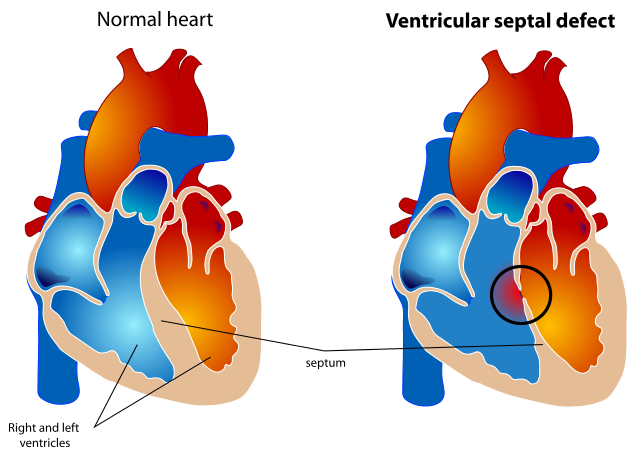
Ventrikelseptumdefekt
Ventricular septal defect (VSD) is a gap or defect in the septum between the heart's two lower chambers (ventricles). The septum is a wall that separates the heart's right and left side of the heart. Septal defects ar... About 8 babies in every 1,000 born will have a problem with their heart or major blood vessels. Of these, half will have a VSD.

Patient information leaflet
Leberfunktionstests
Leberfunktionstests are a set of Bluttests commonly done to check on the health of your liver. Causes can include reactions to medicines, lifelong (congenital) blood cell abnormalities such as hereditary spherocytosis Hereditary spherocytosis and, in babies, breast milk jaundice Neonatal jaundice , severe infection ( sepsis Sepsis ) and.
Patient information leaflet
Vorhofseptumdefekt
Atrial septal defect (ASD) is a hole (defect) in the wall (septum) between the heart's two upper, or collecting, chambers (atria). One chamber is known as an atrium. The septum separates the heart's left and right side. Out of every 1,000 children born, about eight have a heart ... Of these, two or three may have an ASD as part of their heart.
Patient information leaflet
Hypoparathyreoidismus
Was ist hypoparathyroidism. What are the parathyroid glands. Parathyr... It is eventually released and all returns to normal. Transient hypoparathyroidism is more likely to affect a baby if the mother has diabetes, or the mother has overactive parathyroid glands. Congenital hypoparathyroidism DiGeorge's syndrome is a congenital condition that some.
Weiterführende Lektüre und Referenzen
- Isolated congenital asplenia; MedlinePlus, National Library of Medicine.
- Ahmed SA, Zengeya S, Kini U, Pollard AJ. Familial isolated congenital asplenia: case report and literature review. Eur J Pediatr. 2010 Mar;169(3):315-8. doi: 10.1007/s00431-009-1030-0. Epub 2009 Jul 19.
- Bolze A, Boisson B, Bosch B, Antipenko A, Bouaziz M, Sackstein P, Chaker-Margot M, Barlogis V, Briggs T, Colino E, Elmore AC, Fischer A, Genel F, Hewlett A, Jedidi M, Kelecic J, Kruger R, Ku CL, Kumararatne D, Lefevre-Utile A, Loughlin S, Mahlaoui N, Markus S, Garcia JM, Nizon M, Oleastro M, Pac M, Picard C, Pollard AJ, Rodriguez-Gallego C, Thomas C, Von Bernuth H, Worth A, Meyts I, Risolino M, Selleri L, Puel A, Klinge S, Abel L, Casanova JL. Incomplete penetrance for isolated congenital asplenia in humans with mutations in translated and untranslated RPSA exons. Proc Natl Acad Sci U S A. 2018 Aug 21;115(34):E8007-E8016. doi: 10.1073/pnas.1805437115. Epub 2018 Aug 2.
- Bolze A, Mahlaoui N, Byun M, Turner B, Trede N, Ellis SR, Abhyankar A, Itan Y, Patin E, Brebner S, Sackstein P, Puel A, Picard C, Abel L, Quintana-Murci L, Faust SN, Williams AP, Baretto R, Duddridge M, Kini U, Pollard AJ, Gaud C, Frange P, Orbach D, Emile JF, Stephan JL, Sorensen R, Plebani A, Hammarstrom L, Conley ME, Selleri L, Casanova JL. Ribosomal protein SA haploinsufficiency in humans with isolated congenital asplenia. Science. 2013 May 24;340(6135):976-8. doi: 10.1126/science.1234864. Epub 2013 Apr 11.
- Davies JM, Lewis MP, Wimperis J, Rafi I, Ladhani S, Bolton-Maggs PH; British Committee for Standards in Haematology. Review of guidelines for the prevention and treatment of infection in patients with an absent or dysfunctional spleen: prepared on behalf of the British Committee for Standards in Haematology by a working party of the Haemato-Oncology task force. Br J Haematol. 2011 Nov;155(3):308-17. doi: 10.1111/j.1365-2141.2011.08843.x.
- Mahlaoui N, Minard-Colin V, Picard C, Bolze A, Ku CL, Tournilhac O, Gilbert-Dussardier B, Pautard B, Durand P, Devictor D, Lachassinne E, Guillois B, Morin M, Gouraud F, Valensi F, Fischer A, Puel A, Abel L, Bonnet D, Casanova JL. Isolated congenital asplenia: a French nationwide retrospective survey of 20 cases. J Pediatr. 2011 Jan;158(1):142-8, 148.e1. doi: 10.1016/j.jpeds.2010.07.027. Epub 2010 Sep 16.
- Salvadori MI, Price VE; Canadian Paediatric Society, Infectious Diseases and Immunization Committee. Preventing and treating infections in children with asplenia or hyposplenia. Paediatr Child Health. 2014 May;19(5):271-8.
Artikelverlauf
Artikel auch verfügbar in Englisch, Deutsch, Spanisch, Französisch, Italienisch, Portugiesisch, Hindi, Hebräisch, Arabisch, und Schwedisch.
18. Aug 2020 | Neueste Version
1 Apr 2019 | Ursprünglich veröffentlicht
Teilen Sie Ihre Gedanken oder Erfahrungen mit anderen in unserem Patientengemeinschaften.
Einfacher Zugang zu vertrauenswürdigen Behandlungen und Gesundheitsdiensten online.
Common conditions
Get help with common conditions through the NHS, without a GP appointment.





Abonnieren Sie den Patienten-Newsletter
Ihre wöchentliche Dosis klarer, vertrauenswürdiger Gesundheitsberatung - geschrieben, um Ihnen zu helfen, sich informiert, selbstbewusst und in Kontrolle zu fühlen.
Durch das Abonnieren akzeptieren Sie unsere Datenschutzrichtlinie. Sie können sich jederzeit abmelden. Wir verkaufen Ihre Daten niemals.