growth differentiation factor 3
Zuletzt aktualisiert 30. Sept. 2025
Erfüllt die redaktionelle Richtlinien
- HerunterladenHerunterladen
- Teilen
- Language
- Diskussion
- Audio-Version
- Zu bevorzugten Quellen bei Google hinzufügen
The GDF3 gene provides instructions for making a protein that is part of the transforming growth factor beta (TGFβ) superfamily, which is a group of proteins that help control the growth and development of tissues throughout the body. Within the TGFβ superfamily, the GDF3 protein belongs to the bone morphogenetic protein family, which helps regulate the growth and maturation (differentiation) of bone and cartilage. Cartilage is a tough but flexible tissue that makes up much of the skeleton during early development. The proteins in this family help regulate cell growth and differentiation both before and after birth. While the GDF3 protein is known to be involved in bone and cartilage development, its exact role is unclear.
Normal function
The GDF3 gene provides instructions for making a protein that is part of the transforming growth factor beta (TGFβ) superfamily, which is a group of proteins that help control the growth and development of tissues throughout the body. Within the TGFβ superfamily, the GDF3 protein belongs to the bone morphogenetic protein family, which helps regulate the growth and maturation (differentiation) of bone and cartilage. Cartilage is a tough but flexible tissue that makes up much of the skeleton during early development. The proteins in this family help regulate cell growth and differentiation both before and after birth. While the GDF3 protein is known to be involved in bone and cartilage development, its exact role is unclear.
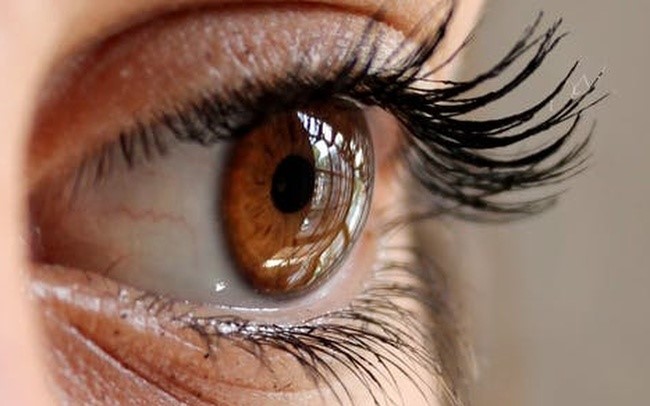
The GDF3 protein is also involved in the development of the eyes, specifically the specialized light-sensitive tissue that lines the back of the eye called the retina.
Conditions referring to this gene or chromosome
Other names
GDF-3
growth/differentiation factor 3
Related patient information and medicines

Patient information leaflet
Kehlkopfkrebs
Whether the cancer has spread to other areas o... Grade of the cancer The biopsy samples are looked at under the microscope to assess the cancer cells. By looking at certain features of the cells the cancer can be graded. The common grading system used for throat (laryngeal) cancer is: Grade 1 (low grade). The cells look reasonably similar to.

Patient information leaflet
Peniskrebs
Der exact reason why a cell becomes cancerous is unclear. It is thought that something damages or alters certain genes in the cell. How common is penile cancer. Penile cancer is rare in the UK. It occurs in fewer than 1 in every 100,000 men each year in Europe. Grade 2 - is a middle grade. Grade 3 - the cells look very abnormal and are said to be.
Patient information leaflet
Diabetische Retinopathie
New abnormal blood ... This is called proliferative retinopathy. These new vessels are delicate and can bleed easily. There are signs of blood flow becoming restricted but not yet showing new blood vessels growing (see below). Stage 3: proliferative retinopathy Proliferative retinopathy is the advanced diabetic retinopathy das occurs when damaged.

Patient information leaflet
Brustkrebs
Breast cancer is the most common cancer in women. Most cases occur in women over the age of 50 but breast cancer can occur in younger women. If breast c... Overall, about 7 in 10 breast cancers are oestrogen receptor positive. Treatment can block the oestrogen in these cancers (see below). Human epidermal growth factor (HER2) ist a protein that can.

Patient information leaflet
Hoher Blutdruck in der Schwangerschaft
Many women with high. This is why your blood pressure is checked regularly by your doctor or midwife during your pregnancy. Your urine is also tested regularly for protein, to look for possible pre-eclampsia. However, there are some s... Having fits (seizures) if you go on to develop eclampsia. Developing chronic hypertension in later life. The.

Patient information leaflet
Gebärmutterkrebs
Polyzystisches Ovarialsyndrom. Genetic factors 'Genetic' means that a condition is passed on through families through special codes inside cells called genes. Most cases of endometrial cancer are not due to genetic or inherited (hereditary) factors. The cancer cells tend to grow and multiply quite quickly and are more aggressive. The grade of cancer.
Weiterführende Lektüre und Referenzen
- growth differentiation factor 3; MedlinePlus, National Library of Medicine.
- Frikha R. Klippel-Feil syndrome: a review of the literature. Clin Dysmorphol. 2020 Jan;29(1):35-37. doi: 10.1097/MCD.0000000000000301.
- Jae-Min Park A, Nelson SE, Mesfin A. Klippel-Feil Syndrome: Clinical Presentation and Management. JBJS Rev. 2022 Feb 15;10(2). doi: 10.2106/JBJS.RVW.21.00166.
- Levine AJ, Brivanlou AH. GDF3 at the crossroads of TGF-beta signaling. Cell Cycle. 2006 May;5(10):1069-73. doi: 10.4161/cc.5.10.2771. Epub 2006 May 15.
- Levine AJ, Levine ZJ, Brivanlou AH. GDF3 is a BMP inhibitor that can activate Nodal signaling only at very high doses. Dev Biol. 2009 Jan 1;325(1):43-8. doi: 10.1016/j.ydbio.2008.09.006. Epub 2008 Sep 18.
- Litrenta J, Bi AS, Dryer JW. Klippel-Feil Syndrome: Pathogenesis, Diagnosis, and Management. J Am Acad Orthop Surg. 2021 Nov 15;29(22):951-960. doi: 10.5435/JAAOS-D-21-00190.
- Menger RP, Rayi A, Notarianni C. Klippel Feil Syndrome. 2024 May 11. In: StatPearls [Internet]. Treasure Island (FL): StatPearls Publishing; 2024 Jan-. Available from http://www.ncbi.nlm.nih.gov/books/NBK493157/
- Ye M, Berry-Wynne KM, Asai-Coakwell M, Sundaresan P, Footz T, French CR, Abitbol M, Fleisch VC, Corbett N, Allison WT, Drummond G, Walter MA, Underhill TM, Waskiewicz AJ, Lehmann OJ. Mutation of the bone morphogenetic protein GDF3 causes ocular and skeletal anomalies. Hum Mol Genet. 2010 Jan 15;19(2):287-98. doi: 10.1093/hmg/ddp496. Epub 2009 Oct 28.
Artikelverlauf
Artikel auch verfügbar in Englisch, Deutsch, Spanisch, Französisch, Italienisch, Portugiesisch, Hindi, Hebräisch, Arabisch, und Schwedisch.
30. Sept. 2025 | Neueste Version
1 Sept 2025 | Ursprünglich veröffentlicht
Nehmen Sie an der Diskussion teil
Teilen Sie Ihre Gedanken oder Erfahrungen mit anderen in unserem Patientengemeinschaften.

Fragen, teilen, verbinden.
Durchsuchen Sie Diskussionen, stellen Sie Fragen und teilen Sie Erfahrungen zu Hunderten von Gesundheitsthemen.
Abonnieren Sie den Patienten-Newsletter
Ihre wöchentliche Dosis klarer, vertrauenswürdiger Gesundheitsberatung - geschrieben, um Ihnen zu helfen, sich informiert, selbstbewusst und in Kontrolle zu fühlen.
Durch das Abonnieren akzeptieren Sie unsere Datenschutzrichtlinie. Sie können sich jederzeit abmelden. Wir verkaufen Ihre Daten niemals.