RAB3 GTPase activating non-catalytic protein subunit 2
Zuletzt aktualisiert 18. Aug 2020
Erfüllt die redaktionelle Richtlinien
- HerunterladenHerunterladen
- Teilen
- Language
- Diskussion
- Audio-Version
- Zu bevorzugten Quellen bei Google hinzufügen
Der RAB3GAP2 gene provides instructions for making a protein that helps regulate the activity of specialized proteins called GTPases, which control a variety of functions in cells. To perform its function, the RAB3GAP2 protein interacts with another protein called RAB3GAP1 (produced from the RAB3GAP1 gene) to form the RAB3GAP complex.
Normal function
Der RAB3GAP2 gene provides instructions for making a protein that helps regulate the activity of specialized proteins called GTPases, which control a variety of functions in cells. To perform its function, the RAB3GAP2 protein interacts with another protein called RAB3GAP1 (produced from the RAB3GAP1 gene) to form the RAB3GAP complex.
Often referred to as molecular switches, GTPases can be turned on and off. They are turned on (active) when they are attached (bound) to a molecule called GTP and are turned off (inactive) when they are bound to another molecule called GDP. The RAB3GAP complex turns on a GTPase known as RAB18 by exchanging GTP for the attached GDP. When active, RAB18 is involved in a process called vesicle trafficking, which moves proteins and other molecules within cells in sac-like structures called vesicles. RAB18 regulates the movement of substances between compartments in cells and the storage and release of fats (lipids) by structures called lipid droplets. The protein also appears to play a role in a process called autophagy, which helps clear unneeded materials from cells. RAB18 is important for the organisation of a cell structure called the endoplasmic reticulum, which is involved in protein processing and transport.
The RAB3GAP complex is also thought to inactivate another GTPase known as RAB3 by stimulating a reaction that turns the attached GTP into GDP. RAB3 plays a role in the release of hormones and brain chemicals (neurotransmitters) from cells.
Conditions referring to this gene or chromosome
Other names
DKFZP434D245
KIAA0839
p150
RAB3 GTPase activating protein subunit 2 (non-catalytic)
rab3 GTPase-activating protein 150 kDa subunit
rab3 GTPase-activating protein non-catalytic subunit
rab3-GAP p150
rab3-GAP regulatory subunit
RAB3-GAP150
RAB3GAP150
RGAP-iso
SPG69
WARBM2
Related patient information and medicines

Patient information leaflet
Kann ich Mirabegron und Rivaroxaban zusammen einnehmen?
Taking these two medicines together... Why this happens Mirabegron and rivaroxaban are processed by different pathways in the body. Mirabegron is primarily broken down by enzymes genannt CYP3A4 and CYP2D6, while rivaroxaban is processed by CYP3A4 and a transport protein called P-gp. While they share the CYP3A4 pathway, studies show that mirabegron.

Patient information leaflet
Gesunde Ernährung
You can reduce your intake of trans fats by ... A 2019 review by the SACN (The Scientific Advisory Committee on Nutrition) determined that reducing dein intake von saturated fats lowers your risk of developing koronare Herzkrankheit, although there was no evidence that it reduces the rate of dying from these conditions. We do not yet know the long.

Patient information leaflet
Das Immunsystem
This leaflet gives a brief overview of the immune system and how it works. A person with a weak immune system might have difficulty fighting off infections. In autoimmune diseases the body is unable to tell what is its own and what is foreign, so it attacks itself. Autoimmune diseases can attack any part of the body - eg, type 1 diabetes.
Patient information leaflet
Paläolithische Diät (Paleo-Diät)
Following a Paleolithic diet means eating unprocessed, fresh foods that reflect the diet of our hunter-gatherer ancestors from the Paleolithic era. It involves avoiding any foods that were not available to these 'cavemen' at that time, including processed foods, grains and dairy products. The staple foods of a Paleolithic diet include meat and.

Patient information leaflet
Granulomatose mit Polyangiitis
Treatment with medicines to reduce the activity of the immune system and treatment with steroids have improved the outlook considerably. What is granulomatosis with polyangiitis and who develops it. Granulomatosis with polyangiitis (GPA) is one of a group of conditions that causes inflammation of the blood vessels of the body (vasculitis). GPA.
Patient information leaflet
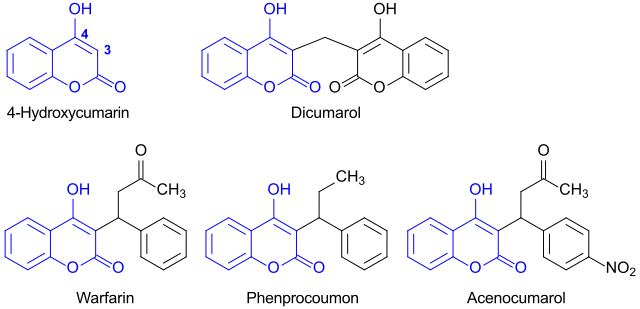
Antikoagulantien
How do anticoagulants work. Our blood has a complex system of chemicals in it, which, when activated, cause blood clots to form. This is called the clotting cascade. This is normally a good thing; it's activated if we have an injury, like a bleeding wound. The clotting cascade causes a clot to form, stopping the bleeding. However, some people get.
Weiterführende Lektüre und Referenzen
- RAB3 GTPase activating non-catalytic protein subunit 2; MedlinePlus, National Library of Medicine.
- Aligianis IA, Morgan NV, Mione M, Johnson CA, Rosser E, Hennekam RC, Adams G, Trembath RC, Pilz DT, Stoodley N, Moore AT, Wilson S, Maher ER. Mutation in Rab3 GTPase-activating protein (RAB3GAP) noncatalytic subunit in a kindred with Martsolf syndrome. Am J Hum Genet. 2006 Apr;78(4):702-7. doi: 10.1086/502681. Epub 2006 Feb 14.
- Borck G, Wunram H, Steiert A, Volk AE, Korber F, Roters S, Herkenrath P, Wollnik B, Morris-Rosendahl DJ, Kubisch C. A homozygous RAB3GAP2 mutation causes Warburg Micro syndrome. Hum Genet. 2011 Jan;129(1):45-50. doi: 10.1007/s00439-010-0896-2. Epub 2010 Oct 22.
- Feldmann A, Bekbulat F, Huesmann H, Ulbrich S, Tatzelt J, Behl C, Kern A. The RAB GTPase RAB18 modulates macroautophagy and proteostasis. Biochem Biophys Res Commun. 2017 May 6;486(3):738-743. doi: 10.1016/j.bbrc.2017.03.112. Epub 2017 Mar 22.
- Gerondopoulos A, Bastos RN, Yoshimura S, Anderson R, Carpanini S, Aligianis I, Handley MT, Barr FA. Rab18 and a Rab18 GEF complex are required for normal ER structure. J Cell Biol. 2014 Jun 9;205(5):707-20. doi: 10.1083/jcb.201403026. Epub 2014 Jun 2.
- Handley MT, Carpanini SM, Mali GR, Sidjanin DJ, Aligianis IA, Jackson IJ, FitzPatrick DR. Warburg Micro syndrome is caused by RAB18 deficiency or dysregulation. Open Biol. 2015 Jun;5(6):150047. doi: 10.1098/rsob.150047.
- Sakane A, Manabe S, Ishizaki H, Tanaka-Okamoto M, Kiyokage E, Toida K, Yoshida T, Miyoshi J, Kamiya H, Takai Y, Sasaki T. Rab3 GTPase-activating protein regulates synaptic transmission and plasticity through the inactivation of Rab3. Proc Natl Acad Sci U S A. 2006 Jun 27;103(26):10029-34. doi: 10.1073/pnas.0600304103. Epub 2006 Jun 16.
Artikelverlauf
Artikel auch verfügbar in Englisch, Deutsch, Spanisch, Französisch, Italienisch, Portugiesisch, Hindi, Hebräisch, Arabisch, und Schwedisch.
18. Aug 2020 | Neueste Version
1 Apr 2018 | Ursprünglich veröffentlicht
Nehmen Sie an der Diskussion teil
Teilen Sie Ihre Gedanken oder Erfahrungen mit anderen in unserem Patientengemeinschaften.

Fragen, teilen, verbinden.
Durchsuchen Sie Diskussionen, stellen Sie Fragen und teilen Sie Erfahrungen zu Hunderten von Gesundheitsthemen.
Abonnieren Sie den Patienten-Newsletter
Ihre wöchentliche Dosis klarer, vertrauenswürdiger Gesundheitsberatung - geschrieben, um Ihnen zu helfen, sich informiert, selbstbewusst und in Kontrolle zu fühlen.
Durch das Abonnieren akzeptieren Sie unsere Datenschutzrichtlinie. Sie können sich jederzeit abmelden. Wir verkaufen Ihre Daten niemals.