
Die Bedeutung des Erlernens von CPR
Begutachtet von Dr Colin Tidy, MRCGPZuletzt aktualisiert von Victoria RawZuletzt aktualisiert 25. Juni 2026
Erfüllt die redaktionelle Richtlinien
- HerunterladenHerunterladen
- Teilen
- Language
- Diskussion
- Audio-Version
- Zu bevorzugten Quellen bei Google hinzufügen
According to the British Heart Foundation (BHF) 30,000 people have a cardiac arrest each year. Fewer than one in ten of these people will survive. Cardiac arrest can happen to anyone, anywhere, at any time - and without warning.
Knowing how to perform CPR could double someone's chances of surviving it. We hear from real-life heroes who've saved lives through CPR. Their stories highlight the vital importance of learning this life-saving skill.
What is CPR?
CPR (cardiopulmonary resuscitation) is an emergency procedure to get your heart beating again when it unexpectedly stops (cardiac arrest). When your heart stops beating it stops pumping blood around your body - starving your brain of oxygen. The longer your brain goes without oxygen, the greater the chance of brain damage and death. CPR can keep your blood pumping until professional medical help arrives.
How to perform CPR
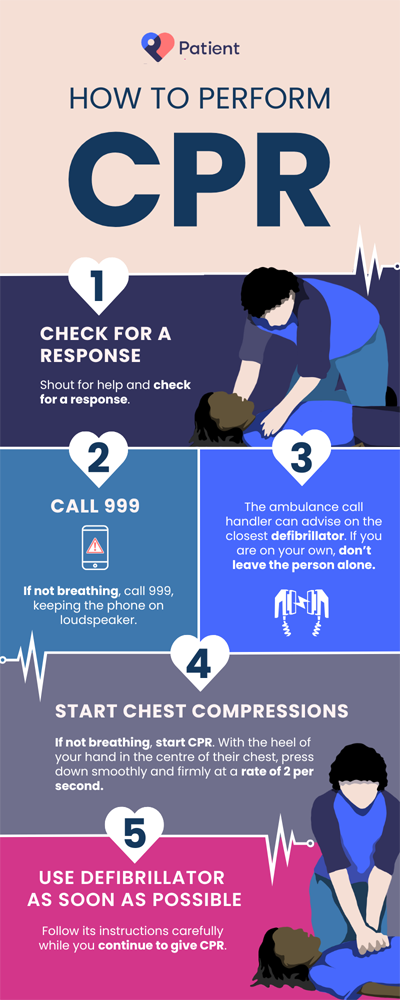
Why is learning CPR important?
Without CPR, your chance of dying dramatically increases after cardiac arrest. By learning CPR, you can become a hero and save someone else's life. Minutes spent learning CPR can mean a lifetime saved. The British Heart Foundation's RevivR campaign puts this power in your hands. Taking its free 15-minute online CPR course means you could be ready to act in an emergency.
Andys Geschichte
Andy Bleasby of Wakefield, West Yorkshire, performed life-saving CPR in a familiar yet seemingly unlikely place.
"I was actually in the pub, about to watch a local rugby game," says the father of two. "I was just chatting with my in-laws when my friend told me someone had collapsed around the corner. I thought, "That doesn't sound good", so I got up to see what was happening.
Due to his role as an operating department practitioner (ODP), Andy undergoes yearly CPR training. So when he saw a man lying unconscious and unresponsive on the floor of the pub, his instinctive response was to step in and perform immediate CPR.
"My friend and I took turns performing CPR until the ambulance team arrived. The person survived and is now living a normal life. I even went to his 65th birthday party."
Andy betont, dass das Wissen, wie man CPR durchführt, entscheidend war, um das Leben dieser Person zu retten.
"There are many organisations running free CPR training and basic life support courses," he says. "So if you have the opportunity to go on one - do it. You never know when it’s going to come in useful. Cardiac arrest can happen to anyone - it may be a stranger in a pub, or it could be a family member in your own house."
Wenn Sie jemanden mit Herzstillstand sehen, sollten Sie immer versuchen, eine Herz-Lungen-Wiederbelebung (HLW) durchzuführen, auch wenn Sie sich der richtigen Technik nicht sicher sind. Jede Art von HLW könnte ihr Leben retten - sofortige HLW kann die Überlebenschance bei Herzstillstand verdoppeln oder verdreifachen.
If you feel uncomfortable doing 'rescue breaths', hands only CPR has been shown to be effective. Chest compressions can keep the blood pumping around their body while you wait for the ambulance to arrive.
"Anything you can do is a bonus," says Andy. "Even if you haven't had CPR training - or only watched it on TV - if you can attempt to do what you can do, that's better than nothing. It gives that person a greater chance of survival."
For more inspiring stories about the life-saving power of CPR, tune in to Emma's story.
Patientenauswahl für Erste Hilfe

Behandlung und Medikamente
Die Bedeutung des Erlernens von CPR: Emma erzählt ihre Geschichte
Laut der British Heart Foundation (BHF) erleiden jedes Jahr 30.000 Menschen einen Herzstillstand. Weniger als jeder Zehnte von ihnen überlebt. Herzstillstand kann jedem passieren, überall und jederzeit – und ohne Vorwarnung. Zu wissen, wie man CPR durchführt, könnte die Überlebenschancen einer Person verdoppeln. Wir hören von echten Helden, die Leben durch CPR gerettet haben. Ihre Geschichten unterstreichen die lebenswichtige Bedeutung, diese lebensrettende Fähigkeit zu erlernen.
von Victoria Raw
Behandlung und Medikamente
Was sollten Sie tun, wenn jemand einen Herzstillstand erleidet?
Jedes Jahr erleiden 30.000 Menschen im Vereinigten Königreich einen Herzstillstand. Wenn jemand nicht reagiert und Sie feststellen, dass er nicht atmet, könnte er einen Herzstillstand haben. In solchen Situationen ist es verständlich, warum wir in Panik geraten und verwirrt sind. Es ist jedoch entscheidend, dass wir die Anzeichen erkennen und genau wissen, was zu tun ist, um jemandem die beste Überlebenschance zu geben.
von Emily Jane Bashforth
Über den AutorVollständige Biografie anzeigen
Aktualisiert von

Victoria Raw
Feature-Autorin
BA (Hons), Englische Literatur
Victoria ist Content-Autorin bei Patient, mit besonderen Interessen in den Bereichen psychisches Wohlbefinden, gesellschaftliche Trends und die Auswirkungen von Technologie auf unsere Gesundheit.
Verfasst von
Victoria Raw
Feature-Autorin
BA (Hons), Englische Literatur
Victoria ist Content-Autorin bei Patient, mit besonderen Interessen in den Bereichen psychisches Wohlbefinden, gesellschaftliche Trends und die Auswirkungen von Technologie auf unsere Gesundheit.
Über den RezensentenVollständige Biografie anzeigen

Dr Colin Tidy, MRCGP
Allgemeinmediziner, Medizinischer Autor
MBBS, MRCGP, MRCP (Paediatrics), DCH
Dr. Colin Tidy ist ein NHS-Arzt mit Sitz in Oxfordshire.
Artikelverlauf
Artikel auch verfügbar in Englisch, Deutsch, Spanisch, Französisch, Italienisch, Portugiesisch, Hindi, Hebräisch, Arabisch, und Schwedisch.
Nächste Überprüfung fällig: 25. Juni 2029
25. Juni 2026 | Neueste Version
14. Okt 2024 | Ursprünglich veröffentlicht
Verfasst von:
Victoria Raw
Nehmen Sie an der Diskussion teil
Teilen Sie Ihre Gedanken oder Erfahrungen mit anderen in unserem Patientengemeinschaften.

Fragen, teilen, verbinden.
Durchsuchen Sie Diskussionen, stellen Sie Fragen und teilen Sie Erfahrungen zu Hunderten von Gesundheitsthemen.

Fühlen Sie sich unwohl?
Bewerten Sie Ihre Symptome online kostenlos
Abonnieren Sie den Patienten-Newsletter
Ihre wöchentliche Dosis klarer, vertrauenswürdiger Gesundheitsberatung - geschrieben, um Ihnen zu helfen, sich informiert, selbstbewusst und in Kontrolle zu fühlen.
Durch das Abonnieren akzeptieren Sie unsere Datenschutzrichtlinie. Sie können sich jederzeit abmelden. Wir verkaufen Ihre Daten niemals.