
Kein Grund zur Sorge: 5 gesundheitliche Vorteile der Sauna im Rampenlicht
Begutachtet von Dr Krishna Vakharia, MRCGPVerfasst von Amberley DavisUrsprünglich veröffentlicht 9. Jul 2024
Erfüllt die Anforderungen des Patienten Richtlinien des Patienten
- HerunterladenHerunterladen
- Teilen
- Language
- Diskussion
- Audio-Version
- Zu bevorzugten Quellen bei Google hinzufügen
Saunabesuche sind ein bewährter Trend, der bis ins Jahr 2000 v. Chr. zurückreicht. Ihre spirituellen, mentalen und physischen Vorteile wurden über Generationen hinweg anekdotisch weitergegeben – und jetzt beginnt die Wissenschaft, sie zu untermauern. Wir stellen fünf gesundheitliche Vorteile des Saunabesuchs vor und was Sie darüber wissen sollten.
What are saunas?
The concept of heat therapy for healing is in many ways nothing new. The sauna has existed for thousands of years, used by ancient and modern cultures around the world to bolster health, practice cleanliness, and nurture social and spiritual wellbeing.
Recent interest from the next generation of young health gurus - on TikTok and other social platforms - is re-shining a spotlight on sauna health benefits. New research, while in early days, suggests that the benefits of heat therapy may be more diverse than once thought.
Any enclosed space designed to hold heat, wet or dry, can be a sauna. Over time, people have used different methods to create this sweat-inducing environment.
Types of saunas
Traditional Finnish saunas: the Finnish invented the sauna, and the oldest in the world can be found dug underground in Finland, where early humans poured water over heated rocks and lined the rooms with animal skin to trap in the heat. Temperatures reach around 80C - 100C (176 - 212F).
Modern Finnish saunas: today, these dry saunas are enjoyed around the world. The concept has remained the same: moisture is kept to a low level and dry heat is either created by heating stones, by burning wood, or electrically heated through the wooden benches and walls, with the temperature closely controlled.
Infrared saunas: these work a little differently, heating your body directly rather than the room around you. This works via infrared wavelengths, invisible rays on the light spectrum that penetrate skin tissue and trigger sweat glands. The infrared sauna is slightly cooler, with temperatures around 45C -60C (113 - 140F).
Wet saunas: widely known as steam rooms, these saunas are all about immersion in wet heat. These spaces tend to have over 50% humidity, the air thick and murky with visible water droplets. They tend to be slightly hotter than infrared saunas but cooler than traditional dry saunas, sitting at around 70C - 80C (158 - 212F).
Most sauna health studies discuss traditional Finnish saunas, which means that we know more about the possible benefits of dry heat.
What are the health benefits of saunas?
If tar, vodka or the sauna won't help, then the disease is fatal - this old Finnish proverb shows that saunas have always been seen as health-giving. Today, science can offer some back up.
A lot of this evidence is emerging, ongoing, and not set in (sauna-steamed) stone. We don't know if these sauna health benefits work for everyone - but the area is certainly a promising and expanding one. Here's a snapshot of what we do know, what shows promise, and where research is heading.
1. Saunas for your heart
Sitting in sauna heat can have the same effect on your body as mild cardiovascular exercise. It pumps blood around your body faster and increases your heart rate, which can give your heart a healthy workout. The high temperatures can also cause your blood vessels to expand, which may lower Blutdruck.
These effects may help explain the link found between sauna bathing and heart health in a study of 2,315 Finnish men1. Those who used the sauna more often appeared to have a lower risk of sudden cardiac death (SCD), fatal coronary Herzerkrankungen (CHD), fatal Herz-Kreislauf-Erkrankungen (CVD), and all-cause mortality.
However, it's worth noting that most studies have been conducted on men - more specifically, Finnish men who have likely been introduced to regular sauna use at a young age. We also know that external effects on blood pressure can vary widely from person to person, lowering blood pressure in some but raising it in others. The exertive effects of heat therapy may not be right for everyone, so it's best to check with your doctor if you have a history of ill heart health.
Saunas after exercise?
A 2022 study found that using a sauna after a workout for 15 minutes, three times a week, improved cardiovascular fitness and reduced high blood pressure in people with poor heart health2. These heart benefits were better than the group who exercised without a sauna session afterward.
2. Saunas for mood and relaxation
From ancient rituals to modern spa days, saunas have long been used as a way to unwind and lift the spirits. In fact, this mental boost has become known as the "totonou" state, a Japanese word for the intense feelings of happiness and calm that follow a hot sauna and cold water3.
We know that this combination of heat and cold therapy somehow triggers the release of endorphins - our feel-good hormones. Studies have found that, not only do people report more positive emotions, but their brain activity also changes to trigger physical relaxation, like a slower heart rate 3.
3. Saunas for depression
Following the knowledge that saunas can make us feel good, the focus has now turned to depression. A 2024 study has shown that people with depression may have higher body temperatures than those who don't. Research is now trialling heat therapy as a potential treatment for Depressionen4.
This may sound counter-intuitive, but heating the body can help it to rebound to a lower core body temperature. Jane Witt recently became the UK’s first ever thermalist instructor, She says that, ironically, these effects may last longer than seen in cold therapy - using an ice bath, for example. The idea is that lowering this core temperature overall may help with depressive symptoms. The evidence isn't there yet, but this study - which involved over 20,000 people - is a positive step.
Witt says: "this research is ground-breaking in a number of ways. The results I see through my work continue to amaze me. In this country, we are just catching on to what the Scandinavians have known for years."
4. Saunas for dementia and Alzheimer's
A new area of interest is whether sauna bathing can help prevent degenerative brain diseases. In the first study on the subject, 2,315 Finnish men appeared to be 65% less likely to develop Demenz und Alzheimer-Krankheit if they had at least four sauna sessions per week, compared with one a week5.
There needs to be more research, including for women, younger people, and other nationalities. The study also attempted to adjust the results based on factors like age, alcohol, smoking status, type 2 diabetes, heart health, and socio-economic status. Still, it's difficult to determine and separate the sauna health benefits for brain health from the other lifestyle factors involved.
5. Saunas for pain relief
Like hot water bottles and heat packs, saunas might be able to provide pain relief. Heat can reduce the sensation of pain by stimulating sensory nerves in your body. We also know that heat exposure, especially when alternated with cold exposure, can release endorphins - your body's natural painkiller.
This said, there aren't that many studies looking at saunas for pain management. The ones that exist tend to focus on the infrared sauna, and while they show promise, many are small6. One large review found that infrared radiation could help relieve musculoskeletal and chronic pain conditions, like osteoarthritis and fibromyalgia. However, there weren't many studies or much evidence for infrared saunas specifically7.
Perhaps surprisingly, the same review found no evidence that infrared heat therapy could help muscle recovery after sports injury.
What are the risks of saunas?
Saunas have big effects on the body - we sweat, our hearts beat faster, and our skin temperature soars within minutes. For most people, though, these effects appear to be safe. If you have uncontrolled high blood pressure or any heart problems like heart disease, it's best to check with your doctor first.
Here are some general ways for a safer sauna:
Before and after, avoid alcohol and medicines that induce sweating and overheating.
Stay in for no more than 15–20 minutes.
Cool down gradually afterward.
Drink two to four glasses of cool water afterward.
Don't use a sauna when you are ill.
If you feel unwell during your sauna, leave.
What sauna temperature is normal and safe?
Traditional Finnish sauna - 80 to 100C (176 to 212F).
Infrared sauna - 45 to 60C (113 to 140F).
Wet sauna - 70 to 80C (158 to 212F).
Weiterführende Lektüre
Patientenauswahl für Therapie
Behandlung und Medikamente
Kein Grund zur Sorge: 5 gesundheitliche Vorteile der Sauna im Rampenlicht
Saunabesuche sind ein bewährter Trend, der bis ins Jahr 2000 v. Chr. zurückreicht. Ihre spirituellen, mentalen und physischen Vorteile wurden über Generationen hinweg anekdotisch weitergegeben – und jetzt beginnt die Wissenschaft, sie zu untermauern. Wir stellen fünf gesundheitliche Vorteile des Saunabesuchs vor und was Sie darüber wissen sollten.
von Amberley Davis
Behandlung und Medikamente
Was ist Rotlichttherapie? Vorteile und Risiken
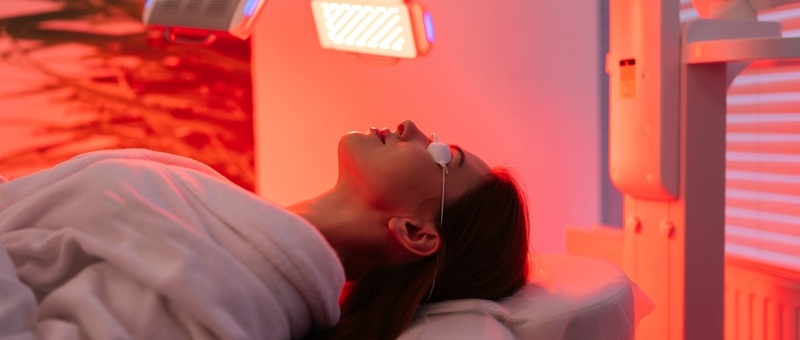
Rotlichttherapie gewinnt zunehmend an Beliebtheit als nicht-invasive Behandlung für eine Vielzahl von Gesundheits- und Schönheitsproblemen. Beworben für alles, von Hautverjüngung bis Schmerzlinderung, ist diese Therapie jetzt in Kliniken und sogar zu Hause weit verbreitet. Aber was ist Rotlichttherapie, wie funktioniert sie und ist sie sicher?
von Josh Alderman
Über den AutorVollständige Biografie anzeigen

Amberley Davis
Senior-Autorin
BA (Hons), CPD
Amberley ist eine leitende Autorin bei Patient und hat umfangreich über eine Vielzahl von Gesundheits- und Wohlfühlthemen geschrieben.
Über den RezensentenVollständige Biografie anzeigen

Dr Krishna Vakharia, MRCGP
Chief Medical Officer für Gesundheit, Optum UK
MBChB, MRCGP(2013), BMedSci (hons), DFSRH, DRCOG, PGDipDerm (Distn)
Dr. Krishna Vakharia ist eine NHS-Hausärztin. Sie ist auch regelmäßige Prüferin für das postgraduale Diplom in Praktischer Dermatologie an der Cardiff University und zudem Chief Medical Officer für Gesundheit bei Optum UK.
Artikelverlauf
Die Informationen auf dieser Seite werden von qualifizierten Klinikern begutachtet.
Artikel auch verfügbar in Englisch, Deutsch, Spanisch, Französisch, Italienisch, Portugiesisch, Hindi, Hebräisch, Arabisch, und Schwedisch.
Nächste Überprüfung fällig: 9. Juli 2027
9. Jul 2024 | Ursprünglich veröffentlicht
Verfasst von:
Amberley DavisBegutachtet von
Dr Krishna Vakharia, MRCGP

Fragen, teilen, verbinden.
Durchsuchen Sie Diskussionen, stellen Sie Fragen und teilen Sie Erfahrungen zu Hunderten von Gesundheitsthemen.

Fühlen Sie sich unwohl?
Bewerten Sie Ihre Symptome online kostenlos
Abonnieren Sie den Patienten-Newsletter
Ihre wöchentliche Dosis klarer, vertrauenswürdiger Gesundheitsberatung - geschrieben, um Ihnen zu helfen, sich informiert, selbstbewusst und in Kontrolle zu fühlen.
Durch das Abonnieren akzeptieren Sie unsere Datenschutzrichtlinie. Sie können sich jederzeit abmelden. Wir verkaufen Ihre Daten niemals.
Mehr zu Behandlung und Medikamenten
- Kann Hypnotherapie bei Schlaflosigkeit helfen?
- Funktioniert Hypnotherapie bei Angstzuständen?
- Wichtige Erste-Hilfe-Artikel für Ihr Zuhause
- Sex nach einer Vasektomie
- Wie Physiotherapie Menschen mit Lungenerkrankungen helfen kann
- Wie man sicher Antidepressiva wechselt
- LGBTQI+: Was sind die Barrieren und Herausforderungen in der Palliativpflege?
- Praktische Möglichkeiten, Ihre Medikamente zu Hause zu verwalten
- Rezepte: Ihre Fragen beantwortet
- Sollte die Operation mit vaginalem Netz verboten werden?
- Sollten Sie sich über eine Schmerzmittelabhängigkeit Sorgen machen?
- Sollten Sie sich über Nebenwirkungen von Malariatabletten Sorgen machen?
- Welche Faktoren verursachen antimikrobielle Resistenz?
- Was ist CBD-Öl und funktioniert es?
- Was ist dialektische Verhaltenstherapie (DBT)?
- Was ist das Serotonin-Syndrom und was verursacht es?
- Was ist Videophysiotherapie und wem kann sie helfen?
- Was Sie erwarten können, wenn Ihr Kind mit der Gesprächstherapie beginnt
- Warum haben so viele von uns Schwierigkeiten mit der Meditation?
- Warum gibt es immer noch ein Stigma um Antidepressiva?