
Period blood loss chart
Peer reviewed by Dr Hayley Willacy, FRCGP Last updated by Danny ChadburnLast updated 30 Oct 2017
Meets Patient’s editorial guidelines
- DownloadDownload
- Share
- Language
- Discussion
- Audio Version
- Add to preferred sources on Google
Using a period blood loss chart helps your doctor to get an idea as to how heavy your period is.
Period blood loss chart for printing off
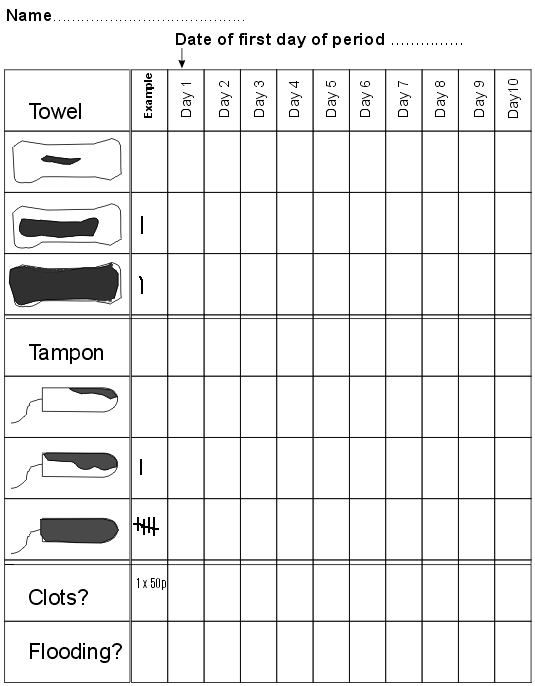
Each time you change a tampon or towel, place a mark mark in the column against the picture which most closely resembles your tampon or towel. (Some women use tampons, some use towels and some use both when the period is heavy.)
If you have a clot, mark roughly how large it is using different coins as a guide. In the UK for example, the size of a 1p, 2p, or 50p coin can be used.
Flooding means you have blood flow enough to stain your underwear (or worse) despite using a tampon, towel or both. If you have any flooding, place a mark in the flooding section.
The example shows a woman who over one day had five heavily blood-soaked tampons, one moderately blood-soaked tampon, one heavily blood-soaked towel, one moderately blood-soaked towel, and one clot the size of a 50p coin.
Patient picks for Periods and period problems

Women's health
Can changing your diet improve PMS?
Symptoms of PMS are common but they range in severity and affect people differently. They can even impact your day-to-day life. Hormones are the cause of PMS, but could certain foods help improve symptoms such as low mood, headaches and bloating?
by Victoria Raw

Women's health
Should you exercise during period times?
It's well known that the menstrual cycle can have an impact on exercise, and not just during your period. Hormonal fluctuations can influence your energy levels and performance all month.
by Abi Millar
About the author

Danny Chadburn
Head of Content
Danny was the previous Head of Content at Patient.
About the reviewerView full bio

Dr Hayley Willacy, FRCGP
General Practitioner, Medical Author
MBChB (1992), DRCOG, DFFP, MRCOG (Part 1) MRCGP (2007), DFSRH (2013), MSc - medical education (2020)
Dr Hayley Willacy was an NHS GP working in northwest England, who retired from clinical practice in 2022 after 30 years.
Article history
The information on this page is peer reviewed by qualified clinicians.
Article also available in English, German, Spanish, French, Italian, Portuguese, Hindi, Hebrew, Arabic, and Swedish.
30 Oct 2017 | Latest version
Join the conversation
Share your thoughts or experiences with others in our patient communities.

Ask, share, connect.
Browse discussions, ask questions, and share experiences across hundreds of health topics.

Feeling unwell?
Assess your symptoms online for free
Sign up to the Patient newsletter
Your weekly dose of clear, trustworthy health advice - written to help you feel informed, confident and in control.
By subscribing you accept our Privacy Policy. You can unsubscribe at any time. We never sell your data.
More in women's health
- 8 common myths about PCOS (Polycystic Ovary Syndrome)
- Can menstrual cups help fight period poverty?
- Contraception videos
- Do contraceptive pills change your behaviour?
- Does the contraceptive pill increase your risk of blood clots?
- Early breast cancer care
- How long do the symptoms of menopause last?
- How menopause can affect women at work
- How to ease your perimenopause symptoms
- Menstrual cups as safe and effective as pads and tampons
- Simple ways to help prevent vaginal thrush
- The 'second puberty': why you might be breaking out in your thirties
- Understanding vaginal cysts
- What are the side effects of HRT?
- What's behind the HRT shortage in the UK?
- What's the future of contraception?
- What's the link between PCOS and diabetes?
- Why are more young women losing their periods due to restrictive diets and excessive exercise?
- Why we need to talk about breast implant illness
- Will HRT for menopause soon be free over the counter?