Cerebro-facio-thoracic dysplasia
Zuletzt aktualisiert 12 Jul 2023
Erfüllt die redaktionelle Richtlinien
- HerunterladenHerunterladen
- Teilen
- Language
- Diskussion
- Ask Patient
- Audio-Version
- Zu bevorzugten Quellen bei Google hinzufügen
Cerebro-facio-thoracic dysplasia is a rare condition characterised by abnormal development (dysplasia) of the brain (cerebro) and structures in the face (facio) and torso (thoracic). The problems with development lead to the key features of cerebro-facio-thoracic dysplasia, which include severe intellectual disability, distinctive facial features, and abnormalities of the ribs and spinal bones (vertebrae).
Videoauswahl für Genetische ErkrankungenVideothek
Beschreibung
Cerebro-facio-thoracic dysplasia is a rare condition characterised by abnormal development (dysplasia) of the brain (cerebro) and structures in the face (facio) and torso (thoracic). The problems with development lead to the key features of cerebro-facio-thoracic dysplasia, which include severe intellectual disability, distinctive facial features, and abnormalities of the ribs and spinal bones (vertebrae).
In addition to intellectual disability, individuals with cerebro-facio-thoracic dysplasia have delayed development of speech and movement (motor) skills, and in some, these skills never develop. Nearly one-quarter of affected individuals never learn to speak and almost half are unable to walk. Weak muscle tone (hypotonia) and difficulty feeding occur in some affected infants. People with cerebro-facio-thoracic dysplasia can have neurodevelopmental problems, such as anxiety, autism spectrum disorder, or self-injuring behaviour; however, many people with the condition are described as friendly and good-natured.
Distinctive facial features common in cerebro-facio-thoracic dysplasia include a wide, short skull (brachycephaly); highly arched eyebrows or eyebrows that grow together in the middle (synophrys); widely spaced eyes (hypertelorism); a wide nasal bridge; low-set ears; an upper lip with pronounced curves (Cupid's bow upper lip); and small teeth (microdontia). Some affected individuals have overgrowth of the gums (gingival hyperplasia), an opening in the roof of the mouth (cleft palate), or a split in the upper lip (cleft lip).
Problems with bone development in the torso (thorax) commonly leads to bone abnormalities such as two or more ribs that are joined together (fused) or ribs that are abnormally shaped with two prongs at one end (bifid ribs). Many people with cerebro-facio-thoracic dysplasia have abnormal side-to-side curvature of the spine (scoliosis) due to malformation of the vertebrae; some vertebrae may also be fused. Additionally, the shoulder blades can be affected in people with this condition.
A wide variety of other features can occur in cerebro-facio-thoracic dysplasia, such as abnormalities involving the eyes, skin, or hair. Heart defects, digestive problems, or genitourinary problems (such as abnormal kidneys or reproductive organs) can also occur. Affected individuals may also have bone or joint abnormalities in other parts of the body.
Inheritance patterns
The source lists the following possible inheritance patterns: Autosomal recessive. More than one pattern can apply in different cases.
Related genes
Other names
Cerebrofaciothoracic dysplasia
CFSMR
CFTD
Craniofacial dysmorphism, skeletal anomalies, and mental retardation syndrome
Pascual-Castroviejo syndrome
TMCO1 defect syndrome
Related patient information and medicines

Patient information leaflet
Eingeschränktes Wachstum
Dwarfism is a medical or genetic condition which causes people to have restricted growth so that they are shorter than average. Specifically, people with dwarfism grow no higher than 4 ft 10 ins (147 cm). ... It tends to be associated with other problems such as a cleft palate, club feet, chest abnormalities and abnormally shaped ears..

Patient information leaflet
Ameisenlaufen
Numbness ist a condition where you can't fühlen anything in part of your body, some describe it as a 'limb falling asleep'. Pins and needles are a tingling or numbness feeling or prickling sensation that is often felt in hands or feet. Usually this is due to pressure on nerves/nerve cells or the blood vessels that supply nerves. This often happens.

Patient information leaflet
Frühgeborene
. Those born at less than 28 completed weeks of pregnancy are considered extremely premature, and will be at most risk of complications and medical problems. However about 1 in 10 of all premature babies will have a permanent Behinderung such as lung disease, cerebral palsy, blindness or deafness. ...example, zerebrale Kinderlähmung + not walking, low.
Patient information leaflet
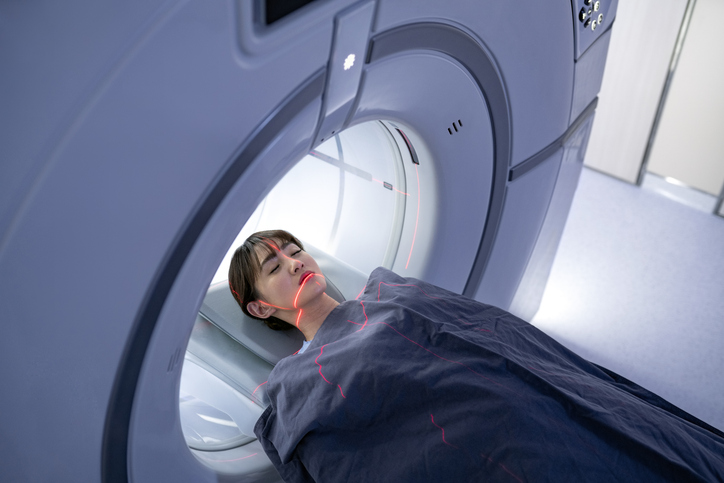
MRT-Scan
Ein MRT-Scan ist a safe and painless test that can provide detailed pictures of organs and other structures inside your body. Note : the information below is a general guide only. Brain MRI is the first-choice investigation for brain tumours Brain tumours , as it produces clearer images than computerised tomography (CT) and shows hard-to-reach areas.

Patient information leaflet
Behandlung von Gesundheitsproblemen bei Neugeborenen
Behandlung depends on the problem, but the conditions being screened for are all ones for which there is a treatment if they are picked up. What happens if there is a problem. For most babies, of course, all tests are deliciously normal. All the conditions being checked for are uncommon. Some examples are briefly explained below Conditions picked.

Patient information leaflet
Halsrippe
About 1 in 100 people are born with an extra rib genannt a cervical rib. About 1 in 10 people who have a cervical rib develop thoracic outlet syndrome. This happens if the cervical rib squashes the nerves and blood vessels going into the arm. Cervical ribs can be present on both sides, or on one side only. Thoracic outlet thoracic outlet and.
Weiterführende Lektüre und Referenzen
- Cerebro-facio-thoracic dysplasia; MedlinePlus, National Library of Medicine.
- Alanay Y, Erguner B, Utine E, Hacariz O, Kiper PO, Taskiran EZ, Percin F, Uz E, Sagiroglu MS, Yuksel B, Boduroglu K, Akarsu NA. TMCO1 deficiency causes autosomal recessive cerebrofaciothoracic dysplasia. Am J Med Genet A. 2014 Feb;164A(2):291-304. doi: 10.1002/ajmg.a.36248. Epub 2013 Nov 5.
- Michael Yates T, Ng OH, Offiah AC, Willoughby J, Berg JN; DDD Study; Johnson DS. Cerebrofaciothoracic dysplasia: Four new patients with a recurrent TMCO1 pathogenic variant. Am J Med Genet A. 2019 Jan;179(1):43-49. doi: 10.1002/ajmg.a.60678. Epub 2018 Dec 17.
- Pehlivan D, Karaca E, Aydin H, Beck CR, Gambin T, Muzny DM, Bilge Geckinli B, Karaman A, Jhangiani SN; Centers for Mendelian Genomics; Gibbs RA, Lupski JR. Whole-exome sequencing links TMCO1 defect syndrome with cerebro-facio-thoracic dysplasia. Eur J Hum Genet. 2014 Sep;22(9):1145-8. doi: 10.1038/ejhg.2013.291. Epub 2014 Jan 15.
- Tender JAF, Ferreira CR. Cerebro-facio-thoracic dysplasia (Pascual-Castroviejo syndrome): Identification of a novel mutation, use of facial recognition analysis, and review of the literature. Transl Sci Rare Dis. 2018 Apr 13;3(1):37-43. doi: 10.3233/TRD-180022.
- Wang QC, Zheng Q, Tan H, Zhang B, Li X, Yang Y, Yu J, Liu Y, Chai H, Wang X, Sun Z, Wang JQ, Zhu S, Wang F, Yang M, Guo C, Wang H, Zheng Q, Li Y, Chen Q, Zhou A, Tang TS. TMCO1 Is an ER Ca(2+) Load-Activated Ca(2+) Channel. Cell. 2016 Jun 2;165(6):1454-1466. doi: 10.1016/j.cell.2016.04.051. Epub 2016 May 19.
Artikelverlauf
Artikel auch verfügbar in Englisch, Deutsch, Spanisch, Französisch, Italienisch, Portugiesisch, Hindi, Hebräisch, Arabisch, und Schwedisch.
12 Jul 2023 | Neueste Version
1. März 2019 | Ursprünglich veröffentlicht
Teilen Sie Ihre Gedanken oder Erfahrungen mit anderen in unserem Patientengemeinschaften.
Einfacher Zugang zu vertrauenswürdigen Behandlungen und Gesundheitsdiensten online.
Common conditions
Get help with common conditions through the NHS, without a GP appointment.





Abonnieren Sie den Patienten-Newsletter
Ihre wöchentliche Dosis klarer, vertrauenswürdiger Gesundheitsberatung - geschrieben, um Ihnen zu helfen, sich informiert, selbstbewusst und in Kontrolle zu fühlen.
Durch das Abonnieren akzeptieren Sie unsere Datenschutzrichtlinie. Sie können sich jederzeit abmelden. Wir verkaufen Ihre Daten niemals.