Chylomicron retention disease
Zuletzt aktualisiert 17. Mai 2022
Erfüllt die redaktionelle Richtlinien
- HerunterladenHerunterladen
- Teilen
- Language
- Diskussion
- Ask Patient
- Audio-Version
- Zu bevorzugten Quellen bei Google hinzufügen
Chylomicron retention disease is an inherited disorder that impairs the normal absorption of fats, cholesterol, and certain vitamins from food. The features of chylomicron retention disease primarily affect the gastrointestinal system and nervous system.
Videoauswahl für Genetische ErkrankungenVideothek
Beschreibung
Chylomicron retention disease is an inherited disorder that impairs the normal absorption of fats, cholesterol, and certain vitamins from food. The features of chylomicron retention disease primarily affect the gastrointestinal system and nervous system.
Chylomicron retention disease begins in infancy or early childhood. Affected children have slow growth and weight gain, frequent (chronic) diarrhea, and foul-smelling stools (steatorrhea). They also have reduced blood cholesterol levels (hypocholesterolemia). Some individuals with chylomicron retention disease develop an abnormal buildup of fats in the liver called hepatic stenosis and can have an enlarged liver.
Other features of chylomicron retention disease develop later in childhood and often impair the function of the nervous system. Affected people may develop decreased reflexes (hyporeflexia) and a decreased ability to sense vibrations. Rarely, affected individuals have heart abnormalities or muscle wasting (amyotrophy).
Inheritance patterns
The source lists the following possible inheritance patterns: Autosomal recessive. More than one pattern can apply in different cases.
Related genes
Other names
Anderson disease
Anderson syndrome
CMRD
Hypobetalipoproteinemia with accumulation of apolipoprotein B-like protein in intestinal cells
Lipid transport defect of intestine
Related patient information and medicines

Patient information leaflet
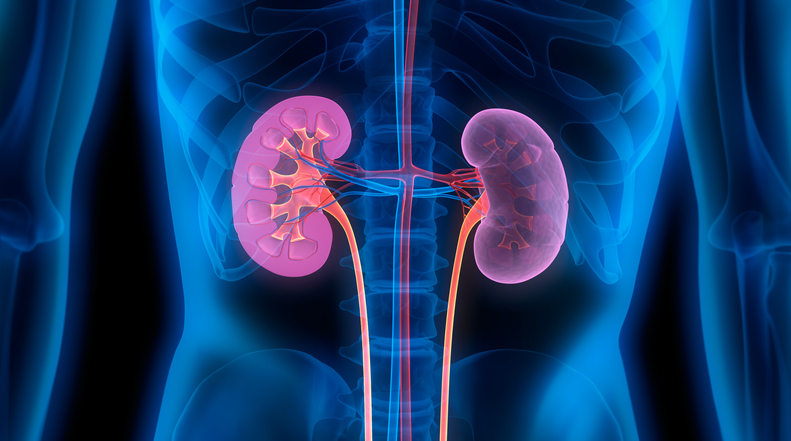
Diabetische Nierenerkrankung
Diabetische Nierenerkrankung is a complication that occurs in some people with Diabetes. Treatment aims to prevent or delay the progression of the disease. Also, it aims to reduce the risk of developing cardiovascular diseases such as heart attack and stroke which are much more common than average in people with this disease. What is diabetic kidney.
Patient information leaflet
Dilatative Kardiomyopathie
Dilatative Kardiomyopathie is a condition where the heart muscle becomes stretched and thin. The heart becomes enlarged (dilates) and pumps blood less well. Symptoms vary according to severity and the treatment depends on the type of symptoms and whether any complications develop. Some forms of dilated cardiomyopathy run in families. A normal heart.

Patient information leaflet
Harnverhalt
Harnverhalt means that you are having problems emptying the bladder completely. It may occur suddenly (acute urinary retention) or it may develop over a longer period of time (chronic urinary retention). Acute urinary retention is a medical emergency. Urinary retention is more common in men than in women. It becomes more common as you become.
Patient information leaflet
Chronische Nierenerkrankung
Chronische Nierenerkrankung means that the Nieren are not working as well as would be expected. Various conditions can cause chronic kidney disease. Chronic kidney disease (CKD) means das the kidneys are not working as well as they used to, either due to being diseased or damaged in some way, or due to ageing. Dr Krishna Vakharia , 29th January 2024.

Patient information leaflet
Herzklappenerkrankung
Heart valves sit in between the chambers of the Herz und control the blood flow through the heart. There are four common types of heart valve problem - mitral stenosis, mitral regurgitation , aortic stenosis and aortic regurgitation. The leaflet called Anatomie of the Herz beinhaltet details about the function of the heart and how the Herz beats..

Patient information leaflet
Polyzystische Nierenerkrankung
Polycystic kidney disease (PKD) causes many fluid-filled sacs (cysts) to develop in the kidneys. The most common type of PKD is an inherited condition called autosomal dominant polycystic kidney disease (ADPKD). With ADPKD, problems commonly do not develop until the age of 30-50, with some people never developing any problems. The two common.
Weiterführende Lektüre und Referenzen
- Chylomicron retention disease; MedlinePlus, National Library of Medicine.
- Burnett JR, Hooper AJ, Hegele RA. Chylomicron Retention Disease. 2022 Mar 24. In: Adam MP, Bick S, Mirzaa GM, Wallace SE, Amemiya A, editors. GeneReviews(R) [Internet]. Seattle (WA): University of Washington, Seattle; 1993-2026. Available from http://www.ncbi.nlm.nih.gov/books/NBK578949/
- Charcosset M, Sassolas A, Peretti N, Roy CC, Deslandres C, Sinnett D, Levy E, Lachaux A. Anderson or chylomicron retention disease: molecular impact of five mutations in the SAR1B gene on the structure and the functionality of Sar1b protein. Mol Genet Metab. 2008 Jan;93(1):74-84. doi: 10.1016/j.ymgme.2007.08.120. Epub 2007 Oct 22.
- Hesse D, Jaschke A, Chung B, Schurmann A. Trans-Golgi proteins participate in the control of lipid droplet and chylomicron formation. Biosci Rep. 2013 Feb 22;33(1):1-9. doi: 10.1042/BSR20120082.
- Levy E. Insights from human congenital disorders of intestinal lipid metabolism. J Lipid Res. 2015 May;56(5):945-62. doi: 10.1194/jlr.R052415. Epub 2014 Nov 11.
- Sane AT, Seidman E, Peretti N, Kleme ML, Delvin E, Deslandres C, Garofalo C, Spahis S, Levy E. Understanding Chylomicron Retention Disease Through Sar1b Gtpase Gene Disruption: Insight From Cell Culture. Arterioscler Thromb Vasc Biol. 2017 Dec;37(12):2243-2251. doi: 10.1161/ATVBAHA.117.310121. Epub 2017 Oct 5.
- Silvain M, Bligny D, Aparicio T, Laforet P, Grodet A, Peretti N, Menard D, Djouadi F, Jardel C, Begue JM, Walker F, Schmitz J, Lachaux A, Aggerbeck LP, Samson-Bouma ME. Anderson's disease (chylomicron retention disease): a new mutation in the SARA2 gene associated with muscular and cardiac abnormalities. Clin Genet. 2008 Dec;74(6):546-52. doi: 10.1111/j.1399-0004.2008.01069.x. Epub 2008 Sep 11.
Artikelverlauf
Artikel auch verfügbar in Englisch, Deutsch, Spanisch, Französisch, Italienisch, Portugiesisch, Hindi, Hebräisch, Arabisch, und Schwedisch.
17. Mai 2022 | Neueste Version
1 Oct 2008 | Ursprünglich veröffentlicht
Teilen Sie Ihre Gedanken oder Erfahrungen mit anderen in unserem Patientengemeinschaften.
Einfacher Zugang zu vertrauenswürdigen Behandlungen und Gesundheitsdiensten online.
Common conditions
Get help with common conditions through the NHS, without a GP appointment.





Abonnieren Sie den Patienten-Newsletter
Ihre wöchentliche Dosis klarer, vertrauenswürdiger Gesundheitsberatung - geschrieben, um Ihnen zu helfen, sich informiert, selbstbewusst und in Kontrolle zu fühlen.
Durch das Abonnieren akzeptieren Sie unsere Datenschutzrichtlinie. Sie können sich jederzeit abmelden. Wir verkaufen Ihre Daten niemals.