Hereditary multiple osteochondromas
Zuletzt aktualisiert 18. Aug 2020
Erfüllt die redaktionelle Richtlinien
- HerunterladenHerunterladen
- Teilen
- Language
- Diskussion
- Audio-Version
- Zu bevorzugten Quellen bei Google hinzufügen
Hereditary multiple osteochondromas is a condition in which people develop multiple benign (noncancerous) bone tumours called osteochondromas. The number of osteochondromas and the bones on which they are located vary greatly among affected individuals. The osteochondromas are not present at birth, but approximately 96 percent of affected people develop multiple osteochondromas by the time they are 12 years old. Osteochondromas typically form at the end of long bones and on flat bones such as the hip and shoulder blade.
Beschreibung
Hereditary multiple osteochondromas is a condition in which people develop multiple benign (noncancerous) bone tumours called osteochondromas. The number of osteochondromas and the bones on which they are located vary greatly among affected individuals. The osteochondromas are not present at birth, but approximately 96 percent of affected people develop multiple osteochondromas by the time they are 12 years old. Osteochondromas typically form at the end of long bones and on flat bones such as the hip and shoulder blade.
Multiple osteochondromas can disrupt bone growth and can cause growth disturbances of the arms, hands, and legs, leading to short stature. Often these problems with bone growth do not affect the right and left limb equally, resulting in uneven limb lengths (limb length discrepancy). Bowing of the forearm or ankle and abnormal development of the hip joints (hip dysplasia) caused by osteochondromas can lead to difficulty walking and general discomfort. Multiple osteochondromas may also result in pain, limited range of joint movement, and pressure on nerves, blood vessels, the spinal cord, and tissues surrounding the osteochondromas.
Osteochondromas are typically benign; however, in some instances these tumours become malignant (cancerous). Researchers estimate that people with hereditary multiple osteochondromas have a 1 in 20 to 1 in 200 lifetime risk of developing cancerous osteochondromas (called sarcomas).
Inheritance patterns
The source lists the following possible inheritance patterns: Autosomal dominant. More than one pattern can apply in different cases.
Related genes
Other names
Bessel-Hagen disease
Diaphyseal aclasis
Exostoses, multiple hereditary
Familial exostoses
Hereditary multiple exostoses
Multiple cartilaginous exostoses
Multiple congenital exostosis
Multiple hereditary exostoses
Multiple osteochondromas
Multiple osteochondromatosis
Related patient information and medicines
Patient information leaflet
Primärer Knochenkrebs
... This is a disease of the bone which occurs in some older people. An osteochondroma (chondroma). This is a non-cancerous (benign) bone tumour which occasionally turns into a chondrosarcoma. Certain rare inherited disorders including: Li-Fraumeni syndrome, hereditary multiple exostoses (HME) und hereditary retinoblastoma. Ollier's disease.

Patient information leaflet
Myelom
Other symptoms include bone pain, breaks. In many cases, treatment with chemotherapy and other treatments can control the disease, ease symptoms and prolong survival for a number of years. What is myeloma. Myeloma is a type of blood cancer. The cancer involves certain white blood cells called plasma cells. The cancerous plasma cells build up in.

Patient information leaflet
Retinoblastom
Retinoblastom is a genetic disease. Genetic diseases are disorders of the 46 chromosomes which contain the coding (DNA) that our body needs in order to build and grow its cells. Retinoblastoma is caused by abnormalities on chromosome 13, which allow the tumour to develop. These abnormalities can be inherited from a parent, or happen for the first.
Patient information leaflet
Multiple Sklerose
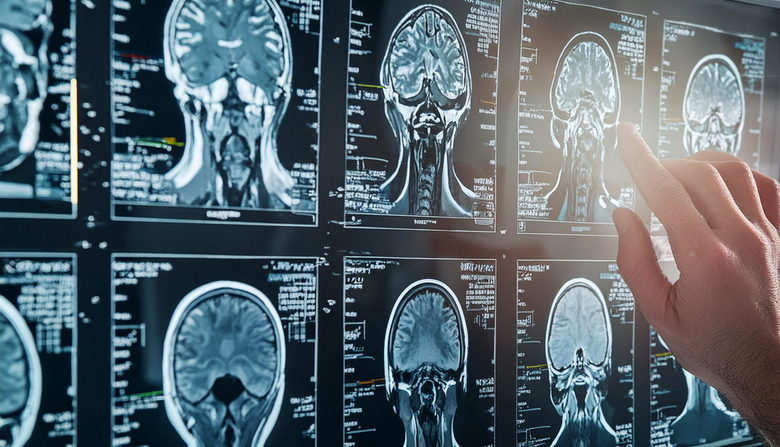
Multiple sclerosis is a disorder of the brain and spinal cord. It can cause various symptoms. What is multiple sclerosis. Multiple sclerosis (MS) is a disease where patches of inflammation occur in parts of your brain and/or spinal cord. This can cause damage to parts of your brain and lead to various symptoms (described below). Multiple sclerosis.
Patient information leaflet
Epidermoide und Pilarzysten
Epidermoide und Pilarzysten are commonly referred to as 'sebaceous cysts' (pronounced 'seb-ay-shuss'). They are overgrowths of skin cells (called keratin) held together in a little capsule, or sac. They are not related to cleanliness, nor will exfoliating stop them occurring. Pilarzysten on the scalp can be hereditary and run in families, although.
Patient information leaflet
Milzschmerzen
This leaflet gives a brief overview of the spleen and its functions. What is the spleen. The spleen is an organ about the size of a clenched fist found on the left-hand side of your upper tummy (abdomen). It is found within the cells and is also broken down and then recycled. See the separate leaflet called Hereditäre Sphärozytose as an example.
Weiterführende Lektüre und Referenzen
- Hereditary multiple osteochondromas; MedlinePlus, National Library of Medicine.
- Alvarez CM, De Vera MA, Heslip TR, Casey B. Evaluation of the anatomic burden of patients with hereditary multiple exostoses. Clin Orthop Relat Res. 2007 Sep;462:73-9. doi: 10.1097/BLO.0b013e3181334b51.
- Bovee JV. Multiple osteochondromas. Orphanet J Rare Dis. 2008 Feb 13;3:3. doi: 10.1186/1750-1172-3-3.
- Jager M, Westhoff B, Portier S, Leube B, Hardt K, Royer-Pokora B, Gossheger G, Krauspe R. Clinical outcome and genotype in patients with hereditary multiple exostoses. J Orthop Res. 2007 Dec;25(12):1541-51. doi: 10.1002/jor.20479.
- Komura S, Matsumoto K, Hirakawa A, Akiyama H. Natural History and Characteristics of Hand Exostoses in Multiple Hereditary Exostoses. J Hand Surg Am. 2021 Sep;46(9):815.e1-815.e12. doi: 10.1016/j.jhsa.2020.12.011. Epub 2021 Feb 26.
- Legler J, Benaroch LR, Pirshahid AA, Serhan O, Cheng D, Bartley D, Carey T, Rasoulinejad P, Singh S, Thornley P. Rate of Spinal Osteochondromas Diagnosed in Pediatric Patients With Hereditary Multiple Osteochondromas: A Systematic Review and Meta-Analysis. J Pediatr Orthop. 2025 Sep 1;45(8):e718-e723. doi: 10.1097/BPO.0000000000002975. Epub 2025 Apr 23.
- Pedrini E, Jennes I, Tremosini M, Milanesi A, Mordenti M, Parra A, Sgariglia F, Zuntini M, Campanacci L, Fabbri N, Pignotti E, Wuyts W, Sangiorgi L. Genotype-phenotype correlation study in 529 patients with multiple hereditary exostoses: identification of "protective" and "risk" factors. J Bone Joint Surg Am. 2011 Dec 21;93(24):2294-302. doi: 10.2106/JBJS.J.00949.
- Pei Y, Wang Y, Huang W, Hu B, Huang D, Zhou Y, Su P. Novel mutations of EXT1 and EXT2 genes among families and sporadic cases with multiple exostoses. Genet Test Mol Biomarkers. 2010 Dec;14(6):865-72. doi: 10.1089/gtmb.2010.0040. Epub 2010 Nov 1.
- Petersen RB, Buch CD, Faergemann C, Nymark T. Bone deformities with hereditary multiple osteochondromas. Dan Med J. 2025 Apr 29;72(5):A11230696. doi: 10.61409/A11230696.
- Sefcik R, Earl D, Thorpe S. Hereditary Multiple Osteochondromas. 2000 Aug 3 [updated 2026 Jan 29]. In: Adam MP, Bick S, Mirzaa GM, Wallace SE, Amemiya A, editors. GeneReviews(R) [Internet]. Seattle (WA): University of Washington, Seattle; 1993-2026. Available from http://www.ncbi.nlm.nih.gov/books/NBK1235/
- Tepelenis K, Papathanakos G, Kitsouli A, Troupis T, Barbouti A, Vlachos K, Kanavaros P, Kitsoulis P. Osteochondromas: An Updated Review of Epidemiology, Pathogenesis, Clinical Presentation, Radiological Features and Treatment Options. In Vivo. 2021 Mar-Apr;35(2):681-691. doi: 10.21873/invivo.12308.
Artikelverlauf
Artikel auch verfügbar in Englisch, Deutsch, Spanisch, Französisch, Italienisch, Portugiesisch, Hindi, Hebräisch, Arabisch, und Schwedisch.
18. Aug 2020 | Neueste Version
1 Dec 2007 | Ursprünglich veröffentlicht
Nehmen Sie an der Diskussion teil
Teilen Sie Ihre Gedanken oder Erfahrungen mit anderen in unserem Patientengemeinschaften.

Fragen, teilen, verbinden.
Durchsuchen Sie Diskussionen, stellen Sie Fragen und teilen Sie Erfahrungen zu Hunderten von Gesundheitsthemen.
Abonnieren Sie den Patienten-Newsletter
Ihre wöchentliche Dosis klarer, vertrauenswürdiger Gesundheitsberatung - geschrieben, um Ihnen zu helfen, sich informiert, selbstbewusst und in Kontrolle zu fühlen.
Durch das Abonnieren akzeptieren Sie unsere Datenschutzrichtlinie. Sie können sich jederzeit abmelden. Wir verkaufen Ihre Daten niemals.