Spleen pain
Peer reviewed by Dr Hayley Willacy, FRCGP Last updated by Dr Colin Tidy, MRCGPLast updated 14 Mar 2023
Meets Patient’s editorial guidelines
- DownloadDownload
- Share
- Language
- Discussion
- Audio Version
- Add to preferred sources on Google
This leaflet gives a brief overview of the spleen and its functions.
At a glance
The spleen is an organ about the size of a clenched fist, found on the left side of your upper tummy.
It filters blood, creates new blood cells, stores platelets, and is part of your immune system.
Spleen pain is felt in the upper left side of the tummy, behind the lower left ribs.
Causes of spleen pain include injuries, liver disease, glandular fever, and malaria.
Spleen pain is usually constant, but its intensity can vary.
What is the spleen?
The spleen is an organ about the size of a clenched fist found on the left-hand side of your upper tummy (abdomen). Its main functions are to filter your blood, create new blood cells and store platelets. It is also a key part of the lymph system and part of your body's immune system.
Where is spleen pain felt?
The spleen
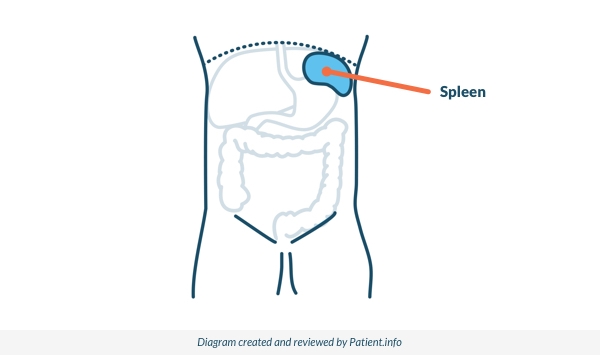
Spleen pain is felt in the upper left side (left upper quadrant) of the tummy (abdomen), behind the lower left ribs. Spleen pain may also cause referred pain in the left shoulder.
Where is the spleen found?
The spleen is found on the upper left side of your body, behind the stomach on a level with the 9th to 11th ribs. It is similar in structure to a lymph node and is the largest lymphatic organ in the body. The spleen contains two main types of tissue - white pulp and red pulp. White pulp is material which is part of the immune system (lymphatic tissue) mainly made up of white blood cells. Red pulp is made up of blood-filled cavities (venous sinuses) and splenic cords. Splenic cords are special tissues which contain different types of red and white blood cells.
What causes spleen pain?
The causes of spleen pain include trauma or rupture of the spleen, which may occur following road traffic accidents (car or bicycle) or any other type of injury such as following an assault. Spleen pain may also be caused by a number of health conditions such as liver disease, glandular fever, sickle cell anaemia, malaria or lymphoma (Hodgkin's or non-Hodgkin's).
Therefore the cause of spleen pain may be obvious following serious injury or may need tests including blood tests and scans (such as a CT scan or MRI scan) to find the cause.
Can spleen pain come and go?
Spleen pain is usually constant but the severity of pain may vary in intensity, changing between severe and less severe pain.
What does the spleen do?
Blood flows into the spleen where it enters the white pulp. Here, infection-fighting white blood cells called B and T cells screen the blood flowing through. T cells help to recognise invading germs such as bacteria and viruses (pathogens) that might cause illness and then attack them. B cells make antibodies that help to stop infections from taking hold.
Blood also enters red pulp. Red pulp has three main functions:
It removes old and damaged red blood cells. Red blood cells have a lifespan of about 120 days. After this time they stop carrying oxygen effectively. Special cells called macrophages break down these old red blood cells. Haemoglobin is a chemical which carries oxygen. It is found within the cells and is also broken down and then recycled. See the separate leaflet called Hereditary Spherocytosis as an example of a condition with abnormal red blood cells.
It also stores up to one third of the body's supply of platelets. Platelets are fragments of cells circulating in the bloodstream that help to stop bleeding when we cut ourselves. These extra stored platelets can be released from the spleen if severe bleeding occurs.
In unborn babies (fetuses) red pulp can also act like bone marrow, producing new red blood cells. Usually this stops after birth but may start again in some people with certain diseases.
While the spleen performs a number of important functions, it is not essential to life. Other organs such as the liver and bone marrow are able to take over many of its jobs. You can have surgery to have your spleen removed (splenectomy) for various reasons. It may, for example, be removed because of an illness that affects the spleen, you have suffered a ruptured spleen or if it is damaged by an injury. Also, the spleen may not work well in some diseases - for example, sickle cell disease, thalassaemia and lymphomas.
However, people who have had their spleen removed are more likely to get infections and may be put on long-term antibiotics to prevent this. See the separate leaflet called Preventing Infection after Splenectomy for more details.
Patient picks for Abdominal pain

Digestive health
Stomach ulcer
Stomach ulcers (also called gastric ulcers) are breaks in the lining of the stomach that develop due to damage. They can cause a burning or gnawing pain in the top and middle of the abdomen. Treatments include acid-suppressing medication and avoiding trigger foods.
by Dr Philippa Vincent, MRCGP

Digestive health
Abdominal pain
Abdominal pain means pain in the stomach. Usually it doesn't last long and is often due to a gut infection or a small upset - but there are many other possible causes. Pain that is severe or doesn't settle quickly may need attention from a doctor.
by Dr Toni Hazell, FRCGP
Frequently asked questions
What is splenomegaly?
The article uses the term splenomegaly but does not define it clearly. Based on context, it refers to an enlarged spleen, which can be a symptom of various health conditions like liver disease, glandular fever, sickle cell anaemia, malaria, or lymphoma. An enlarged spleen might cause the constant but varying intensity pain described in the article.
Does spleen pain get worse when I breathe?
The article states that spleen pain is in the upper left abdomen, behind the lower left ribs. It does not explicitly mention if the pain changes with breathing. This question is included because it's a common patient query related to abdominal pain and its connection with respiratory movements, offering a piece of information not directly addressed. Spleen pain is usually constant but the severity may vary.
What tests can identify the cause of spleen pain?
If the cause of spleen pain isn't obvious, such as after a serious injury, doctors may use various tests to find out what's wrong. These tests can include blood tests to check for conditions like infections or blood disorders, and scans like a CT scan or an MRI scan to get detailed images of the spleen and surrounding areas.
Can I live a normal life without my spleen?
Yes, you can live without a spleen. While the spleen has important functions, it is not essential for life. Other organs, such as the liver and bone marrow, can take over many of its jobs. However, people who have had their spleen removed are more susceptible to infections and may need long-term antibiotics to help prevent this.
What conditions might cause my spleen to not work properly?
Certain diseases can cause the spleen to not function effectively, even if it's still present in the body. Examples include sickle cell disease, thalassaemia, and lymphomas. In such cases, the spleen may not be able to perform its filtering, blood cell storage, or immune functions correctly.
Further reading and references
- Coco D, Leanza S; Indications for Surgery in Non-Traumatic Spleen Disease. Open Access Maced J Med Sci. 2019 Aug 30;7(17):2958-2960. doi: 10.3889/oamjms.2019.568. eCollection 2019 Sep 15.
- Girard E, Abba J, Cristiano N, et al; Management of splenic and pancreatic trauma. J Visc Surg. 2016 Aug;153(4 Suppl):45-60. doi: 10.1016/j.jviscsurg.2016.04.005. Epub 2016 Jul 9.
About the authorView full bio

Dr Colin Tidy, MRCGP
General Practitioner, Medical Author
MBBS, MRCGP, MRCP (Paediatrics), DCH
Dr Colin Tidy is an NHS Doctor, based in Oxfordshire.
About the reviewerView full bio

Dr Hayley Willacy, FRCGP
General Practitioner, Medical Author
MBChB (1992), DRCOG, DFFP, MRCOG (Part 1) MRCGP (2007), DFSRH (2013), MSc - medical education (2020)
Dr Hayley Willacy was an NHS GP working in northwest England, who retired from clinical practice in 2022 after 30 years.
Article history
The information on this page is written and peer reviewed by qualified clinicians.
Article also available in English, German, Spanish, French, Italian, Portuguese, Hindi, Hebrew, Arabic, and Swedish.
Next review due: 12 Mar 2028
14 Mar 2023 | Latest version
Join the conversation
Share your thoughts or experiences with others in our patient communities.

Ask, share, connect.
Browse discussions, ask questions, and share experiences across hundreds of health topics.

Feeling unwell?
Assess your symptoms online for free
Sign up to the Patient newsletter
Your weekly dose of clear, trustworthy health advice - written to help you feel informed, confident and in control.
By subscribing you accept our Privacy Policy. You can unsubscribe at any time. We never sell your data.