angiotensin I converting enzyme
Zuletzt aktualisiert 3 Mar 2023
Erfüllt die redaktionelle Richtlinien
- HerunterladenHerunterladen
- Teilen
- Language
- Diskussion
- Ask Patient
- Audio-Version
- Zu bevorzugten Quellen bei Google hinzufügen
Der ACE gene provides instructions for making the angiotensin-converting enzyme. This enzyme is able to cut (cleave) proteins. It is part of the renin-angiotensin system, which regulates blood pressure and the balance of fluids and salts in the body. By cutting a protein called angiotensin I at a particular location, the angiotensin-converting enzyme converts this protein to angiotensin II. Angiotensin II causes blood vessels to narrow (constrict), which results in increased blood pressure. This protein also stimulates production of the hormone aldosterone, which triggers the absorption of salt and water by the kidneys. The increased amount of fluid in the body also increases blood pressure. Proper blood pressure during fetal growth, which delivers oxygen to the developing tissues, is required for normal development of the kidneys, particularly of structures called the proximal tubules, and other tissues. In addition, angiotensin II may play a more direct role in kidney development, perhaps by affecting growth factors involved in the development of kidney structures.
Normal function
Der ACE gene provides instructions for making the angiotensin-converting enzyme. This enzyme is able to cut (cleave) proteins. It is part of the renin-angiotensin system, which regulates blood pressure and the balance of fluids and salts in the body. By cutting a protein called angiotensin I at a particular location, the angiotensin-converting enzyme converts this protein to angiotensin II. Angiotensin II causes blood vessels to narrow (constrict), which results in increased blood pressure. This protein also stimulates production of the hormone aldosterone, which triggers the absorption of salt and water by the kidneys. The increased amount of fluid in the body also increases blood pressure. Proper blood pressure during fetal growth, which delivers oxygen to the developing tissues, is required for normal development of the kidneys, particularly of structures called the proximal tubules, and other tissues. In addition, angiotensin II may play a more direct role in kidney development, perhaps by affecting growth factors involved in the development of kidney structures.
The angiotensin-converting enzyme can cleave other proteins, including bradykinin. Bradykinin causes blood vessels to widen (dilate), which decreases blood pressure. Cleavage by the angiotensin-converting enzyme inactivates bradykinin, helping to increase blood pressure.
Conditions referring to this gene or chromosome
Other names
ACE1
ACE_HUMAN
angiotensin converting enzyme, somatic isoform
angiotensin I converting enzyme (peptidyl-dipeptidase A) 1
angiotensin I converting enzyme peptidyl-dipeptidase A 1 transcript
angiotensin-converting enzyme
CD143
CD143 antigen
DCP
DCP1
dipeptidyl carboxypeptidase 1
dipeptidyl carboxypeptidase I
EC 3.4.15.1
ICH
kininase II
MVCD3
Related patient information and medicines

Patient information leaflet
ACE-Hemmer
Angiotensin-converting enzyme (ACE) inhibitors are used to treat a number of different conditions: High blood pressure (hypertension) High blood pressure - ACE inhibitors usually work well to lower blood pressure. ACE inhibitors prevent the body from creating ... Angiotensin II has three main effects: Tightening (constriction) of blood vessels..

Patient information leaflet
Aspirationspneumonie
Aspiration pneumonia is a lower respiratory tract (chest) infection caused by bacteria which have leaked into the lungs from fluid from the stomach or mouth. There is evidence that Medikamente wie zum Beispiel angiotensin converting enzyme inhibitors (ACE inhibitors, usually used to reduce blood pressure) can help to reduce the risk of aspiration..

Patient information leaflet
Chronischer, anhaltender Husten bei Erwachsenen
S... Medicines A group of medicines called angiotensin-converting enzyme (ACE) inhibitors ACE inhibitors may cause a persistent cough, but this occurs in fewer than 1 in 5 people taking these medicines. Examples of commonly used ACE-Hemmer are lisinopril Lisinopril - an ACE inhibitor , ramipril Ramipril - an ACE inhibitor , trandolapril.

Patient information leaflet
Diabetes und Krankheit
On angiotensin-converting enzyme (ACE) inhibitors ACE inhibitors , angiotensin receptor blockers ( azilsartan Azilsartan - an angiotensin receptor blocker , candesartan Candesartan - an angiotensin receptor blocker , eprosartan Eprosartan - an angiotensin receptor blocker , irbesartan Irbesartan - an angiotensin receptor blocker , losartan.
Patient information leaflet
Medikament gegen Bluthochdruck
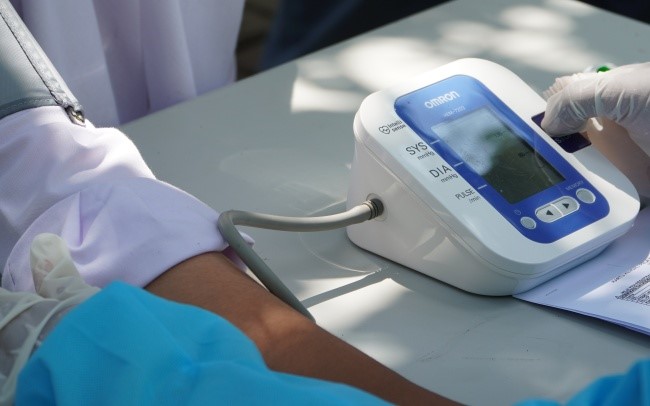
For detailed information about your own medication you should read the leaflet that comes inside the medicine packet. What are the types of blood pressure medicines. There are six main classes of medicines that are used to lower blood pressure: Angiotensin-konvertierendes Enzym (ACE)-Hemmer. Angiotensin receptor blockers (ARBs)..

Patient information leaflet
Aorteninsuffizienz
Aortic regurgitation is sometimes called aortic incompetence or a leaky aortic valve. In aortic regurgitation the valve does not close properly. Surgery may sometimes be advised. Medication Medication may be advised to help ease symptoms of heart failure if heart failure develops - for example, Angiotensin-konversionsenzym (ACE)-Hemmer ACE.
Weiterführende Lektüre und Referenzen
- angiotensin I converting enzyme; MedlinePlus, National Library of Medicine.
- Gribouval O, Gonzales M, Neuhaus T, Aziza J, Bieth E, Laurent N, Bouton JM, Feuillet F, Makni S, Ben Amar H, Laube G, Delezoide AL, Bouvier R, Dijoud F, Ollagnon-Roman E, Roume J, Joubert M, Antignac C, Gubler MC. Mutations in genes in the renin-angiotensin system are associated with autosomal recessive renal tubular dysgenesis. Nat Genet. 2005 Sep;37(9):964-8. doi: 10.1038/ng1623. Epub 2005 Aug 14.
- Gribouval O, Moriniere V, Pawtowski A, Arrondel C, Sallinen SL, Saloranta C, Clericuzio C, Viot G, Tantau J, Blesson S, Cloarec S, Machet MC, Chitayat D, Thauvin C, Laurent N, Sampson JR, Bernstein JA, Clemenson A, Prieur F, Daniel L, Levy-Mozziconacci A, Lachlan K, Alessandri JL, Cartault F, Riviere JP, Picard N, Baumann C, Delezoide AL, Belar Ortega M, Chassaing N, Labrune P, Yu S, Firth H, Wellesley D, Bitzan M, Alfares A, Braverman N, Krogh L, Tolmie J, Gaspar H, Doray B, Majore S, Bonneau D, Triau S, Loirat C, David A, Bartholdi D, Peleg A, Brackman D, Stone R, DeBerardinis R, Corvol P, Michaud A, Antignac C, Gubler MC. Spectrum of mutations in the renin-angiotensin system genes in autosomal recessive renal tubular dysgenesis. Hum Mutat. 2012 Feb;33(2):316-26. doi: 10.1002/humu.21661. Epub 2011 Dec 22.
- Gubler MC, Antignac C. Renin-angiotensin system in kidney development: renal tubular dysgenesis. Kidney Int. 2010 Mar;77(5):400-6. doi: 10.1038/ki.2009.423. Epub 2009 Nov 18.
- Huang Y, Li G, Lan H, Zhao G, Huang C. Angiotensin-converting enzyme insertion/deletion gene polymorphisms and risk of intracerebral hemorrhage: a meta-analysis of epidemiologic studies. J Renin Angiotensin Aldosterone Syst. 2014 Mar;15(1):32-8. doi: 10.1177/1470320313481838. Epub 2013 Mar 11.
- Marre M, Jeunemaitre X, Gallois Y, Rodier M, Chatellier G, Sert C, Dusselier L, Kahal Z, Chaillous L, Halimi S, Muller A, Sackmann H, Bauduceau B, Bled F, Passa P, Alhenc-Gelas F. Contribution of genetic polymorphism in the renin-angiotensin system to the development of renal complications in insulin-dependent diabetes: Genetique de la Nephropathie Diabetique (GENEDIAB) study group. J Clin Invest. 1997 Apr 1;99(7):1585-95. doi: 10.1172/JCI119321.
- Wolf G. Angiotensin II and tubular development. Nephrol Dial Transplant. 2002;17 Suppl 9:48-51. doi: 10.1093/ndt/17.suppl_9.48.
- Wuyts B, Delanghe J, De Buyzere M. Angiotensin I-converting enzyme insertion/deletion polymorphism: clinical implications. Acta Clin Belg. 1997;52(6):338-49. doi: 10.1080/17843286.1997.11718599.
- Zhang Z, Xu G, Liu D, Fan X, Zhu W, Liu X. Angiotensin-converting enzyme insertion/deletion polymorphism contributes to ischemic stroke risk: a meta-analysis of 50 case-control studies. PLoS One. 2012;7(10):e46495. doi: 10.1371/journal.pone.0046495. Epub 2012 Oct 1.
Artikelverlauf
Artikel auch verfügbar in Englisch, Deutsch, Spanisch, Französisch, Italienisch, Portugiesisch, Hindi, Hebräisch, Arabisch, und Schwedisch.
3 Mar 2023 | Neueste Version
1 May 2013 | Ursprünglich veröffentlicht
Teilen Sie Ihre Gedanken oder Erfahrungen mit anderen in unserem Patientengemeinschaften.
Einfacher Zugang zu vertrauenswürdigen Behandlungen und Gesundheitsdiensten online.
Common conditions
Get help with common conditions through the NHS, without a GP appointment.





Abonnieren Sie den Patienten-Newsletter
Ihre wöchentliche Dosis klarer, vertrauenswürdiger Gesundheitsberatung - geschrieben, um Ihnen zu helfen, sich informiert, selbstbewusst und in Kontrolle zu fühlen.
Durch das Abonnieren akzeptieren Sie unsere Datenschutzrichtlinie. Sie können sich jederzeit abmelden. Wir verkaufen Ihre Daten niemals.