class II major histocompatibility complex transactivator
Zuletzt aktualisiert 18. Aug 2020
Erfüllt die redaktionelle Richtlinien
- HerunterladenHerunterladen
- Teilen
- Language
- Diskussion
- Audio-Version
- Zu bevorzugten Quellen bei Google hinzufügen
Der CIITA gene provides instructions for making a protein that primarily helps control the activity (transcription) of genes called major histocompatibility complex (MHC) class II genes. Transcription is the first step in the production of proteins, and CIITA is critical for the production of specialized immune proteins called MHC class II proteins from these genes. The CIITA protein coordinates various proteins to turn on MHC class II gene transcription and allow the production of MHC class II proteins.
Normal function
Der CIITA gene provides instructions for making a protein that primarily helps control the activity (transcription) of genes called major histocompatibility complex (MHC) class II genes. Transcription is the first step in the production of proteins, and CIITA is critical for the production of specialized immune proteins called MHC class II proteins from these genes. The CIITA protein coordinates various proteins to turn on MHC class II gene transcription and allow the production of MHC class II proteins.
MHC class II proteins are found on the surface of several types of immune cells, including white blood cells (lymphocytes) that are involved in immune reactions. These proteins play an important role in the body's immune response to foreign invaders, such as bacteria, viruses, and fungi. To help the body recognise and fight infections, MHC class II proteins bind to fragments of proteins (peptides) from foreign invaders so that other specialized immune system cells can interact with them. When these immune system cells recognise the peptides as harmful, they trigger the lymphocytes and other immune cells to launch immune responses to get rid of the foreign invaders.
The CIITA protein also appears to play a role in enhancing the transcription of MHC class I genes, which provide instructions for making immune system proteins called MHC class I proteins. Like MHC class II proteins, MHC class I proteins attach to peptides from foreign invaders and present them to specific immune system cells. These cells then attack the foreign invaders to rid them from the body. While the CIITA protein is able to help promote MHC class I gene activity, it is not the primary regulator of these genes. Other proteins play a more prominent role in their transcription.
Conditions referring to this gene or chromosome
Other names
C2TA
CIITAIV
MHC class II transactivator
MHC2TA
NLR family, acid domain containing
NLRA
nucleotide-binding oligomerization domain, leucine rich repeat and acid domain containing
Related patient information and medicines

Patient information leaflet
Cushing-Syndrom
Cushing-Syndrom is caused by too high a level of glucocorticoid in the body. This can be caused by taking steroid medication long-term (the common cause) or by the body making too much cortisol (the main glucocorticoid made by the body). Symptoms usually develop gradually and so the diagnosis (other than that caused by steroid medication) may.

Patient information leaflet
Tiefe Venenthrombose
See the separate leaflets called Nephrotic Syndrome, Antiphospholipid Syndrome and Thrombophilia for more details. Some rare inherited conditions can also cause the blood to clot more easily than normal. An example of an inherited blood disorder which can cause DVTs is factor V Leiden mutation. You are more at risk of a DVT if you have a family.
Patient information leaflet
Ventrikelseptumdefekt
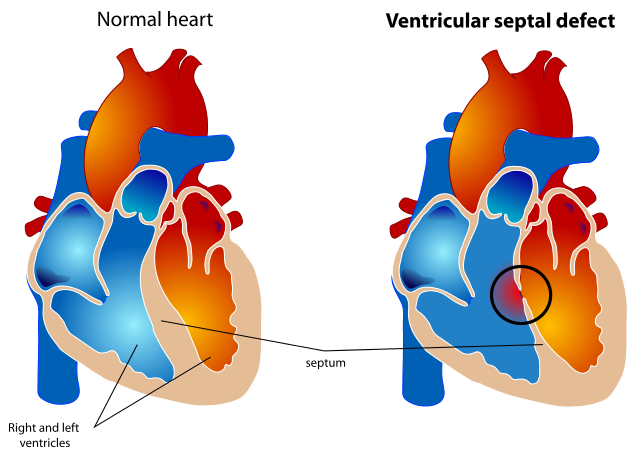
Ventricular septal defect (VSD) ist a gap or defect in the septum between the heart's two lower chambers (ventricles). The septum is a wall that separates the heart's right and left side of the heart. Septal defects are sometimes called a 'hole' in the heart. It is the most common heart problem that babies are born with. Many defects in the.

Patient information leaflet
Addison-Krankheit
Call a doctor immediately if this occurs and state that you have Addison's disease. The Addison's Disease Self-help Group website (details below in Further reading) has a wealth of information about how to handle various situations. If you know what to do in different situations involving stress, trauma or illness, you can avoid an adrenal crisis..
Patient information leaflet
Antikoagulantien
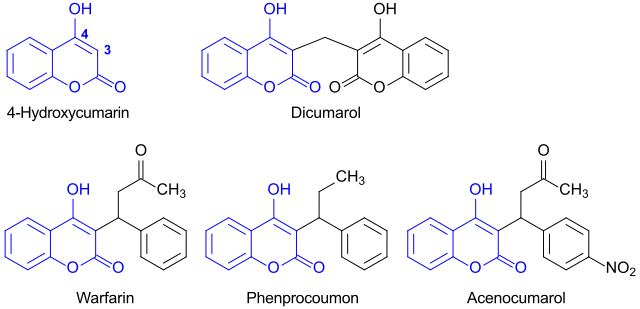
Anticoagulants are medicines that prevent the blood from clotting as quickly or as effectively as normal. Some people call anticoagulants blood thinners. However, the blood is not actually made any thinner - it just does not clot so easily whilst you take an anticoagulant. Anticoagulants are used to treat and prevent blood clots forming in blood.

Patient information leaflet
Herzinsuffizienz
As a general rule, you will often be admitted to hospital if you have acute heart failure, whereas if you have chronic heart failure you will probably have tests done as an outpatient. If you have chronic heart failure, it is possible to develop acute heart failure if matters suddenly become worse. Heart failure is also divided into types.
Weiterführende Lektüre und Referenzen
- class II major histocompatibility complex transactivator; MedlinePlus, National Library of Medicine.
- Ahmed A, Reith W, Puck JM, Cheng LE. Novel Mutation in the Class II Transactivator Associated with Immunodeficiency and Autoimmunity. J Clin Immunol. 2015 Aug;35(6):521-2. doi: 10.1007/s10875-015-0183-z. Epub 2015 Aug 14. No abstract available.
- Bontron S, Steimle V, Ucla C, Eibl MM, Mach B. Two novel mutations in the MHC class II transactivator CIITA in a second patient from MHC class II deficiency complementation group A. Hum Genet. 1997 Apr;99(4):541-6. doi: 10.1007/s004390050403.
- Devaiah BN, Singer DS. CIITA and Its Dual Roles in MHC Gene Transcription. Front Immunol. 2013 Dec 20;4:476. doi: 10.3389/fimmu.2013.00476.
- Gobin SJ, Peijnenburg A, van Eggermond M, van Zutphen M, van den Berg R, van den Elsen PJ. The RFX complex is crucial for the constitutive and CIITA-mediated transactivation of MHC class I and beta2-microglobulin genes. Immunity. 1998 Oct;9(4):531-41. doi: 10.1016/s1074-7613(00)80636-6.
- Martin BK, Chin KC, Olsen JC, Skinner CA, Dey A, Ozato K, Ting JP. Induction of MHC class I expression by the MHC class II transactivator CIITA. Immunity. 1997 May;6(5):591-600. doi: 10.1016/s1074-7613(00)80347-7.
Artikelverlauf
Artikel auch verfügbar in Englisch, Deutsch, Spanisch, Französisch, Italienisch, Portugiesisch, Hindi, Hebräisch, Arabisch, und Schwedisch.
18. Aug 2020 | Neueste Version
1 May 2017 | Ursprünglich veröffentlicht
Nehmen Sie an der Diskussion teil
Teilen Sie Ihre Gedanken oder Erfahrungen mit anderen in unserem Patientengemeinschaften.

Fragen, teilen, verbinden.
Durchsuchen Sie Diskussionen, stellen Sie Fragen und teilen Sie Erfahrungen zu Hunderten von Gesundheitsthemen.
Abonnieren Sie den Patienten-Newsletter
Ihre wöchentliche Dosis klarer, vertrauenswürdiger Gesundheitsberatung - geschrieben, um Ihnen zu helfen, sich informiert, selbstbewusst und in Kontrolle zu fühlen.
Durch das Abonnieren akzeptieren Sie unsere Datenschutzrichtlinie. Sie können sich jederzeit abmelden. Wir verkaufen Ihre Daten niemals.