N-acetylglucosamine-1-phosphate transferase subunits alpha and beta
Zuletzt aktualisiert 18. Aug 2020
Erfüllt die redaktionelle Richtlinien
- HerunterladenHerunterladen
- Teilen
- Language
- Diskussion
- Ask Patient
- Audio-Version
- Zu bevorzugten Quellen bei Google hinzufügen
Der GNPTAB gene provides instructions for making two different parts, the alpha and beta subunits, of an enzyme called GlcNAc-1-phosphotransferase. This enzyme is made up of two alpha (α), two beta (β), and two gamma (γ) subunits. The gamma subunit is produced from a different gene, called GNPTG. GlcNAc-1-phosphotransferase helps prepare certain newly made enzymes for transport to lysosomes. Lysosomes are compartments within the cell that use digestive enzymes called hydrolases to break down large molecules into smaller ones that can be reused by cells.
Normal function
Der GNPTAB gene provides instructions for making two different parts, the alpha and beta subunits, of an enzyme called GlcNAc-1-phosphotransferase. This enzyme is made up of two alpha (α), two beta (β), and two gamma (γ) subunits. The gamma subunit is produced from a different gene, called GNPTG. GlcNAc-1-phosphotransferase helps prepare certain newly made enzymes for transport to lysosomes. Lysosomes are compartments within the cell that use digestive enzymes called hydrolases to break down large molecules into smaller ones that can be reused by cells.
GlcNAc-1-phosphotransferase is involved in the first step of making a molecule called mannose-6-phosphate (M6P). M6P acts as a tag that indicates a hydrolase should be transported to the lysosome. Specifically, GlcNAc-1-phosphotransferase transfers a molecule called GlcNAc-1-phosphate to a newly produced hydrolase. In the next step, a molecule is removed to reveal an M6P attached to the hydrolase. Once a hydrolase has an M6P tag, it can be transported to a lysosome.
Conditions referring to this gene or chromosome
Other names
alpha-beta GlcNAc-1-phosphotransferase
DKFZp762B226
GlcNAc phosphotransferase
GlcNAc-1-phosphotransferase
GNPTA
GNPTA_HUMAN
KIAA1208
MGC4170
N-acetylglucosamine-1-phosphate transferase
N-acetylglucosamine-1-phosphate transferase alpha and beta subunits
N-acetylglucosamine-1-phosphate transferase, alpha and beta subunits
UDP-N-acetylglucosamine-lysosomal-enzyme N-acetylglucosamine
uridine 5'-diphosphate-N-acetylglucosamine: lysosomal hydrolase N-acetyl-1-phosphotransferase
Related patient information and medicines

Patient information leaflet
Leberfunktionstests
Changes in Leberfunktion tests give a clue as to whether your liver is under strain, inflamed, infected or diseased, and how badly. Transferases (AST or SGOT und ALT or SGPT). Autoantibody tests (to detect and monitor immune diseases The immune sy... ALT stands for alanine transaminase and is also called SGPT (serum glutamic-pyruvic.

Patient information leaflet
Kann ich Royal Sun und Shiitake zusammen einnehmen?
Both Royal Sun (Agaricus blazei) and Shiitake (Lentinula edodes) mushrooms contain high levels von beta-glucans, which are substances that stimulate the immune system. General Food Intake These medicinal mushrooms contain complex polysaccharides (beta-glucans). ...r helps you check whether your prescriptions, over-the-counter medicines, and.
Patient information leaflet
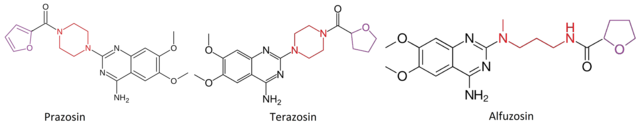
Alpha-Blocker
Alpha-Blocker sind Medikamenten that are mainly used to treat high blood pressure (hypertension) and problems with passing urine in men who have enlargement of the prostate gland. Prostate gland enlargement is also called benign prostatic hyperplasia (BPH). For hi... Alpha-Blocker are normally only started if: Other Medikamenten such as beta-blockers.

Patient information leaflet
Insulin
Some people who have type 2 diabetes may also need to ... Insulin is usually injected under the skin between 2-4 times a day. For more information on insulin, go to [/health/type-1-diabetes/insulins](https://patient.info/health/type-1-diabetes/insulins) Insulin ist a hormone that is made by cells called beta cells. These are.
Patient information leaflet
Medikament gegen Bluthochdruck
What are the types of blood pressure medicines. There are six main classes of medicines that are used to lower blood pressure: Angiotensin-konvertierendes Enzym (ACE)-Hemmer. Angiotensin receptor blockers (ARBs). Calcium-channel blockers. 'Water' tablets (thiazide diuretics). Beta-blockers. Alpha blockers The following gives a brief overview of.

Patient information leaflet
Hoher Blutdruck
This means the heart has to work harder and the blood vessels are under mor... Healthcare professionals sometimes call high blood pressure 'hypertension'. [/health/high-blood-pressure-hypertension](https://patient.info/health/high-blood-pressure-hypertension) Understanding a blood pressure reading Blood pressure readings are.
Weiterführende Lektüre und Referenzen
- N-acetylglucosamine-1-phosphate transferase subunits alpha and beta; MedlinePlus, National Library of Medicine.
- Bargal R, Zeigler M, Abu-Libdeh B, Zuri V, Mandel H, Ben Neriah Z, Stewart F, Elcioglu N, Hindi T, Le Merrer M, Bach G, Raas-Rothschild A. When Mucolipidosis III meets Mucolipidosis II: GNPTA gene mutations in 24 patients. Mol Genet Metab. 2006 Aug;88(4):359-63. doi: 10.1016/j.ymgme.2006.03.003. Epub 2006 Apr 21.
- Braulke T, Pohl S, Storch S. Molecular analysis of the GlcNac-1-phosphotransferase. J Inherit Metab Dis. 2008 Apr;31(2):253-7. doi: 10.1007/s10545-008-0862-5. Epub 2008 Apr 15.
- Cathey SS, Leroy JG, Wood T, Eaves K, Simensen RJ, Kudo M, Stevenson RE, Friez MJ. Phenotype and genotype in mucolipidoses II and III alpha/beta: a study of 61 probands. J Med Genet. 2010 Jan;47(1):38-48. doi: 10.1136/jmg.2009.067736. Epub 2009 Jul 16.
- Erdem F, Canda E. GNPTAB-Related Disorders. 2008 Aug 26 [updated 2026 Aug 13]. In: Adam MP, Bick S, Mirzaa GM, Wallace SE, Amemiya A, editors. GeneReviews(R) [Internet]. Seattle (WA): University of Washington, Seattle; 1993-2026. Available from http://www.ncbi.nlm.nih.gov/books/NBK1828/
- Kudo M, Brem MS, Canfield WM. Mucolipidosis II (I-cell disease) and mucolipidosis IIIA (classical pseudo-hurler polydystrophy) are caused by mutations in the GlcNAc-phosphotransferase alpha / beta -subunits precursor gene. Am J Hum Genet. 2006 Mar;78(3):451-63. doi: 10.1086/500849. Epub 2006 Jan 24.
- Otomo T, Muramatsu T, Yorifuji T, Okuyama T, Nakabayashi H, Fukao T, Ohura T, Yoshino M, Tanaka A, Okamoto N, Inui K, Ozono K, Sakai N. Mucolipidosis II and III alpha/beta: mutation analysis of 40 Japanese patients showed genotype-phenotype correlation. J Hum Genet. 2009 Mar;54(3):145-51. doi: 10.1038/jhg.2009.3. Epub 2009 Feb 6.
- Plante M, Claveau S, Lepage P, Lavoie EM, Brunet S, Roquis D, Morin C, Vezina H, Laprise C. Mucolipidosis II: a single causal mutation in the N-acetylglucosamine-1-phosphotransferase gene (GNPTAB) in a French Canadian founder population. Clin Genet. 2008 Mar;73(3):236-44. doi: 10.1111/j.1399-0004.2007.00954.x. Epub 2008 Jan 7.
- Steet RA, Hullin R, Kudo M, Martinelli M, Bosshard NU, Schaffner T, Kornfeld S, Steinmann B. A splicing mutation in the alpha/beta GlcNAc-1-phosphotransferase gene results in an adult onset form of mucolipidosis III associated with sensory neuropathy and cardiomyopathy. Am J Med Genet A. 2005 Feb 1;132A(4):369-75. doi: 10.1002/ajmg.a.30498.
- Tiede S, Muschol N, Reutter G, Cantz M, Ullrich K, Braulke T. Missense mutations in N-acetylglucosamine-1-phosphotransferase alpha/beta subunit gene in a patient with mucolipidosis III and a mild clinical phenotype. Am J Med Genet A. 2005 Sep 1;137A(3):235-40. doi: 10.1002/ajmg.a.30868.
- Tiede S, Storch S, Lubke T, Henrissat B, Bargal R, Raas-Rothschild A, Braulke T. Mucolipidosis II is caused by mutations in GNPTA encoding the alpha/beta GlcNAc-1-phosphotransferase. Nat Med. 2005 Oct;11(10):1109-12. doi: 10.1038/nm1305. Epub 2005 Oct 2.
Artikelverlauf
Artikel auch verfügbar in Englisch, Deutsch, Spanisch, Französisch, Italienisch, Portugiesisch, Hindi, Hebräisch, Arabisch, und Schwedisch.
18. Aug 2020 | Neueste Version
1 Aug 2009 | Ursprünglich veröffentlicht
Teilen Sie Ihre Gedanken oder Erfahrungen mit anderen in unserem Patientengemeinschaften.
Einfacher Zugang zu vertrauenswürdigen Behandlungen und Gesundheitsdiensten online.
Common conditions
Get help with common conditions through the NHS, without a GP appointment.





Abonnieren Sie den Patienten-Newsletter
Ihre wöchentliche Dosis klarer, vertrauenswürdiger Gesundheitsberatung - geschrieben, um Ihnen zu helfen, sich informiert, selbstbewusst und in Kontrolle zu fühlen.
Durch das Abonnieren akzeptieren Sie unsere Datenschutzrichtlinie. Sie können sich jederzeit abmelden. Wir verkaufen Ihre Daten niemals.