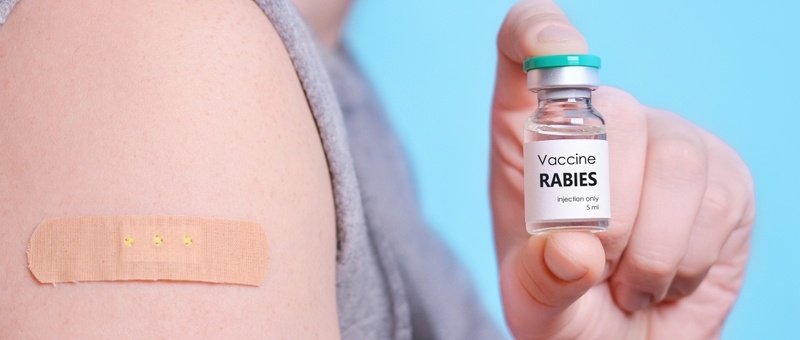
Everything you need to know about the rabies jab
Peer reviewed by Dr Sarah JarvisAuthored by Glynis KozmaOriginally published 12 Feb 2019
Meets Patient’s editorial guidelines
- DownloadDownload
- Share
- Language
- Discussion
- Audio Version
- Add to preferred sources on Google
If you are travelling overseas, travel vaccinations against some diseases are compulsory. There is, however, one disease which is usually fatal without prompt treatment and where a pre-travel vaccination is not compulsory: rabies.
What is rabies?
Rabies is a viral disease which attacks the nervous system and is caught from infected animals. It's fatal unless treated promptly, something which can be impossible in remote areas of the world where medical facilities are scarce or inadequate.
There are over 150 countries in the world where the rabies virus exists. Around 55,000 people die annually in the world from the disease.
The UK has been rabies-free for more than a century, apart from one species of bat which may carry it. But recently a UK man died from rabies after being infected after being scratched by a cat in Morocco, highlighting the importance of taking proper precautions when travelling abroad.
How do you catch rabies?
Animals transfer the rabies virus through their saliva. It's carried by dogs, cats, bats, foxes, raccoons, mongooses and jackals.
Dr Mike Brown, consultant in Infectious Diseases and Tropical Medicine at University College London Hospitals says: "People often imagine a rabid animal to be foaming at the mouth and behaving aggressively, whereas you are just as likely to be infected by an 'Andrex puppy' lookalike.
"An infected animal can transfer rabies through a bite, scratch or even by licking an open wound or broken skin. Bats can pose a problem: it's possible to be bitten when you are sleeping and not notice the bite. Check your skin if you sleep in the open or where there are bats in countries with rabies."
Where are you most at risk of rabies?
If you are travelling overseas to a country which has a high incidence of rabies - for example, India - you can protect yourself by having a vaccination.
Before you travel, check if the country you are visiting is on the high-risk list. Asia, especially India, is a high-risk area, but so are countries like South America, Egypt and Turkey.
In the UK, there is a rare species of wild bat which can carry rabies. It's highly unlikely you'll contract the disease here, but if you ever have to handle a bat - even a dead one - take care and wear thick gloves.
Why the rabies vaccination is so important
Almost without exception, if you are infected, are not vaccinated and not able to access treatment quickly, rabies is fatal.
It's important to plan your vaccination because the injections - up to three - are given several weeks apart. You should allow at least two months before you intend to travel to be fully vaccinated. But if eight weeks in advance isn't possible, having part of the vaccination treatment is still worthwhile.
The rabies jab is an inactive vaccine, so you cannot catch the virus by being vaccinated.
Side effects of the rabies vaccine are usually very mild, but some people experience a little soreness, redness and swelling at the injection site. Rarely patients might notice a mild fever, headache, vomiting or a rash.
Brown advises: "If you are visiting a country for longer than four weeks, or if it's a remote region, you should be vaccinated. The longer you are in a country where there is rabies, the greater the risk of being infected.
"If you are travelling off the beaten track and you are in contact with a rabid animal, it's unlikely you will be able to access the right treatment quickly enough. This is because there are few medical facilities in remote areas. Those which exist rarely have human rabies-specific immunoglobulin (HRIG). This offers very rapid, short-term protection for anyone who has been bitten and not vaccinated. Sometimes the only option is to be flown back to the UK or another country offering HRIG."
You will also need to be vaccinated against rabies with either two or five booster doses of vaccine, depending on your risk, as soon as possible.
What to do if you're bitten or scratched
If you are bitten, scratched or licked (on a skin lesion) by an unknown animal in a country where there is rabies, it's best to assume you could be infected.
Brown says: "Wash the wound well with soap and running water as soon as possible. You can also use alcohol-based disinfectant to wash it. Seek medical help. If you are not vaccinated or fully vaccinated, you may have to return to the UK for treatment, promptly; this means within hours."
But even if you have been vaccinated, you will still need to seek medical attention and further treatment.
Once the initial symptoms of rabies appear, anywhere from three to 12 weeks post-exposure: fever, headache, muscle aches and pains, treatment is unsuccessful. This is why you should always seek medical advice if there is a possibility you could have been infected, even if you have no symptoms.
Rabies is serious; it's important to be aware of how you may be at risk and plan your vaccination well in advance of your travel.
Patient picks for Vaccinations
Infections
Where does a fear of vaccines come from?
In places where successful vaccination programmes have been carried out, we no longer see as many people dying from diseases like polio or measles. With a vaccine now available for COVID-19, it's important that as many people as possible receive this safe and effective vaccine. So where does vaccine fear come from, and how can we help people get through it?
by Allie Anderson

Infections
Why have I been offered the shingles vaccine?
If you’re aged 70-79, you are eligible to receive a shingles vaccine free from the NHS. You may have received a notification about this recently, and be wondering whether to take up the offer. So what is the shingles vaccine? Why is it offered to this age group? And should you get the vaccine?
by Gillian Harvey
Frequently asked questions
Can I get rabies from a mouse, rat, or other rodent?
The article explicitly lists dogs, cats, bats, foxes, raccoons, mongooses, and jackals as carriers of the rabies virus. It does not mention mice, rats, or other rodents as animals that carry the disease. The UK is also rabies-free except for one species of bat.
If I am bitten by an animal, how quickly do I need to get treatment?
If you are bitten, scratched, or licked on broken skin by an unknown animal in a country where rabies is present, you should thoroughly wash the wound with soap and running water immediately, and apply an alcohol-based disinfectant. You need to seek medical help promptly, within hours, especially if you are not vaccinated or not fully vaccinated.
What are the common symptoms of rabies?
Initial symptoms of rabies, which appear anywhere from three to twelve weeks after exposure, include fever, headache, and muscle aches and pains. Once these symptoms appear, treatment is usually unsuccessful.
If I've had the rabies vaccine, do I still need to worry if I'm exposed to the virus?
Yes, even if you have been vaccinated against rabies, you will still need to seek immediate medical attention and further treatment if you are bitten, scratched, or licked on broken skin by a potentially infected animal. The vaccination provides protection but follow-up treatment is still necessary.
How long does the rabies vaccination protect me for?
The article states that if you have been vaccinated, you will still need either two or five booster doses of the vaccine as soon as possible after potential exposure, depending on your risk. This implies that the initial vaccination does not offer indefinite protection, and subsequent boosts are needed after exposure.
About the author

Glynis Kozma
About the reviewerView full bio

Dr Sarah Jarvis
Clinical Consultant
MA (Cantab), BM, BCh (Oxon), DRCOG, FRCGP, MBE
After training in medicine at Cambridge and Oxford, Dr Sarah Jarvis MBE became a GP.
Article history
The information on this page is peer reviewed by qualified clinicians.
Article also available in English, German, Spanish, French, Italian, Portuguese, Hindi, Hebrew, Arabic, and Swedish.
12 Feb 2019 | Originally published
Authored by:
Glynis Kozma
Peer reviewed by
Dr Sarah Jarvis
Join the conversation
Share your thoughts or experiences with others in our patient communities.

Ask, share, connect.
Browse discussions, ask questions, and share experiences across hundreds of health topics.

Feeling unwell?
Assess your symptoms online for free
Sign up to the Patient newsletter
Your weekly dose of clear, trustworthy health advice - written to help you feel informed, confident and in control.
By subscribing you accept our Privacy Policy. You can unsubscribe at any time. We never sell your data.
More in infections
- Back to school: how to check your child for head lice and nits
- Do any natural cold remedies work?
- First long-acting injectable HIV treatment approved
- Flu, colds and fever videos
- How to avoid tick bites and Lyme disease
- How to deal with gastroenteritis
- How to protect yourself from shingles
- How to speak to someone who's hesitant about vaccines
- How to spot bedbugs and get rid of them
- How to treat an infected piercing
- How to treat food poisoning at home
- Measles is back: why vaccines matter
- Meningitis videos
- Mpox - what do we know so far?
- Rise in scabies cases across the UK
- Should your child get the chickenpox vaccine?
- Stigma of HIV and representations in the media
- What to eat when you have gastroenteritis
- What's the difference between double pneumonia and pneumonia?
- World AIDS Day: Where are we now with HIV?