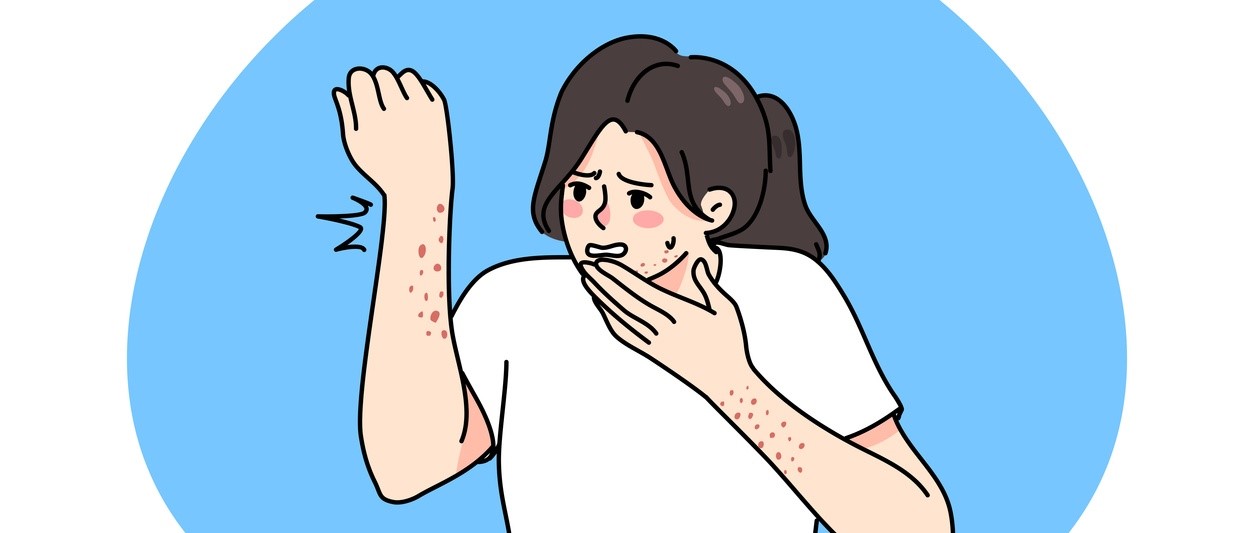
Anstieg der Krätze-Fälle im gesamten Vereinigten Königreich
Begutachtet von Dr Krishna Vakharia, MRCGPVerfasst von Amberley DavisUrsprünglich veröffentlicht 4 Jan 2024
Erfüllt die Anforderungen des Patienten Richtlinien des Patienten
- HerunterladenHerunterladen
- Teilen
- Language
- Diskussion
- Audio-Version
- Zu bevorzugten Quellen bei Google hinzufügen
Die Anzahl der Menschen mit Krätze ist etwa doppelt so hoch wie erwartet für diese Jahreszeit. Wir erklären, was Krätze ist, wie man sie erkennt und was man dagegen tun kann.
Doctors report surge in scabies
According to a new report from the British Association of Dermatologists (BAD), 8 out of the 9 regions across the UK have seen an increase in scabies this year.
Professor Kamila Hawthorne, chair at the Royal College of General Practitioners (RCGP) commented on the surge: "Since July, GPs have seen a growing rate of scabies - at a consistently higher level than the five-year average and the seasonal norm. At the end of November, the rate of scabies was double the seasonal average."
The North of England appears to be most affected. Due to the highly contagious nature of scabies, outbreaks in nursing homes, care homes, and university accommodation are more common, where people are closer together.
How to prevent scabies
Krätze is an intensely itchy skin condition caused by tiny insects known as mites, which are almost invisible to the naked eye. It can spread between people through close skin contact.
Therefore, the best way to protect yourself against scabies is to:
Avoid touching someone who shows the symptoms below.
Avoid sharing clothes, towels, and bedsheets with them.
Hot wash your bedding and towels at 50°C or above if they have been used by them.
Anyone can get scabies, so it's important to know the signs so it can be treated and prevented from spreading.
How to spot scabies
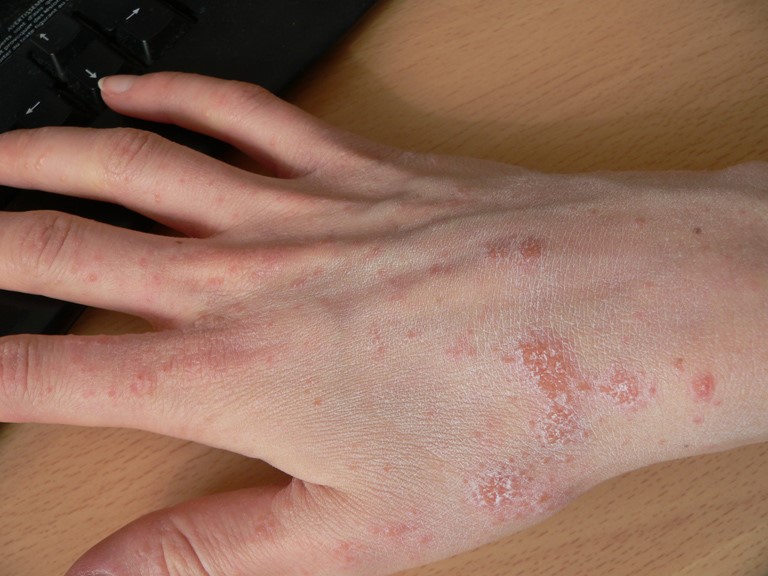
Scabies appears as blotchy, lumpy red rashes. It's common to first notice them on your hands, and they also tend to form on the stomach, lower back, and thighs - although they can appear anywhere on your body.
These rashes are often very itchy and cause you to scratch the affected areas, which can further damage your skin. It might be that this itchiness starts in one place, and then spreads to other areas you touch.
You might also see small dark-grey lines on your skin, most commonly in between your fingers, on your wrists, and in the palms of your hands. However, these aren't always visible.
Scabies rash on hand
What to do if you have scabies
If you think you might have scabies:
It's important to get treatment to help prevent the condition spreading to others.
Try and avoid skin contact with other people as much as possible.
Either your pharmacist or GP can diagnose this condition based on how your rash looks.
Treatment involves a cream or lotion you apply to your skin.
In the UK, the two main treatment creams are called permethrin and malathion. These are usually available in pharmacies and GP surgeries, however the surge in scabies cases comes during a shortage of both medicines.
This is thought to be due to the increase in demand, supply chain issues, a rise in the cost of raw materials, and the war in Ukraine, according to BAD1.
Currently, the availability of scabies treatment will depend on where you are, so it's important that you try your pharmacist or doctor, instead of suffering this uncomfortable condition and possibly passing it on to others.
If you have problems getting treatment, home remedies like neem, tea tree oil, and clove oil may help ease your itching in the meantime but it won't get rid of the mites.
Weiterführende Lektüre
Patientenauswahl für Hautausschläge

Haut-, Nagel- und Haargesundheit
Was verursacht, dass unsere Haut Nesselsucht bekommt?
Nesselsucht – auch bekannt als Urtikaria – ist ein relativ häufig auftretender juckender Hautausschlag, der rote oder weiße Beulen auf der Haut verursacht. Laut der British Association of Dermatologists (BAD) betrifft sie etwa jeden fünften Menschen im Laufe seines Lebens, und bei etwa der Hälfte der Fälle ist die Ursache unbekannt. Aber wenn Sie Nesselsucht bekommen, hier ist, was hinter diesen juckenden Beulen stecken könnte.
von Sarah Graham
Haut-, Nagel- und Haargesundheit
Anstieg der Krätze-Fälle im gesamten Vereinigten Königreich
Die Anzahl der Menschen mit Krätze ist etwa doppelt so hoch wie erwartet für diese Jahreszeit. Wir erklären, was Krätze ist, wie man sie erkennt und was man dagegen tun kann.
von Amberley Davis
Über den AutorVollständige Biografie anzeigen

Amberley Davis
Senior-Autorin
BA (Hons), CPD
Amberley ist eine leitende Autorin bei Patient und hat umfangreich über eine Vielzahl von Gesundheits- und Wohlfühlthemen geschrieben.
Über den RezensentenVollständige Biografie anzeigen

Dr Krishna Vakharia, MRCGP
Chief Medical Officer für Gesundheit, Optum UK
MBChB, MRCGP(2013), BMedSci (hons), DFSRH, DRCOG, PGDipDerm (Distn)
Dr. Krishna Vakharia ist eine NHS-Hausärztin. Sie ist auch regelmäßige Prüferin für das postgraduale Diplom in Praktischer Dermatologie an der Cardiff University und zudem Chief Medical Officer für Gesundheit bei Optum UK.
Artikelverlauf
Die Informationen auf dieser Seite werden von qualifizierten Klinikern begutachtet.
Artikel auch verfügbar in Englisch, Deutsch, Spanisch, Französisch, Italienisch, Portugiesisch, Hindi, Hebräisch, Arabisch, und Schwedisch.
4 Jan 2024 | Ursprünglich veröffentlicht
Verfasst von:
Amberley DavisBegutachtet von
Dr Krishna Vakharia, MRCGP

Fragen, teilen, verbinden.
Durchsuchen Sie Diskussionen, stellen Sie Fragen und teilen Sie Erfahrungen zu Hunderten von Gesundheitsthemen.

Fühlen Sie sich unwohl?
Bewerten Sie Ihre Symptome online kostenlos
Abonnieren Sie den Patienten-Newsletter
Ihre wöchentliche Dosis klarer, vertrauenswürdiger Gesundheitsberatung - geschrieben, um Ihnen zu helfen, sich informiert, selbstbewusst und in Kontrolle zu fühlen.
Durch das Abonnieren akzeptieren Sie unsere Datenschutzrichtlinie. Sie können sich jederzeit abmelden. Wir verkaufen Ihre Daten niemals.
Mehr über Haut-, Nagel- und Haargesundheit
- Können Haartransplantationen die psychische Gesundheit verbessern?
- Häufige Rosazea-Auslöser und wie man sie vermeidet
- Sind Sie wegen eines Muttermals besorgt? Erhalten Sie Sicherheit mit der Online-Muttermalkontrolle
- NeuFunktionieren LED-Gesichtsmasken wirklich?
- Glykolsäure: Hautpflegevorteile, Nebenwirkungen und mehr
- Wie man während der Chemotherapie auf sein Haar achtet
- Wie man Hautprobleme in den Wechseljahren bewältigt
- Wie man Bettwanzen erkennt und sie loswird
- Wie man einen Bremsenstich behandelt
- Wie man ein infiziertes Piercing behandelt
- Wie man Sonnenbrandblasen behandelt
- Ist Kokosöl gut für deine Haare?
- Neurokosmetik: Ein Gehirnveränderer für Ihre Gesundheit?
- Rosacea-Behandlungen: Welche ist die richtige für Sie?
- Hautzustand-Videos
- Die 'zweite Pubertät': Warum Sie in Ihren Dreißigern Hautprobleme bekommen könnten
- Was bewirkt ein Vitamin-C-Serum?
- Was ist Vulvadermatitis?
- Welche natürlichen Heilmittel lindern Neurodermitis?
- Warum tragen Männer seltener Sonnencreme?