Distal hereditary motor neuropathy, type V
Zuletzt aktualisiert 10. März 2025
Erfüllt die redaktionelle Richtlinien
- HerunterladenHerunterladen
- Teilen
- Language
- Diskussion
- Audio-Version
- Zu bevorzugten Quellen bei Google hinzufügen
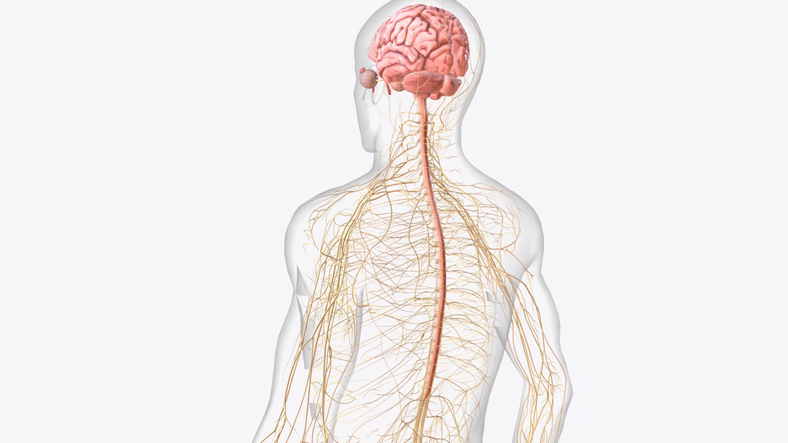
Distal hereditary motor neuropathy, type V is a disorder that affects nerve cells (neurons) in the spinal cord. This condition specifically affects motor neurons, which are specialized cells that control muscle movement. Damage to motor neurons results in muscle weakness that worsens over time. In people with distal hereditary motor neuropathy, type V, this weakness primarily affects movement in the muscles that are furthest from the center of the body (distal muscles), such as the muscles in the hands and feet.
Beschreibung
Distal hereditary motor neuropathy, type V is a disorder that affects nerve cells (neurons) in the spinal cord. This condition specifically affects motor neurons, which are specialized cells that control muscle movement. Damage to motor neurons results in muscle weakness that worsens over time. In people with distal hereditary motor neuropathy, type V, this weakness primarily affects movement in the muscles that are furthest from the center of the body (distal muscles), such as the muscles in the hands and feet.
Signs and symptoms of distal hereditary motor neuropathy, type V usually begin during adolescence, but they can appear any time between infancy and the mid-30s. The first symptom of this condition is often cramps in the hands that are brought on by exposure to cold temperatures.
The characteristic features of distal hereditary motor neuropathy, type V are weakness and wasting (atrophy) of muscles of the hand, specifically on the side of the index finger near the thumb and in the palm of the hand at the base of the thumb.
About half of individuals with distal hereditary motor neuropathy, type V develop muscle weakness in the feet and lower legs. This can lead to problems with walking (gait disturbance), difficulty lifting the front part of the foot (foot drop), and a high foot arch (pes cavus).
People with distal hereditary motor neuropathy, type V can have exaggerated reflexes (hyperreflexia) or other disturbances in the nerves that are used to detect sensations (sensory neuropathy). Although sensory neuropathy is uncommon in people with distal hereditary motor neuropathy, type V, it is typical of a disorder called Charcot-Marie-Tooth disease. These two disorders have overlapping features and can also share a genetic cause. People with distal hereditary motor neuropathy, type V typically have a normal life expectancy.
Inheritance patterns
The source lists the following possible inheritance patterns: Autosomal dominant. More than one pattern can apply in different cases.
Related genes
Other names
DHMN5
DHMNV
Distal hereditary motor neuronopathy type 5
Distal hereditary motor neuronopathy, type V
Distal spinal muscular atrophy, type V
DSMAV
HMN V
Spinal muscular atrophy, distal type V
Spinal muscular atrophy, distal, with upper limb predominance
Related patient information and medicines

Patient information leaflet
Periphere Neuropathie
Peripheral neuropathy means damage to one or more of your peripheral nerves. There are many different conditions that can lead ... If not treated, the symptoms then gradually start to move towards the centre of your body as the neuropathy worsens. If motor nerves sind damaged, this is known as motor neuropathy. It can cause symptoms in affected.

Patient information leaflet
Palliativpflege
End of life care is a term used to cover the issues you need to think about and plan for, when you are approaching death. In September 2021 the National Institute for Health and Care Excellence (NICE) issued new quality standards about what everyone should be able to expect from end of life care. This leaflet deals with adv... For example, a.

Patient information leaflet
Glykogenspeicherkrankheiten
Glykogenspeicherkrankheiten are a group of inherited diseases. They result from a problem with one of the proteins (known as enzymes) involved in the conversion of glucose to glycogen, or the breakdown of glycogen back into glucose. What are the symptoms of glycogen storag... Some disorders affect the liver (types I, IV, VI and IX), some the.

Patient information leaflet
Muskeldystrophie
Es gibt verschiedene types of muscular dystrophy, which vary as to how severe they are, ranging from very mild to severe. The different types also vary as to. In some cases, there may be symptoms of heart disease without much in the way of muscle weakness. Types of muscular dystrophy Duchenne muscular dystrophy (DMD) Duchenne muscular dystrophy.

Patient information leaflet
Muskelrelaxantien
Baclofen, diazepam, methocarbamol and tizanidine act on the central nervous system (brain and spinal cord). Whe... Muskelrelaxantien are used to relieve muscle spasms which may result from some conditions which affect the nervous system, such as: Multiple Sklerose. Motoneuronerkrankung. Zerebrale Kinderlähmung. Sometimes, injuries to the head or back..
Patient information leaflet
Motoneuronerkrankung
Motoneuronerkrankung (MND) is a neurological condition causes a progressive weakness and wasting of many of the muscles in the body. There are various types of motor neurone disease. This leaflet is mainly about amyotrophic lateral sclerosis (ALS), which is the most common type von motor neurone disease. Although there is no cure for motor neurone.
Weiterführende Lektüre und Referenzen
- Distal hereditary motor neuropathy, type V; MedlinePlus, National Library of Medicine.
- Antonellis A, Ellsworth RE, Sambuughin N, Puls I, Abel A, Lee-Lin SQ, Jordanova A, Kremensky I, Christodoulou K, Middleton LT, Sivakumar K, Ionasescu V, Funalot B, Vance JM, Goldfarb LG, Fischbeck KH, Green ED. Glycyl tRNA synthetase mutations in Charcot-Marie-Tooth disease type 2D and distal spinal muscular atrophy type V. Am J Hum Genet. 2003 May;72(5):1293-9. doi: 10.1086/375039. Epub 2003 Apr 10.
- Antonellis A, Lee-Lin SQ, Wasterlain A, Leo P, Quezado M, Goldfarb LG, Myung K, Burgess S, Fischbeck KH, Green ED. Functional analyses of glycyl-tRNA synthetase mutations suggest a key role for tRNA-charging enzymes in peripheral axons. J Neurosci. 2006 Oct 11;26(41):10397-406. doi: 10.1523/JNEUROSCI.1671-06.2006.
- Auer-Grumbach M, Loscher WN, Wagner K, Petek E, Korner E, Offenbacher H, Hartung HP. Phenotypic and genotypic heterogeneity in hereditary motor neuronopathy type V: a clinical, electrophysiological and genetic study. Brain. 2000 Aug;123 ( Pt 8):1612-23. doi: 10.1093/brain/123.8.1612.
- Beetz C, Pieber TR, Hertel N, Schabhuttl M, Fischer C, Trajanoski S, Graf E, Keiner S, Kurth I, Wieland T, Varga RE, Timmerman V, Reilly MM, Strom TM, Auer-Grumbach M. Exome sequencing identifies a REEP1 mutation involved in distal hereditary motor neuropathy type V. Am J Hum Genet. 2012 Jul 13;91(1):139-45. doi: 10.1016/j.ajhg.2012.05.007. Epub 2012 Jun 14.
- Dubourg O, Azzedine H, Yaou RB, Pouget J, Barois A, Meininger V, Bouteiller D, Ruberg M, Brice A, LeGuern E. The G526R glycyl-tRNA synthetase gene mutation in distal hereditary motor neuropathy type V. Neurology. 2006 Jun 13;66(11):1721-6. doi: 10.1212/01.wnl.0000218304.02715.04.
- Irobi J, De Jonghe P, Timmerman V. Molecular genetics of distal hereditary motor neuropathies. Hum Mol Genet. 2004 Oct 1;13 Spec No 2:R195-202. doi: 10.1093/hmg/ddh226.
- Ito D, Suzuki N. Molecular pathogenesis of seipin/BSCL2-related motor neuron diseases. Ann Neurol. 2007 Mar;61(3):237-50. doi: 10.1002/ana.21070.
- Ito D, Suzuki N. Seipinopathy: a novel endoplasmic reticulum stress-associated disease. Brain. 2009 Jan;132(Pt 1):8-15. doi: 10.1093/brain/awn216. Epub 2008 Sep 12.
- Rohkamm B, Reilly MM, Lochmuller H, Schlotter-Weigel B, Barisic N, Schols L, Nicholson G, Pareyson D, Laura M, Janecke AR, Miltenberger-Miltenyi G, John E, Fischer C, Grill F, Wakeling W, Davis M, Pieber TR, Auer-Grumbach M. Further evidence for genetic heterogeneity of distal HMN type V, CMT2 with predominant hand involvement and Silver syndrome. J Neurol Sci. 2007 Dec 15;263(1-2):100-6. doi: 10.1016/j.jns.2007.06.047. Epub 2007 Jul 30.
- Sivakumar K, Kyriakides T, Puls I, Nicholson GA, Funalot B, Antonellis A, Sambuughin N, Christodoulou K, Beggs JL, Zamba-Papanicolaou E, Ionasescu V, Dalakas MC, Green ED, Fischbeck KH, Goldfarb LG. Phenotypic spectrum of disorders associated with glycyl-tRNA synthetase mutations. Brain. 2005 Oct;128(Pt 10):2304-14. doi: 10.1093/brain/awh590. Epub 2005 Jul 13.
- Windpassinger C, Auer-Grumbach M, Irobi J, Patel H, Petek E, Horl G, Malli R, Reed JA, Dierick I, Verpoorten N, Warner TT, Proukakis C, Van den Bergh P, Verellen C, Van Maldergem L, Merlini L, De Jonghe P, Timmerman V, Crosby AH, Wagner K. Heterozygous missense mutations in BSCL2 are associated with distal hereditary motor neuropathy and Silver syndrome. Nat Genet. 2004 Mar;36(3):271-6. doi: 10.1038/ng1313. Epub 2004 Feb 22.
Artikelverlauf
Artikel auch verfügbar in Englisch, Deutsch, Spanisch, Französisch, Italienisch, Portugiesisch, Hindi, Hebräisch, Arabisch, und Schwedisch.
10. März 2025 | Neueste Version
1 Mar 2025 | Ursprünglich veröffentlicht
Nehmen Sie an der Diskussion teil
Teilen Sie Ihre Gedanken oder Erfahrungen mit anderen in unserem Patientengemeinschaften.

Fragen, teilen, verbinden.
Durchsuchen Sie Diskussionen, stellen Sie Fragen und teilen Sie Erfahrungen zu Hunderten von Gesundheitsthemen.
Abonnieren Sie den Patienten-Newsletter
Ihre wöchentliche Dosis klarer, vertrauenswürdiger Gesundheitsberatung - geschrieben, um Ihnen zu helfen, sich informiert, selbstbewusst und in Kontrolle zu fühlen.
Durch das Abonnieren akzeptieren Sie unsere Datenschutzrichtlinie. Sie können sich jederzeit abmelden. Wir verkaufen Ihre Daten niemals.