Rosazea
Zuletzt aktualisiert 19 Sept 2024
Erfüllt die redaktionelle Richtlinien
- HerunterladenHerunterladen
- Teilen
- Language
- Diskussion
- Audio-Version
- Zu bevorzugten Quellen bei Google hinzufügen
Rosacea is a long-lasting (chronic) skin disease that affects the face, primarily the forehead, nose, cheeks, and chin. The signs and symptoms of rosacea vary, and they may come and go or change over time.
Beschreibung
Rosacea is a long-lasting (chronic) skin disease that affects the face, primarily the forehead, nose, cheeks, and chin. The signs and symptoms of rosacea vary, and they may come and go or change over time.
There are three main types of rosacea, categorized by their primary signs and symptoms. Erythematotelangiectatic rosacea causes skin redness and warmth (flushing) and visible clusters of blood vessels (telangiectasia). Papulopustular rosacea causes skin redness, swelling, and pus-filled bumps called pustules. Phymatous rosacea is characterised by thickened skin on the face and an enlarged, bulbous nose (rhinophyma). People with rosacea may feel itching, stinging, or burning sensations in affected areas. Often, the disorder affects the eyes, causing abnormal inflammation of the eyelids and eyes (ocular rosacea). This inflammation can cause dryness, redness, and irritation of the eyes and may affect vision.
Inheritance patterns
The source lists the following possible inheritance patterns: Pattern unknown. More than one pattern can apply in different cases.
Related genes
Other names
Erythematotelangiectatic rosacea
Granulomatous rosacea
Ocular rosacea
Papulopustular rosacea
Phymatous rosacea
Related patient information and medicines

Patient information leaflet
Rosazea
Rosacea is a skin condition that affects parts of your face. Symptoms can include facial flushing, facial redness, spots, thickening of your skin, and eye problems wie zum Beispiel dry eyes and sore eyelids. Not all symptoms occur in all cases. Rosacea affects about 1 in 20 people in the UK, usually in middle age. Rosacea is a skin condition that usually.
Patient information leaflet
Akne
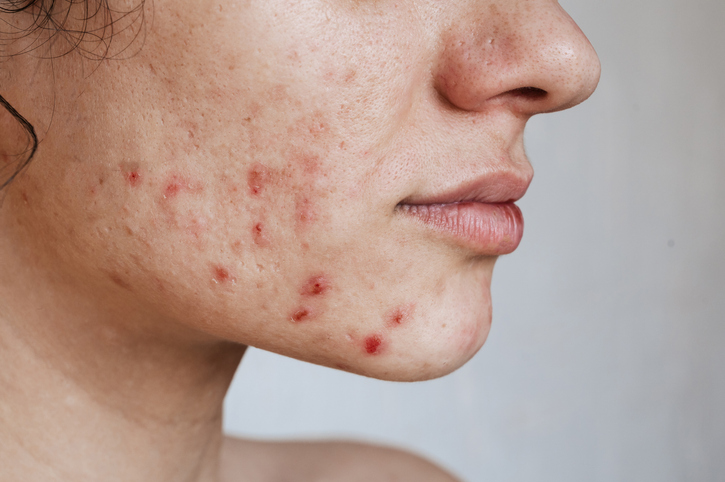
Being exposed to chemicals in the workplace, particularly things called halogenated hydrocarbons, can cause acne. A condition called Rosazea , which affects about 1 in 10 people in the UK, can also lead to small cysts und lumpy spots that look like acne. As with acne, Rosazea mostly affects the face (although chest, neck and ears can sometimes be.

Patient information leaflet
Blepharitis
They are: Dry eye syndrome ( keratoconjunctivitis sicca ). Seborrhoeic dermatitis. Rosacea. See the separate leaflets called Seborrhoeic dermatitis , Dry eyes and Rosacea for further information. Rosacea , ein common skin condition, can cause meibomian blepharitis. Combinations of the above In p... If you also have seborrhoeic dermatitis, rosacea or.
Patient information leaflet
Geschwollenes Augenlid
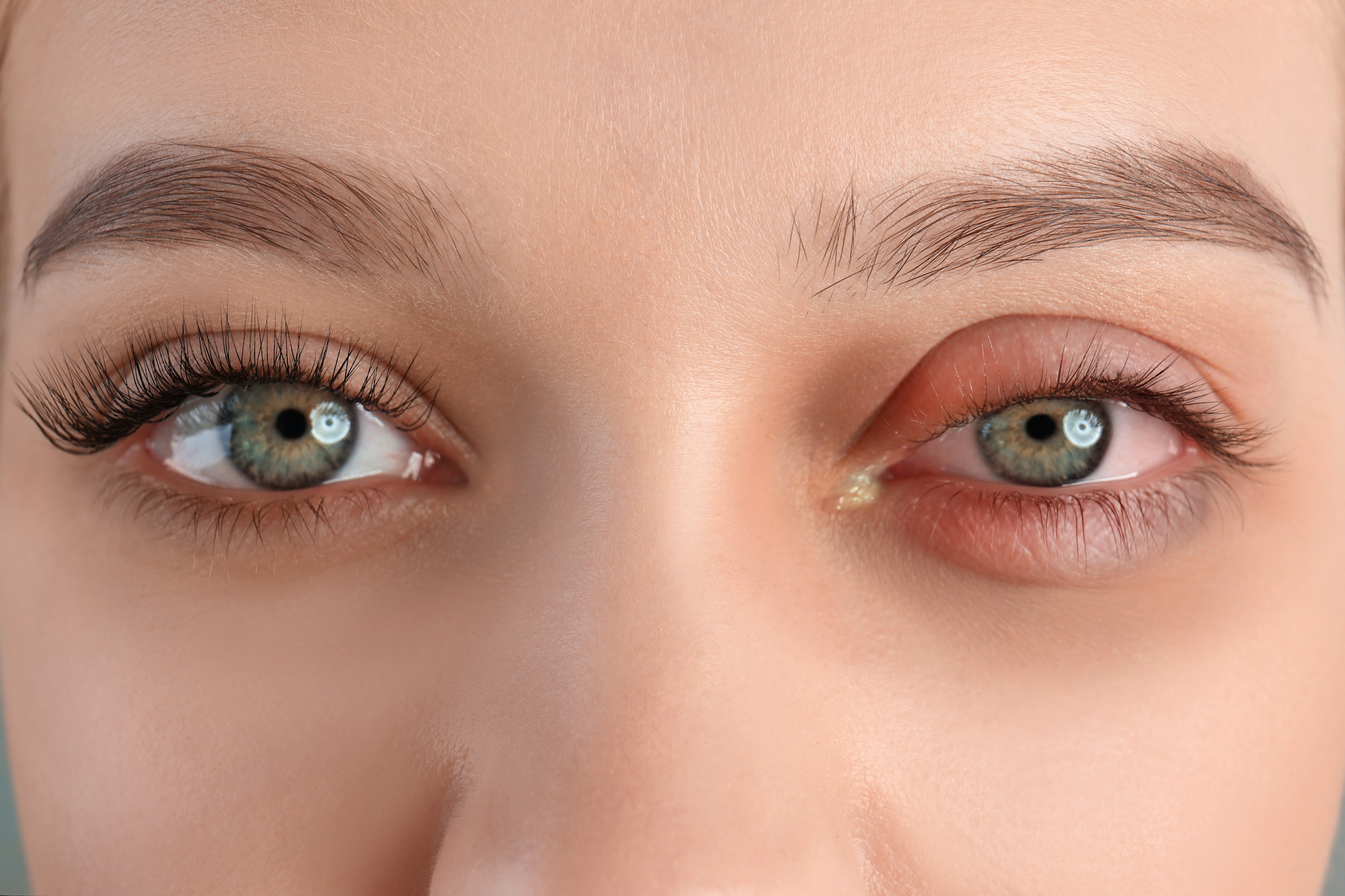
A swollen eyelid is very common and is usually due to allergy, inflammation, infection, or injury. It can be a persistent or recurring problem. It’s sometimes linked with skin conditions such as Rosazea or seborrhoeic dermatitis. Conjunctivitis (pink eye) Conjunctivitis (pink eye) is inflammation or infection of the conjunctiva (the thin membrane.

Patient information leaflet
Trockene Augen
Damage to the outer part of the eyes, eyelids, etc, from disease, injury or surgery This can affect our natural ability to produce enough tears and result in damage to the general functioning of the eye. Skin rashes such as seborrhoeic dermatitis or rosacea Seborrhoeic dermatitis and ocular rosacea can cause or exacerbate Meibomian gland.

Patient information leaflet
Augenprobleme
Contrary to common belief, the irises of patients with albinism are. Instead it varies from ... It can be a troublesome and recurring condition with no one-off cure. It can be associated with other skin conditions such as rosacea and seborrhoeic dermatitis. See the separate leaflet called Blepharitis. These may indicate urgent conditions such as.
Weiterführende Lektüre und Referenzen
- Rosazea; MedlinePlus, National Library of Medicine.
- Aldrich N, Gerstenblith M, Fu P, Tuttle MS, Varma P, Gotow E, Cooper KD, Mann M, Popkin DL. Genetic vs Environmental Factors That Correlate With Rosacea: A Cohort-Based Survey of Twins. JAMA Dermatol. 2015 Nov;151(11):1213-9. doi: 10.1001/jamadermatol.2015.2230.
- Asai Y, Tan J, Baibergenova A, Barankin B, Cochrane CL, Humphrey S, Lynde CW, Marcoux D, Poulin Y, Rivers JK, Sapijaszko M, Sibbald RG, Toole J, Ulmer M, Zip C. Canadian Clinical Practice Guidelines for Rosacea. J Cutan Med Surg. 2016 Sep;20(5):432-45. doi: 10.1177/1203475416650427. Epub 2016 May 17.
- Chang ALS, Raber I, Xu J, Li R, Spitale R, Chen J, Kiefer AK, Tian C, Eriksson NK, Hinds DA, Tung JY. Assessment of the genetic basis of rosacea by genome-wide association study. J Invest Dermatol. 2015 Jun;135(6):1548-1555. doi: 10.1038/jid.2015.53. Epub 2015 Feb 19.
- Egeberg A, Hansen PR, Gislason GH, Thyssen JP. Clustering of autoimmune diseases in patients with rosacea. J Am Acad Dermatol. 2016 Apr;74(4):667-72.e1. doi: 10.1016/j.jaad.2015.11.004. Epub 2016 Jan 30.
- Schaller M, Almeida LM, Bewley A, Cribier B, Dlova NC, Kautz G, Mannis M, Oon HH, Rajagopalan M, Steinhoff M, Thiboutot D, Troielli P, Webster G, Wu Y, van Zuuren E, Tan J. Rosacea treatment update: recommendations from the global ROSacea COnsensus (ROSCO) panel. Br J Dermatol. 2017 Feb;176(2):465-471. doi: 10.1111/bjd.15173. Epub 2017 Feb 5.
- Steinhoff M, Schauber J, Leyden JJ. New insights into rosacea pathophysiology: a review of recent findings. J Am Acad Dermatol. 2013 Dec;69(6 Suppl 1):S15-26. doi: 10.1016/j.jaad.2013.04.045.
- Steinhoff M, Schmelz M, Schauber J. Facial Erythema of Rosacea - Aetiology, Different Pathophysiologies and Treatment Options. Acta Derm Venereol. 2016 Jun 15;96(5):579-86. doi: 10.2340/00015555-2335.
- Tan J, Berg M. Rosacea: current state of epidemiology. J Am Acad Dermatol. 2013 Dec;69(6 Suppl 1):S27-35. doi: 10.1016/j.jaad.2013.04.043.
- van Zuuren EJ, Fedorowicz Z, Carter B, van der Linden MM, Charland L. Interventions for rosacea. Cochrane Database Syst Rev. 2015 Apr 28;2015(4):CD003262. doi: 10.1002/14651858.CD003262.pub5.
- van Zuuren EJ. Rosacea. N Engl J Med. 2017 Nov 2;377(18):1754-1764. doi: 10.1056/NEJMcp1506630. No abstract available.
- Woo YR, Lim JH, Cho DH, Park HJ. Rosacea: Molecular Mechanisms and Management of a Chronic Cutaneous Inflammatory Condition. Int J Mol Sci. 2016 Sep 15;17(9):1562. doi: 10.3390/ijms17091562.
- Yazici AC, Tamer L, Ikizoglu G, Kaya TI, Api H, Yildirim H, Adiguzel A. GSTM1 and GSTT1 null genotypes as possible heritable factors of rosacea. Photodermatol Photoimmunol Photomed. 2006 Aug;22(4):208-10. doi: 10.1111/j.1600-0781.2006.00220.x.
Artikelverlauf
Artikel auch verfügbar in Englisch, Deutsch, Spanisch, Französisch, Italienisch, Portugiesisch, Hindi, Hebräisch, Arabisch, und Schwedisch.
19 Sept 2024 | Neueste Version
1 Sept 2018 | Ursprünglich veröffentlicht
Nehmen Sie an der Diskussion teil
Teilen Sie Ihre Gedanken oder Erfahrungen mit anderen in unserem Patientengemeinschaften.

Fragen, teilen, verbinden.
Durchsuchen Sie Diskussionen, stellen Sie Fragen und teilen Sie Erfahrungen zu Hunderten von Gesundheitsthemen.
Abonnieren Sie den Patienten-Newsletter
Ihre wöchentliche Dosis klarer, vertrauenswürdiger Gesundheitsberatung - geschrieben, um Ihnen zu helfen, sich informiert, selbstbewusst und in Kontrolle zu fühlen.
Durch das Abonnieren akzeptieren Sie unsere Datenschutzrichtlinie. Sie können sich jederzeit abmelden. Wir verkaufen Ihre Daten niemals.