X-linked dilated cardiomyopathy
Zuletzt aktualisiert 18. Aug 2020
Erfüllt die redaktionelle Richtlinien
- HerunterladenHerunterladen
- Teilen
- Language
- Diskussion
- Ask Patient
- Audio-Version
- Zu bevorzugten Quellen bei Google hinzufügen
X-linked dilated cardiomyopathy is a form of heart disease. Dilated cardiomyopathy enlarges and weakens the heart (cardiac) muscle, preventing the heart from pumping blood efficiently. Signs and symptoms of this condition can include an irregular heartbeat (arrhythmia), shortness of breath, extreme tiredness (fatigue), and swelling of the legs and feet. In males with X-linked dilated cardiomyopathy, heart problems usually develop early in life and worsen quickly, leading to heart failure in adolescence or early adulthood. In affected females, the condition appears later in life and worsens more slowly.
Videoauswahl für Genetische ErkrankungenVideothek
Beschreibung
X-linked dilated cardiomyopathy is a form of heart disease. Dilated cardiomyopathy enlarges and weakens the heart (cardiac) muscle, preventing the heart from pumping blood efficiently. Signs and symptoms of this condition can include an irregular heartbeat (arrhythmia), shortness of breath, extreme tiredness (fatigue), and swelling of the legs and feet. In males with X-linked dilated cardiomyopathy, heart problems usually develop early in life and worsen quickly, leading to heart failure in adolescence or early adulthood. In affected females, the condition appears later in life and worsens more slowly.
X-linked dilated cardiomyopathy is part of a spectrum of related conditions caused by mutations in the DMD gene. The other conditions in the spectrum, Duchenne and Becker muscular dystrophy, are characterised by progressive weakness and wasting of muscles used for movement (skeletal muscles) in addition to heart disease. People with X-linked dilated cardiomyopathy typically do not have any skeletal muscle weakness or wasting, although they may have subtle changes in their skeletal muscle cells that are detectable through laboratory testing. Based on these skeletal muscle changes, X-linked dilated cardiomyopathy is sometimes classified as subclinical Becker muscular dystrophy.
Inheritance patterns
The source lists the following possible inheritance patterns: X-linked dominant. More than one pattern can apply in different cases.
Related genes
Other names
CMD3B
Dilated cardiomyopathy 3B
DMD-associated dilated cardiomyopathy
DMD-related dilated cardiomyopathy
XLCM
XLDC
Related patient information and medicines
Patient information leaflet
Dilatative Kardiomyopathie
Dilated cardiomyopathy is a condition where the heart muscle becomes stretched and thin. Dilated cardiomyopathy is uncommon, but it is the most common type of cardiomyopathy. These look for gene variants that we know are linked to dilated cardiomyopathy. It's likely that there are other genetic variants that cause dilated cardiomyopathy that we.

Patient information leaflet
Duchenne-Muskeldystrophie
DMD is inherited in a pattern called 'X-linked inheritance'. The DMD gene is 'carried' by women but does not us... This type of treatment has improved over recent years, which has helped to improve the quality of life and outlook for people with DMD. Heart (cardiac) complications Teenagers and adults with DMD may develop a Herz problem called.

Patient information leaflet
Herzkrankheit
Heart valve disease Heart rhythm problems See the separate leaflet called Abnormal Heart Rhythms (Arrhythmias) Abnormal heart rhythms. Cardiomyopathy Cardiomyopathies are diseases that affect the heart muscle. There are several types: Hypertrophic cardiomyopathy Hypertrophic cardiomyopathy. Dilated cardiomyopathy Dilated cardiomyopathy..
Patient information leaflet
Vorhofflimmern
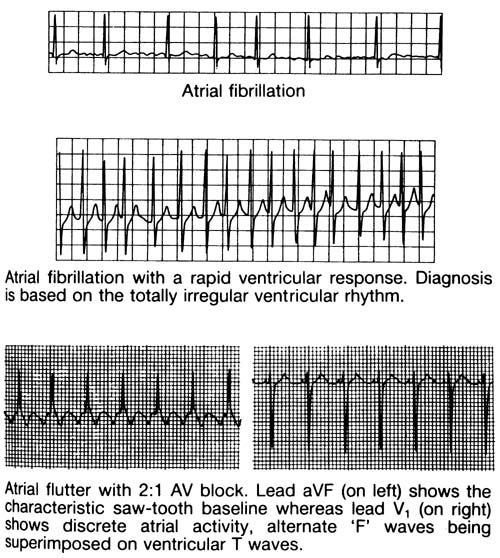
Atrial fibrillation (AF) is an abnormal fast irregular heartbeat. Atrial fibrillation Atrial fibrillation explained is a type of abnormal heart rhythm (arrhythmia). For example, AF occurs in some people with heart valve problems Heart valve disease , pericardial disease Pericarditis , dilated cardiomyopathy Dilated cardiomyopathy and hypertrophic.
Patient information leaflet
Herzklappenerkrankung
If rheumatic fever is the cause then symptoms often start between the ages of 20 and 50 years, about 10-20 years after having had an episode o... Other causes of heart valve disease Other causes of heart valve disease include: Deposits of calcium (calcification) in parts of the valve. This is the most common cause of aortic stenosis in older.

Patient information leaflet
Hämochromatose
Dr Sarah Jarvis MBE, GP and Clinical Director of Patient.info Hämochromatose is an inherited (genetic) disorder causing the body to absorb too much iron from the diet. The excess iron is then stored in various organ... Disease of the heart muscle (cardiomyopathy) Dilated cardiomyopathy. Herz disease -for example it can lead to the Herz muscles.
Weiterführende Lektüre und Referenzen
- X-linked dilated cardiomyopathy; MedlinePlus, National Library of Medicine.
- Beggs AH. Dystrophinopathy, the expanding phenotype. Dystrophin abnormalities in X-linked dilated cardiomyopathy. Circulation. 1997 May 20;95(10):2344-7. doi: 10.1161/01.cir.95.10.2344. No abstract available.
- Berko BA, Swift M. X-linked dilated cardiomyopathy. N Engl J Med. 1987 May 7;316(19):1186-91. doi: 10.1056/NEJM198705073161904.
- Cohen N, Muntoni F. Multiple pathogenetic mechanisms in X linked dilated cardiomyopathy. Heart. 2004 Aug;90(8):835-41. doi: 10.1136/hrt.2003.023390.
- Duvuru R, Cunningham T, Colvin MK, Veerapandiyan A. Dystrophinopathies. 2000 Sep 5 [updated 2026 Sep 10]. In: Adam MP, Bick S, Mirzaa GM, Wallace SE, Amemiya A, editors. GeneReviews(R) [Internet]. Seattle (WA): University of Washington, Seattle; 1993-2026. Available from http://www.ncbi.nlm.nih.gov/books/NBK1119/
- Ferlini A, Sewry C, Melis MA, Mateddu A, Muntoni F. X-linked dilated cardiomyopathy and the dystrophin gene. Neuromuscul Disord. 1999 Jul;9(5):339-46. doi: 10.1016/s0960-8966(99)00015-2.
- Muntoni F, Torelli S, Ferlini A. Dystrophin and mutations: one gene, several proteins, multiple phenotypes. Lancet Neurol. 2003 Dec;2(12):731-40. doi: 10.1016/s1474-4422(03)00585-4.
- Nakamura A. X-Linked Dilated Cardiomyopathy: A Cardiospecific Phenotype of Dystrophinopathy. Pharmaceuticals (Basel). 2015 Jun 9;8(2):303-20. doi: 10.3390/ph8020303.
- Neri M, Valli E, Alfano G, Bovolenta M, Spitali P, Rapezzi C, Muntoni F, Banfi S, Perini G, Gualandi F, Ferlini A. The absence of dystrophin brain isoform expression in healthy human heart ventricles explains the pathogenesis of 5' X-linked dilated cardiomyopathy. BMC Med Genet. 2012 Mar 28;13:20. doi: 10.1186/1471-2350-13-20.
- Posafalvi A, Herkert JC, Sinke RJ, van den Berg MP, Mogensen J, Jongbloed JD, van Tintelen JP. Clinical utility gene card for: dilated cardiomyopathy (CMD). Eur J Hum Genet. 2013 Oct;21(10). doi: 10.1038/ejhg.2012.276. Epub 2012 Dec 19. No abstract available.
- Towbin JA, Hejtmancik JF, Brink P, Gelb B, Zhu XM, Chamberlain JS, McCabe ER, Swift M. X-linked dilated cardiomyopathy. Molecular genetic evidence of linkage to the Duchenne muscular dystrophy (dystrophin) gene at the Xp21 locus. Circulation. 1993 Jun;87(6):1854-65. doi: 10.1161/01.cir.87.6.1854.
Artikelverlauf
Artikel auch verfügbar in Englisch, Deutsch, Spanisch, Französisch, Italienisch, Portugiesisch, Hindi, Hebräisch, Arabisch, und Schwedisch.
18. Aug 2020 | Neueste Version
1 Feb 2012 | Ursprünglich veröffentlicht
Teilen Sie Ihre Gedanken oder Erfahrungen mit anderen in unserem Patientengemeinschaften.
Einfacher Zugang zu vertrauenswürdigen Behandlungen und Gesundheitsdiensten online.
Common conditions
Get help with common conditions through the NHS, without a GP appointment.





Abonnieren Sie den Patienten-Newsletter
Ihre wöchentliche Dosis klarer, vertrauenswürdiger Gesundheitsberatung - geschrieben, um Ihnen zu helfen, sich informiert, selbstbewusst und in Kontrolle zu fühlen.
Durch das Abonnieren akzeptieren Sie unsere Datenschutzrichtlinie. Sie können sich jederzeit abmelden. Wir verkaufen Ihre Daten niemals.