Hämochromatose
Fachlich geprüft von Dr Colin Tidy, MRCGPZuletzt aktualisiert von Dr Philippa Vincent, MRCGPZuletzt aktualisiert 10. Aug 2023
Erfüllt die Anforderungen des Patienten für redaktionelle Inhalte
- HerunterladenHerunterladen
- Teilen
- Language
- Diskussion
- Audio-Version
- Zu bevorzugten Quellen bei Google hinzufügen
Hämochromatose ist eine vererbte (genetische) Erkrankung, bei der der Körper zu viel Eisen aus der Nahrung aufnimmt. Dieser überschüssige Eisen verursacht Schäden an Organen, in denen es sich ansammelt. Die Hauptbehandlung besteht darin, regelmäßig Blut zu spenden, um das überschüssige Eisen aus dem Körper zu entfernen. Wenn die Behandlung frühzeitig beginnt, noch bevor Komplikationen auftreten, sind die Aussichten für Menschen mit Hämochromatose sehr gut.
Auf einen Blick
Haemochromatosis is a genetic condition where the body absorbs too much iron from food.
This excess iron is stored in organs, which can cause damage and various symptoms.
Symptoms often start between 30 and 50 years, including tiredness, joint pain, or stomach pain.
Diagnosis involves blood tests to check iron levels and a gene test.
Treatment includes regularly removing blood to reduce iron levels in the body.
Early diagnosis and treatment can prevent serious complications and lead to a normal life expectancy.
Avoid iron supplements, heavily fortified cereals, large doses of vitamin C, and excessive alcohol.
What is haemochromatosis?
What is haemochromatosis?
People with haemochromatosis have inherited a faulty gene, which directs the body to absorb too much iron from what they eat and drink. Excessive quantities of iron are then stored in various organs. This excess iron may be stored in the liver, pancreas, heart, testicles, ovaries, skin and joints. It causes damage to these tissues, which leads to a variety of symptoms.
Haemochromatosis symptoms
Symptoms of haemochromatosis usually start between the ages of 30 and 50 years. The first symptoms are usually vague and may include feeling weak and tired, and having joint pains or abdominal pains.
As haemochromatosis progresses, more specific symptoms develop due to organ damage but these are significantly less common nowadays due to earlier diagnosis. However there are still many cases each year in people who have not yet been diagnosed.
These problems may include:
Joint pain and swelling, especially the knuckle and the first joint of the first two fingers.
Bronzing of the skin (looking like a permanent tan).
Loss of sex drive.
Loss of body hair.
Period changes in women. Women may have either no menstrual periods or very light menstrual periods. Early menopause may also occur in women with haemochromatosis.
Poor memory.
Feeling irritable.
Entwicklung Diabetes.
An increase in the size of the liver.
Most of these symptoms are found in other disorders and so diagnosis can be difficult. Arthritis found only in the knuckle and the first joint of the first two fingers is very suggestive of haemochromatosis.
The need for treatment to remove excess iron does not depend on the presence of symptoms. Because of the risk of developing a serious complication such as cirrhosis, treatment to remove iron buildup from the body is very important even if there are no symptoms.
Causes of haemochromatosis
Haemochromatosis is a genetic condition. It is passed on through families through codes inside cells called genes. Genes come in pairs. In haemochromatosis, one of the gene pairs does not work properly. A few different genes may be involved but 9 out of 10 people with haemochromatosis have an abnormal 'HFE' gene, which is on chromosome 6.
Haemochromatosis is an autosomal recessive disorder. This means that haemochromatosis will only occur if both copies of the gene are abnormal (one copy from the mother and one from the father). If only one copy is defective, a person will be healthy but will be a 'carrier'. This means he or she will be able to pass on the abnormal gene to a son or daughter.
There is now a gene test which can help to diagnose most people who have haemochromatosis.
When two people who carry the abnormal gene have a child, there is a:
1 in 4 chance that the child will have haemochromatosis (by inheriting the abnormal gene from both parents).
2 in 4 chance that the child will not have haemochromatosis but will be a carrier (by inheriting the abnormal gene from one parent but the normal gene form the other parent).
1 in 4 chance that the child will not have haemochromatosis and will not be a carrier (by inheriting the normal gene from both parents).
These proportions are averages for the whole population and in any one family with both parents being carriers, it would be possible for all children to be affected, all to be carriers, or for all not to be affected or be carriers.
How recessive inheritance works when both parents are carriers (n = normal gene; H = gene for haemochromatosis):
Haemochromatosis inheritance
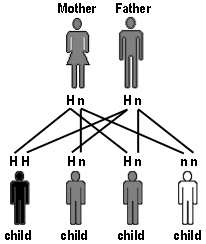
©The Haemochromatosis Society
How common is haemochromatosis?
Haemochromatosis occurs in people from all parts of the world but is most common in people from Northern Europe. Surveys have shown that around 1 in 150 of people of UK origin have haemochromatosis though it is much more common in Northern Ireland with closer to 1 in 100 people affected. Approximately 1 in 10 people carries one copy of the abnormal gene in Northern Europe and is therefore a carrier of haemochromatosis; this is 1 in 5 people in Northern Ireland. Haemochromatosis is now recognised as being one of the most common genetic disorders.
How is haemochromatosis diagnosed?
Bluttests
The first tests are to see how much iron is stored in the body. This can be done by having a Bluttest for iron (ferritin) and transferrin saturations. Transferrin is a protein that transports iron in the blood. Transferrin is mostly made in the liver, and it regulates iron absorption.
Transferrin saturation is the percentage of this protein which is already attached to iron. The levels of both iron in the blood and the transferrin saturation are usually high in haemochromatosis.
Initial tests will also check for any other possible causes of the symptoms. Blood tests will also be done for any possible complications of haemochromatosis such as problems with the liver oder Diabetes.
Gene test
The test to confirm the diagnosis of haemochromatosis is the gene test for the HFE gene, which is abnormal in 9 out of 10 people with haemochromatosis. (See the section at the end of this leaflet to read more about this gene.)
Scans
A scan of the liver may help to detect how much iron is in the liver. Taking a liver sample (biopsy) used to be needed but is much less often done nowadays because a scan and a gene test can be done instead. However, a liver biopsy may be needed if the iron level in the body is very high or there seem to be other problems with the liver.
Other tests may be needed to check for complications of haemochromatosis, such as an ultrasound scan of the heart (echocardiogram).
Who should be tested?
Anyone with symptoms indicating possible haemochromatosis should be tested for the level of iron in the body. The gene test should be offered if high iron levels are detected.
Brothers, sisters and children of anyone who has haemochromatosis should be tested for the abnormal gene. The test should only be done after talking to a health professional about the possible benefits and problems of having the test.
The clear benefit of being tested is to have treatment early before any complications occur. Possible problems include the psychological impact of a positive test. In 2018, insurance companies in the UK agreed not to require positive genetic tests to be revealed when offering life insurance. Siehe den separaten Beipackzettel mit dem Titel "Genetische Tests" für weitere Informationen.
Haemochromatosis treatment
Treatment of haemochromatosis is simple and effective. It consists of regular removal of blood which is also known as venesection therapy or phlebotomy. This may need to be done frequently (every week) at first, depending on the level of iron overload in the body.
The levels of iron in the body are monitored closely during treatment. Iron levels are reduced very slowly, often over quite a long period of time. Once levels are normal, regular blood tests monitor the iron levels. Further blood may then need to be removed every so often.
Regular blood removal will not cure some of the complications of haemochromatosis such as diabetes or liver 'scarring' (cirrhosis). Therefore, early diagnosis and treatment are very important.
Liver transplant may occasionally be needed if the liver is very badly affected.
Haemochromatosis cannot be cured because the faulty gene cannot be removed. However, with early diagnosis and the right treatment, symptoms and complications can be avoided.
A haematologist will usually monitor the blood levels and advise on treatment. If there are very high levels of iron, or any evidence of liver damage, a liver specialist (a hepatologist) will also be involved in the management.
Foods zur avoid if Sie have haemochromatosis
The increased levels of iron in the body cannot be treated by diet alone. Removing blood has a much bigger effect on reducing the levels of iron in the body. However, there are some recommendations of foods to avoid which can help to control iron levels. These are to:
Avoid vitamin supplements or tonics containing iron. This includes multi-vitamins and minerals. A balanced diet should provide all the vitamins and minerals needed.
Avoid breakfast cereals which are heavily fortified with iron.
Large doses of vitamin C should also be avoided because it increases the amount of iron absorbed from food eaten. Vitamin C also increases the amount of iron stored in the body.
Reduce intake of offal (eg, liver and kidney) and red meat.
Tea, coffee and all milk products taken with a meal reduce the amount of iron absorbed from food.
Essen a healthy balanced diet is still important. A very restricted or unusual diet will not significantly affect iron levels, and could cause other symptoms.
Further information on diet is available from the Haemochromatosis Society - see the 'Further reading and references' section at the end of this leaflet.
Alcohol and Hämochromatose
Alcohol can increase the rate at which iron is absorbed, particularly when drinking alcohol with a meal. Excessive amounts of alcohol can also damage the liver itself, adding to the risk of liver problems.
When drinking alcohol, it is important to keep it to sensible levels - an absolute maximum of 14 units per week. This should be spread out over the week rather than in 'binges'. It is sensible to try to avoid drinking alcohol with meals.
Alcohol should be avoided completely if there is liver damage from haemochromatosis or if there is any other liver disease.
Complications of haemochromatosis
The excess iron stored in body organs can cause damage. The possible complications of haemochromatosis include:
Diabetes due to damage to the pancreas.
Heart disease -for example it can lead to the heart muscles becoming weak (dilatative Kardiomyopathie) or stiff (restrictive cardiomyopathy), Herzinsuffizienz und abnormale Herzrhythmen.
Liver 'scarring' (cirrhosis). People with haemochromatosis who develop cirrhosis are also at increased risk of liver cancer and should be checked regularly with Ultraschalluntersuchungen oder MRT-Scans (Magnetresonanztomographie).
Joint damage.
Wie ist die Aussicht (Prognose)?
If haemochromatosis is diagnosed and treated early before any complications develop the outlook is very good with no reduction in life expectancy. In most people, haemochromatosis is not a fatal condition and life expectancy is normal.
If complications do occur then the prognosis may be much worse. This depends on which complication develops and how severe it is.
Patientenauswahl für Blutstörungen

Allergien, Blut und Immunsystem
Thrombophilie
Der Körper verfügt über einen natürlichen Gerinnungsprozess im Blut, der bei Thrombophilie verändert ist. Der normale Gerinnungsprozess wird Hämostase genannt.
von Dr. Toni Hazell, FRCGP

Allergien, Blut und Immunsystem
Hämophilie
Hämophilie ist eine seltene Blutungsstörung, die Ihre Fähigkeit beeinträchtigt, Gerinnsel zu bilden. Das Blut enthält Substanzen, sogenannte Gerinnungsfaktoren, die zusammen mit den Blutplättchen ein Gerinnsel bilden. Wenn Sie sich verletzen, stoppt das Gerinnsel die Blutung. Hämophilie ist eine Erkrankung, bei der ein Mangel an Gerinnungsfaktoren besteht, sodass Menschen mit dieser Erkrankung in der Regel längere Blutungen haben. Es gibt keine Heilung, aber mit den verfügbaren Behandlungen können die meisten Menschen mit Hämophilie ein normales Leben führen.
von Dr. Hayley Willacy, FRCGP
Häufig gestellte Fragen
Does having haemochromatosis mean I will have a shorter life expectancy?
No, if haemochromatosis is diagnosed and treated early, before any complications develop, the outlook is very good, and there is no reduction in life expectancy. For most people, it is not a fatal condition, and life expectancy is normal. However, if complications do occur, the prognosis can be worse, depending on the type and severity of the complication.
What kind of doctor specialises in haemochromatosis?
A haematologist typically monitors blood levels and advises on treatment for haemochromatosis. If iron levels are very high, or if there's evidence of liver damage, a liver specialist (hepatologist) will also be involved in managing the condition.
Are there any specific lifestyle changes I should make regarding alcohol consumption if I have haemochromatosis?
Yes, alcohol can accelerate iron absorption, especially when consumed with a meal. Excessive alcohol also damages the liver, increasing the risk of liver problems. It's important to keep alcohol intake to sensible levels, with an absolute maximum of 14 units per week, spread out rather than in binges. It's also sensible to try and avoid drinking alcohol with meals. If you have existing liver damage from haemochromatosis or any other liver disease, alcohol should be avoided completely.
Can haemochromatosis lead to problems with getting pregnant?
Yes, excess iron stored in the body's organs can cause damage, and one of the possible complications of haemochromatosis is fertility problems.
If I have haemochromatosis, can my children or siblings also be affected?
Yes, because haemochromatosis is a genetic condition, brothers, sisters, and children of anyone diagnosed with it should be tested for the abnormal gene. It's recommended to discuss the potential benefits and challenges of testing with a health professional before proceeding.
Weiterführende Literatur und Referenzen
- Adams PC, Barton JC; How I treat hemochromatosis. Blood. 2010 Jul 22;116(3):317-25. Epub 2010 Mar 22.
- Crownover BK, Covey CJ; Hereditary hemochromatosis. Am Fam Physician. 2013 Feb 1;87(3):183-90.
- Fitzsimons EJ, Cullis JO, Thomas DW, et al; Diagnosis and therapy of genetic haemochromatosis (review and 2017 update). Br J Haematol. 2018 May;181(3):293-303. doi: 10.1111/bjh.15164. Epub 2018 Apr 16.
- EASL clinical practice guidelines for HFE hemochromatosis. J Hepatol. 2010 Jul;53(1):3-22. doi: 10.1016/j.jhep.2010.03.001. Epub 2010 Apr 18.
- Healthy eating and haemochromatosis; The Haemochromatosis Society
- Common conditions associated with hereditary haemochromatosis genetic variants: cohort study in UK Biobank; Pilling
- Haemochromatosis UK
Über den AutorVollständige Biografie anzeigen

Dr Philippa Vincent, MRCGP
Allgemeinmediziner, Medizinischer Autor
MB BS, Bsc, MRCGP (2000), DCH, DFSRH, DRCOG
Dr Philippa Vincent ist ein NHS-Arzt, der in Nordlondon arbeitet.
Über den RezensentenVollständige Biografie anzeigen

Dr Colin Tidy, MRCGP
Allgemeinmediziner, Medizinischer Autor
MBBS, MRCGP, MRCP (Paediatrics), DCH
Dr. Colin Tidy ist ein NHS-Arzt mit Sitz in Oxfordshire.
Artikelverlauf
Die Informationen auf dieser Seite wurden von qualifizierten Klinikern verfasst und begutachtet.
Artikel auch verfügbar in Englisch, Deutsch, Spanisch, Französisch, Italienisch, Portugiesisch, Hindi, Hebräisch, Arabisch, und Schwedisch.
Nächste Überprüfung fällig: 8. Aug. 2028
10. Aug 2023 | Neueste Version

Fragen, teilen, verbinden.
Durchsuchen Sie Diskussionen, stellen Sie Fragen und teilen Sie Erfahrungen zu Hunderten von Gesundheitsthemen.

Fühlen Sie sich unwohl?
Bewerten Sie Ihre Symptome online kostenlos
Abonnieren Sie den Patienten-Newsletter
Ihre wöchentliche Dosis klarer, vertrauenswürdiger Gesundheitsberatung - geschrieben, um Ihnen zu helfen, sich informiert, selbstbewusst und in Kontrolle zu fühlen.
Durch das Abonnieren akzeptieren Sie unsere Datenschutzrichtlinie. Sie können sich jederzeit abmelden. Wir verkaufen Ihre Daten niemals.
Mehr zu Allergien, Blut und Immunsystem
- Akute myeloische Leukämie
- Allergische Konjunktivitis
- Morbus Behçet
- Bluttests
- Kontaktekzem
- Ernährungspläne für Menschen mit Anämie
- Arzneimittelallergie
- Nahrungsmittelallergie und -intoleranz
- Glukosetoleranztest
- Hämophilie
- Nesselsucht
- Immunsuppression
- Eisenmangelanämie
- Lokalisierte Sklerodermie
- Pemphigus vulgaris
- Polycythaemia rubra vera
- Routinemäßiger Bluttest zur Nierenfunktion
- Stammzelltransplantation
- Geschwollene Lymphknoten
- Systemische Sklerose