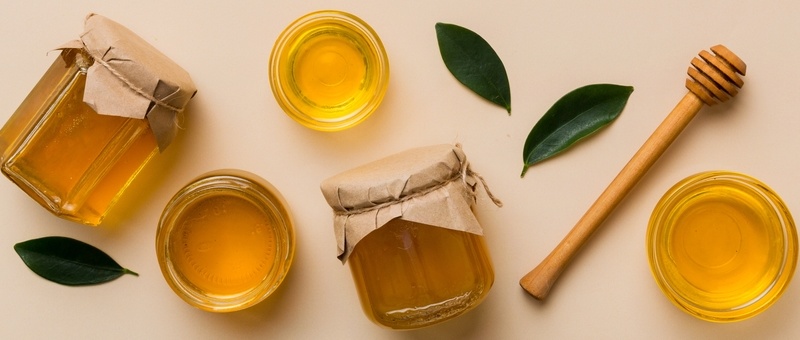
Honig könnte der natürliche Energieschub sein, den Sie für Ihr Training benötigen
Verfasst von Stephen KhanUrsprünglich veröffentlicht 9 Jun 2026
Erfüllt die redaktionelle Richtlinien
- HerunterladenHerunterladen
- Teilen
- Language
- Diskussion
- Audio-Version
- Zu bevorzugten Quellen bei Google hinzufügen
Honig wird von Menschen seit Tausenden von Jahren als natürlicher Süßstoff und Energiequelle genutzt, um Arbeit und körperliche Leistung zu unterstützen. Kürzlich ist er als natürliche Option zur Energieversorgung beim Sport wieder aufgetaucht, wobei einige Social-Media-Nutzer behaupten, er sei das perfekte Nahrungsmittel vor einem Workout, wenn man einen Energieschub benötigt.
Interestingly, Sebastian Sawe, the first man to run a sub two-hour marathon, fuelled up before his race with bread and honey.
Research actually does suggest honey can work comparably to commercial products such as energy drinks and gels. But where it may be most beneficial is when it’s used as a recovery tool.
Honey and energy
Honey is primarily made up of carbohydrates - more specifically, glucose and fructose, which are simple sugars. These carbs provide a rapid and accessible source of energy, which is particularly useful during exercise when your body needs fuel quickly.
Our bodies store carbohydrate as glycogen in the muscles and liver. These stores are depleted during moderate‑to‑high intensity exercise - especially during prolonged bouts of physical activity lasting longer than 60 minutes. When glycogen levels fall, fatigue increases and performance declines.
Consuming carbohydrates before or during exercise ensures energy is available, allowing us to sustain exercise for longer.
The science behind honey’s role in exercise is therefore straightforward - it supplies fast‑acting energy when needed. However, what is more interesting is that honey contains a natural combination of both glucose and fructose.
These sugars are absorbed through different pathways in the gut, allowing them to be used simultaneously. This increases the amount of carbohydrates absorbed, puts less strain on the gut, and helps sustain the amount of energy being delivered to working muscles during workouts. This may also potentially delay fatigue.
This science is also behind why many sports drinks and energy gels contain multiple carbohydrate sources to maximise fuelling efficiency.
Research has shown that consuming both glucose and fructose together enhances the amount of carbohydrate your body is able to use for energy compared to a single sugar source. Honey therefore represents a natural version of this evidence‑based approach.
In practical terms, one generous tablespoon of honey provides around 20 grams of carbohydrate. This is comparable to the amount of carbs found in a commercial energy gel.
Consuming around 1 tablespoon or 1.5 tablespoons of honey before training can top up glycogen stores, particularly in the liver. This can be important if training in the morning when liver glycogen stores are lower from an overnight fasting period.
Honey and exercise performance
But while honey can help provide your body with the energy it needs during a workout, whether honey actually boosts performance is less certain.
Previous research found that using honey as a drink given before and during 75 minutes of football training - a total of around four heaped tablespoons per participant - was not found to have improved performance.
A commercial sports drink containing the same amount of carbohydrates was also tested. Neither the sports drink nor the honey proved to have any performance benefit over the placebo (water only) - showing that both carb drinks had no effect.
However, other studies have shown that honey does perform similarly to other carbohydrate sources and may improve performance.
For instance, a study which gave cyclists 15 grams of honey every 16 kilometres over a 64 kilometre time trial resulted in cyclists having greater power output in the final 16 kilometres compared to those who were given a placebo.
Additionally, a recent study in trained cyclists who were given 90 grams of honey per hour over three hours of cycling found that performance was comparable to traditional sports gels.
So while honey might not boost your performance over other types of carbs, it may work just as well.
Additional benefits
Where honey shines may well be in its role in recovery. Research has shown that consuming a honey‑based drink after exercise helps maintain higher blood glucose levels, which can affect subsequent performance - particularly when your body is under extra stress - such as when it’s hot.
In one study, ten recreational runners performed two one-hour runs in the heat, with a two-hour rest in between. After the first run, they were given a drink containing honey. The researchers found that the runners were able to run around 10% further in the second trial after consuming honey than they had run during the first trial.
This suggests that honey may be particularly effective at restoring energy between bouts of exercise. As honey contains both glucose and fructose, this can help replenish your body’s energy stores quickly.
Beyond its carbohydrate content, honey also contains small amounts of vitamins, minerals, amino acids and important plant compounds such as flavonoids and phenolic acids. These compounds may have antioxidant, antimicrobial and potentially antiviral effects, which may be particularly beneficial for athletes during stressful training periods.
However, not all honeys are the same. Their taste, texture, sugar composition and contents vary depending on factors such as flower source, climate and processing methods. For instance, Malaysian and Manuka honey contain higher levels of anti-bacterial and anti‑inflammatory compounds, which could better support recovery and immune function.
Some research also indicates certain types of honey can influence inflammatory signalling pathways, potentially helping regulate the response. This means honey may reduce muscle soreness and improve recovery, offering more than just a source of energy.
However, there’s currently little evidence to suggest that one type of honey is significantly superior to another as an exercise fuel.
Based on current evidence, honey does appear to be comparable to other sports products such as energy gels. This makes honey an effective, low cost, natural alternativeto commercial sports fuels for athletes.
This article is republished from The Conversation under a Creative Commons license. Read the original article.
Patientenauswahl für Ernährung

Ernährung und Diät
Sind Kürbiskerne gesund für Sie?
Kürbiskerne sind nicht nur für Halloween. Auch wenn sie Sie an das Schnitzen von Herbst-Kürbislaternen erinnern mögen, genießen viele Menschen sie das ganze Jahr über wegen ihrer gesundheitlichen Vorteile. Werfen wir einen genaueren Blick darauf, was Kürbiskerne zu bieten haben und ob sie einen festen Platz in Ihrer Ernährung verdienen.
von Victoria Raw

Ernährung und Diät
Den Blick auf die verborgenen Gesundheitsvorteile von Joghurt öffnen
In Supermärkten weltweit gibt es viele Arten und Marken von Joghurt. Von fettarm bis vollfett, aromatisiert bis fruchtig – jede Sorte bietet eine Reihe einzigartiger Eigenschaften und gesundheitlicher Vorteile. Dieser Artikel untersucht die gesunden Vorteile von Joghurt und wie man die weniger gesunden Optionen erkennt.
von Victoria Raw
Häufig gestellte Fragen
Wie viel Honig wird empfohlen, vor dem Training zu konsumieren?
Der Verzehr von etwa 1 bis 1,5 Esslöffeln Honig vor dem Training kann helfen, die Glykogenspeicher aufzufüllen, insbesondere das Leberglykogen, das möglicherweise niedriger ist, wenn Sie morgens nach einer nächtlichen Fastenperiode trainieren.
Wie schneidet Honig im Vergleich zu kommerziellen Sportprodukten wie Energiegels ab?
Forschungen legen nahe, dass Honig mit kommerziellen Sportprodukten wie Energydrinks und Gels vergleichbar sein kann, wenn es darum geht, während des Trainings Energie bereitzustellen. Er wird oft als effektive, kostengünstige, natürliche Alternative zu diesen kommerziellen Brennstoffen angesehen.
Spielt die Honigsorte eine Rolle für die Vorteile beim Sport?
Obwohl sich verschiedene Honigsorten im Geschmack, in der Textur und in der Zusammensetzung aufgrund von Faktoren wie Blumenquelle und Klima unterscheiden, gibt es derzeit wenig Beweise dafür, dass eine Honigsorte speziell als Energiequelle für Sportler signifikant überlegen ist. Einige Sorten wie malaysischer und Manuka-Honig sind jedoch für höhere Gehalte an antibakteriellen und entzündungshemmenden Verbindungen bekannt, die zusätzliche Erholungs- und Immunsystemunterstützung bieten können.
Kann Honig helfen, Muskelschmerzen nach dem Training zu lindern?
Einige Forschungen deuten darauf hin, dass bestimmte Honigsorten entzündliche Signalwege beeinflussen können. Dies könnte potenziell helfen, die Reaktion des Körpers auf Bewegung zu regulieren, was zu weniger Muskelkater und einer verbesserten allgemeinen Erholung führen könnte, und somit Vorteile über die reine Energieversorgung hinaus bieten.
Neben Kohlenhydraten, welche anderen nützlichen Bestandteile sind in Honig enthalten?
Abgesehen von seinem Kohlenhydratgehalt enthält Honig kleine Mengen an Vitaminen, Mineralstoffen, Aminosäuren und wichtigen Pflanzenstoffen wie Flavonoiden und phenolischen Säuren. Diese Verbindungen können antioxidative, antimikrobielle und potenziell antivirale Wirkungen haben, die besonders vorteilhaft für Sportler während anspruchsvoller Trainingsphasen sein könnten.
Über den AutorVollständige Biografie anzeigen
Verfasst von

Stephen Khan
Editor-in-Chief, The Conversation
Stephen is the Global Executive Director and co-founder of The Conversation, a non-profit news organisation. An experienced journalist and media leader, he specialises in news writing and digital journalism, and has held senior editorial roles at The Guardian, The Independent, and The Observer.
Artikelverlauf
Artikel auch verfügbar in Englisch, Deutsch, Spanisch, Französisch, Italienisch, Portugiesisch, Hindi, Hebräisch, Arabisch, und Schwedisch.
9 Jun 2026 | Ursprünglich veröffentlicht
Verfasst von:
Stephen Khan
Nehmen Sie an der Diskussion teil
Teilen Sie Ihre Gedanken oder Erfahrungen mit anderen in unserem Patientengemeinschaften.

Fragen, teilen, verbinden.
Durchsuchen Sie Diskussionen, stellen Sie Fragen und teilen Sie Erfahrungen zu Hunderten von Gesundheitsthemen.

Fühlen Sie sich unwohl?
Bewerten Sie Ihre Symptome online kostenlos
Abonnieren Sie den Patienten-Newsletter
Ihre wöchentliche Dosis klarer, vertrauenswürdiger Gesundheitsberatung - geschrieben, um Ihnen zu helfen, sich informiert, selbstbewusst und in Kontrolle zu fühlen.
Durch das Abonnieren akzeptieren Sie unsere Datenschutzrichtlinie. Sie können sich jederzeit abmelden. Wir verkaufen Ihre Daten niemals.