Familial adenomatous polyposis
Zuletzt aktualisiert 26. Aug 2025
Erfüllt die redaktionelle Richtlinien
- HerunterladenHerunterladen
- Teilen
- Language
- Diskussion
- Ask Patient
- Audio-Version
- Zu bevorzugten Quellen bei Google hinzufügen
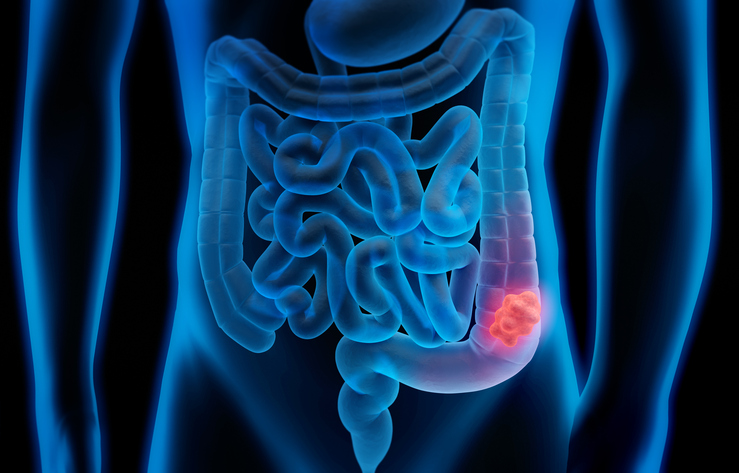
Familial adenomatous polyposis (FAP) is an inherited disorder that is characterised by a greatly increased risk of cancer of the large intestine (colon) and rectum (collectively known as colorectal cancer). People with FAP have multiple precancerous (benign) growths (polyps) in the colon, and one or more of these polyps will likely develop into colorectal cancer. There are two forms of FAP: the classic type and the attenuated type.
Beschreibung
Familial adenomatous polyposis (FAP) is an inherited disorder that is characterised by a greatly increased risk of cancer of the large intestine (colon) and rectum (collectively known as colorectal cancer). People with FAP have multiple precancerous (benign) growths (polyps) in the colon, and one or more of these polyps will likely develop into colorectal cancer. There are two forms of FAP: the classic type and the attenuated type.
The classic type of FAP is the more severe type. People with classic FAP develop colon polyps as early as childhood. By age 35 years, 95 percent of people with classic FAP will have colon polyps. Once polyps appear in people with classic FAP, the number of polyps increases quickly. People with classic FAP may have hundreds to thousands of colon polyps. Unless the colon is removed, one or more of these polyps will become cancerous (malignant). Individuals with classic FAP typically develop colorectal cancer around 40 years old, and at least 90 percent of affected individuals will develop colorectal cancer by age 50 years if they do not have a procedure that removes their colon beforehand (preventative colectomy).
The attenuated type of FAP is the less severe form. People with attenuated FAP tend to have fewer polyps (an average of 30) that develop later in life (early to mid-adulthood) than those with classic FAP. People with attenuated FAP have a 70 percent lifetime risk of colorectal cancer, with cancer typically developing around 55 years old. People with attenuated FAP may or may not be advised to have a preventative colectomy.
Less commonly, people with FAP may develop other types of cancer. Affected individuals are at increased risk of developing cancer of the stomach, pancreas, a gland in the lower neck (thyroid gland), liver (specifically, a form known as hepatoblastoma), brain (specifically, a form known as medulloblastoma), or a section of the small intestine (duodenum).
People with FAP can also have benign growths in their bones (osteomas), in their skin (cysts), or in the small glands located on top of the kidneys called adrenal glands (adrenal masses). Other benign growths called desmoid tumours develop in 10 to 30 percent of people with FAP. These fibrous tumours usually occur in the abdomen or abdominal wall. Desmoid tumours tend to recur after they are surgically removed.
People with FAP may also have dental abnormalities, which can include teeth that do not break through the gums, one or more missing teeth, extra (supernumerary) teeth, and dental cysts.
Individuals with FAP often have an eye problem called congenital hypertrophy of the retinal pigment epithelium (CHRPE). CHRPE is characterised by flat lesions on the light-sensitive tissue that lines the back of the eye (retina) that can be seen during an eye exam. CHRPE does not cause any vision problems and occurs in up to 80 percent of people with FAP.
Inheritance patterns
The source lists the following possible inheritance patterns: Autosomal dominant+1 affected parent. More than one pattern can apply in different cases.
Related genes
Other names
Adenomatous familial polyposis
Adenomatous familial polyposis syndrome
Adenomatous polyposis coli
Familial multiple polyposis syndrome
FAP
Related patient information and medicines

Patient information leaflet
Darm-Polypen
Bowel polyps (colonic polyps) are small non-cancerous (benign) growths on the inside lining of the bowel (colon and rectum). What are bowel polyps. A bowel polyp is a small non-cancerous growthSee also the separate leaflet on Bowel Cancer Screening Bowel cancer screening. Polyposis syndromes Polyposis syndromes are a group of inherited conditions..
Patient information leaflet
Darmkrebs
Colon cancer and rectal cancer (also called colorectal cancer) are common in the UKWhat is bowel cancer? | Patient Explainers Colon cancer and rectal cancer (also called colorectal cancer) are common in the UK. Polyps and bowel cancer A bowel polyp (adenoma) Bowel polyps is a small growth that sometimes forms on the inside lining of the colon or.

Patient information leaflet
Darmkrebsvorsorge
Bowel (colorectal) cancer is common. The outlook (prognosis) and chance of cure are m... These are rare conditions. They include: Familiäre adenomatöse Polyposis (FAP). Hereditary non-polyposis bowel cancer (HNPCC). If you have a disease or family history that causes an increased risk of developing bowel cancer, your doctor will advise on the type.

Patient information leaflet
Dilatative Kardiomyopathie
Dilated cardiomyopathy is a condition where the heart muscle becomes stretched and thin. One estimate is that between 1 in every 2,500, to 1 in every 1,250 people have it; however, this might be an under-estimate, as it can take som... About one in four people with idiopathic dilated Kardiomyopathie habe ein familial (hereditary) form. They include:.

Patient information leaflet
BRCA-Gene
There are a few known gene changes (mutations) that can increase the risk of certain cancers, and tests available for some of them, including BRCA1 und BRCA2 gene mutations. Some people have a higher risk of developing breast cancer because close members of their family (eg, mother, sister or daughter) have had cancer of the breas... This is.

Patient information leaflet
Chronische lymphatische Leukämie
Chronic lymphocytic leukaemia (CLL) is a condition where you have many abnormal B lymphocyte white blood cells. What is chronic lymphocytic leukaemia. Chronic lymphocytic leukaemia (CLL) is a condition where you have many abnormal B lymphocyte white blood cells. The lymphocytes look normal under a microscope but are abnormal as they do not.
Weiterführende Lektüre und Referenzen
- Familial adenomatous polyposis; MedlinePlus, National Library of Medicine.
- Abbott J, Nathke IS. The adenomatous polyposis coli protein 30 years on. Semin Cell Dev Biol. 2023 Dec;150-151:28-34. doi: 10.1016/j.semcdb.2023.04.004. Epub 2023 Apr 22.
- Ditonno I, Novielli D, Celiberto F, Rizzi S, Rendina M, Ierardi E, Di Leo A, Losurdo G. Molecular Pathways of Carcinogenesis in Familial Adenomatous Polyposis. Int J Mol Sci. 2023 Mar 16;24(6):5687. doi: 10.3390/ijms24065687.
- Joo JE, Viana-Errasti J, Buchanan DD, Valle L. Genetics, genomics and clinical features of adenomatous polyposis. Fam Cancer. 2025 Apr 16;24(2):38. doi: 10.1007/s10689-025-00460-0.
- Kumari R, Ghava D, Rathod R, Panda AK, Kumar S, Behera SK. Molecular Dynamics of Adenomatous Polyposis Coli (APC) Protein and Its Inhibitors: A Special Insight to Colorectal Cancer. Crit Rev Oncog. 2025;30(1):91-105. doi: 10.1615/CritRevOncog.v30.i1.110.
- Moller P, Ahadova A, Kloor M, Seppala TT, Burn J, Haupt S, Macrae F, Dominguez-Valentin M, Moslein G, Lindblom A, Sunde L, Winship I, Capella G, Monahan K, Buchanan DD, Evans DG, Hovig E, Sampson JR. Colorectal carcinogenesis in the Lynch syndromes and familial adenomatous polyposis: trigger events and downstream consequences. Hered Cancer Clin Pract. 2025 Jan 23;23(1):3. doi: 10.1186/s13053-025-00305-y.
- Weiss JM, Gupta S, Burke CA, Axell L, Chen LM, Chung DC, Clayback KM, Dallas S, Felder S, Gbolahan O, Giardiello FM, Grady W, Hall MJ, Hampel H, Hodan R, Idos G, Kanth P, Katona B, Lamps L, Llor X, Lynch PM, Markowitz AJ, Pirzadeh-Miller S, Samadder NJ, Shibata D, Swanson BJ, Szymaniak BM, Wiesner GL, Wolf A, Yurgelun MB, Zakhour M, Darlow SD, Dwyer MA, Campbell M. NCCN Guidelines(R) Insights: Genetic/Familial High-Risk Assessment: Colorectal, Version 1.2021. J Natl Compr Canc Netw. 2021 Oct 15;19(10):1122-1132. doi: 10.1164/jnccn.2021.0048.
- Yen T, Stanich PP, Axell L, Patel SG. APC-Associated Polyposis Conditions. 1998 Dec 18 [updated 2022 May 12]. In: Adam MP, Bick S, Mirzaa GM, Wallace SE, Amemiya A, editors. GeneReviews(R) [Internet]. Seattle (WA): University of Washington, Seattle; 1993-2026. Available from http://www.ncbi.nlm.nih.gov/books/NBK1345/
Artikelverlauf
Artikel auch verfügbar in Englisch, Deutsch, Spanisch, Französisch, Italienisch, Portugiesisch, Hindi, Hebräisch, Arabisch, und Schwedisch.
26. Aug 2025 | Neueste Version
1 Aug 2025 | Ursprünglich veröffentlicht
Teilen Sie Ihre Gedanken oder Erfahrungen mit anderen in unserem Patientengemeinschaften.
Einfacher Zugang zu vertrauenswürdigen Behandlungen und Gesundheitsdiensten online.
Common conditions
Get help with common conditions through the NHS, without a GP appointment.





Abonnieren Sie den Patienten-Newsletter
Ihre wöchentliche Dosis klarer, vertrauenswürdiger Gesundheitsberatung - geschrieben, um Ihnen zu helfen, sich informiert, selbstbewusst und in Kontrolle zu fühlen.
Durch das Abonnieren akzeptieren Sie unsere Datenschutzrichtlinie. Sie können sich jederzeit abmelden. Wir verkaufen Ihre Daten niemals.