Myasthenia gravis
Peer reviewed by Dr Rachel Hudson, MRCGPLast updated by Dr Caroline Wiggins, MRCGP Last updated 21 May 2025
Meets Patient’s editorial guidelines
- DownloadDownload
- Share
- Language
- Discussion
- Audio Version
- Add to preferred sources on Google
Myasthenia gravis (MG) is a condition where muscles become easily tired and weak. It is due to a problem with how the nerves stimulate the muscles to tighten (contract). The muscles around the eyes are commonly affected first. This causes drooping eyelids and double vision. Treatment is usually effective. However, relapses are common and many people with myasthenia gravis have long-term difficulties with their daily activities.
At a glance
Myasthenia gravis is a rare autoimmune condition where the immune system mistakenly attacks nerve-to-muscle connections.
It causes muscle weakness that worsens with activity and improves with rest.
Symptoms often affect eye muscles, leading to drooping eyelids or double vision.
Other muscles around the face, throat, arms, legs, and chest can also be affected.
Diagnosis involves checking muscle weakness, antibody blood tests, and scans of the chest.
Treatment includes medicines to improve muscle strength, steroids, and sometimes surgery to remove the thymus gland.
Understanding muscle
Each muscle is supplied by a nerve which splits into smaller nerves as they spread along the muscle fibres. There is a tiny gap between the ends of the nerves and the surface of the muscle. This gap is called the neuromuscular junction (see diagram below).
Myasthenia gravis
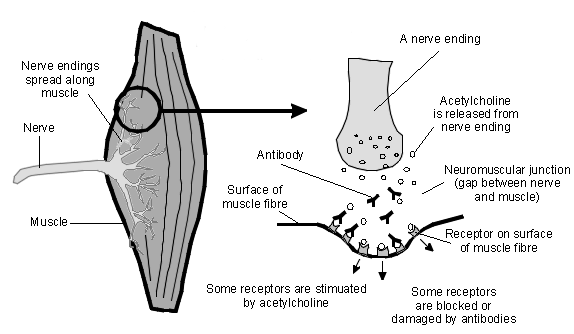
The brain sends messages down the nerves to the muscles it wants to tighten (contract). The nerve endings release a chemical called a neurotransmitter into the neuromuscular junction. This neurotransmitter is called acetylcholine. The acetylcholine moves across the neuromuscular junction and quickly attaches to receptors on the muscles. This triggers the muscle to tighten (contract). There are lots of acetylcholine receptors on each muscle fibre.
What is myasthenia gravis?
People with myasthenia gravis have a fault in the way nerve messages are passed from the nerves to the muscles at the neuromuscular junction. The muscles become easily tired and weak.
What causes myasthenia gravis?
Myasthenia gravis is an autoimmune disease. This means that the immune system (which normally protects the body from infections) mistakenly attacks itself. (Other autoimmune diseases include type 1 diabetes and thyroid disorders.) In most people with myasthenia gravis, antibodies are made which block, alter or destroy the acetylcholine receptors on muscles. The acetylcholine cannot then attach to the receptor on the muscle fibre at the neuromuscular junction and so the muscle is less able to tighten (contract).
What causes the abnormal antibodies to be made?
Myasthenia gravis usually occurs in people whose bodies have particular DNA which makes them more likely to have myasthenia gravis.
The reason why the body's immune system starts to make abnormal antibodies against muscle receptors is not known. Abnormal antibodies are made in various parts of the immune system, including:
The bone marrow.
Blood.
Lymph glands.
The thymus gland.
How common is myasthenia gravis?
Myasthenia gravis is a rare condition. It can occur at any age but most commonly affects women aged between 30 and 40 and men aged 50-70 years. Women are slightly more likely than men to have myasthenia gravis, particularly in certain ethnic backgrounds. It can occur in more than one member of the same family.
What role does the thymus gland have in myasthenia gravis?
The thymus gland is a small gland in the upper chest just behind the breastbone (sternum). It is part of the immune system. The thymus is abnormal in many people with myasthenia gravis. The exact role of the cells in the thymus is not clear. However, the cells may have something to do with programming or making antibodies against acetylcholine receptors. For some people, surgical removal of the thymus gland by an operation can improve their symptoms or allow them to take less medication to manage their symptoms.
A small number of people with myasthenia gravis develop a growth (tumour) of the thymus gland, called a thymoma. If it occurs, it is usually non-cancerous (benign), However, in a very small number of cases it is cancerous (malignant). Removal of the thymoma is recommended in most cases.
What are the symptoms of myasthenia gravis?
The typical main symptom is weakness of muscles that becomes worse with activity and improves with rest. Affected muscles tire or become fatigued very easily. This means that symptoms are usually worse at the end of the day and after exercising. Fatigue is also a very common symptom.
The symptoms vary enormously between people with myasthenia gravis:
The muscles around the eyes are commonly affected first. This causes drooping of the eyelid (ptosis), and double vision (diplopia). In some people, the muscles around the eyes are the only ones affected. This is known as ocular myasthenia and affects 1 in 7 people with myasthenia gravis. Some people with ocular myasthenia (they only have eye symptoms) develop generalised myasthenia (affecting other parts of their body) within the first few years of their symptoms starting.
Muscles around the face and throat are often affected. Difficulty swallowing, slurred speech, voice changes or repeatedly coughing or choking when eating may be the first signs of myasthenia gravis.
Weakness in the arms, legs and neck may develop.
Weakness in the chest muscles sometimes occurs. If this is severe, a myasthenic crisis may result (see below).
The severity of symptoms (how easily the muscles tire) can vary from mild to severe. Most people notice their symptoms are at their most troublesome in the first couple of years. Infection, stress and certain medications can make symptoms worse.
How is myasthenia gravis diagnosed?
It is not uncommon for the diagnosis of myasthenia gravis to take some time. This is because it is a rare condition and the symptoms often start gradually. If a doctor thinks you may have myasthenia gravis they will examine you to check for muscle weakness, and to see if your muscles tire quickly.
Tests that may then be done include the following:
A blood test to detect the abnormal antibodies and confirm the diagnosis in most cases.
Blood tests may be done to look for other autoimmune conditions.
Muscle and nerve tests may be needed in some cases where the diagnosis is not clear. These usually happen in hospital settings.
If you are diagnosed with myasthenia gravis, further tests will include:
More blood tests to look for other autoimmune disease which may exist alongside.
A CT scan of the chest to assess the thymus gland.
Breathing tests are performed in those people who have weakness of the chest muscles.
People who have double vision (diplopia) will have a scan of their brain. This is to check that there are no masses inside the brain which could be causing the double vision. If this scan is normal, the medical team can be more confident the double vision is caused by myasthenia gravis.
What is the treatment for myasthenia gravis?
In most cases, myasthenia gravis can be effectively treated. Often, combinations of these treatments are needed to best control symptoms.
Anticholinesterase medicines
These medicines slow the breakdown of the neurotransmitter acetylcholine when it is released from the nerve endings. More acetylcholine is then available to compete against the abnormal antibodies for the muscle receptors, which then improves the strength of the muscles. These medicines work best when the disease is mild and the level of antibody is low. The most commonly prescribed anticholinesterase medicine is called pyridostigmine. Diarrhoea is a common side-effect of this but it usually resolves without treatment.
Removal of the thymus (thymectomy)
This is an option in some cases and can improve symptoms for some people with myasthenia gravis.
Immunosuppressant medication
Steroid medication
Steroid medication such as prednisolone tablets is often used in the treatment of myasthenia gravis. Steroids suppress the immune system and prevent the abnormal antibodies from being made.
It may take several months for the steroids to have their maximum benefit on your symptoms. Once improved, the dose is usually reduced gradually to find the lowest dose needed to prevent symptoms. This is to try and avoid the long term side-effects of this medicine. In some people, the dose of steroid needed to control the disease may be quite high and lead to side-effects. See the separate leaflet called Oral steroids for more details.
Other immunosuppressant medicines
An immunosuppressant medicine such as azathioprine may be advised in addition to steroid medication. These medicines work by suppressing the immune system. If these medicines are not effective or you are unable to take them, there are alternatives. These alternatives also work to dampen how well your immune system works.
A steroid plus another immunosuppressant tends to be prescribed. This can work better than either alone and allow a lower dose of steroid to be needed, reducing the risk of steroid side-effects.
Myasthenic crisis
A myasthenic crisis occurs when the muscles that control breathing weaken to the point that breathing becomes very difficult. This can happen quickly and may be triggered by an infection, stress or particular medications which can lead to a worsening of symptoms. Admission to hospital for a week or more is usually needed and you are likely to need a ventilator to help you breathe.
Steroids and rapid acting treatments such as plasma exchange (PLEX) or intravenous immunoglobulins (IVIG) may be given to help your body during a myasthenic crisis. The aim of these treatments is to quickly reduce the abnormal antibodies in your body so you can recover.
What is the course of the disease and outlook (prognosis)?
The current available treatment options usually mean that people with myasthenia gravis have a near-normal life expectancy. Treatment usually works well but many people continue to have some symptoms. Myasthenia gravis is a very variable condition and can cause long-term difficulties with daily activities.
Myasthenia crisis is a life-threatening event. When people are diagnosed with myasthenia gravis, they will be given advice about how to reduce the risk of triggering a myasthenia crisis. This involves advice about how to avoid infections, the importance of taking medications as they are prescribed, stopping smoking and the importance of having immunisations to protect against infection.
Patient picks for Muscle problems

Bones, joints and muscles
Leg cramps
Leg cramps are common and most common in the calf muscles. They can occur in any muscle group. The cause is not known in most cases. However, some medications and diseases can cause leg cramps. Regular calf stretching exercises may prevent leg cramps. Quinine tablets may be advised as a last resort if the cramps occur regularly.
by Dr Surangi Mendis, MRCGP

Bones, joints and muscles
Repetitive strain injury
Repetitive strain injury (RSI) is a condition where pain and other symptoms occur in an area of the body which has done repetitive tasks (often the arms, wrists or hands). Repetitive strain means strain related to actions which are frequently repeated.
by Dr Colin Tidy, MRCGP
Frequently asked questions
Can diet or lifestyle changes help manage myasthenia gravis?
The article does not specifically mention diet or lifestyle changes as a treatment or management strategy for myasthenia gravis. However, it does state that avoiding infections, managing stress, stopping smoking, and having immunisations are important to reduce the risk of triggering a myasthenic crisis.
What might make my symptoms of myasthenia gravis worse?
Your symptoms of myasthenia gravis can be made worse by infections, stress, and certain medications. It is important to be aware of these triggers.
Are there any alternative therapies that can help with myasthenia gravis?
The article focuses on established medical treatments for myasthenia gravis, such as anticholinesterase medicines, thymectomy, steroids, and other immunosuppressants. It does not contain information about alternative therapies.
If I have myasthenia gravis, will my children also have it?
The article mentions that myasthenia gravis can occur in more than one member of the same family and that people usually have particular DNA that makes them more likely to develop it. However, it does not specify the exact risk of passing it on to children.
How often do I need to see a doctor for ongoing management of myasthenia gravis?
The article describes the diagnostic process and treatment options for myasthenia gravis, but it does not specify the frequency of follow-up appointments or ongoing medical monitoring.
Further reading and references
- Farmakidis C, Pasnoor M, Dimachkie MM, et al; Treatment of Myasthenia Gravis. Neurol Clin. 2018 May;36(2):311-337. doi: 10.1016/j.ncl.2018.01.011.
- Wang S, Breskovska I, Gandhy S, et al; Advances in autoimmune myasthenia gravis management. Expert Rev Neurother. 2018 Jul;18(7):573-588. doi: 10.1080/14737175.2018.1491310. Epub 2018 Jul 4.
- Estephan EP, Baima JPS, Zambon AA; Myasthenia gravis in clinical practice. Arq Neuropsiquiatr. 2022 May;80(5 Suppl 1):257-265. doi: 10.1590/0004-282X-ANP-2022-S105.
- Beloor Suresh A, Asuncion RMD; Myasthenia Gravis
- Narayanaswami P, Sanders DB, Wolfe G, et al; International Consensus Guidance for Management of Myasthenia Gravis: 2020 Update. Neurology. 2021 Jan 19;96(3):114-122. doi: 10.1212/WNL.0000000000011124. Epub 2020 Nov 3.
- Wiendl H, Abicht A, Chan A, et al; Guideline for the management of myasthenic syndromes. Ther Adv Neurol Disord. 2023 Dec 26;16:17562864231213240. doi: 10.1177/17562864231213240. eCollection 2023.
About the authorView full bio

Dr Caroline Wiggins, MRCGP
General Practitioner, Medical Author
MBBS Honours (with Distinction), MRCGP (2016), MSc.SEM (with Distinction), BSc (Hons)
Dr Caroline Wiggins is a GP locum currently in the South-West of England.
About the reviewerView full bio

Dr Rachel Hudson, MRCGP
General Practitioner and Medical Author
MBChB, MRCGP (2008), BSc (Medical Science), DFSRH, DRCOG, DCH
Dr Rachel Hudson, is an NHS GP working in the North West of England.
Article history
The information on this page is written and peer reviewed by qualified clinicians.
Article also available in English, German, Spanish, French, Italian, Portuguese, Hindi, Hebrew, Arabic, and Swedish.
Next review due: 20 May 2028
21 May 2025 | Latest version
Join the conversation
Share your thoughts or experiences with others in our patient communities.

Ask, share, connect.
Browse discussions, ask questions, and share experiences across hundreds of health topics.

Feeling unwell?
Assess your symptoms online for free
Sign up to the Patient newsletter
Your weekly dose of clear, trustworthy health advice - written to help you feel informed, confident and in control.
By subscribing you accept our Privacy Policy. You can unsubscribe at any time. We never sell your data.
More in bones, joints and muscles
- Ankle injury
- Biological medicines for rheumatoid arthritis
- Calcium pyrophosphate deposition
- Disease-modifying antirheumatic drugs
- Dupuytren's contracture
- Forearm injuries and fractures
- Hip replacement
- Joint pain
- Knee ligament injuries
- Mallet finger
- Meralgia paraesthetica
- Paget's disease of bone
- Repetitive strain injury
- Rhabdomyosarcoma
- Rotator cuff injuries and disorders
- Scaphoid wrist fracture
- Scoliosis and kyphosis
- Sprains and strains
- Tendinopathy and tenosynovitis
- Vitamin D deficiency