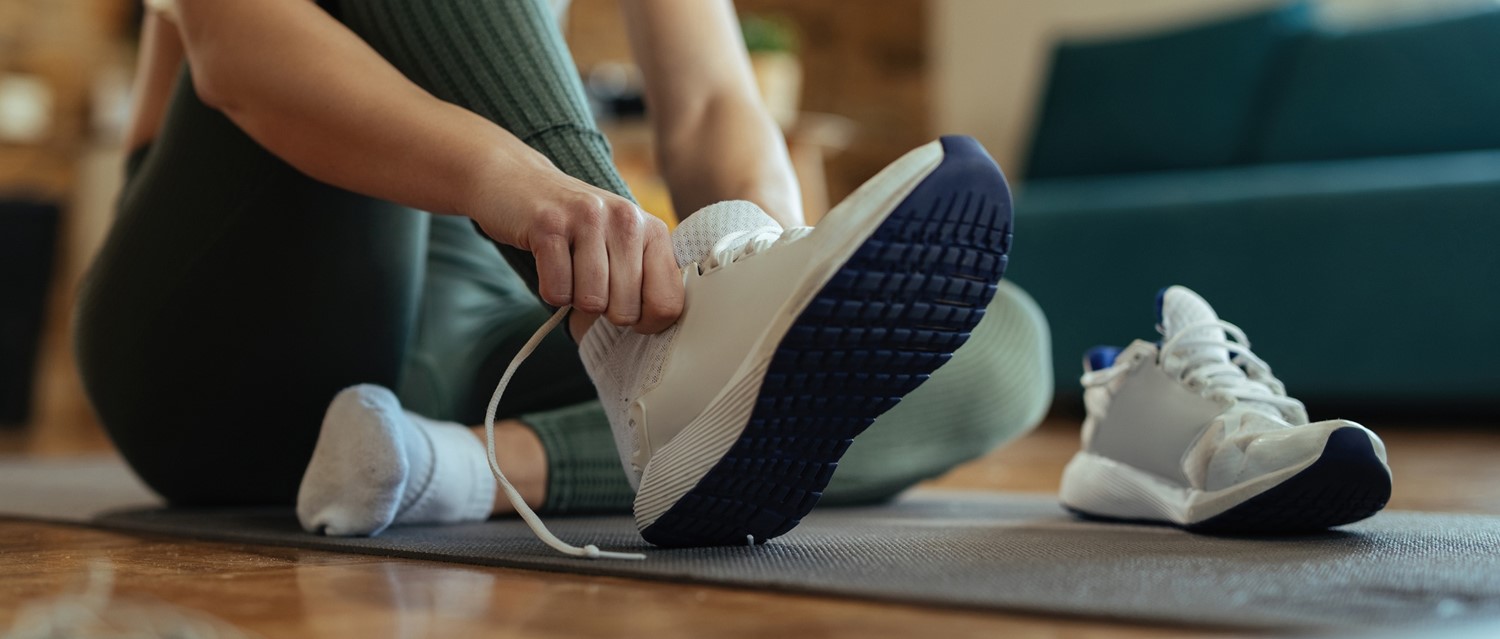
Tips for restarting your exercise routine after lockdown
Peer reviewed by Dr Sarah JarvisLast updated by Gillian HarveyLast updated 21 Jul 2020
Meets Patient’s editorial guidelines
- DownloadDownload
- Share
- Language
- Discussion
- Audio Version
- Add to preferred sources on Google
Lockdown has affected us all in different ways. When it comes to fitness, some of us have stepped things up - going running for the first time, or taking long walks. Others will have experienced illness, had to care for others or simply found it all too much. As lockdown eases, what's the best way to restore our fitness, or even get fit for the first time?
Modify your expectations
If you worked out regularly prior to lockdown but have lost fitness since, it's tempting to want to resume old levels of activity immediately. However, if you’ve lost fitness or been unable to keep up your regular routine, it's important to walk before you can run.
"You may need to modify your expectations. If you're used to using 5 kg weights in your workouts you may need to switch to 2 or 3. It's more important to maintain form when exercising. If you jump right back to where you used to be there's a risk of injury and you might be out even longer," explains Mollie Millington, personal trainer.
The same is true if you've put on weight due to inactivity. "If you gained weight during lockdown and you try to lose that weight too quickly, you'll probably be setting yourself up to fail. Create a new fitness routine, and treat it like a fresh start," says Alexandra McMillan, London-based personal trainer.
Refresh your knowledge
With many exercises, quality is even more important than quantity. If you're revisiting your downward dog, or trying out a bicep curl, it's important you ensure your form is correct. "For example, if you're doing a bicep curl but pivoting from the waist instead of the elbow, the exercise just won't be as effective," explains Millington.
It's worth reading up on proper form, watching YouTube videos, or if time and funds allow, booking a session with a trainer to revisit exercises.
Listen to your body
There's no point overdoing it or exhausting yourself by trying to get back to your old level of fitness too quickly. Choosing lighter weights or fewer reps isn't a sign of failure, but evidence that you are working towards a goal sensibly rather than risking exhaustion or injury.
"It's important to find the right balance," explains Millington. "If you don't have rest days, your muscles won't have time to heal. If you don't get enough sleep, your body won't have time to process the changes you're making."
Rest doesn't have to mean lying or sitting with our feet up. Instead, if we feel well enough, it's worth trying active rest - for example, by walking to work, or taking a walk with family or friends.
Get 'sport ready'
You may have kept up your fitness levels by running throughout lockdown, but that doesn't necessarily mean you can throw yourself around on a court. If your local outdoor tennis court has opened, or you fancy a game of badminton in the back garden, remember that these kinds of sports require us to move differently. That means it may be necessary to ease ourselves in rather than going for the grand slam straightaway.
"Running on the road, your body's movement is very one-direction and forward. If you want to play tennis, you need to be very agile with different actions. Your body isn't going to be used to having that flexibility, that response time, moving front to back. You need to consider your risk of injury, your ankles, your legs," advises Millington.
Practise aftercare
If you were pretty fit prior to lockdown, you may be surprised how you feel the day after returning to your exercise routine. If you experience pain, it's important to assess what's going on in your body and look after yourself. "Sharp pain is a bad thing and probably indicates an injury. But dull pain probably means your muscles are a bit sore from being active," explains Millington.
"It's really important to warm up before exercise and perform cooldown exercises afterwards," she says. "Especially for those going back in to sport. If you're still a bit sore the next day, try stretching out your muscles or taking a warm bath. If you can, it's worth booking in with a local physio.
"If you're super sore, it's a sign that you overdid it. Take it easy during workouts to reduce the risk of an injury that will put you out for even longer," advises Millington.
Keep motivated
If you've lost fitness over the last few months, or are finding it hard to motivate yourself, it's worth getting an accountability partner. "Finding a friend or family member who will meet up and work out with you can be really helpful," agrees Millington.
It's also worth trying something new, which will be easier as more exercise venues start to open up. "You want to make it fun," says Millington. "Try something new - dancing, fencing, swimming - the important thing is that you keep moving."
Focus on health
It's also important to remember that coronavirus hasn't gone away. During this stressful time, self-care is all the more important.
Exhausting yourself, or going on a restrictive diet may affect your ability to cope with stress or illness. Instead, try to set goals which focus on fitness and health. "Go with what makes you feel good, rather than worrying too much about what's in the mirror," advises McMillan.
Patient picks for Pandemic articles
COVID-19
Tips to help your kids get used to face masks and coverings
As many schools now insist pupils over 11 wear masks in certain situations, lots of our children will be donning a face covering for the first time. But how should masks be worn? And how can we help our children to use them effectively?
by Gillian Harvey
COVID-19
How have Brits neglected their oral health during the pandemic?
New research reveals 1 in 3 Brits have let their oral health slip since the start of the pandemic, driven by a lack of routine and other health-related issues taking priority over looking after their teeth and gums.
by Emily Jane Bashforth
About the authorView full bio
Gillian Harvey
Freelance Writer
BA (Hons) English
Gillian is a freelance writer and columnist for a variety of national newspapers and magazines.
About the reviewerView full bio

Dr Sarah Jarvis
Clinical Consultant
MA (Cantab), BM, BCh (Oxon), DRCOG, FRCGP, MBE
After training in medicine at Cambridge and Oxford, Dr Sarah Jarvis MBE became a GP.
Article history
The information on this page is peer reviewed by qualified clinicians.
Article also available in English, German, Spanish, French, Italian, Portuguese, Hindi, Hebrew, Arabic, and Swedish.
21 Jul 2020 | Latest version
Join the conversation
Share your thoughts or experiences with others in our patient communities.

Ask, share, connect.
Browse discussions, ask questions, and share experiences across hundreds of health topics.

Feeling unwell?
Assess your symptoms online for free
Sign up to the Patient newsletter
Your weekly dose of clear, trustworthy health advice - written to help you feel informed, confident and in control.
By subscribing you accept our Privacy Policy. You can unsubscribe at any time. We never sell your data.
More in cOVID-19
- COVID-19 antibody tests: how do they work and who can get tested?
- COVID-19 coronavirus: what can I do under the new rules?
- COVID-19: is handwashing still important when you're self-isolating?
- How could long COVID impact your mental health?
- How to cope with a fear of leaving lockdown
- How to help your child adjust to a post-COVID world
- Long COVID: what it is and how to cope
- What to do if you have a dental emergency during the lockdown
- What we know about the IHU COVID-19 variant
- Why lockdown is making us feel exhausted