Leinsamen: eine Geheimwaffe für die Gesundheit von Frauen?
Begutachtet von Dr Colin Tidy, MRCGPVerfasst von Victoria RawUrsprünglich veröffentlicht 13. Mai 2025
Erfüllt die Anforderungen des Patienten redaktionellen Richtlinien
- HerunterladenHerunterladen
- Teilen
- Language
- Diskussion
- Audio-Version
- Zu bevorzugten Quellen bei Google hinzufügen
Leinsamen werden für ihre vielfältigen gesundheitlichen Vorteile gelobt - von der Unterstützung der Herzgesundheit bis zur Regulierung des Blutzuckers. Reich an Nährstoffen, lassen sie sich leicht zu Mahlzeiten, Backwaren und Getränken hinzufügen. Sie gewinnen auch in der Welt der Frauengesundheit an Beliebtheit. Aber was genau sind diese gesundheitlichen Vorteile und was sagen die Experten?
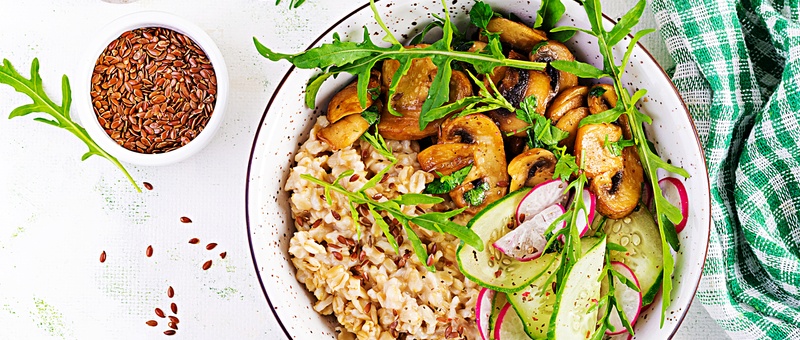
Flax seeds - also known as linseeds - are small, oval-shaped oil seeds that vary in colour, from a rich reddish-brown to a golden yellow. They can be eaten whole, ground, or consumed as flaxseed oil. Highly regarded for their nutritional value, these seeds are frequently recommended by health professionals for their wide array of health benefits.
Leinsamen: eine Geheimwaffe für die Gesundheit von Frauen?
Are flax seeds good for you?
Packed with essential nutrients, flax seeds may offer positive health effects when incorporated into your daily diet.
Dr Helen Messier, Chief Medical and Science Officer at Fountain Life in San Jose, California, USA says that flax seeds are a rich source of beneficial compounds.
Dazu gehören:
Alpha-linolenic (ALA) - a plant-based omega-3.
Lignans - a type of plant-based compound (phytoestrogens), that share a similar chemical structure to oestrogen.
Ballaststoffe - soluble and insoluble.
Dr Brittany Busse, Co-founder, President, and Chief Medical Officer of ViTelHealth, Sacramento, California, USA adds that flax seeds also contain micronutrients such as magnesium and B-vitamins.
Hormonal benefits of flax seeds for women
For menstruating women, the nutrients found in flax seeds may help support hormonal balance by influencing your oestrogen levels.
Busse explains that because lignans resemble oestrogen, they may help regulate your hormone levels.
"When oestrogen is too low it can stimulate your body to produce more," she says. "But when it's too high it can actually block the excess oestrogen from having a negative effect."
She adds that some evidence suggests flax seeds may:
Support fertility and healthy ovulation for women struggling to conceive.
Decrease symptoms of oestrogen depletion - such as hot flashes, night sweats and vaginal dryness.
Dr Bill Kapp, Chief Executive Officer, Fountain Life, Naples, Florida, USA agrees that the nutrients in flax seeds can be especially beneficial for women during the midlife transition, supporting digestive health, both heart and gut function, and helping to reduce inflammation.
When it comes to whether flax seeds help with hormonal balance, he points out that the evidence isn't strong enough to confirm they have a major effect.
Er sagt: "Lignans have weak oestrogen-like activity, and some researchers speculate that it may ease menopausal symptoms, but results are mixed."
Flax seeds for heart health, digestion and weight
Flax seeds are packed with nutrients that support various aspects of health - not just hormonal balance.
Messier explains that the fibre in flax seeds may help:
Reduce cholesterol.
Promote regular bowel movements.
Support anti-inflammatory processes.
Boost heart health.
"From a weight management perspective, flax promotes satiety and slows digestion," she says. "This helps reduce cravings and support insulin sensitivity. Emerging research suggests flax seeds may also support cognitive aging and skin health due to their antioxidant content."
Busse adds that omega-3 balance is an important factor in lowering your chance of developing heart disease - which increases significantly in post-menopausal women due to decreased oestrogen levels.
Sie sagt: "The ALA in flax seeds has been shown to reduce plaque build-up (atherosclerotic disease), responsible for stroke and heart attacks, as well as lower inflammation in blood vessels and blood pressure."
Flax seeds for blood sugar control
Flax seeds are rich in soluble fibre, healthy fats, and protein - nutrients which may help to balance your blood sugar levels.
Trista Best, Registered Dietitian, The Candida Diet, Georgia, USA, explains that these components work together to support blood sugar regulation.
They do so in the following ways:
Lösliche Ballaststoffe - slows digestion for a more gradual release of sugar (glucose) into your bloodstream, helping to prevent spikes in blood sugar levels after meals.
Gesunde Fette - such as omega-3 fatty acids - promote insulin sensitvity, allowing cells to effectively use glucose for energy.
Protein - contributes to stable blood sugar levels by providing a steady source of energy.
"By incorporating flax seeds into your diet, you may experience improved glycaemic control, making it particularly beneficial if you have diabetes or insulin resistance," she says. "However, it's important to consult with a healthcare professional for personalised advice regarding blood sugar management."
Recommended flax seed intake
If you're thinking of adding flax seeds to your diet, it's important to follow the recommended daily intake guidelines.
Though they may be good for your health as part of a balanced diet, you should not consume more than 1-2 tablespoons a day.
Busse says ground flax is best for absorption, as whole flax often passes through your system undigested, offering little nutritional benefit.
Messier advises drinking plenty of water to help the fibre in flax seeds work most effectively.
Are flax seeds safe for everyone?
Flax seeds are generally considered safe and well-tolerated by the majority of people.
Kapp warns, however, that women with hormone-sensitive conditions or people on certain medicines should check with their doctor before making big changes to their diets.
Messier says that anyone taking blood thinners should be cautious, as flax seeds may have a mild blood-thinning effect that could interfere with medication.
She adds: "It may also interfere with absorption of certain medicines if taken at the same time."
Busse concludes by advising you to avoid eating too much fibre too fast.
"Many of our bodies aren't adapted to high levels of fibre," she explains. "This may cause gastrointestinal (GI) discomfort - such as bloating, gas or diarrhoea."
Patientenauswahl für Ernährung
Ernährung und Diät
10 überraschende gesundheitliche Vorteile von Kohl
Cabbage might not look like a superfood, but nutritionally, it punches way above its weight. Often overlooked in favour of trendier greens, this humble crucifer has been fuelling healthy diets for centuries.
von Heather Ainsworth

Ernährung und Diät
10 essentielle Nährstoffe, die Ihnen möglicherweise fehlen
Laut einer Studie, die vom Health and Food Supplement Information Service (HSIS) veröffentlicht wurde, sind die Ernährungsgewohnheiten im Vereinigten Königreich in den letzten 30 Jahren ungesünder geworden. Wir haben mit Gesundheitsexperten über 10 wichtige Nährstoffe gesprochen, die in Ihrer Ernährung fehlen könnten.
von Victoria Raw
Über den AutorVollständige Biografie anzeigen

Victoria Raw
Feature-Autorin
BA (Hons), Englische Literatur
Victoria ist eine Content-Autorin bei Patient, deren besondere Interessen sich auf das mentale Wohlbefinden, gesellschaftliche Trends und den Einfluss der Technologie auf unsere Gesundheit konzentrieren.
Über den RezensentenVollständige Biografie anzeigen

Dr Colin Tidy, MRCGP
Allgemeinmediziner, Medizinischer Autor
MBBS, MRCGP, MRCP (Paediatrics), DCH
Dr. Colin Tidy ist ein NHS-Arzt mit Sitz in Oxfordshire.
Artikelverlauf
Die Informationen auf dieser Seite werden von qualifizierten Klinikern begutachtet.
Artikel auch verfügbar in Englisch, Deutsch, Spanisch, Französisch, Italienisch, Portugiesisch, Hindi, Hebräisch, Arabisch, und Schwedisch.
Nächste Überprüfung fällig: 14. Mai 2028
13. Mai 2025 | Ursprünglich veröffentlicht
Verfasst von:
Victoria RawBegutachtet von
Dr Colin Tidy, MRCGP

Fragen, teilen, verbinden.
Durchsuchen Sie Diskussionen, stellen Sie Fragen und teilen Sie Erfahrungen zu Hunderten von Gesundheitsthemen.

Fühlen Sie sich unwohl?
Bewerten Sie Ihre Symptome online kostenlos
Abonnieren Sie den Patienten-Newsletter
Ihre wöchentliche Dosis klarer, vertrauenswürdiger Gesundheitsberatung - geschrieben, um Ihnen zu helfen, sich informiert, selbstbewusst und in Kontrolle zu fühlen.
Durch das Abonnieren akzeptieren Sie unsere Datenschutzrichtlinie. Sie können sich jederzeit abmelden. Wir verkaufen Ihre Daten niemals.
Mehr zu Ernährung und Diät
- 10 essentielle Nährstoffe, die Ihnen möglicherweise fehlen
- 10 Quellen für pflanzliches Eiweiß zur Knochengesundheit
- 7 lebendige Herbstrezepte – Bleiben Sie saisonal
- 9 gesundheitliche Vorteile von Chiasamen
- Gibt es 'Superfoods' wirklich?
- Alles, was Sie über das 3-tägige Sardinen-Fasten wissen sollten
- Feeding your good bacteria with probiotics and prebiotic supplements
- Lebensmittel zur Stärkung Ihres Immunsystems in diesem Winter
- AktualisiertWie die Ernährung Ihr Herz beeinflusst
- Wie Sie kleine gesunde Veränderungen in Ihrer Ernährung vornehmen können, ohne Diät zu halten
- Wie man das Fressanfall-Übermaß beendet
- Wie Sie Ihr Essen zubereiten, ist wichtig
- Wie Ihr Darm Ihre Gesundheit insgesamt beeinflusst
- Ernährungs- und Diätvideos
- Die besten Lebensmittel für die Darmgesundheit - und warum Sie sie brauchen
- Was sind die Vorteile einer pflanzenbasierten Ernährung?
- Was sind die Vorteile von Vitamin A?
- Welche Lebensmittel können Stress und Angst reduzieren?
- Warum bekommen wir Zuckerentzugserscheinungen?
- Warum Ballaststoffe dein Freund sind