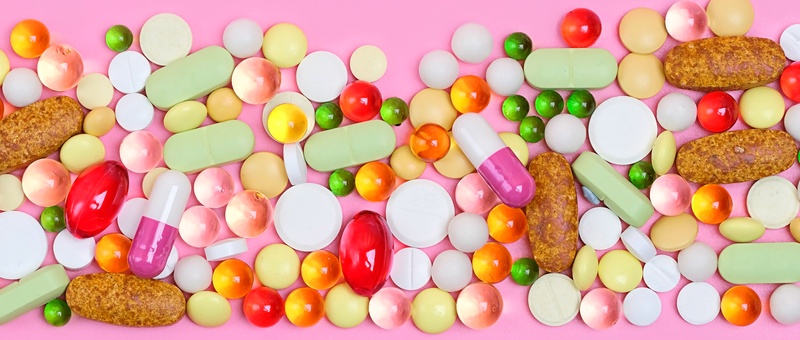
Zuviele Pillen? Der besorgniserregende Anstieg der Polypharmazie bei Frauen in der Lebensmitte
Begutachtet von Dr Colin Tidy, MRCGPVerfasst von Victoria RawUrsprünglich veröffentlicht 23. Jul 2026
Erfüllt die redaktionelle Richtlinien
- HerunterladenHerunterladen
- Teilen
- Language
- Diskussion
- Audio-Version
- Zu bevorzugten Quellen bei Google hinzufügen
When a health gap warrants more attention, most healthcare professionals focus on finding better ways to support people. Others, however, see that same gap as a business opportunity.
One result is the rise of polypharmacy - taking multiple medications or supplements at the same time without clear clinical guidance.
Was ist Polypharmazie?
Women in midlife are especially vulnerable to consumer manipulation. Whether they're being sold products that promise to help them look younger, live longer, lose weight, or manage perimenopause, they're increasingly targeted by marketers promoting a range of medications, supplements, and treatments - often implying they need all of them.
This has contributed to the rise of polypharmacy - the practice of taking multiple medications or supplements at the same time, without careful consideration of whether they're necessary or how they might interact. As a result, people can end up taking far more than they need, with no one overseeing the full picture or assessing the cumulative health hazards.
Richa Puri is an independent prescribing pharmacist and registered nutritionist at Richa Puri Hormones. She explains that women in their forties and fifties have become the prime target for a booming longevity industry, which markets products and treatments claiming to slow ageing and extend lifespan.
"They're told they can control how fast they age," she says. "But the practical advice they're given is often a shopping list of tests and pills."
Richa Puri

How science became a sales pitch
Research is often undertaken to improve health and deepen our understanding of disease and ageing. But as new findings emerge, they're sometimes repackaged and marketed to consumers long before the evidence is strong enough to support their widespread use.
One example is the ‘hallmarks of ageing’ framework. Developed over the past decade, it describes 12 cellular and molecular processes that contribute to ageing and provides scientists with a way to organise research into why we grow older.
Recent research has built on the 'hallmarks of ageing' framework to explore potential longevity drugs and other interventions. But outside the lab, the concept has been turned into a marketing tool.
Many clinics and wellness brands now sell products they claim target the hallmarks of ageing, including supplement bundles and IV therapies. These are often promoted with promises of reducing your biological age by several years, even though scientists are still debating how reliable those claims are.
The 'hallmarks of ageing' are a research framework - not a treatment plan. They help scientists understand how we age, but they don't prove that the supplements or treatments being sold to consumers can safely or effectively target these processes. In many cases, the marketing is moving faster than the evidence.
Why midlife women are being hit hardest
Women in midlife are not only a key target for marketing tactics, but may also be more susceptible to the negative health effects associated with unregulated polypharmacy.
The timing is particularly important. Perimenopause brings significant changes - including shifting hormones, disrupted sleep, weight changes, altered blood sugar regulation, and increased mental health challenges.
It’s also a crucial window for prevention, as long-term health conditions such as heart disease, Osteoporose, and cognitive decline can begin to emerge during your forties and fifties. At the same time, the number of medicines and supplements people are taking is steadily increasing.
“By the time many women find me, they’re on three or four prescriptions and taking a handful of supplements they’ve chosen themselves to ‘target’ hallmarks or biological age,” says Puri.
The pharmacist adds that patients often self-prescribe, creating room for harm without professional healthcare guidance. A woman in midlife may combine prescribed medicines such as HRT, thyroid medication, or weight loss treatments with a growing list of supplements and longevity products.
“Individually, none of these is necessarily unreasonable,” warns Puri. “The risk is in the combination, because no medical professional has reviewed what’s being taken against her history, lab results, and medical priorities.”
When self-care turns into self-prescribing
Health experts warn that this combination of physical changes, multiple medications, and the booming longevity industry is exposing gaps in healthcare.
“What we’re seeing now is a kind of DIY longevity clinic in the kitchen cupboard,” says Puri. “Patients bring in expensive biological‑age reports and bags of supplements, but those products often don’t show up accurately in our records, and appointment slots are too short to review the entire regimen.”
Puri points to women aged 40 to 55 as the group most affected by this disconnect.
“We’ve invested in important awareness messages about perimenopause, but we haven’t yet caught up with the reality that these same women are being told they can and should self‑manage their biological age,” she explains. “Without a prescriber who understands both hallmarks science and drug–supplement interactions, it becomes guesswork.”
What really supports healthy ageing
If you're considering supplements or medications to help manage major life transitions or reduce your chance of developing age-related health conditions, speak to a healthcare professional first. They can help you decide what's appropriate for your individual needs and make sure any treatments or supplements are safe to take together.
Rather than reaching for the latest supplement or longevity product your algorithm has served up, it's worth focusing on a handful of well-established health habits first.
According to Puri, these are likely to have a far greater impact on your long-term health.
Prioritise sleep - for many women, getting hot flushes and night sweats under control with HRT or non‑hormonal medication is the first real longevity intervention. It stabilises sleep and allows your brain and immune system to repair properly.
Build strength - focus less on weight and more on strength, balance, and metabolic flexibility. Resistance training seems to pay dividends across the longevity hallmarks that matter for blood sugar, bone, and brain.
Eat well and rethink alcohol - helping women move towards a Mediterranean‑leaning diet and examine their drinking is more impactful than any single supplement for most people.
Manage stress - the 45 - 55 window is often peak stress. For example, work, teens, parents, health, and long-term stress shows up in telomeres and inflammatory markers. Sometimes we need medication or therapy here as much as lifestyle advice.
Only after those foundations are in place, Puri says, does she consider whether targeted medications or supplements could be helpful. Depending on the person, that might include HRT to manage severe hot flushes and protect bone health, or carefully chosen supplements to support gut or metabolic health.
Puri believes the healthcare system needs to catch up with changing consumer behaviour.
Healthcare professionals should start having conversations about healthy ageing and longevity much earlier, rather than waiting until issues develop.
“We should be offering full medication and supplement interaction reviews to midlife women in the same way we offer medication reviews to older adults,” she says. “That means sitting down with a prescriber or a qualified nutritionist who would be best placed to offer advice.”
Patientenauswahl für Allgemeine Frauengesundheit

Behandlung und Medikamente
Antibiotikaresistenz: eine versteckte Gesundheitskrise
If you have a bacterial infection, your doctor may prescribe antibiotics. However, unnecessary use of antibiotics can weaken their effectiveness, leading to antibiotic resistance and making future infections harder to treat. Doctors and other appropriately qualified health professionals will only prescribe antibiotics where there is a critical need.
von Victoria Raw
Haut-, Nagel- und Haargesundheit
Funktionieren LED-Gesichtsmasken wirklich?
LED face masks are everywhere right now, promising to blast away acne and smooth out fine lines with nothing but wavelengths of light. But do these products promise more than they actually deliver? We asked a dermatologist for their take.
von Victoria Raw
Über den AutorVollständige Biografie anzeigen
Verfasst von

Victoria Raw
Feature-Autorin
BA (Hons), Englische Literatur
Victoria ist Content-Autorin bei Patient, mit besonderen Interessen in den Bereichen psychisches Wohlbefinden, gesellschaftliche Trends und die Auswirkungen von Technologie auf unsere Gesundheit.
Über den RezensentenVollständige Biografie anzeigen

Dr Colin Tidy, MRCGP
Allgemeinmediziner, Medizinischer Autor
MBBS, MRCGP, MRCP (Paediatrics), DCH
Dr. Colin Tidy ist ein NHS-Arzt mit Sitz in Oxfordshire.
Artikelverlauf
Artikel auch verfügbar in Englisch, Deutsch, Spanisch, Französisch, Italienisch, Portugiesisch, Hindi, Hebräisch, Arabisch, und Schwedisch.
Next review due: 23 Jul 2029
23. Jul 2026 | Ursprünglich veröffentlicht
Verfasst von:
Victoria RawBegutachtet von
Dr Colin Tidy, MRCGP
Nehmen Sie an der Diskussion teil
Teilen Sie Ihre Gedanken oder Erfahrungen mit anderen in unserem Patientengemeinschaften.

Fragen, teilen, verbinden.
Durchsuchen Sie Diskussionen, stellen Sie Fragen und teilen Sie Erfahrungen zu Hunderten von Gesundheitsthemen.

Fühlen Sie sich unwohl?
Bewerten Sie Ihre Symptome online kostenlos
Abonnieren Sie den Patienten-Newsletter
Ihre wöchentliche Dosis klarer, vertrauenswürdiger Gesundheitsberatung - geschrieben, um Ihnen zu helfen, sich informiert, selbstbewusst und in Kontrolle zu fühlen.
Durch das Abonnieren akzeptieren Sie unsere Datenschutzrichtlinie. Sie können sich jederzeit abmelden. Wir verkaufen Ihre Daten niemals.