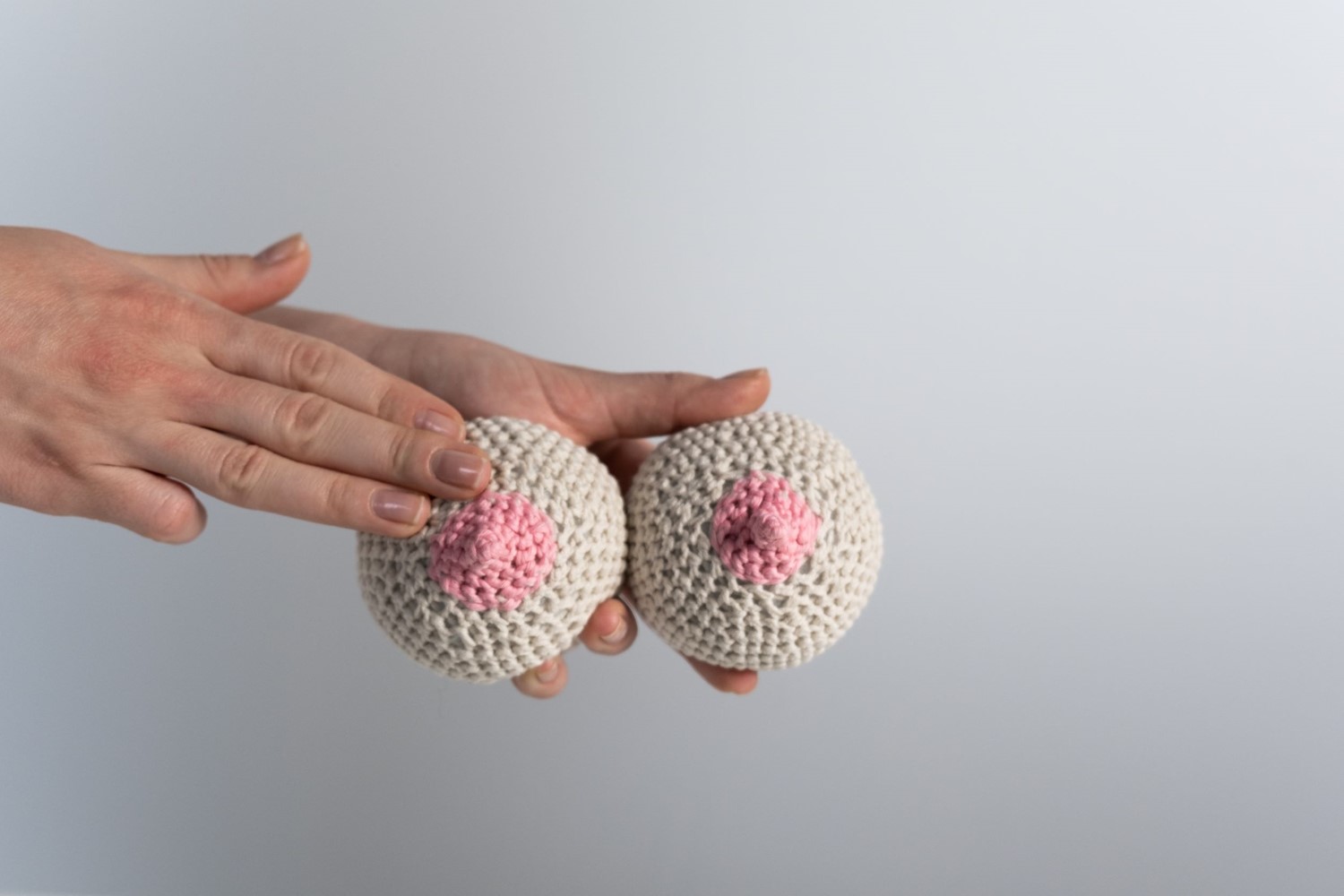
Do you check your breasts?
Peer reviewed by Dr Krishna Vakharia, MRCGPAuthored by Dr Sarah JarvisOriginally published 21 Sept 2022
Meets Patient’s editorial guidelines
- DownloadDownload
- Share
- Language
- Discussion
- Audio Version
- Add to preferred sources on Google
As a GP, I regularly see women with breast problems - and they're almost always worried about cancer. But breast lumps, bumps and other breast problems often aren't cancerous. And if they are, early treatment these days is usually highly successful. The key word is early - if you have a breast issue, it's always important to get it checked out by your doctor.
Being breast aware
When I first became a GP in 1990, we encouraged all women to check their breasts once a month. Today, doctors focus much more on being 'breast aware' - getting to know what your breasts look and feel like on a really regular basis (size, outline or shape). That means you'll know what's normal, and are better positioned to spot changes early. That's crucial because if you do have breast cancer, early treatment is much more likely to lead to you beating it.
How to check your breasts
Start by looking at your breasts in the mirror, with arms down and raised above your head. You're looking for changes to the shape or outline of your breast; skin changes such as rash, redness, puckering or dimpling of the skin; a nipple that's started turning inwards or is pointing in a different direction; discharge from your nipple or dry or scaly skin around your nipple.
Then run the flat of your fingers over your breasts and armpits. Feel for any new lump, swelling, thickening or bumpiness. If you notice any of these changes, speak to your GP without delay.
Breast screening
Every woman in the UK is invited for breast screening from age 50-70. In some parts of the UK, women are being invited from 47 instead. Your first invitation will come some time in the 3 years after you turn 50 (or 47), then every 3 years until you turn 71. While the procedure - called a mammogram - can be uncomfortable, it shouldn't be painful and is very quick.
There has been some concern that breast screening results in some women being treated unnecessarily. In the UK, it's estimated that for every life saved, about 3 women are treated for cancer or suspected cancerous changes they otherwise wouldn't have known about. However, overall breast screening saves about 1,300 lives every year in the UK - so for most women the benefits will greatly outweigh the risks.
Over 70s can still access 3 yearly NHS breast screening through the local screening service - ask your GP for details.
When to worry about breast pain
Interestingly, breast pain is very rarely a symptom when detecting breast cancer, but up to 7 in 10 women get it for other reasons. Sometimes it's linked to your time of the month (menstrual cycle) - this type of pain always settles once you have gone through the menopause. Persistent breast pain is more common in women over 40. The cause isn't always clear.
However, if you get pain that comes on rapidly in one breast and is linked to an area of red, hot skin, it could be an infection called mastitis - your GP can treat this with antibiotics. Shingles can also cause pain in one breast - the pain starts a day or two before a blistering rash appears. Speak to your GP promptly - antiviral tablets can reduce the risk of painful long-term neuralgia (nerve pain) but they need to be started as soon as possible.
How common is breast cancer?
There's good and not-so-good news where breast cancer is concerned. The less good news is how common breast cancer is - it accounts for about 1 in 7 of all new cancers diagnosed, making it the most common cancer in the UK. About 1 in 7 women will get a diagnosis of breast cancer at some point. Most, but not all breast cancers occur in later life - about 1 in 4 are diagnosed in women over 75.
But the much better news is that today, breast cancer isn't an automatic death sentence. Largely because it affects so many women, a huge amount of research has focused on improving outcomes.
Scientists have discovered that there are many different types of breast cancer - for instance, some are driven to grow by the female hormone oestrogen; some have much higher levels of a protein called HER2. This knowledge has allowed researchers to develop drugs that are tailored to different kinds of cancer - and that has dramatically improved survival rates.
Among women with oestrogen-sensitive breast cancer, treatment with anti-oestrogen treatment can cut the chance of a cancer returning by up to half. Herceptin caused headlines a couple of decades ago when it was found to offer dramatic benefits for women with HER2-positive breast cancer.
In addition, doctors have worked out how to improve outcomes without always needing to remove the whole breast - in fact, these days, most women diagnosed early will only need minor surgery to remove the lump, often along with radiotherapy.
Since the early 1970s, the proportion of women surviving breast cancer for at least 10 years has jumped from 2 in 5 to 4 in 5 - and almost 9 in 10 women survive for at least five years.
With thanks to 'My Weekly' magazine where this article was originally published.
Patient picks for Breast health

Women's health
Why we need to talk about breast implant illness
Have you heard of breast implant illness? Although not yet recognised as an official medical condition, understanding that this is a possible side-effect of breast implant surgery can help people make more informed decisions, identify the root of their health issues, and improve their chances of recovery.
by Amberley Davis

Women's health
Is your bra harming your health?
What you're wearing underneath your clothes could have more of an impact on your physical - and mental - wellbeing than you think. We explore the possible consequences of wearing a bra that doesn't fit you properly.
by Victoria Raw
About the authorView full bio

Dr Sarah Jarvis
Clinical Consultant
MA (Cantab), BM, BCh (Oxon), DRCOG, FRCGP, MBE
After training in medicine at Cambridge and Oxford, Dr Sarah Jarvis MBE became a GP.
About the reviewerView full bio

Dr Krishna Vakharia, MRCGP
Chief Medical Officer for Health, Optum UK
MBChB, MRCGP(2013), BMedSci (hons), DFSRH, DRCOG, PGDipDerm (Distn)
Dr Krishna Vakharia is an NHS GP. She is also a regular examiner for the postgraduate Diploma in Practical Dermatology at Cardiff University as well as being the Chief Medical Officer for health at Optum UK.
Article history
The information on this page is peer reviewed by qualified clinicians.
Article also available in English, German, Spanish, French, Italian, Portuguese, Hindi, Hebrew, Arabic, and Swedish.
21 Sept 2022 | Originally published
Authored by:
Dr Sarah JarvisPeer reviewed by
Dr Krishna Vakharia, MRCGP
Join the conversation
Share your thoughts or experiences with others in our patient communities.

Ask, share, connect.
Browse discussions, ask questions, and share experiences across hundreds of health topics.

Feeling unwell?
Assess your symptoms online for free
Sign up to the Patient newsletter
Your weekly dose of clear, trustworthy health advice - written to help you feel informed, confident and in control.
By subscribing you accept our Privacy Policy. You can unsubscribe at any time. We never sell your data.
More in women's health
- Are fertility apps a reliable form of contraception?
- Can changing your diet improve PMS?
- Can women take Viagra?
- How much period pain is normal?
- HRT: fact-checking risks and benefits
- Living with endometriosis - Keisha's story
- New operation could delay menopause by 20 years
- NewPerimenopause and birth control - how the pill can affect your symptoms
- The female reproductive system
- Too many pills? The worrying rise of polypharmacy in midlife women
- Video: Are fibroids cancerous?
- Video: Can endometriosis occur whilst pregnant?
- Video: How do you know you're going through the menopause?
- Video: How does PID affect fertility?
- What are the signs HRT is not working anymore?
- What women need to know about autoimmune conditions
- Which types of condoms are best for preventing pregnancy?
- Why we all need to be 'breast aware'
- Will we ever have a male contraceptive pill?
- Women's health in sport: injuries, menstruation, and motherhood